


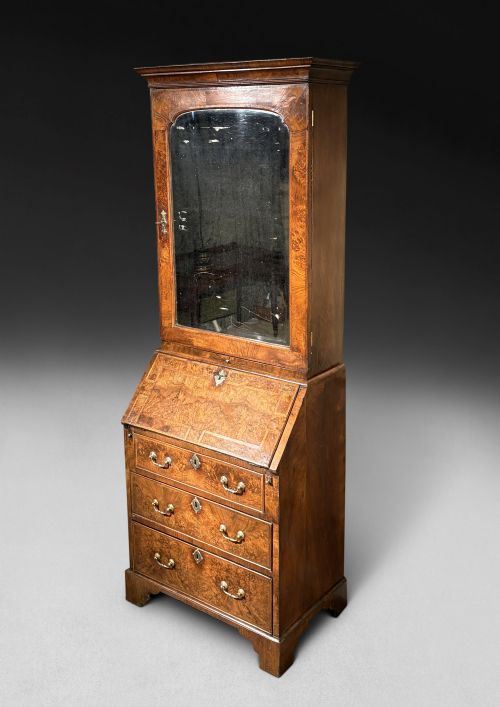

Small Walnut Writing Desk
A small walnut writing desk offers a compact writing surface in rich timber, bringing period character and practical use to any room.
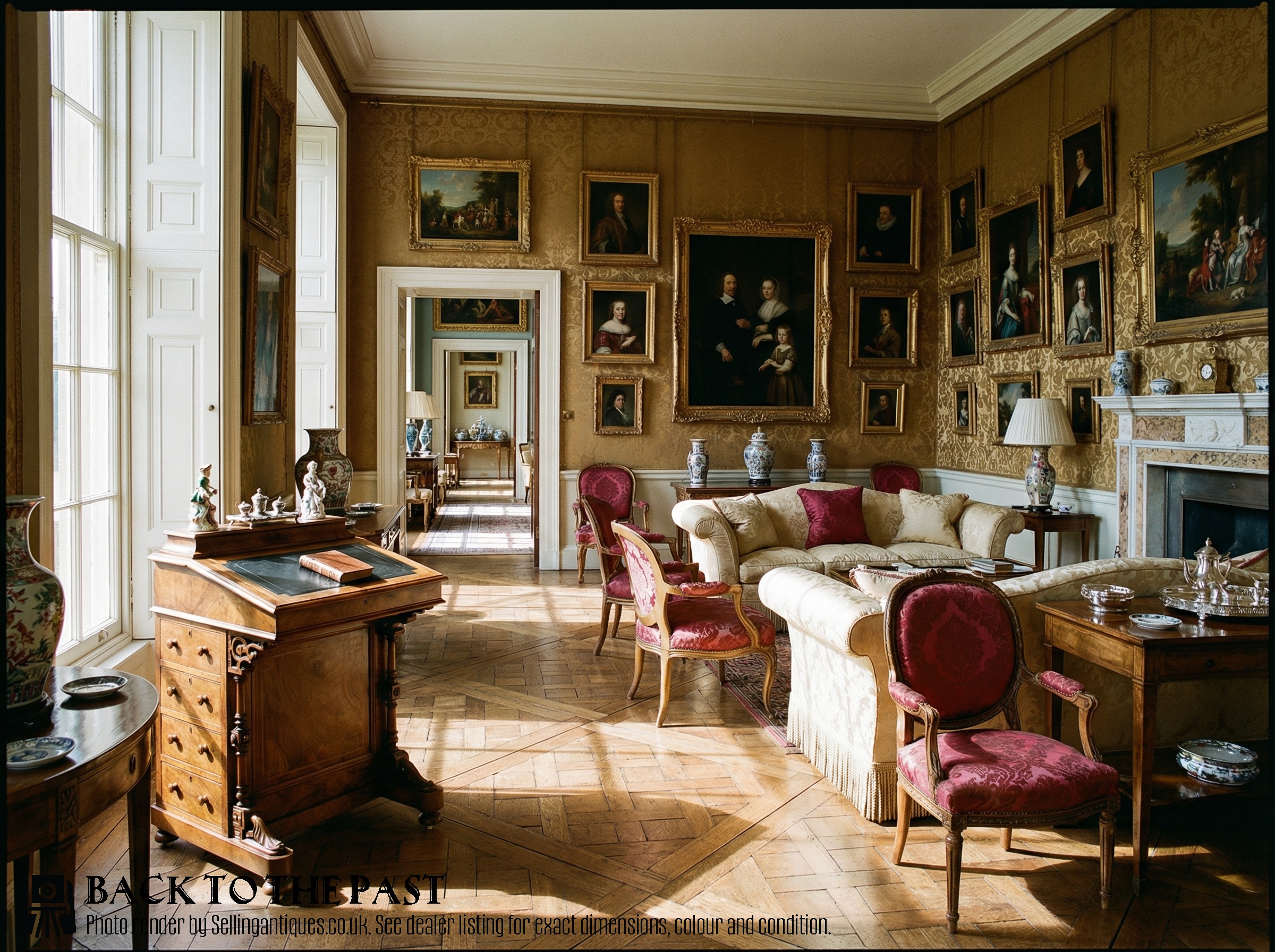
What these pieces are
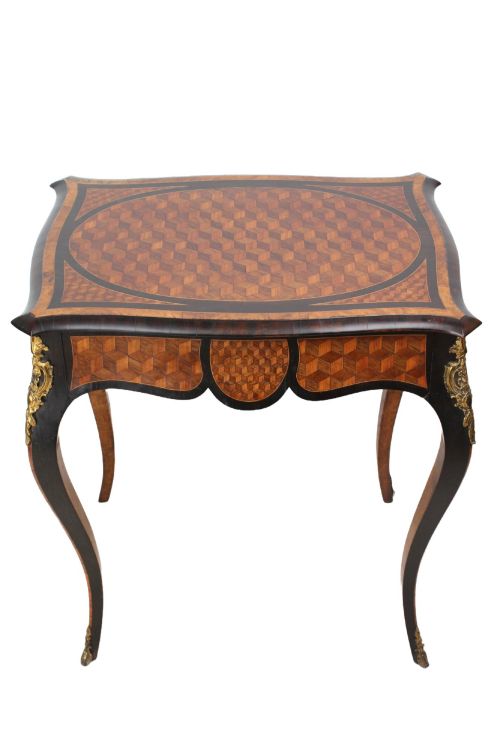
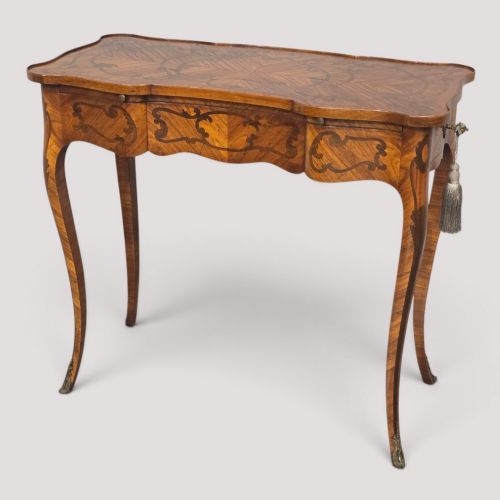
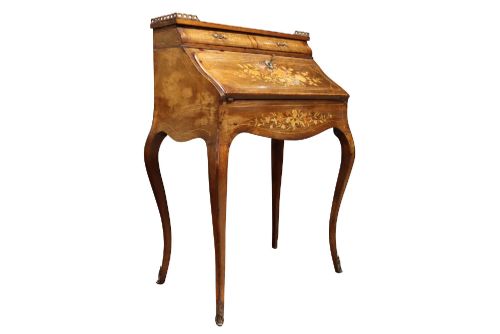
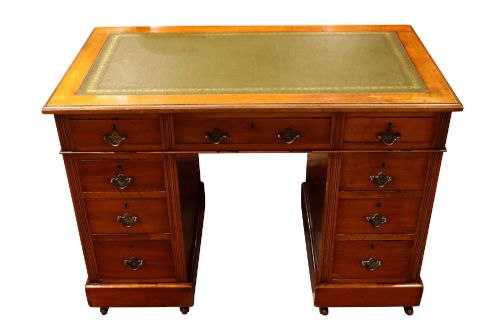
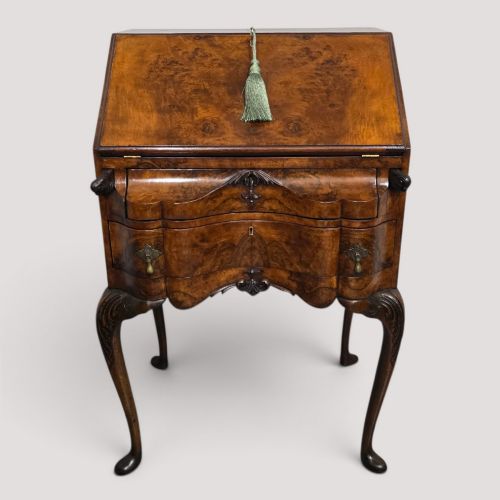
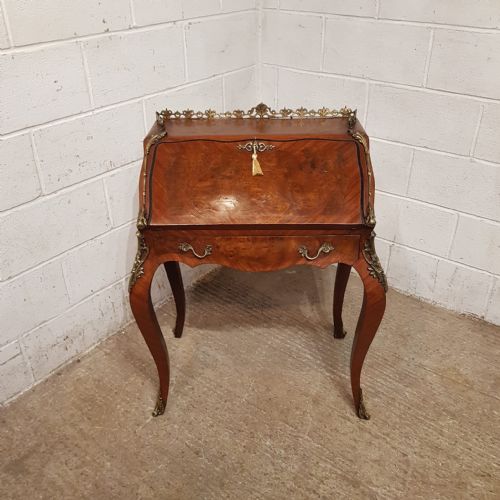
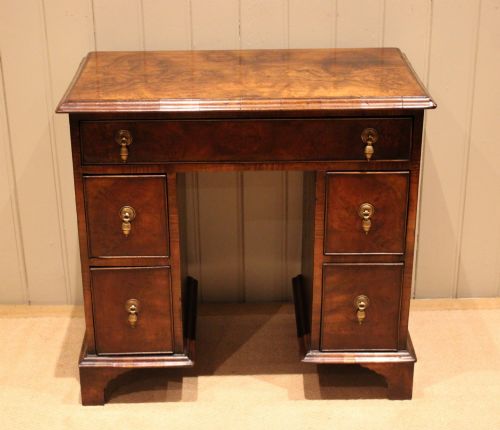
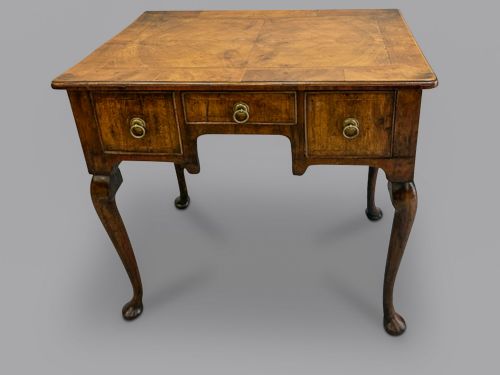
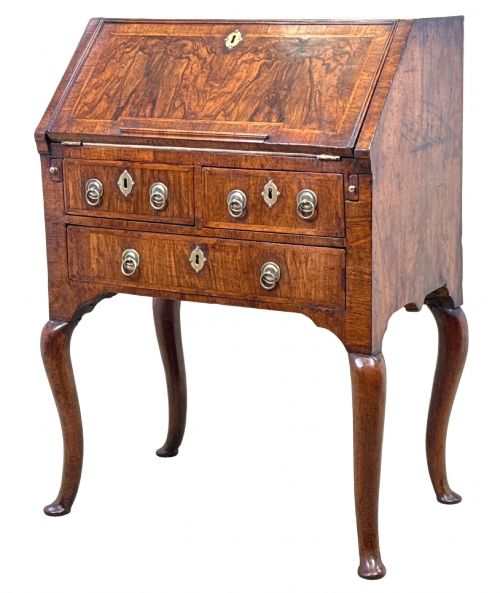
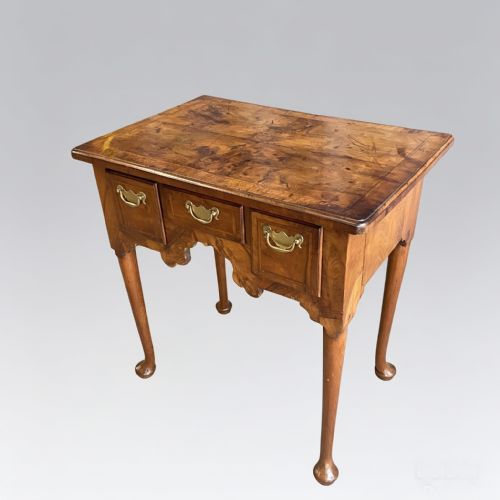
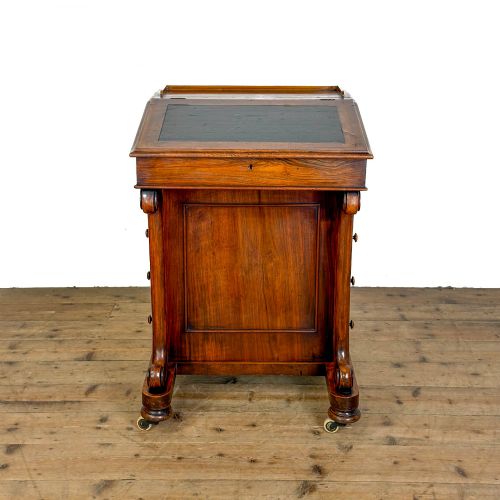
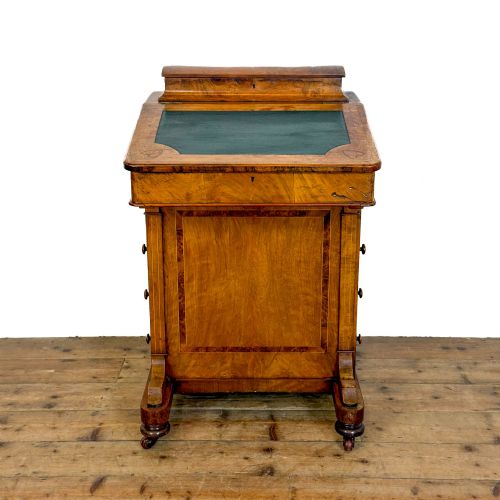
A small walnut writing desk encompasses forms ranging from Victorian davenports and kneehole desks to bureau tables and kidney shapes. These pieces serve as compact writing surfaces designed for domestic use rather than grand administrative spaces.
The version most likely to meet a buyer on this page is a Victorian or 18th-century piece, often featuring burr walnut veneers or solid timber construction. Makers adapted these forms across eras, incorporating leather inserts, drawers, and writing flaps.
Origins span English and French workshops, encompassing Georgian, Victorian, Queen Anne, and Louis XV Revival styles. Each piece reflects the domestic requirements of its period while retaining the distinctive grain of walnut.

How they were made
Construction relies on walnut and burr walnut timbers, frequently supported by secondary woods such as oak. Craftsmen applied decorative veneers to surfaces, highlighting the natural figure of the wood.
Metal components such as brass handles and ormolu mounts provide functional and decorative details on drawers and flaps. Writing surfaces frequently incorporate inset leather panels alongside wood and inlaid details.
Retail Price Guide 2026
Typical UK retail prices for small walnut writing desk, calculated from the Sellingantiques database of over a million retail prices indexed since 2003. This retail price guide relies exclusively on Sellingantiques data; no external sources or auction records are used, so the figures do not describe the wider market.
Listings feature periods spanning the 18th century through to 1920, incorporating walnut, burr walnut, oak, brass, and leather.
What varies in quality
The depth of figure in the walnut veneer distinguishes standard examples from exceptional pieces, with burr walnut offering complex grain patterns. The quality of timber selection and the precision of the grain matching across drawers dictate visual appeal.
Joinery execution and the integration of secondary woods like oak reveal the maker's hand. Finer pieces demonstrate careful attention to internal drawer construction and the durability of fitted writing surfaces.
The Small Walnut Writing Desk Glossary
- Burr walnut
- A prized timber harvested from growth excrescences on walnut trees, yielding intricate, swirling grain patterns. It is frequently used for decorative veneering on cabinet fronts and desk lids.
- Davenport
- A compact form of small writing desk featuring a sloping writing surface above a pedestal of drawers. It typically incorporates a stationery compartment at the top.
- Kneehole desk
- A form featuring a central recess for the user's legs, flanked by pedestals of small drawers. This layout allows for a compact footprint while maintaining storage capacity.
- Ormolu
- Gilded bronze used for decorative mounts and fittings on furniture. It adds metallic contrast to wood surfaces, particularly on French revival pieces.
Frequently Asked Questions
Where were small walnut writing desks placed?
These desks were designed for domestic use in private studies, drawing rooms, or bedrooms. Their compact dimensions allowed them to fit into smaller residential spaces where a large partner's desk would prove impractical.
Owners utilised them for correspondence, personal accounting, and keeping journals. Their placement often highlighted the decorative grain of the timber within a well-appointed interior.
How do I identify a Victorian desk?
Victorian examples often feature dark walnut timber, robust construction, and specific forms such as the davenport or pedestal desk. Stylistic markers include carved details, brass hardware, and inset leather writing surfaces.
Comparing the proportions and internal secondary woods, such as oak drawers, helps differentiate these 19th-century pieces from earlier Georgian or later Edwardian variations.
Can I use one for daily laptop work?
Many of these pieces offer a surface area suitable for modern laptops and writing tasks. Their historical dimensions mean surface depths are often shallower than contemporary office furniture.
Care must be taken with antique leather or polished wood surfaces when placing electronic equipment or writing directly on the timber without a protective pad.