

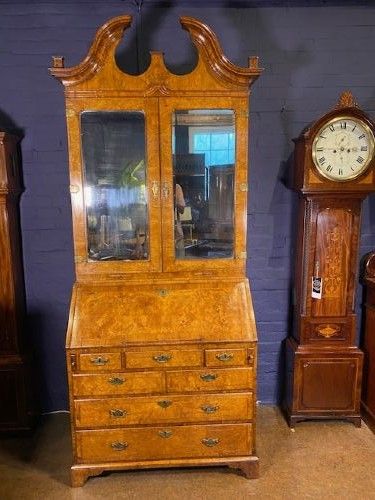
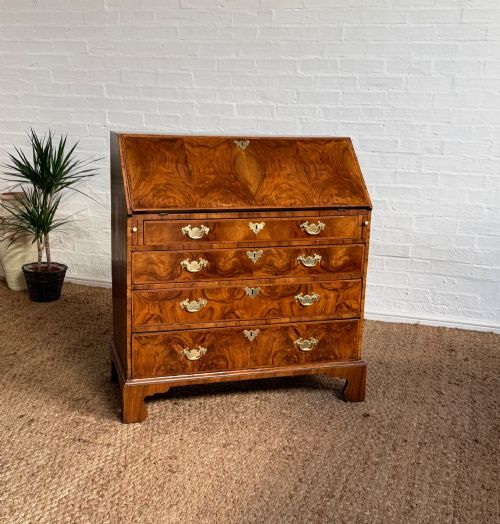
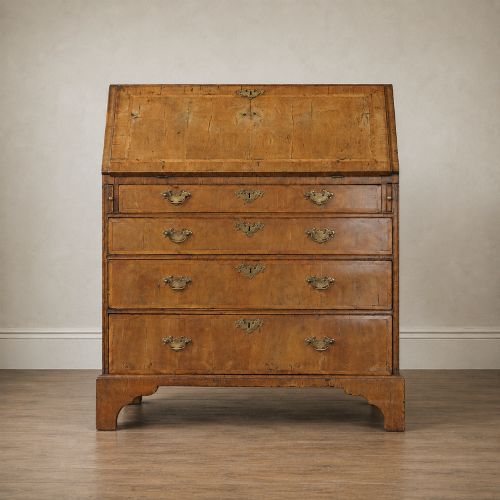
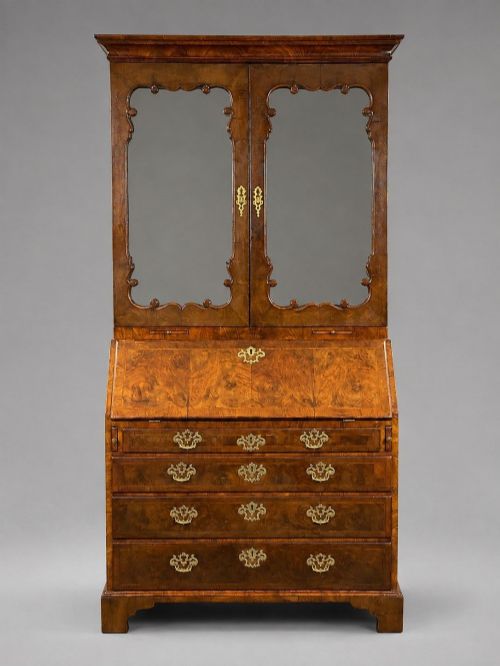
Walnut Slant Front Bureau
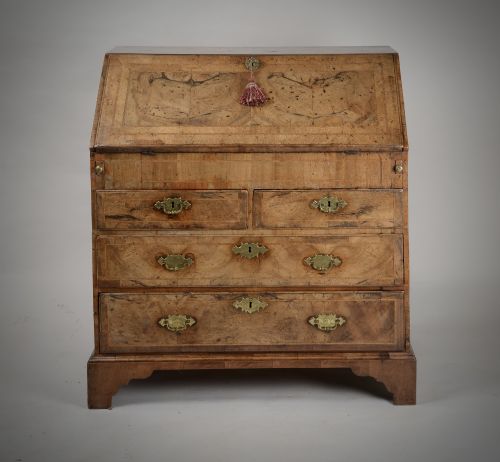
A walnut slant front bureau offers a sloping fall front that conceals a fitted writing interior, combining practical workspace with exceptional cabinet work.
Walnut Slant Front Bureau
A walnut slant front bureau provides a dedicated writing surface that conceals pigeonholes, small drawers, and secret compartments behind an angled drop-down flap. Buyers encountering this phrase will find pieces spanning from the seventeenth century through the Georgian and Victorian eras up to Edwardian and later interpretations.
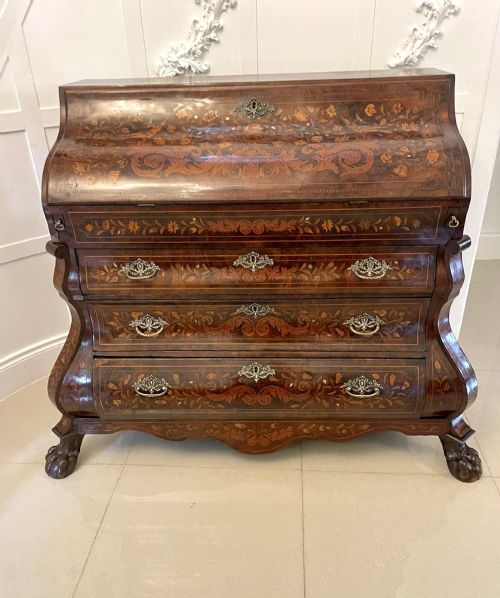
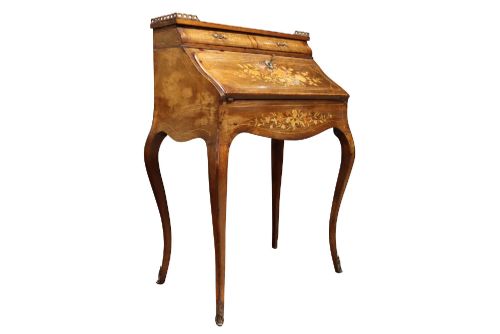
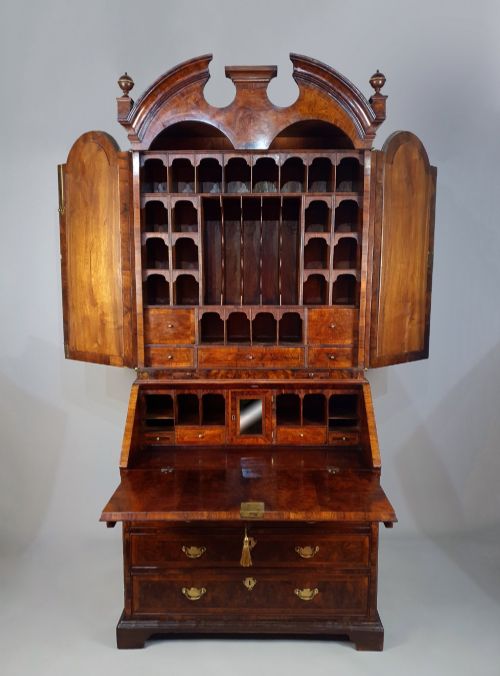
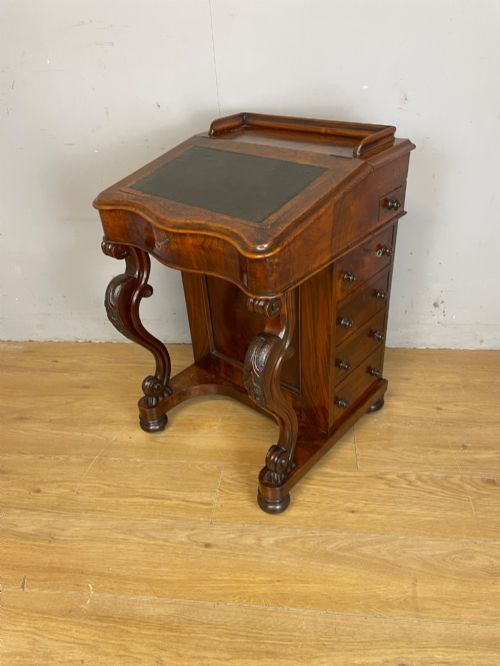
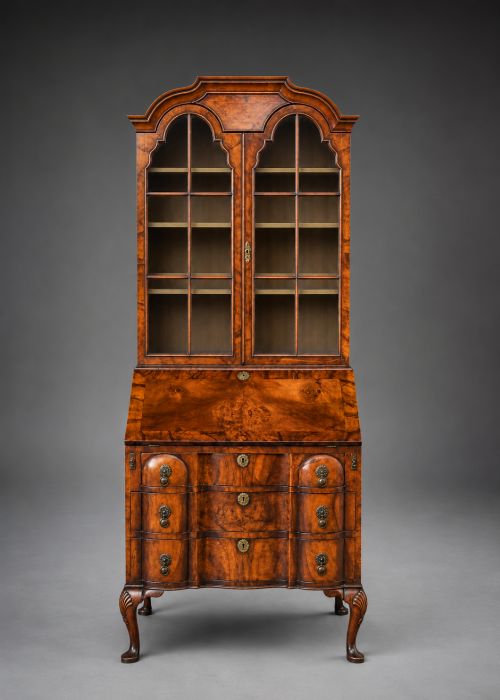
The selection ranges from compact early tables on legs and bombé shaped Continental examples to large two-part bureau bookcases featuring glazed upper display sections. Formats such as the Davenport desk and the bonheur-du-jour also appear among the offerings alongside traditional fall-front desks.
Materials and construction
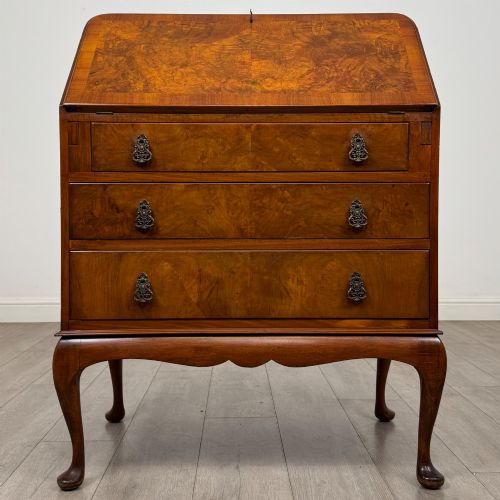
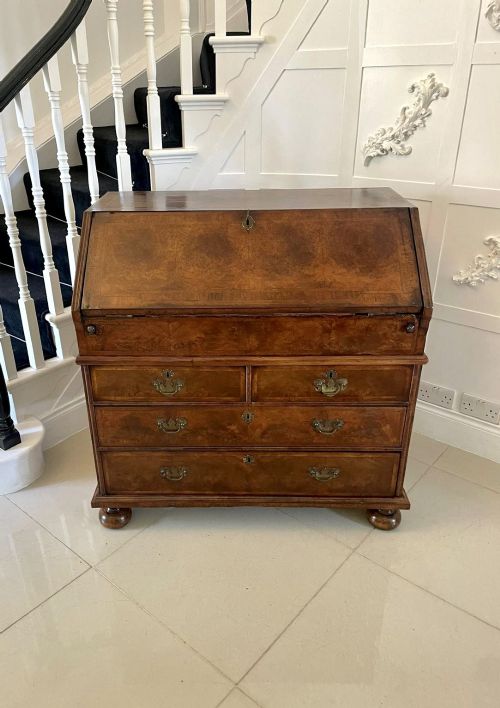
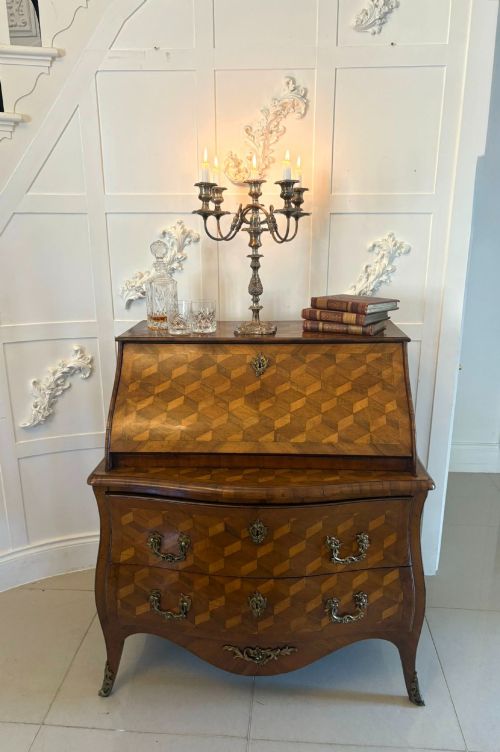
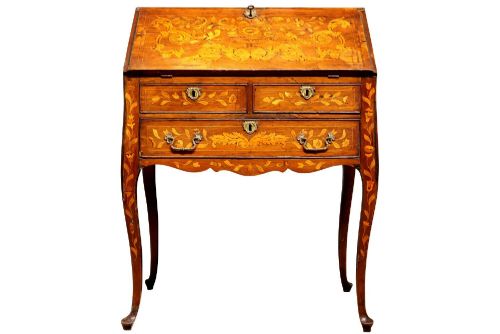
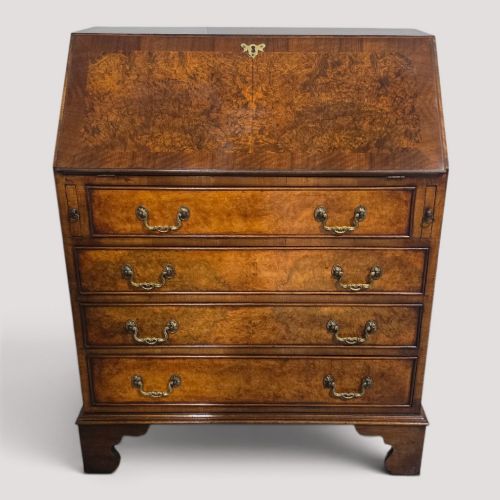
Cabinet makers utilised solid timbers alongside figured veneers, selecting burr walnut, blonde walnut, and plain walnut to create striking grain patterns across the sloping falls and drawer fronts. Herringbone banding, floral marquetry, and parquetry inlays frequently decorate the exterior surfaces.
Internal elements incorporate secondary woods and brass hardware such as escutcheons and drop handles, while certain pieces integrate leather writing surfaces and glass panel doors within upper bookcase sections.
Walnut Slant Front Bureau Retail Price Guide 2026
Typical asking prices for walnut slant front bureau among the pieces listed under this phrase on Sellingantiques today, from the lower quarter to the upper quarter. They describe what is for sale here now, not the wider market.
Several examples incorporate hidden compartments tucked away behind the pigeonholes, designed for stashing secret letters and small treasures.
Judging execution and finish
Quality rests upon the selection and matching of the veneer figures, particularly how symmetrically the grain flows across the fall front and drawer facades. The intricacy of the internal fittings, secret drawers, and the precision of any marquetry or parquetry inlay further distinguish finer examples.
Proportion and structural integrity define the higher tiers, where original brasses, well-figured timber, and sophisticated cabinet work take precedence over simpler later reproductions.
The Walnut Slant Front Bureau Glossary
- Slant front bureau
- A desk featuring an angled hinged flap that opens to reveal a fitted interior of drawers and pigeonholes.
- Burr walnut
- A highly prized timber harvested from walnut tree growths, displaying swirling, knotty grain patterns.
- Bombe
- A swelling, convex furniture contour characteristic of continental baroque and rococo design.
- Marquetry
- Decorative veneer work formed by fitted pieces of various woods and materials to create pictorial or floral designs.
- Bureau bookcase
- A two-part form combining a slant-front desk base with an upper glazed shelving or cabinet section.
Walnut Slant Front Bureau: Frequently Asked Questions
What is a slant front bureau?
It is a writing desk featuring a hinged sloping flap on the front that pulls down to serve as a writing surface.
Opening this flap exposes an internal arrangement of small drawers, pigeonholes, and occasionally concealed compartments.
How do I date a walnut bureau?
Dating relies on examining construction techniques, timber choices, and stylistic traits such as bracket feet, hardware, and veneer thickness.
Early eighteenth-century pieces often display fine burr walnut veneers and oak linings, while later Victorian and Edwardian examples show different internal joinery and secondary woods.
Where were these desks used?
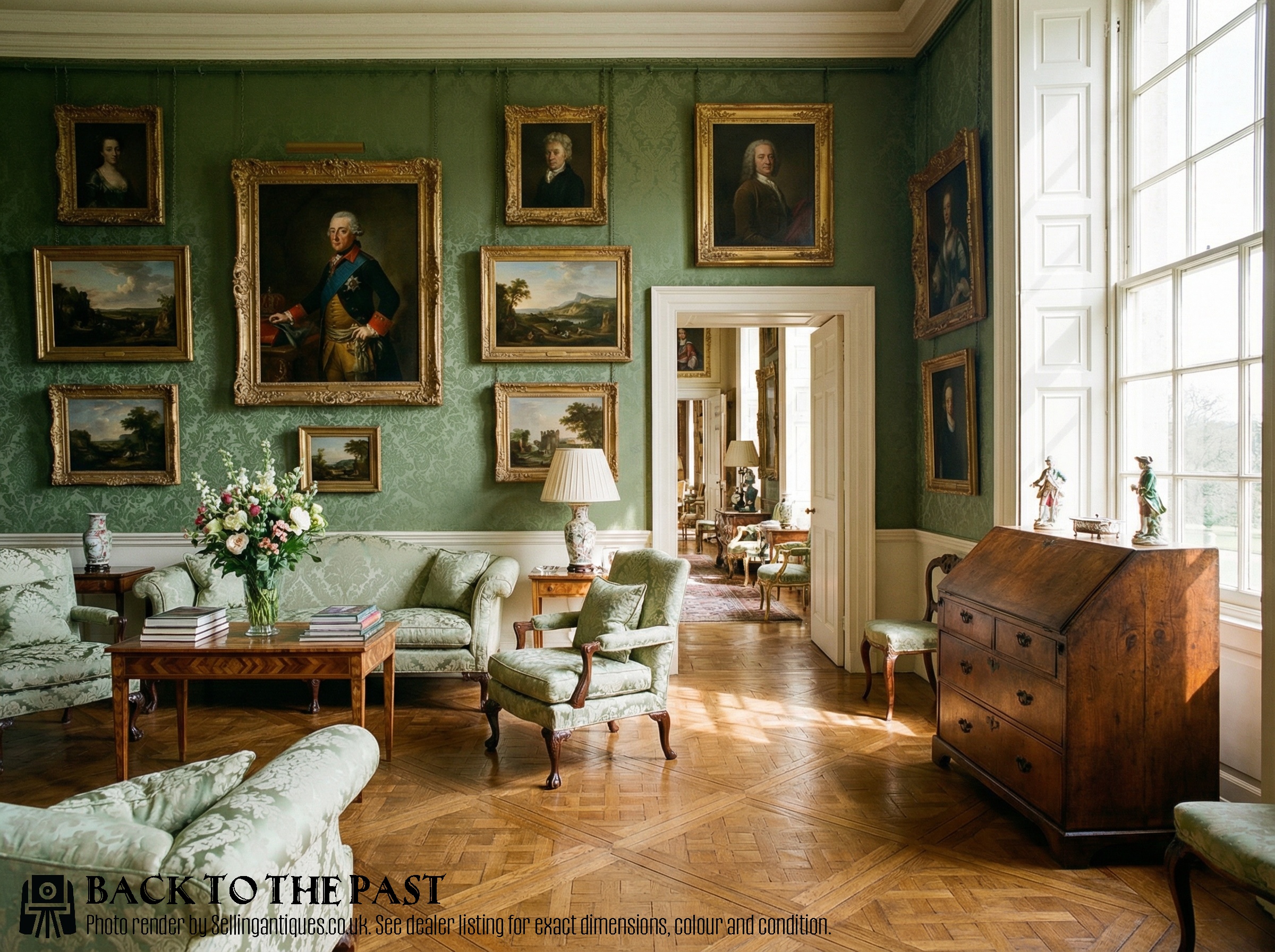
These pieces served primarily in private studies, libraries, and withdrawing rooms as secure places for correspondence and record keeping.
The sloping lid allowed owners to lock away private papers and unfinished writing out of sight.
What is the difference between a bureau and a Davenport?
A standard bureau uses a sloping fall front that opens forward above a chest of drawers.
A Davenport is typically a more compact Victorian form featuring a slant top atop a pedestal of side drawers.