
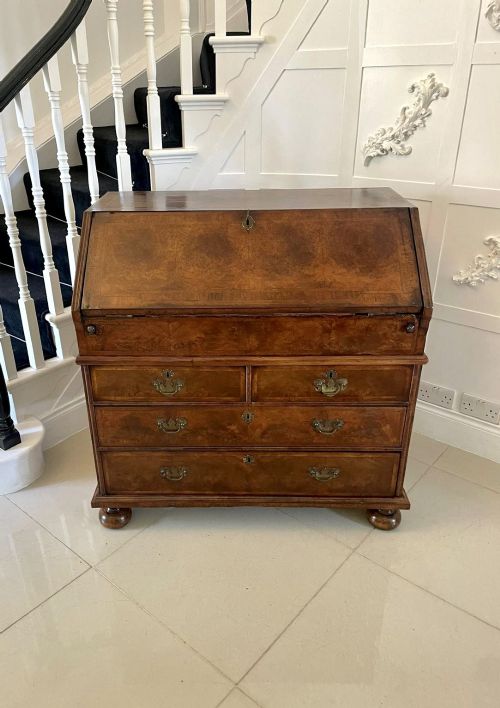
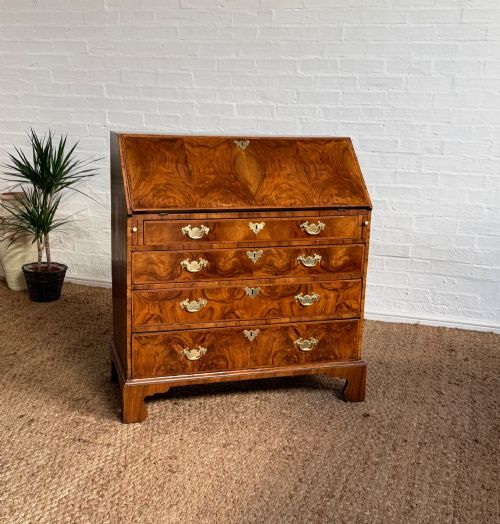
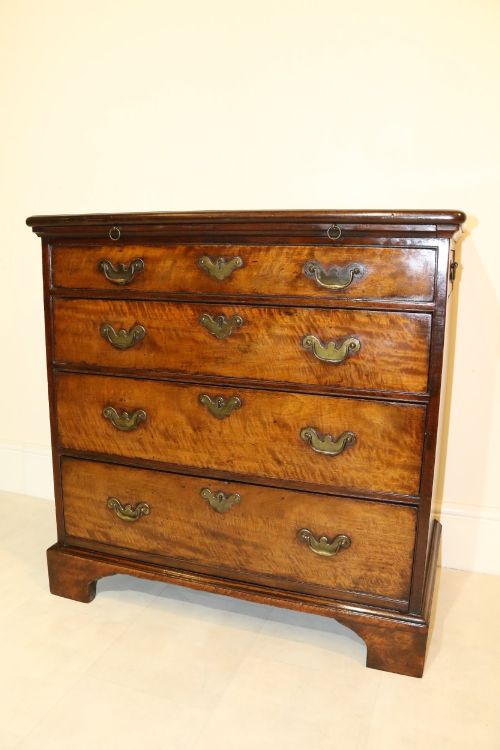
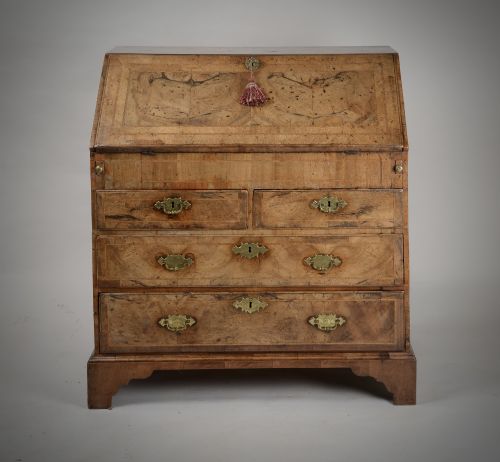

Georgian Walnut Chest Desk
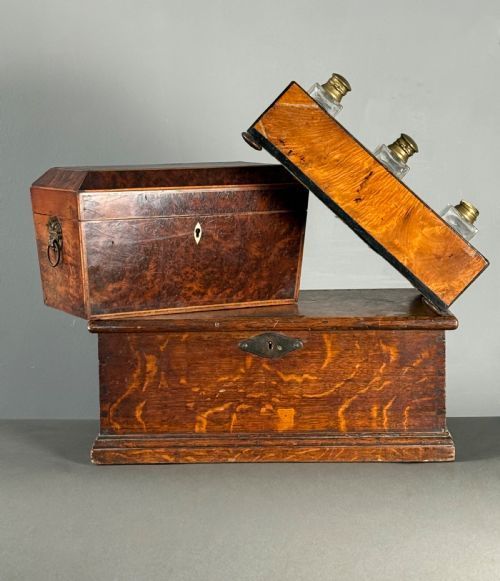
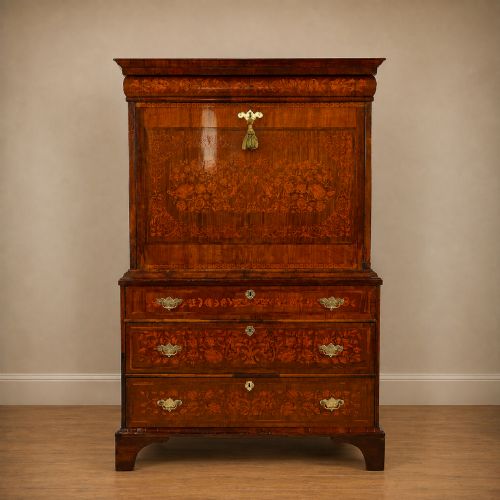
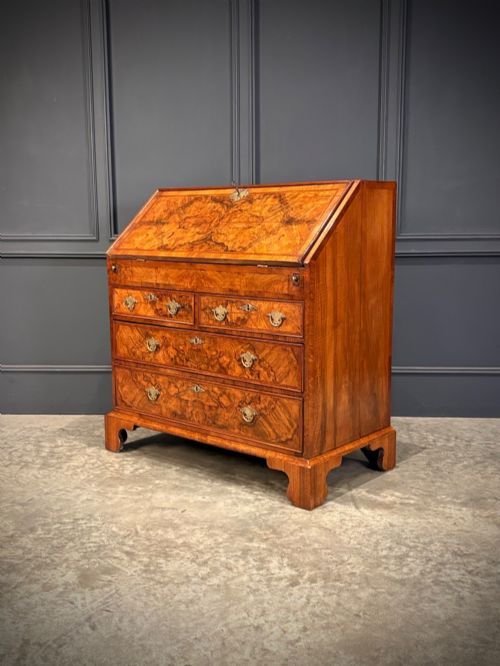
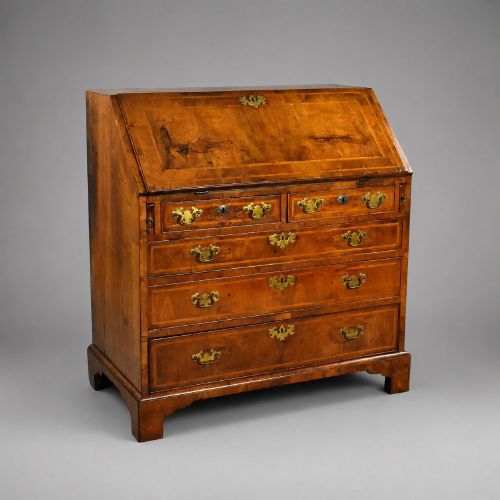
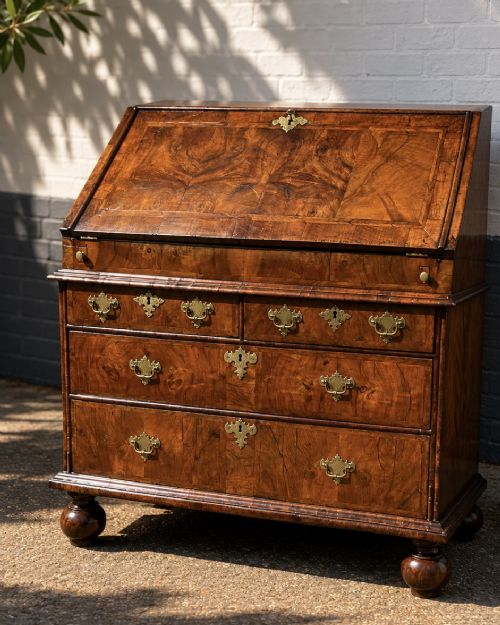
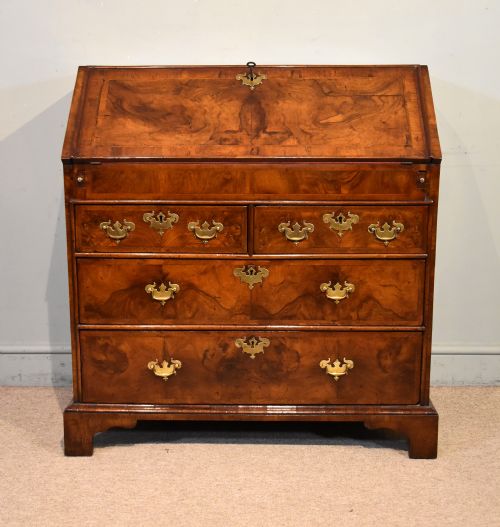
A georgian walnut chest desk brings together fitted drawers and a drop-front writing surface in a single substantial piece of timber furniture.
Georgian Walnut Chest Desk
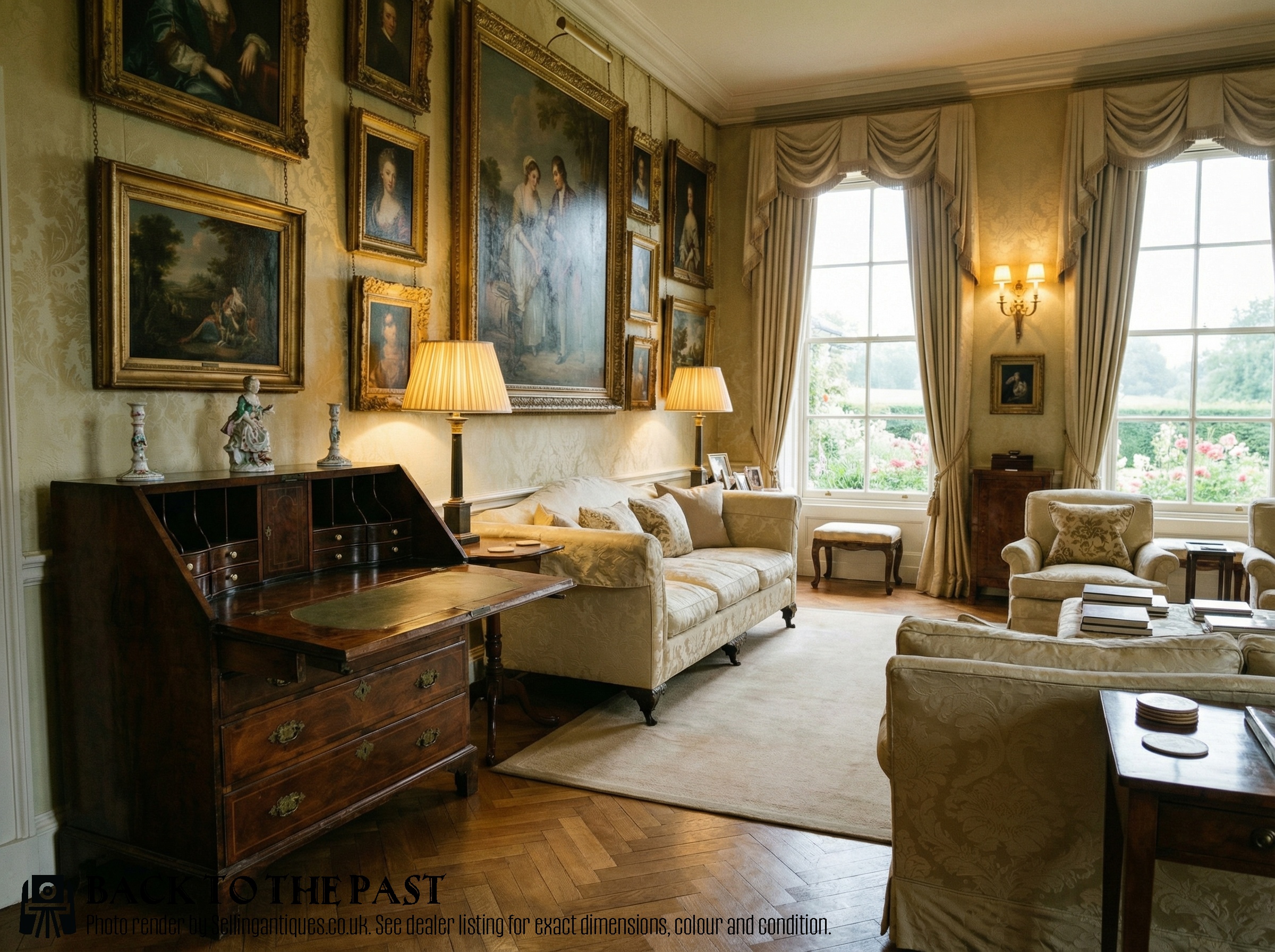
A georgian walnut chest desk is primarily encountered as a bureau, escritoire, or kneehole desk dating from the eighteenth century, alongside later revival pieces. These items combine a practical writing surface with drawers for correspondence, storage, and documents.
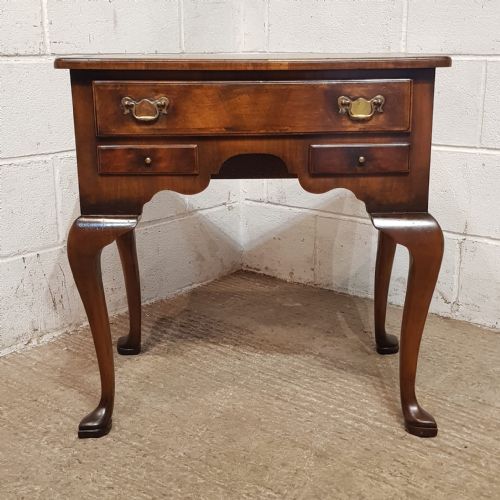
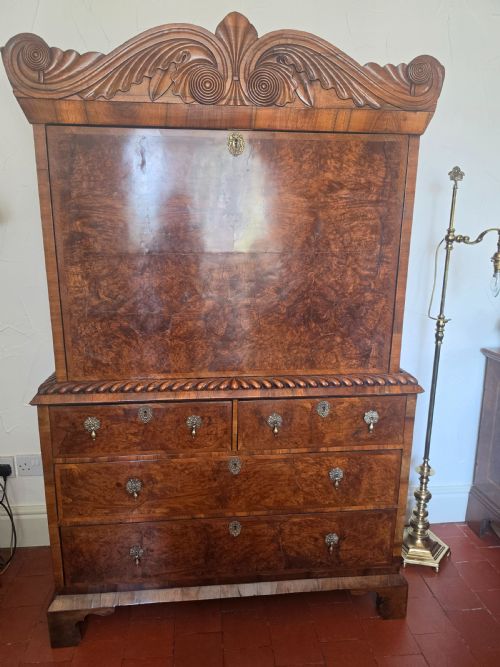
The surviving examples range from fall-front writing cabinets and bureau bookcases to lowboys and side tables adapted for writing. Walnut and burr walnut dominate the forms, frequently styled across the Queen Anne, George I, and George II periods.
Materials and construction
Cabinet makers utilised solid walnut, burr walnut veneers, oak, and fruitwood, often applying feather banding or herringbone inlay to accentuate the grain figures. Ironwork, brass handles, and leather writing surfaces complete the construction of these writing cabinets.
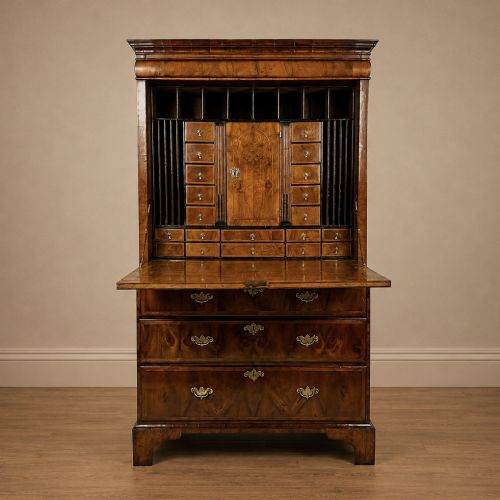
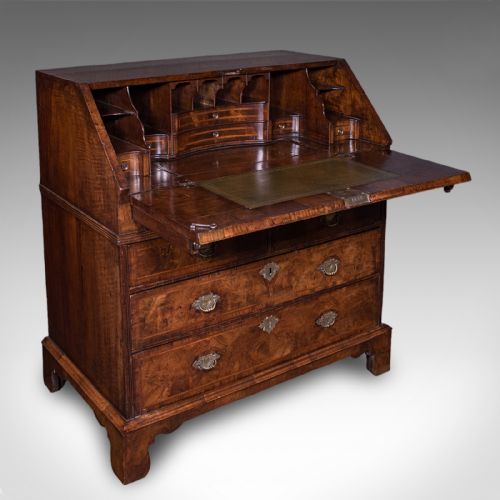
Veneers were carefully laid onto secondary timbers like oak, while fall fronts and drawers conceal fitted pigeonholes and small compartments for papers.
Georgian Walnut Chest Desk Retail Price Guide 2026
Typical asking prices for georgian walnut chest desk among the pieces listed under this phrase on Sellingantiques today, from the lower quarter to the upper quarter. They describe what is for sale here now, not the wider market.
Listings feature walnut, burr walnut, oak, fruitwood, and brass across eighteenth-century and revival periods.
Distinctions in quality
Quality rests upon the choice of timber figure, such as highly patterned burr walnut or figured walnut veneers, paired with precise marquetry and inlay work. The sophistication of the internal pigeonhole arrangement and the presence of original brass or ironwork distinguish finer examples.
Proportions also dictate standard, where diminutive or well-balanced bureau bookcases and kneehole desks reflect greater skill in design than standard iterations.
The Georgian Walnut Chest Desk Glossary
- Bureau
- A writing cabinet featuring a sloping fall-front that opens to reveal a fitted interior of drawers and pigeonholes.
- Escritoire
- A tall writing cabinet or desk, often fitted with a drop front and internal compartments.
- Kneehole desk
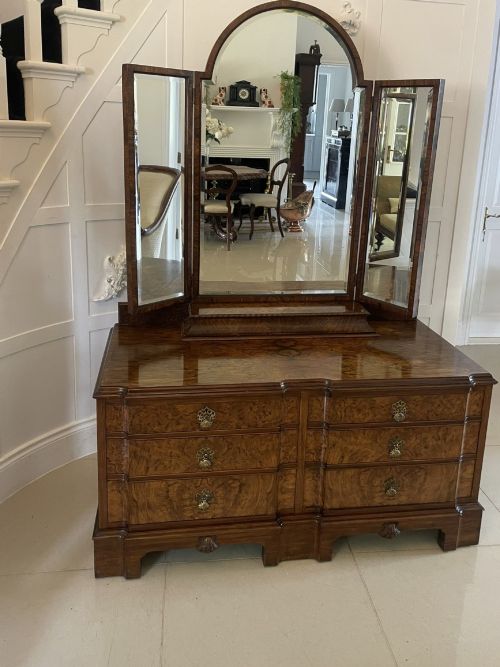
- A compact desk or dressing chest featuring a central recess for the knees flanked by banks of small drawers.
- Feather banding
- A decorative inlay technique using veneer strips arranged in a herringbone or V-shaped pattern.
- Lowboy
- A small side table with drawers, frequently utilised as a dressing table or writing surface.
Georgian Walnut Chest Desk: Frequently Asked Questions
What is a bureau bookcase?
A bureau bookcase combines a sloping fall-front writing desk at the base with an enclosed shelving section above for books and papers.
These taller storage pieces represent substantial cabinet making from the eighteenth century onwards.
How do I identify burr walnut?
Burr walnut exhibits swirling, knotty grain patterns created from growths on the tree rather than straight timber boards.
Cabinet makers valued this highly decorative wood for the primary visible surfaces of high-status desks.
What is a fall front?
A fall front is a hinged writing flap that pulls down from a vertical position to provide a flat writing surface.
When closed, it conceals the inner compartments and keeps the correspondence tidy.
Are these desks suitable for daily use?
These historical writing cabinets accommodate modern notebook use and correspondence if treated with appropriate care.
The fitted interior drawers and leather surfaces remain as functional as they were centuries ago.