




Antique Kneehole Sideboard
An antique kneehole sideboard combines formal storage with a recessed central space, offering a practical table surface and disciplined proportion.
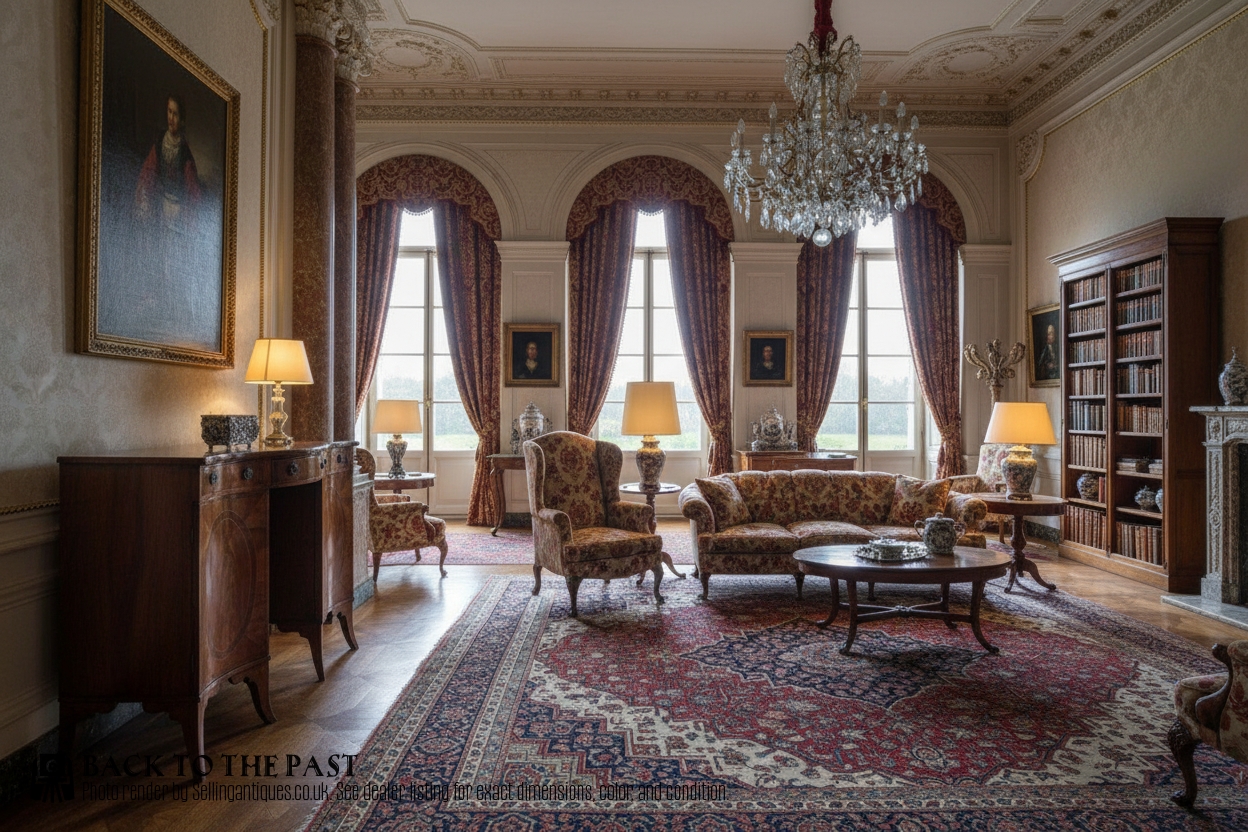
Antique Kneehole Sideboard
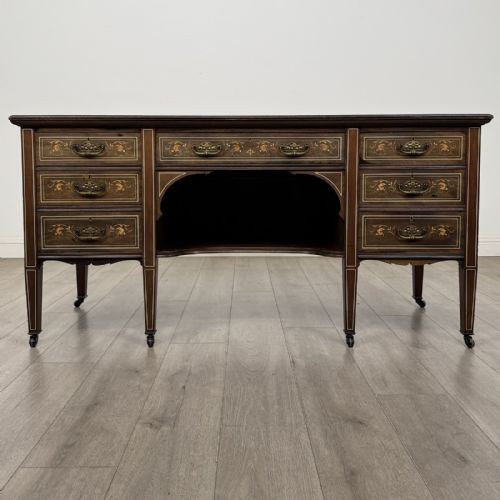
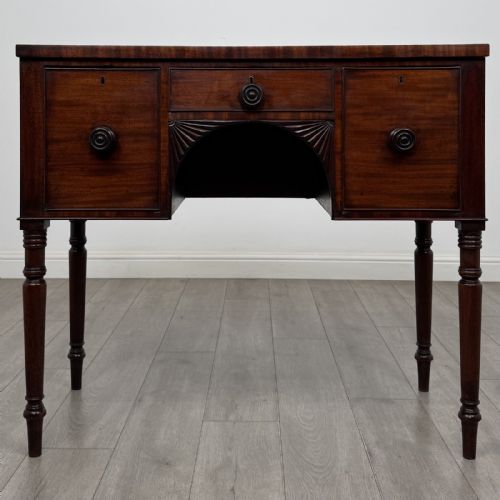
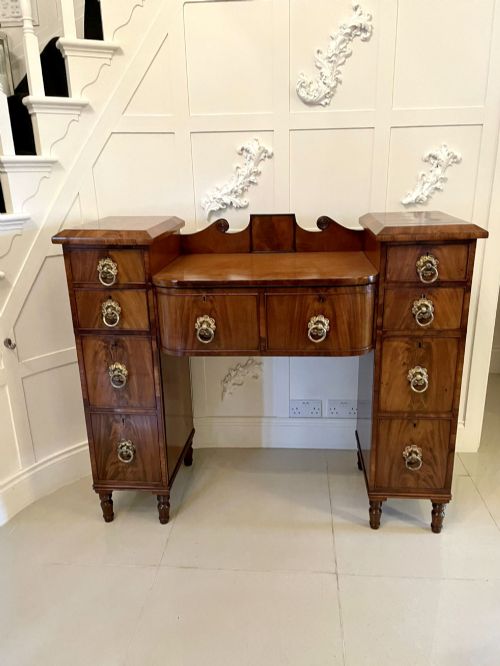
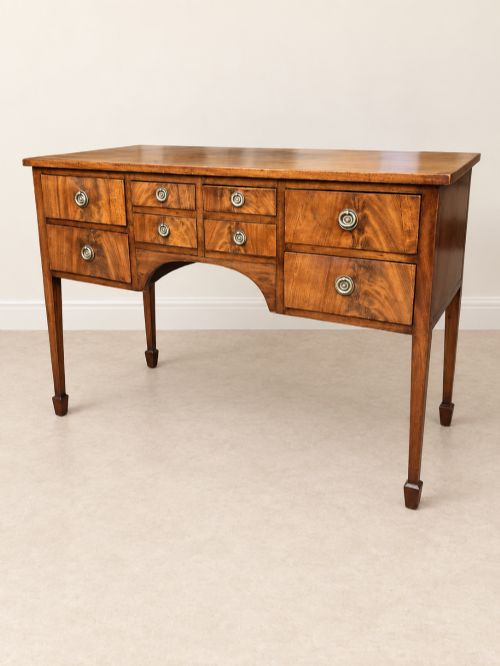
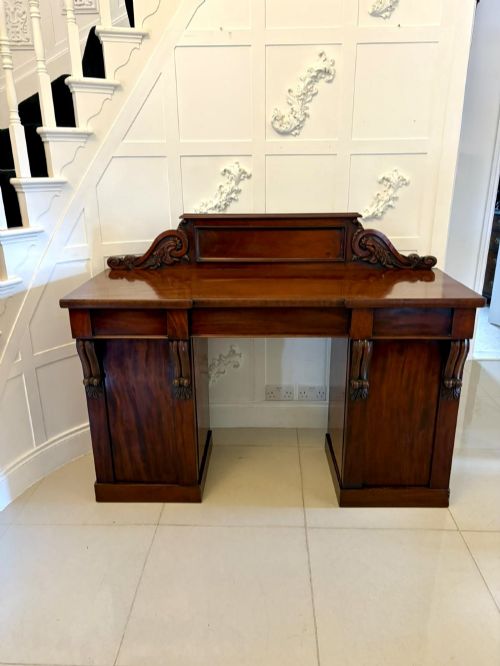
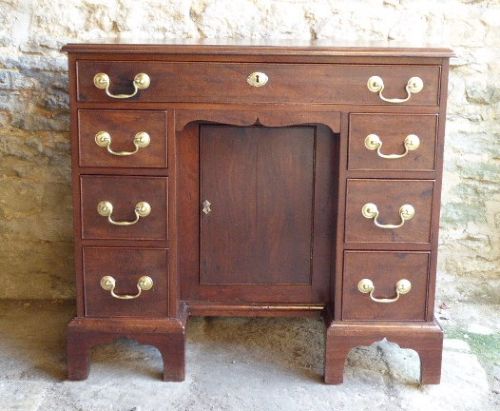
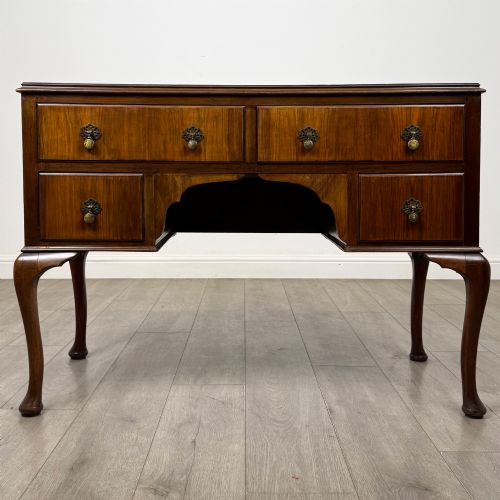
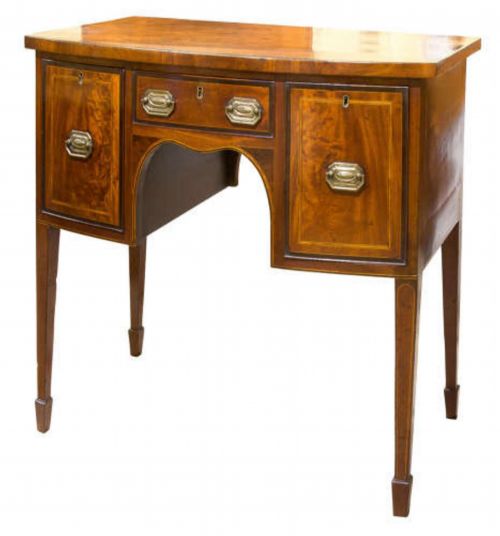
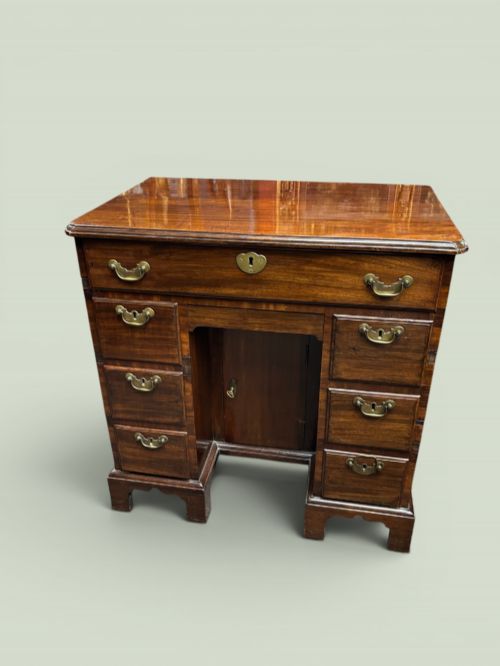
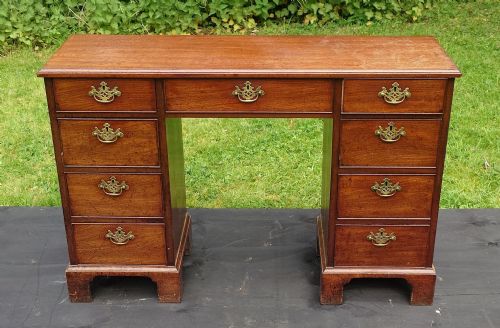
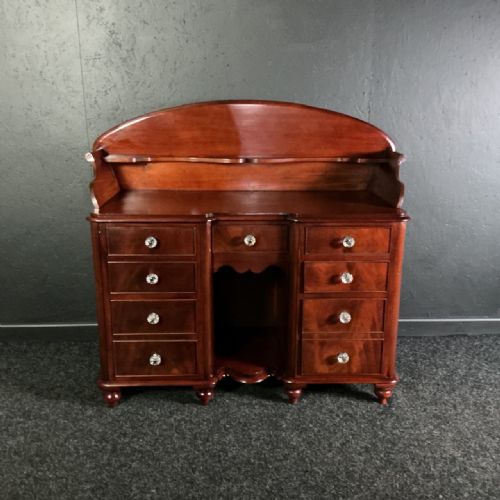
An antique kneehole sideboard is a substantial timber item designed for domestic service, featuring a central recessed space flanked by banks of drawers or cupboards. You encounter versions spanning the Georgian, Regency, and Victorian periods, alongside Edwardian examples and pieces from the eighteenth and nineteenth centuries.
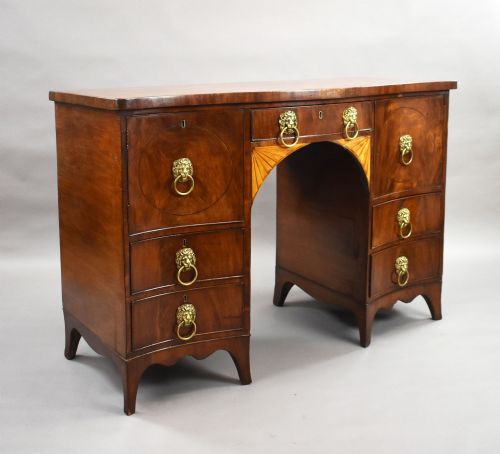
The form bridges the gap between a serving surface and a writing desk, occasionally appearing as a dressing table or a compact desk. Most surviving pieces utilise mahogany, walnut, or oak, presenting either straight fronts, bow-fronts, or serpentine lines.
Makers adapted the central kneehole configuration to suit dining rooms, halls, and bedchambers alike. These forms reflect the changing domestic requirements of the eighteenth and nineteenth centuries through fitted drawers and modest proportions.
How they were made
Cabinet makers built these pieces using solid timbers such as mahogany, oak, and walnut, frequently applying veneers of satinwood or walnut across drawer fronts and top surfaces. Structural framing relied on pine for secondary elements, whilst boxwood, purpleheart, and intricate wood inlay provided contrasting stringing and banding.
Surface decoration incorporated brass handles and key escutcheons, alongside carved details seen on Victorian Renaissance Revival and later revival pieces. Construction techniques focused on stable carcase work to support heavy timber tops and multiple internal drawers.
Antique Kneehole Sideboard Retail Price Guide 2026
Typical asking prices for kneehole sideboard among the pieces listed under this phrase on Sellingantiques today, from the lower quarter to the upper quarter. They describe what is for sale here now, not the wider market.
Listings feature pieces spanning the Georgian, Regency, Victorian, and Edwardian periods, constructed in mahogany, walnut, oak, pine, and satinwood.
What varies in quality
Quality rests upon the choice of timber and the precision of the cabinet work, particularly where veneers meet curved surfaces like bow-fronts and serpentine profiles. Superior pieces display carefully matched grain patterns and restrained inlay work rather than heavy applied ornamentation.
The integrity of the structural joinery and the survival of original brass hardware dictate the standing of an individual piece. Lesser examples rely on utilitarian pine carcasses with simpler painted finishes, whereas finer iterations utilise dense figured mahogany and well-figured walnut.
John Gregory London·Étienne Kohlmann
The Antique Kneehole Sideboard Glossary
- Kneehole
- A recessed central space beneath the main surface of a desk, sideboard, or dressing table, designed to accommodate the user's legs while seated.
- Bow-front
- A convex, outwardly curved front profile popular on case furniture during the Georgian and Regency periods. This shape softens the corners of a room and displays figured mahogany grain to advantage.
- Serpentine
- A shaped furniture front featuring a concave centre flanked by convex outer sections. It requires advanced woodworking skill to execute cleanly in solid timber or veneer.
- Veneer
- A thin layer of finely figured wood applied over a secondary timber base to create a decorative surface. Walnut and satinwood veneers were frequently utilised on eighteenth and nineteenth-century pieces.
- Stringing
- Narrow inlay lines of contrasting wood, such as boxwood, used to edge drawer fronts and tabletops. This technique defines the geometric boundaries of the piece.
Antique Kneehole Sideboard: Frequently Asked Questions
What is a kneehole sideboard used for?
These pieces served as formal serving stations in dining spaces, offering surface area for dishes alongside enclosed storage for linens and dining accessories.
Many examples also functioned as writing desks or dressing tables, providing a comfortable seated position within the central kneehole recess.
How do I date an antique sideboard?
Dating relies on observing the primary timbers, secondary woods, and stylistic cues such as bracket feet, turned legs, or carved drawer fronts. Georgian and Regency pieces typically show different proportions and handle styles compared to later Victorian and Edwardian revivals.
Examining the construction methods inside the drawer boxes and the type of fixings used provides further chronological evidence.
What wood are antique sideboards made from?
Mahogany is the predominant timber found across these listings, appearing alongside walnut, oak, and pine. Cabinet makers also incorporated satinwood, boxwood, and purpleheart for decorative banding and inlay.
Secondary woods like pine were frequently employed for interior drawer linings and backboards on country and formal pieces alike.
Are bow front sideboards Georgian?
Many bow-front sideboards date from the Georgian and Regency eras, particularly the late eighteenth and early nineteenth centuries. Makers utilised this curved profile to create elegant silhouettes in dining rooms.
Later nineteenth and twentieth-century makers continued to produce bow-front designs as part of Georgian and Sheraton revival movements.
How do I care for antique wood furniture?
Maintain antique timber by keeping pieces away from direct heat sources and sudden humidity changes to prevent wood movement and veneer lifting. Regular dusting with a soft, dry cloth preserves the polished surface without the buildup of heavy waxes.
Apply specialised furniture wax sparingly only when the timber appears dry, following the direction of the grain.