

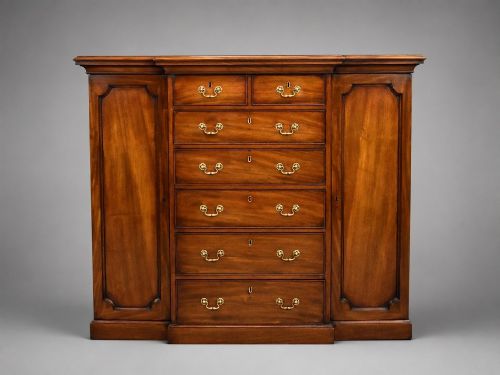


Antique Pedestal Server
An antique pedestal server brings architectural dignity and generous storage to a dining room, uniting rich mahogany timbers with classical proportions.
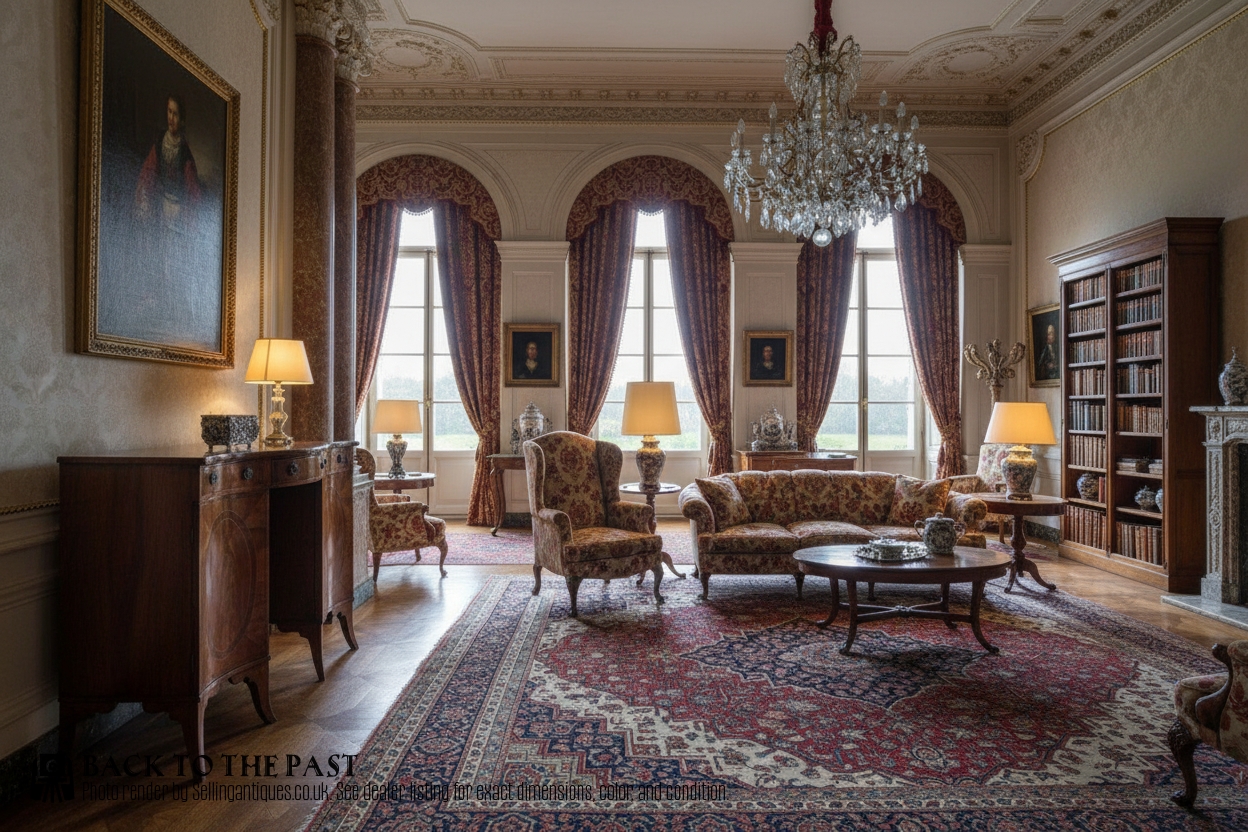
Antique Pedestal Server
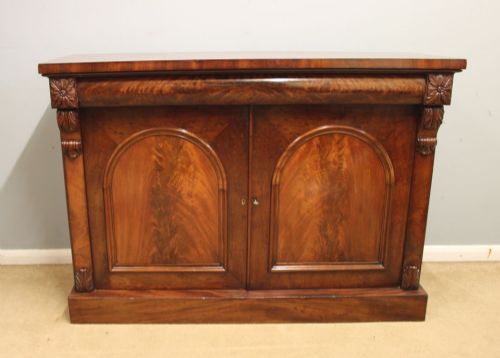
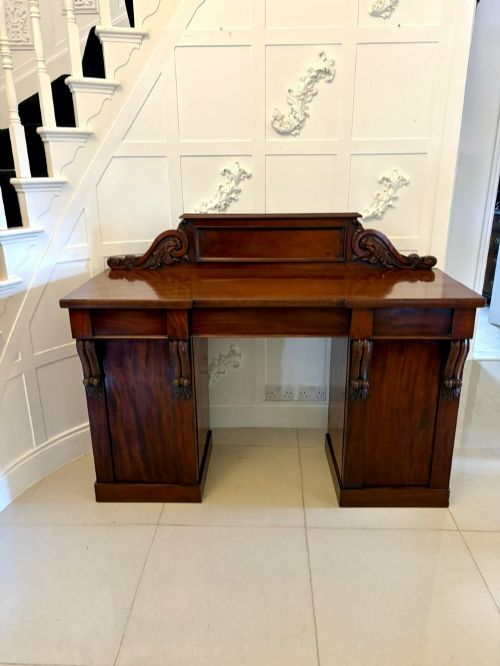
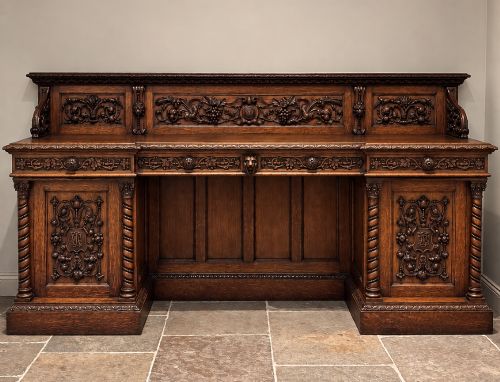
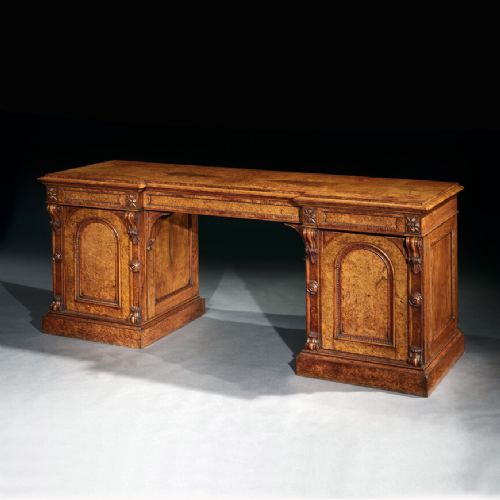
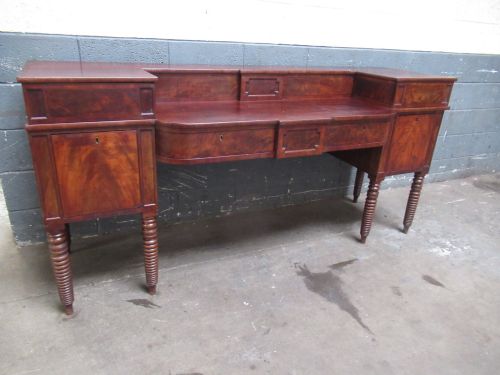
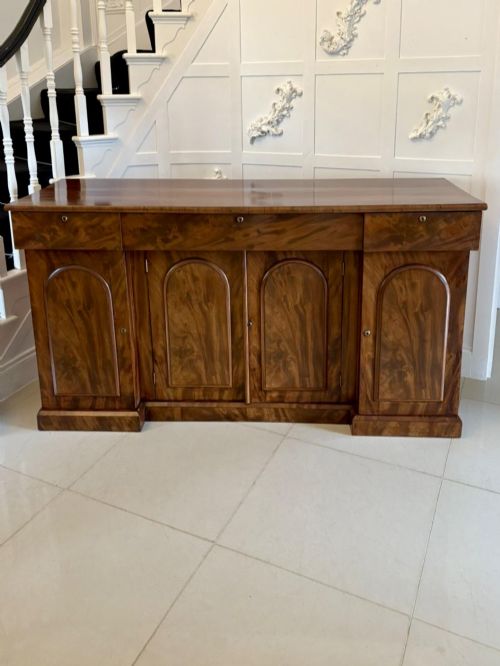
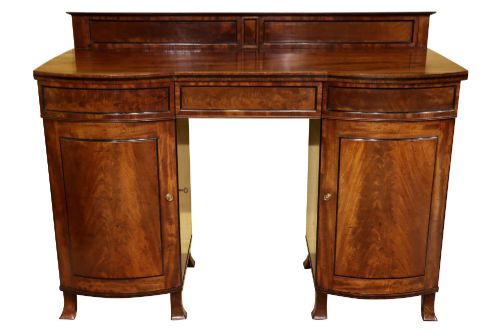
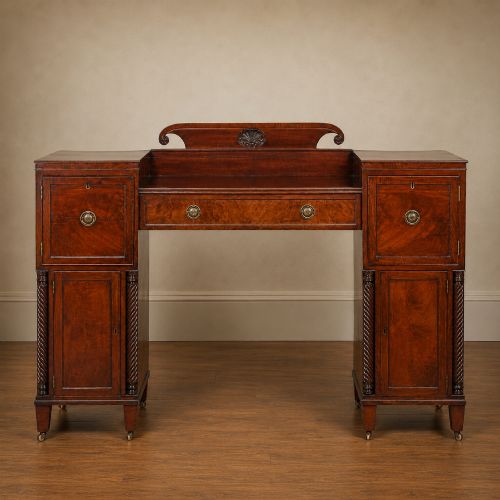
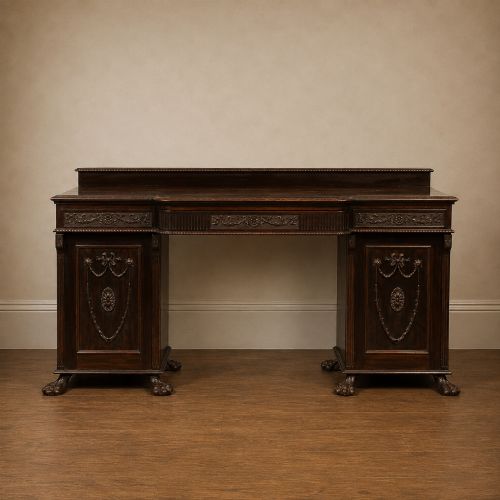
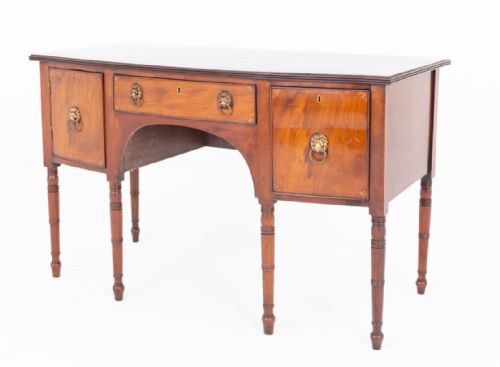
When you search for an antique pedestal server, you are looking at substantial dining room furniture designed to hold silver, linen, and glassware. The pieces seen here span the Georgian, Regency, and Victorian periods, often taking the form of robust sideboards with distinct columnar or cabinet pedestals at each end.
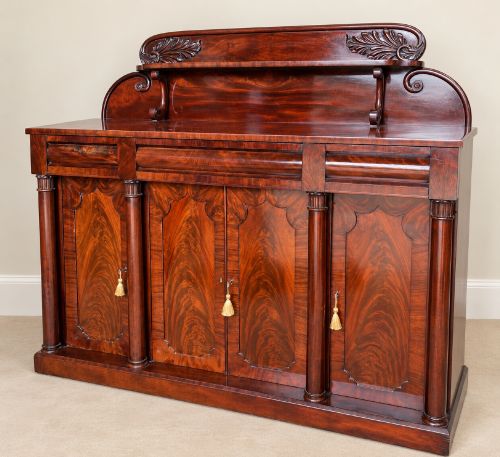
You are most likely to meet mahogany versions featuring shaped fronts or panelled doors, alongside occasional examples in pollard oak or padouk. These items served dining rooms from grand country houses to genteel town residences, functioning as both storage cabinets and serving surfaces during large meals.
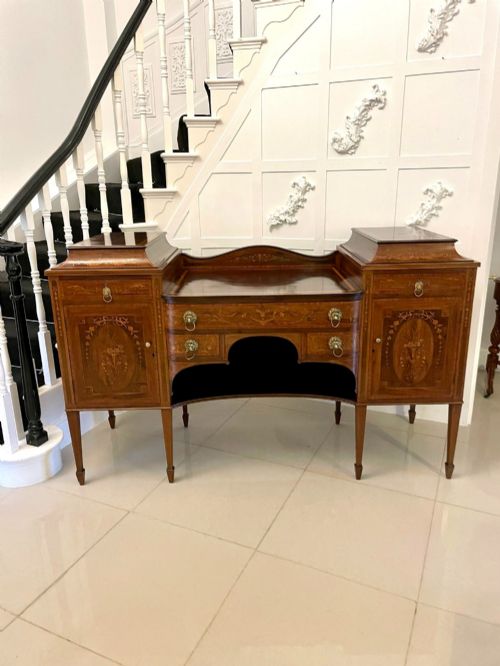
The layout typically incorporates central drawers flanked by deeper cellaret pedestals, sometimes surmounted by brass galleries or carved mirrors. Their presence anchors a room, offering a functional surface that displays silver plate and decanters with traditional poise.
Distinctions in quality and execution
The upper tier of pieces displays exceptional selection in figured mahogany veneers, where grain patterns mirror each other symmetrically across drawer fronts and pedestal doors. Subtle details such as fine stringing in boxwood, hand-carved acanthus scrolls, and robust brass fittings separate superior workshops from routine production.
Proportion and scale dictate the success of these large items, with finer examples maintaining balanced lines despite their inherent bulk. Structural integrity in the heavy pedestal bases and the smooth movement of deep cellaret drawers reflect the original standard of craftsmanship.
Squirrel nut dishes and animal-form silverware occasionally sneak into the serving selections to watch over the mahogany.
Hewetsons London·Gillows
The Antique Pedestal Server Glossary
- Pedestal sideboard
- A large dining room cabinet featuring two distinct end pedestals flanking a central section, often fitted for bottles.
- Flame mahogany veneer
- Timber sliced from fork joints of the tree to create a flickering, highly figured grain pattern. It was prized for principal display surfaces.
- Brass gallery
- A low metal rail mounted along the rear edge of a serving surface to prevent items from sliding off. They frequently incorporate delicate pierced designs.
- Cellaret
- A deep, lined compartment within a pedestal base designed to cool or store wine bottles securely. These often contain original dividers.
- Marquetry
- Decorative veneer work forming pictorial or geometric patterns using various coloured woods. Craftsmen cut contrasting timbers like satinwood and boxwood into precise recesses.
Antique Pedestal Server: Frequently Asked Questions
What is an antique pedestal server used for?
These large cabinets served dining rooms as storage points for silver, linen, and serving dishes during formal meals.
Today, they function as substantial sideboards that provide deep surface space and concealed storage for modern dining rooms.
How do I date an antique pedestal server?
Dating relies on stylistic shifts, moving from the clean classical lines of Georgian and Regency periods to the heavier carved ornamentation of Victorian furniture.
Secondary timbers, handle designs, and construction techniques inside the drawers offer further clues to the decade of manufacture.
Where should I place a pedestal server?
Because of their considerable length and depth, these servers suit spacious dining rooms or wide hallways with high ceilings.
They require a solid wall where their architectural proportions and polished mahogany surfaces can be fully appreciated.
How do I care for mahogany furniture?
Maintain the timber by keeping it away from direct heat sources and sudden changes in humidity that cause wood to split.
Apply traditional beeswax occasionally to nourish the grain and preserve the deep natural shine of the polished surface.