


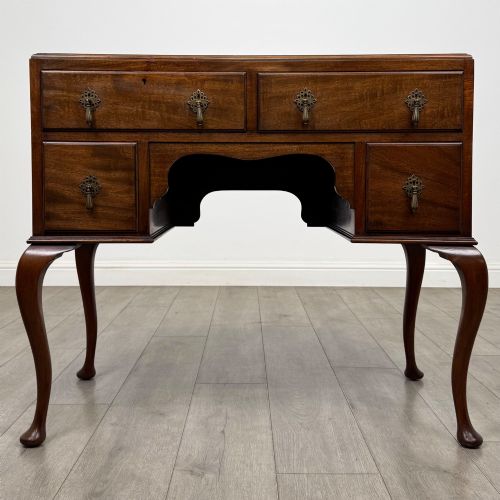
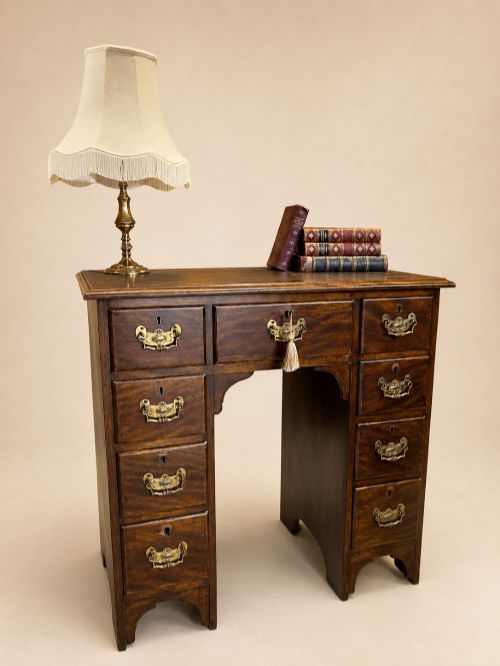
Antique Desk with Kneehole
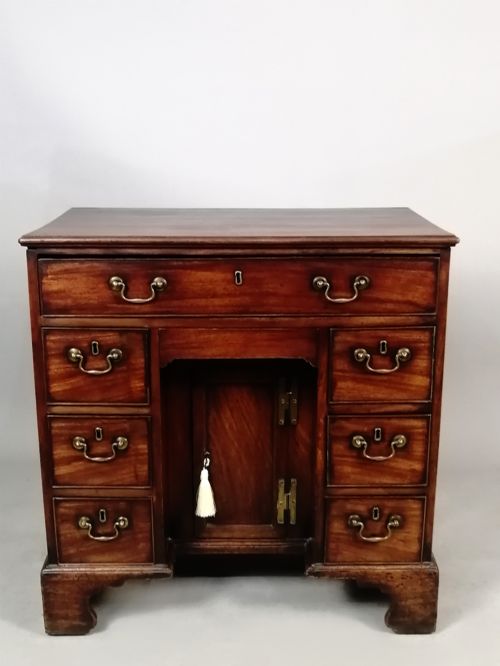
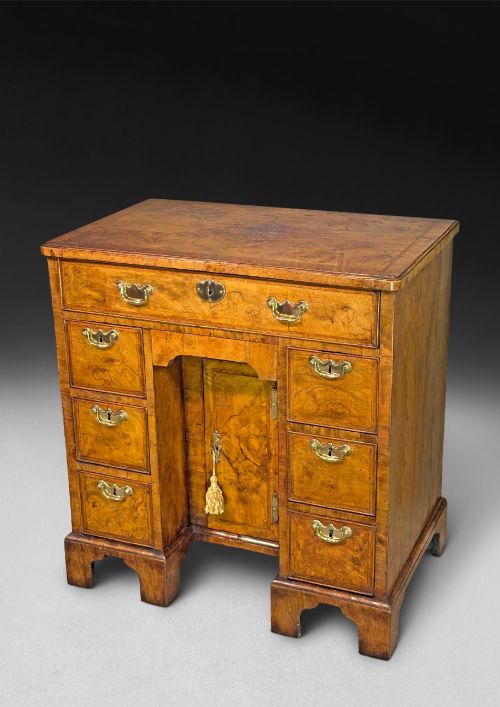
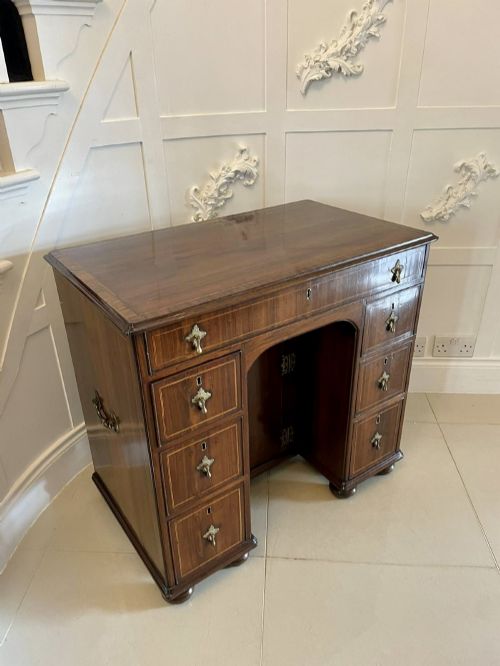
An antique desk with kneehole offers a compact writing space framed by pedestals of drawers, combining period joinery with practical daily utility.
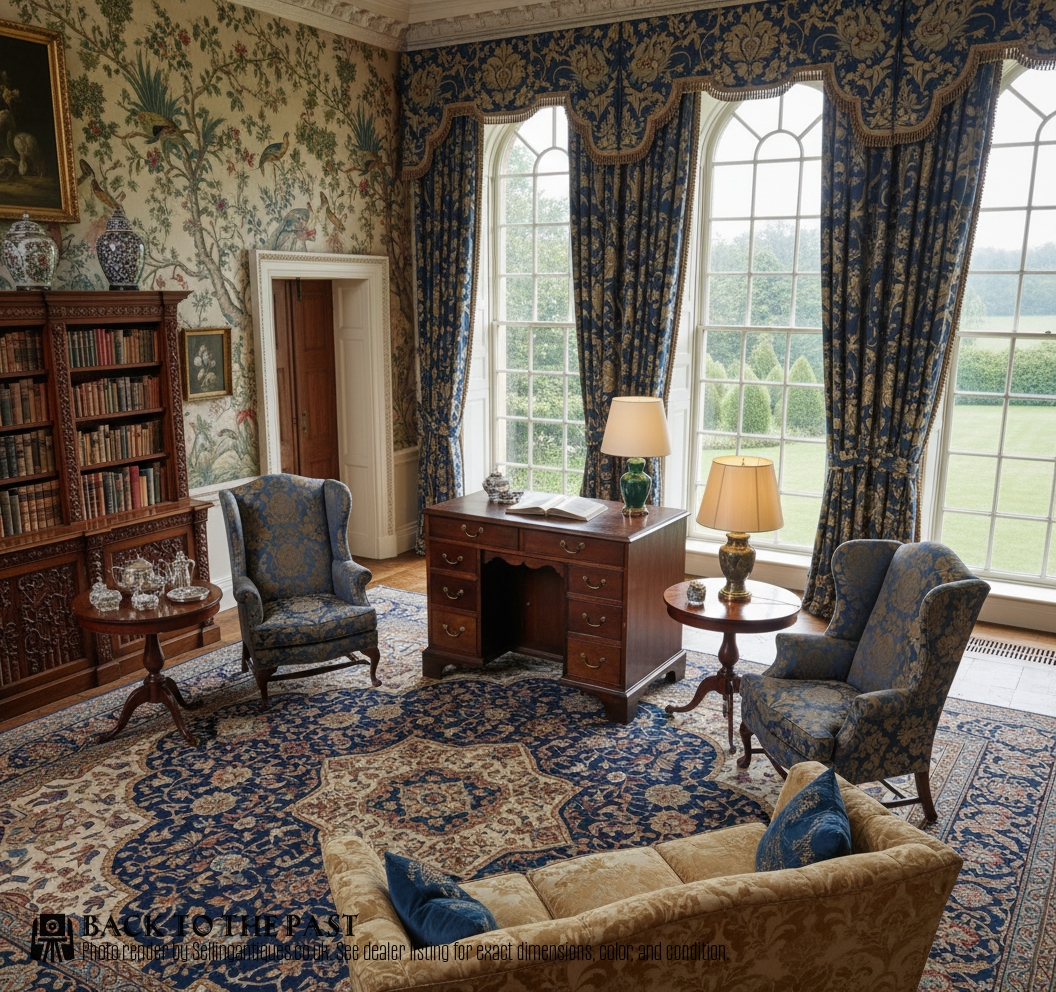
Antique Desk with Kneehole
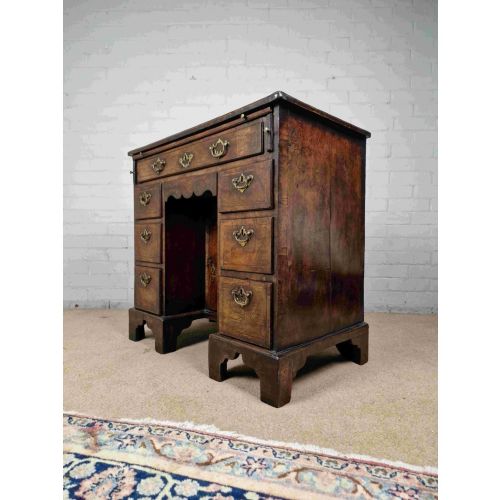
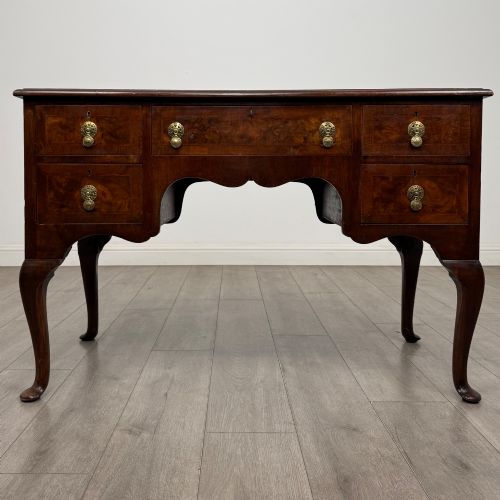
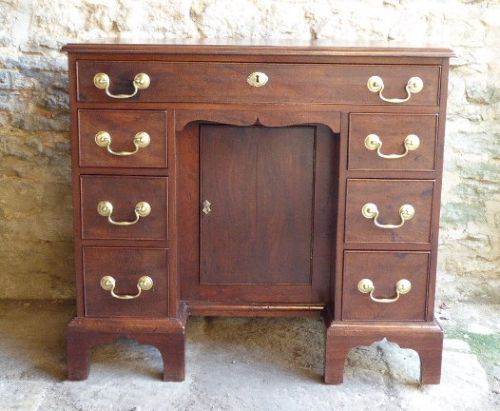
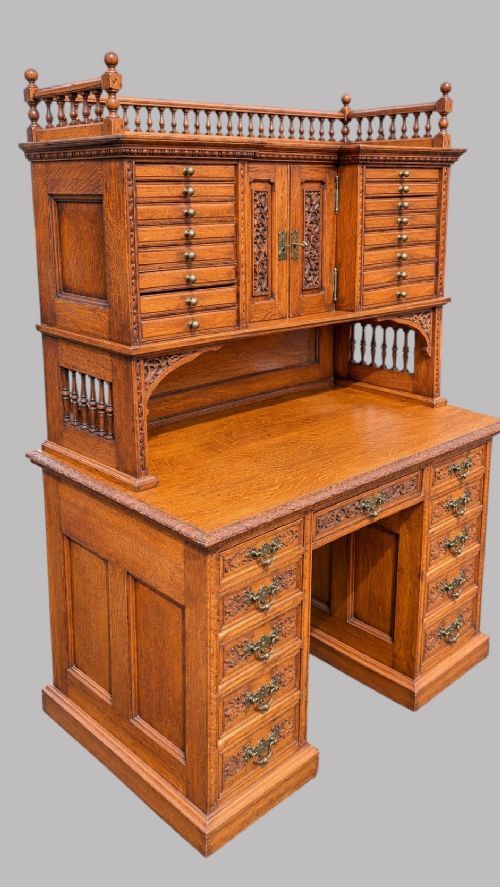
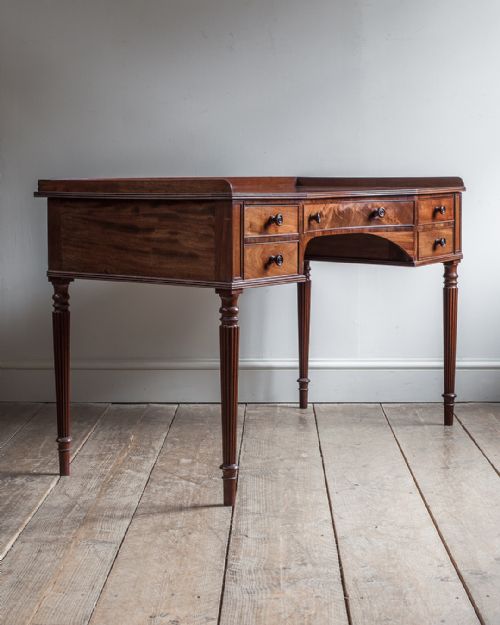
When you search for an antique desk with kneehole, you encounter pieces spanning from the early eighteenth century through the Edwardian era and into the 1930s. The selection ranges from substantial mahogany and oak twin pedestal desks to smaller walnut writing tables, lowboys, and dressing chests.
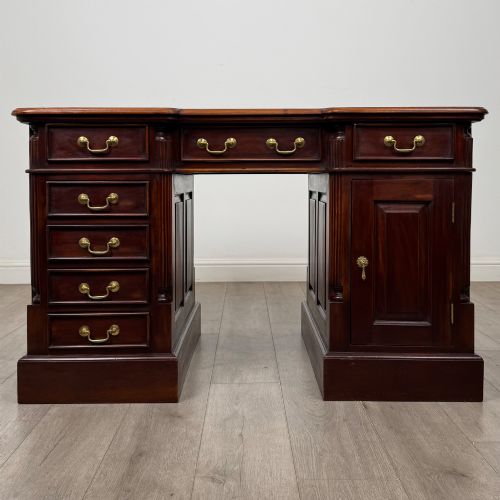
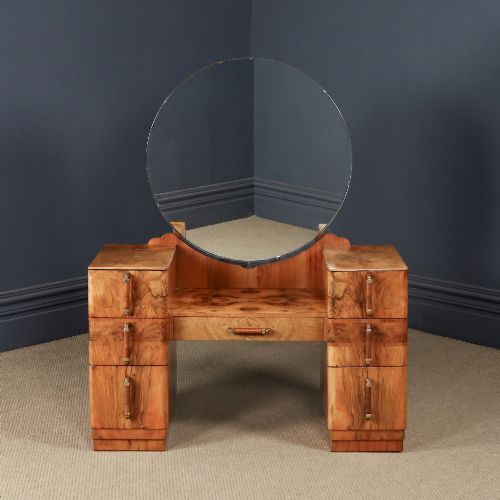
The most common formats on this page are nineteenth-century mahogany pedestal desks and Edwardian writing tables, alongside Georgian examples and twentieth-century burr walnut pieces. Forms vary from miniature desks and bureau bookcases to dressing tables fitted with mirrors and writing slides.
Originating primarily from English workshops, these items serve as working desks, dressing tables, and console surfaces. They reflect the changing domestic requirements of the Georgian, Victorian, and Edwardian periods through fitted stationery drawers and secret compartments.
Materials and Construction
Cabinet makers constructed these pieces predominantly from solid timbers and veneers of mahogany, oak, and walnut, frequently incorporating burr walnut and satinwood for decorative surfaces. Secondary woods like pine appear in drawer linings and internal framing.
Workshops utilised traditional joinery techniques, dovetailing drawer boxes and mounting brass handles, pulls, and backplates to secure the cabinetry. Writing surfaces were routinely inset with tooled leather panels, while decorative finishes relied on wax polishing and stencilled ornamentation.
Listings feature mahogany, oak, and walnut timbers across eighteenth-century Georgian designs through to Edwardian and 1930s walnut productions.
Design and Execution
The distinction between standard utility pieces and finer examples rests on the selection of timber and the precision of the cabinet work. Figured veneers, such as burr walnut, and matched mahogany grains indicate a higher grade of manufacture.
Johnstone & Jeanes
The Antique Desk with Kneehole Glossary
- Kneehole
- A recessed central space beneath a desk or dressing table designed to accommodate the user's legs while seated. It is typically flanked by pedestals of small drawers or cupboards.
- Lowboy
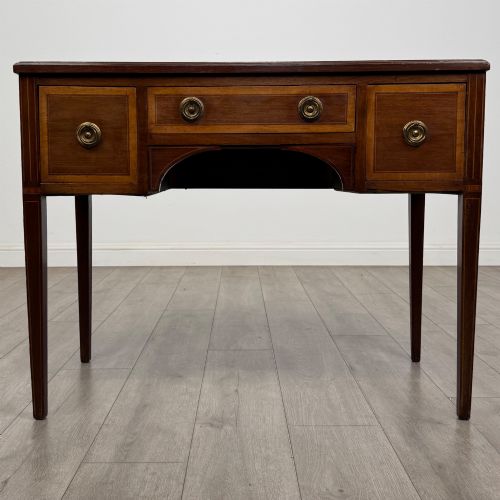
- A small eighteenth-century dressing or side table featuring one or more rows of drawers beneath a flat top, supported on slender legs. These pieces frequently function as compact writing desks.
- Pedestal desk
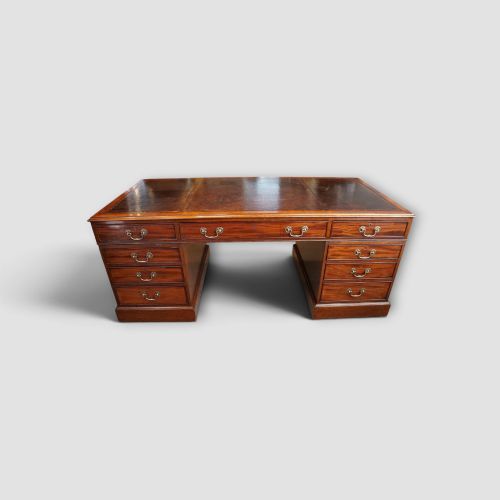
- A heavy freestanding writing table comprising two separate drawer columns that support a wide desktop. The central kneehole often contains a single long drawer above the recess.
- Writing slide
- A pull-out wooden board integrated just beneath the desktop to provide extra surface area for paperwork without cluttering the main writing space.
- Bureau bookcase
- A tall two-part cabinet combining a sloping writing flap that encloses small pigeonholes above a set of drawers, surmounted by glazed shelving doors.
Antique Desk with Kneehole: Frequently Asked Questions
What is a kneehole desk?
A kneehole desk is a form of writing furniture featuring a central recessed space for the legs, flanked on both sides by pedestals of stacked drawers. This layout allows the user to sit directly facing the cabinet while keeping reference materials close at hand.
Such desks developed in various sizes throughout the eighteenth and nineteenth centuries, serving both grand libraries and private dressing rooms as practical writing stations.
How do I tell a Georgian desk from a Victorian one?
Georgian desks, dating through the eighteenth century, tend to display restrained proportions, restrained timber figuring, and hand-cut dovetails executed in oak or early mahogany. They often utilise solid secondary woods and simpler brass hardware.
Victorian pieces from the nineteenth century generally appear heavier, utilising dense mahogany or oak with machine-moulded details, factory-produced locks, and frequently inset leather writing surfaces in shades like green or tan.
Were these desks used for writing or dressing?
Kneehole forms served multiple domestic functions depending on their internal fittings and eras of production. Many functioned primarily for correspondence and estate management, equipped with stationery drawers and document slots.
Other examples incorporate dressing mirror attachments, partitioned compartments for cosmetics, or lowboy configurations that suited both personal grooming and casual writing.
How do I care for antique leather tops?
Antique leather writing surfaces require gentle maintenance to prevent the material from drying and cracking over time. Regular dusting with a soft cloth and occasional treatment with neutral leather balms help preserve the supple texture.
Avoid applying harsh chemical cleaners, alcohol, or excessive moisture directly onto the tooled borders and gilded leaf work surrounding the perimeter.