
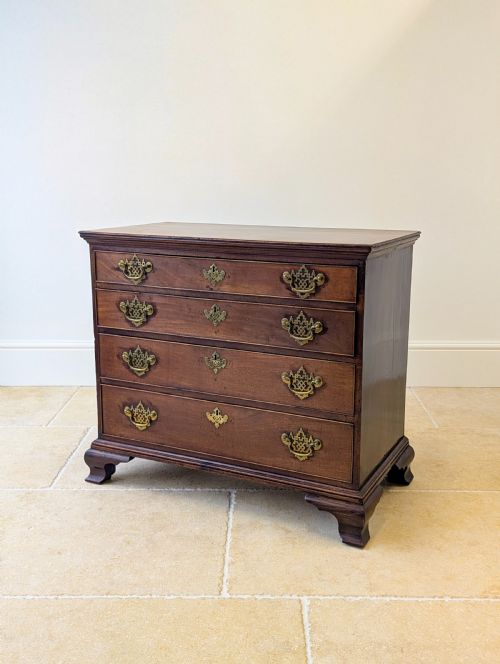


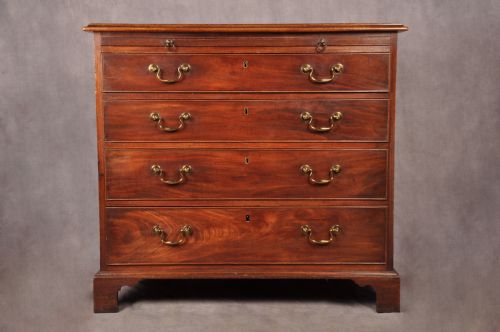


Graduated Four Drawer Chest
A graduated four drawer chest is a traditional storage piece offering decreasing drawer depths down the front, prized for proportion and utility.
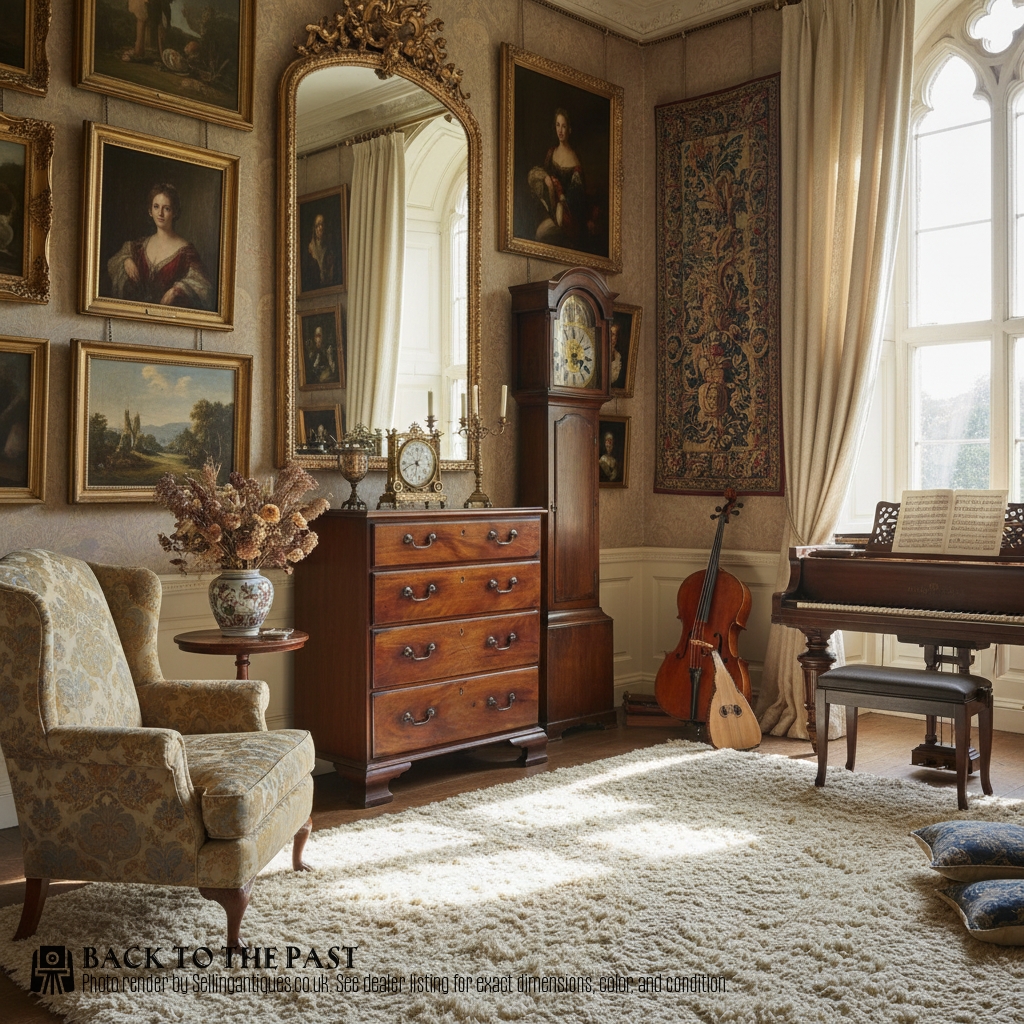
Graduated Four Drawer Chest
A graduated four drawer chest is a functional storage item designed with four horizontal tiers where the uppermost drawer is shallowest and each successive drawer deepens toward the floor. This architectural decrease in drawer height draws the eye and creates a balanced, pleasing facade that has endured through centuries of cabinet making.
Most examples encountered on this page stem from the Georgian and 18th century periods, alongside later Victorian interpretations. These pieces take the form of chests of drawers, dressing chests, and shop chests, reflecting domestic and commercial uses of the past.
Mahogany is the dominant timber seen across these listings, accompanied by yew wood and walnut. Pieces range from grand George III and George II Chippendale designs to more modest vernacular work.
Materials and construction
Cabinet makers utilised dense native and imported timbers, primarily mahogany, walnut, and yew wood, selecting figured grain for principal display surfaces. These woods were worked by hand, employing traditional joinery to construct robust carcasses capable of holding heavy contents.
Metal hardware such as brass handles and escutcheons complement the woodwork, secured to the graduated drawer fronts. Polished finishes highlight the natural grain and colour of the timber without obscuring the material.
Graduated Four Drawer Chest Retail Price Guide 2026
Typical asking prices for graduated four drawer chest among the pieces listed under this phrase on Sellingantiques today, from the lower quarter to the upper quarter. They describe what is for sale here now, not the wider market.
Shop chests earned their polished patinas from decades of busy merchants counting coins above the top drawer.
Assessing quality
Quality in a graduated four drawer chest rests on the selection of timber and the harmony of its proportions. Pieces featuring well-figured mahogany or walnut show a higher degree of initial craftsmanship and patron investment.
The subtlety of the graduation and the crispness of the drawer construction distinguish finer examples from standard utility pieces. The integration of period brassware and secondary timbers further marks the distinction between workshop traditions.
The Graduated Four Drawer Chest Glossary
- Graduation
- The deliberate decrease in depth from the lowest drawer to the top drawer. This technique creates a visual lightness that prevents a tall block of furniture from feeling heavy in a room.
- Chippendale
- A style of 18th century English furniture associated with cabinet maker Thomas Chippendale. Pieces in this manner often display carved details and confident proportions.
- Dressing chest
- A lower form of case furniture designed for personal grooming. These often incorporate internal slide mechanisms or fitted upper compartments.
- Shop chest
- A commercial storage unit utilised in retail environments. These are built for heavy daily use and robust handling.
Graduated Four Drawer Chest: Frequently Asked Questions
What is a graduated four drawer chest?
A graduated four drawer chest is a piece of case furniture featuring four horizontal drawers arranged so that the top drawer is the shallowest and the bottom is the deepest.
This specific architectural arrangement provides both visual balance and practical storage segregation for items of varying bulk.
How were these chests used historically?
These chests served primarily as bedroom or dressing room storage for clothing and personal linens.
Some variations, such as dressing chests or shop chests, included integrated writing slides or served commercial display functions in trade premises.
How do I date a Georgian chest?
Dating relies on observing timber choices, construction methods, and stylistic cues inherent to periods like George II or George III.
Secondary woods, drawer linings, and the profile of the mouldings offer physical clues to the decade of manufacture.
Where should I place this chest at home?
These chests suit bedrooms, hallways, or living spaces where their balanced proportions can be appreciated against a wall.
Ensure placement avoids direct heat sources that might dry out historic timber and brass elements.