


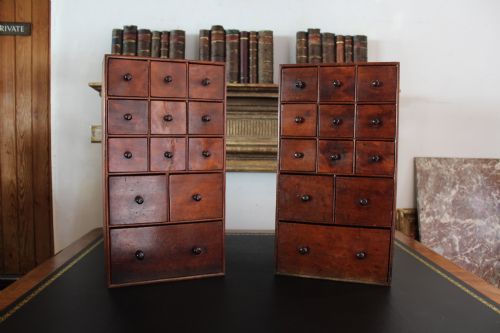
Small Georgian Chest
A small georgian chest delivers compact proportions and period timber quality, making it a practical choice for compact rooms.
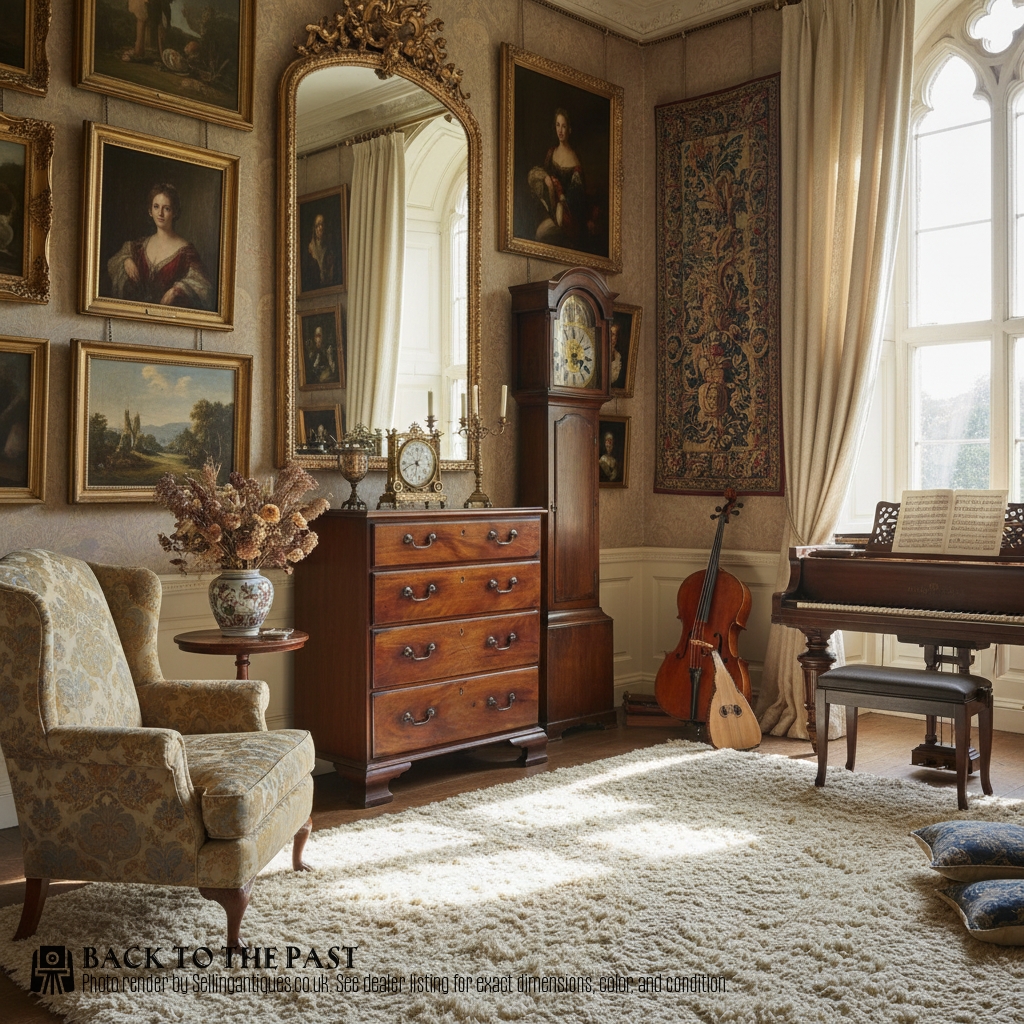
Small Georgian Chest
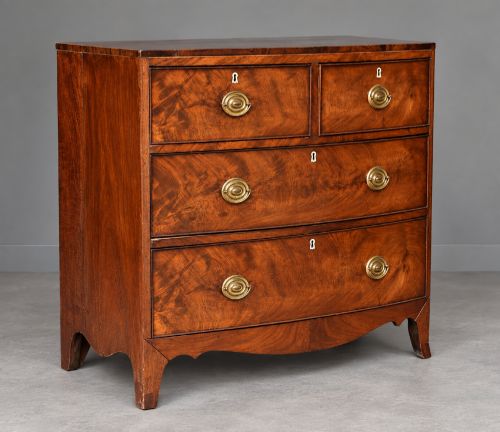
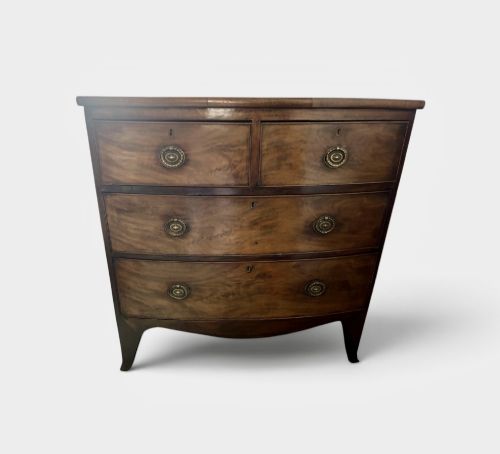
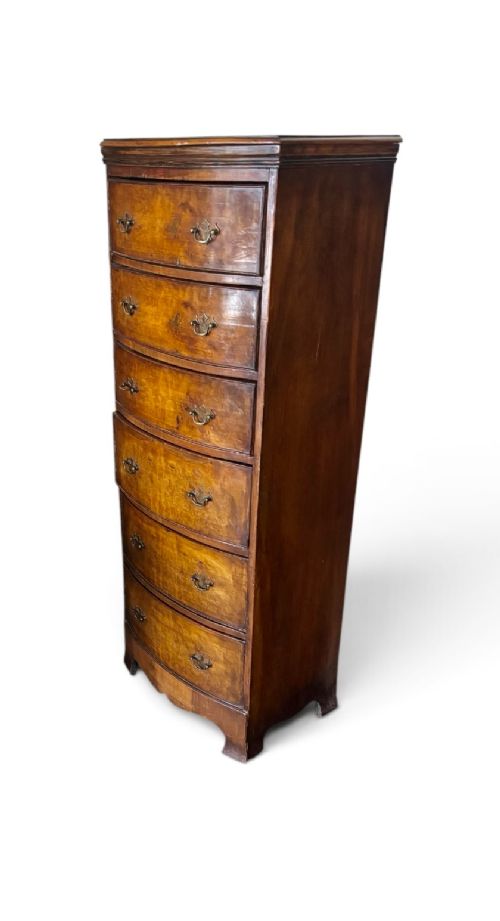
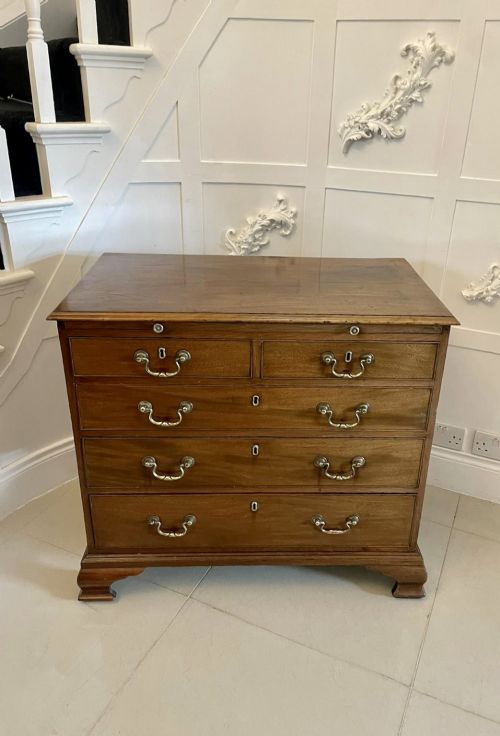
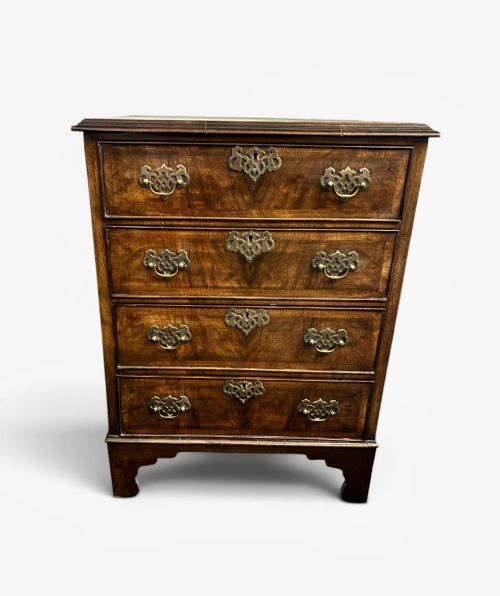
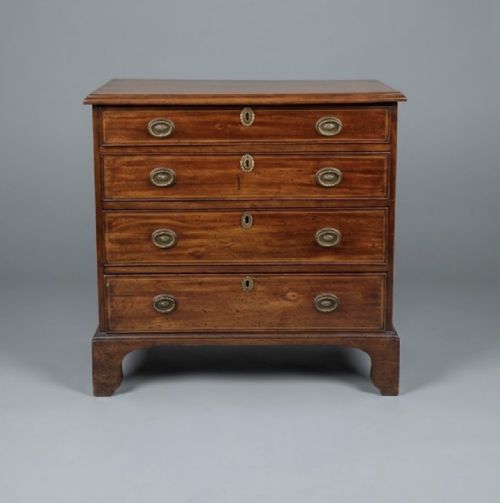
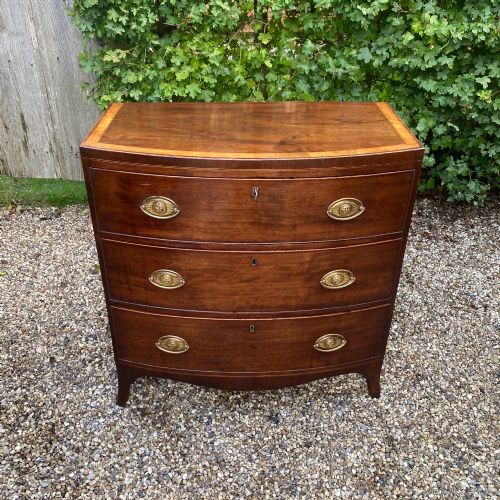
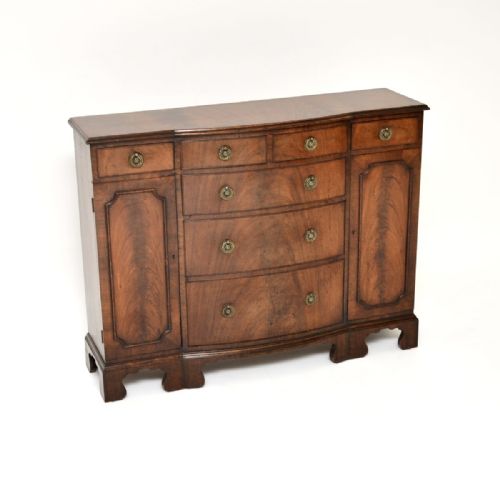
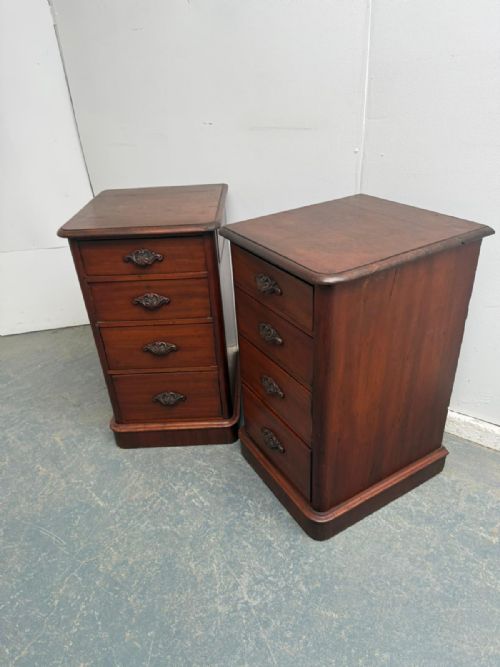
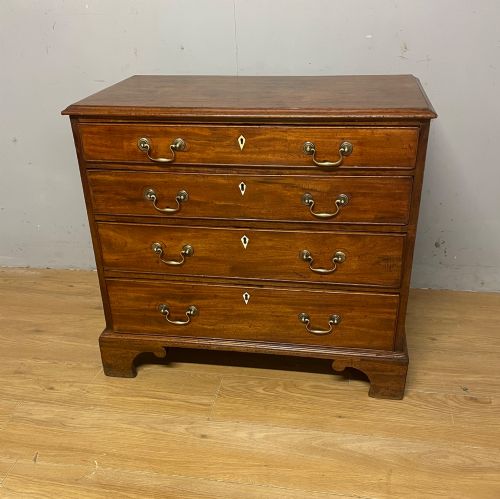
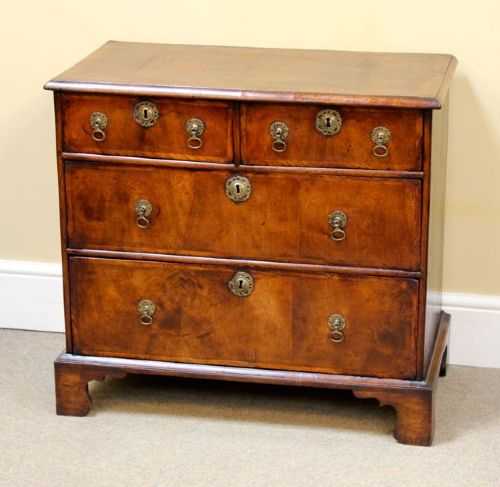
A small georgian chest typically presents as a set of graduated drawers scaled down for domestic use, frequently found in mahogany, walnut, or oak. The form encompasses straight-fronted designs alongside bowfront and serpentine shapes originating from the eighteenth and early nineteenth centuries.
Beyond standard drawer configurations, related compact forms include bachelor's chests equipped with sliding writing surfaces, alongside miniature apprentice pieces and bedside cabinets.
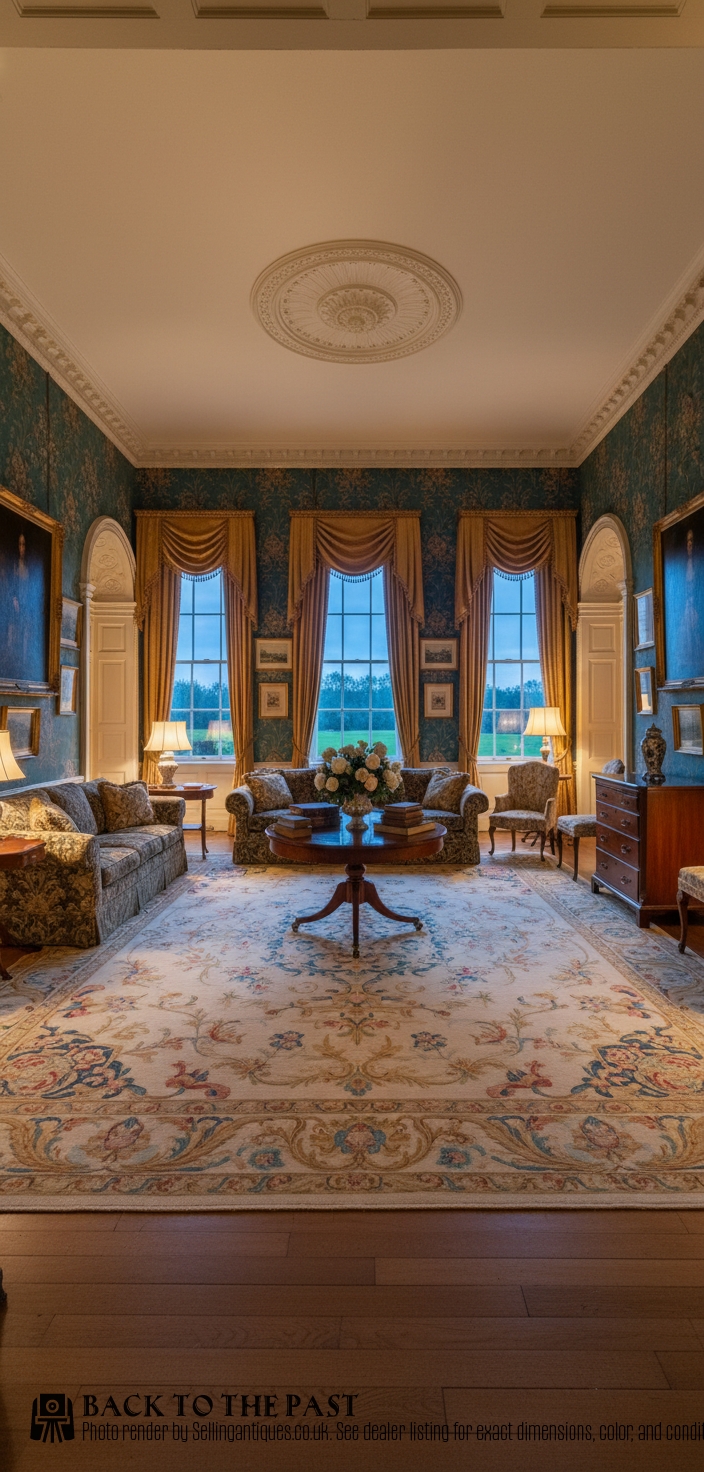
Materials and construction methods
Cabinetmakers utilised dense hardwoods such as mahogany and walnut, frequently selecting figured veneers or flame mahogany for primary surfaces and crossbanding details. Oak and pine served as secondary timbers for drawer linings and internal framing.
Construction relied on traditional joinery methods, incorporating hand-cut dovetails for drawer construction and pegged frames. Brass hardware, including swing handles and oval backplates, accompanied key escutcheons on working locks.
Small Georgian Chest Retail Price Guide 2026
Typical asking prices for small georgian chest among the pieces listed under this phrase on Sellingantiques today, from the lower quarter to the upper quarter. They describe what is for sale here now, not the wider market.
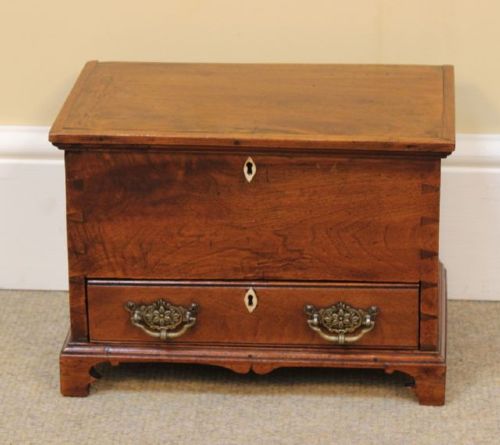
Apprentice pieces allowed young woodworkers to demonstrate mastery by miniaturising a full-sized chest down to a miniature scale.
Assessing quality in construction and timber
Quality rests upon the selection of cabinet timbers, where highly figured walnut or flame mahogany veneers demonstrate superior material choice. The consistency of grain matching across drawer fronts distinguishes finer examples.
Structural integrity shows in the precision of the dovetail joints and the smooth operation of the drawers within their frames. Retaining original brass fittings and undisturbed surface patination elevates a piece above later replacements.
The Small Georgian Chest Glossary
- Bowfront
- A convex curved cabinet front that projects outward in the centre, popular during the late eighteenth and Regency periods. This shape softens the profile of standard rectilinear chests.
- Crossbanding
- A narrow strip of veneer laid perpendicularly to the surrounding grain along the edges of a drawer or top. It creates a decorative border framing the primary timber.
- Brushing slide
- A pull-out shelf positioned above the top drawers, traditionally used for folding linen or temporary writing. It slides flush into the cabinet frame when not in use.
- Ogee feet
- An S-shaped moulding profile forming bracket feet that lift the chest base off the floor. This architectural detail appears on mid-to-late eighteenth-century case furniture.
- Caddy top
- A raised, moulded tabletop with stepped edges resembling the lid of a tea caddy. It is characteristic of better-quality case pieces from the Georgian era.
Small Georgian Chest: Frequently Asked Questions
Where should I place a small georgian chest?
These compact chests suit entryways, hallways, or bedrooms where floor space is limited. Their modest footprint allows them to function as bedside tables or accent storage units.
Ensure placement avoids direct heat sources or strong sunlight to protect historic wood veneers and maintain the original polished surface.
How do I care for antique drawer timber?
Dust the surfaces regularly with a soft, dry cloth to prevent particulate buildup on the polish. Apply a traditional beeswax sparingly to nourish the wood when it appears dry.
Avoid modern liquid polishes containing silicone, which can penetrate porous grain and damage the historic patination over time.
Are these drawers suitable for daily use?
Most surviving pieces remain structurally sound and capable of holding everyday items. The internal drawers slide easily when maintained with traditional beeswax on the runners.
Care should be taken not to overload the smaller drawers of delicate miniature or apprentice pieces, which were originally built for display or practice.
How do I distinguish revival pieces from original ones?
Original eighteenth-century chests display hand-sawn secondary timbers like oak inside the drawer boxes, alongside irregular dovetails. Revival pieces from the twentieth century often exhibit uniform machine cutting and modern internal sizing.
Examine the backboards and drawer linings for tool marks and signs of age-appropriate timber shrinkage that differentiate early construction from later copies.