

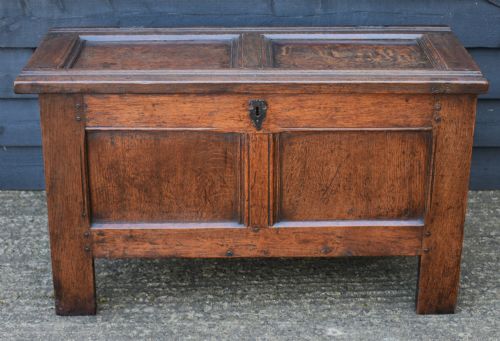
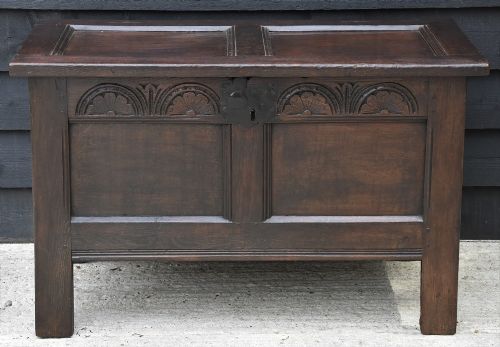
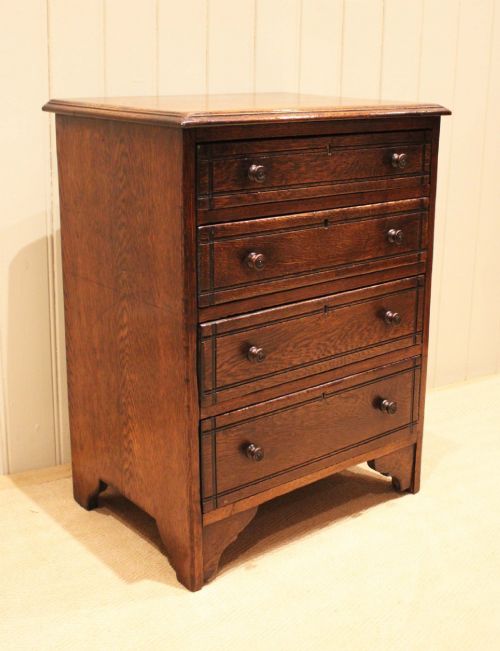
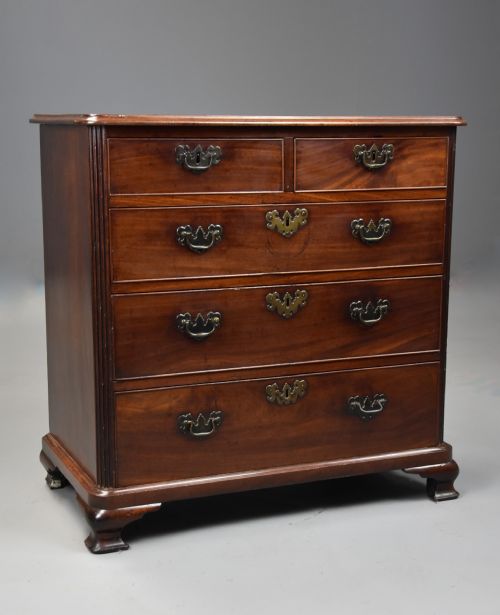


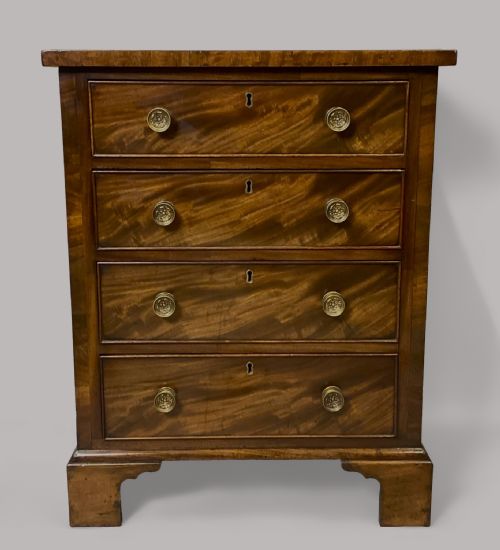


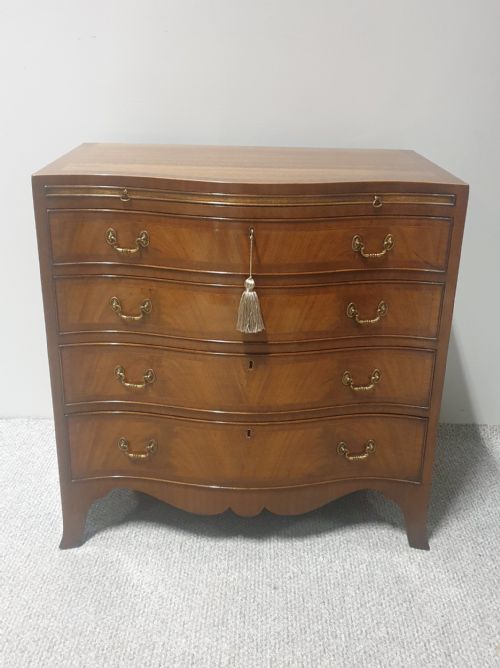

Small Proportioned Chest
A small proportioned chest offers compact storage without surrendering the rich timber and presence of full-scale antique furniture.
Small Proportioned Chest
A small proportioned chest is a compact storage piece built to scale down dimensions while retaining the function of a standard chest of drawers, coffer, or bureau. These items serve spaces where a standard piece dominates the room, offering practicality alongside traditional craftsmanship.
The selections span centuries from the seventeenth century through the Georgian and Regency eras into the early twentieth century. Mahogany, oak, and walnut dominate the offerings, appearing in forms ranging from plain country oak to refined serpentine mahogany drawers.
How they were made
Cabinet makers utilised solid timbers alongside veneers, applying oak and mahogany for structural integrity while selecting burr walnut and figured mahogany for decorative drawer fronts. Timber selection dictated how the piece received polish and how well it endured heavy domestic use.
Joinery techniques varied by period, shifting from pegged frame and panel construction in early coffer boxes to precise dovetailing in later drawer carcasses. Brass hardware, from swing handles to escutcheons, was fitted to secure and operate the doors and drawers.
Small Proportioned Chest Retail Price Guide 2026
Typical asking prices for small proportioned chest among the pieces listed under this phrase on Sellingantiques today, from the lower quarter to the upper quarter. They describe what is for sale here now, not the wider market.
The listings include solid oak, mahogany, burr walnut, and cherry wood across periods spanning the seventeenth century to the 1920s.
What varies in quality
Quality rests upon the crispness of the timber grain, the depth of the original patina, and the proportion of the carcass. Superior examples retain matching veneer grains across the drawer fronts and original brass handles that sit correctly within their historic screw holes.
Construction details distinguish workshop tiers, visible in the fineness of the dovetail joints and the thickness of the drawer linings. Untouched surfaces and mellow aged tones elevate a piece above later adaptations or heavy surface restorations.
The Small Proportioned Chest Glossary
- Patina
- The surface sheen and colour developed by wood through age, handling, and light exposure over decades. This quality indicates the length of time a piece has existed in domestic settings.
- Dovetail
- A joint interlocking two pieces of wood by fitted wedge-shaped fingers. This method provides the tensile strength required to hold drawer corners together securely.
- Bachelors chest
- A compact chest of drawers featuring a fold-over top or a pull-out brushing slide. These pieces served gentlemen requiring a writing surface within a bedroom setting.
- Serpentine
- A front profile curving outward in the centre and inward at the sides. This shape demands advanced cabinet making skill to cut and fit the timber precisely.
- Brushing slide
- A pull-out shelf positioned above the top drawer of a chest. Historically, this surface was used for brushing garments or holding items temporarily during dressing.
Small Proportioned Chest: Frequently Asked Questions
Where should I place a small chest?
These compact pieces fit well in hallways, narrow landings, or beside a bed where standard furniture overpowers the floor space. Their reduced depth allows them to sit comfortably in rooms with limited clearance.
They function effectively as bedside tables, auxiliary storage in dressing rooms, or display surfaces in reception spaces without crowding the surrounding architecture.
How do I identify a Georgian chest?
Georgian pieces display clean architectural proportions, often constructed from mahogany or oak with hand-cut dovetails on the drawer sides. Look for subtle details such as cockbeading around the drawer edges and original brass batwing handles.
Earlier examples from the George II period lean toward rich walnut veneers, while later George III items frequently incorporate finer string inlay and bracket or splay feet.
What is a brushing slide used for?
A brushing slide is a pull-out board positioned directly beneath the top surface or above the uppermost drawer. In period use, it provided a temporary shelf for folding clothes or brushing dust from garments.
Today, this sliding shelf offers a convenient surface for placing small items or resting a cup without needing to open the main drawers.
How do walnut and mahogany differ?
Walnut was favoured during the late seventeenth and early eighteenth centuries, prized for its swirling grain patterns and rich brown tones. It often appears as a veneer laid over an oak or pine carcass.
Mahogany gained popularity later in the eighteenth century due to its dense, stable nature which permitted sharper carved details and deep red-brown polished finishes.