
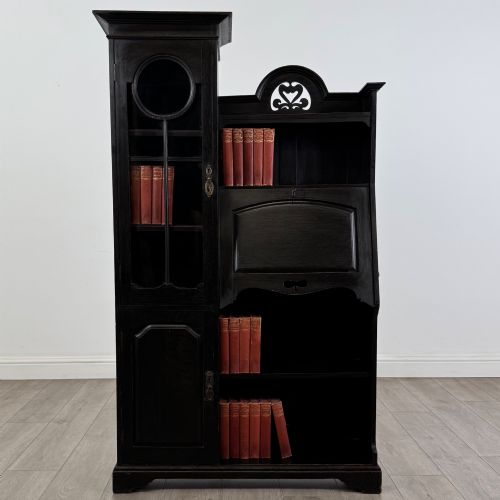
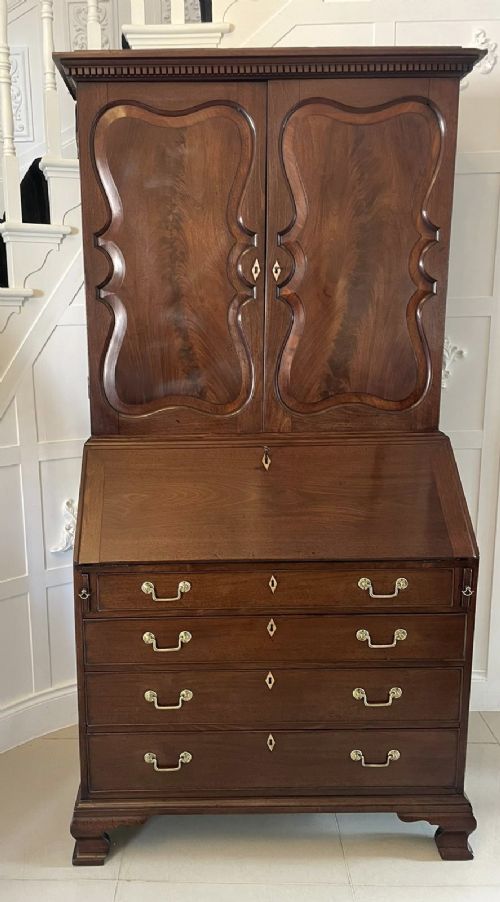
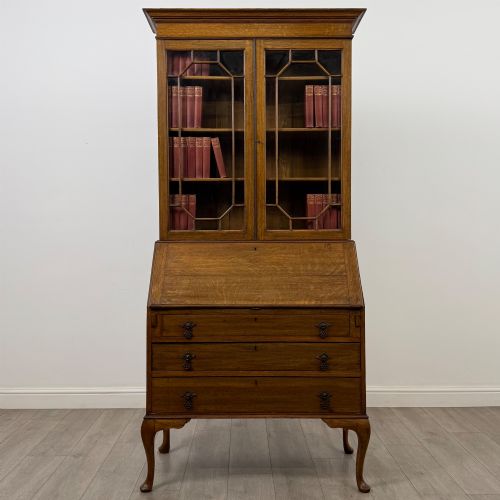
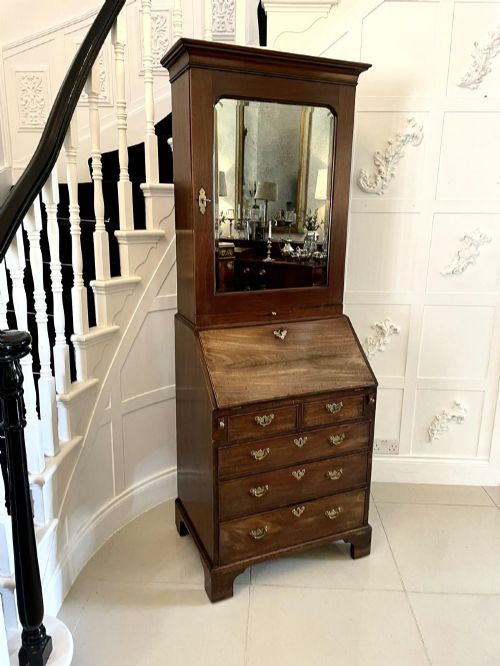


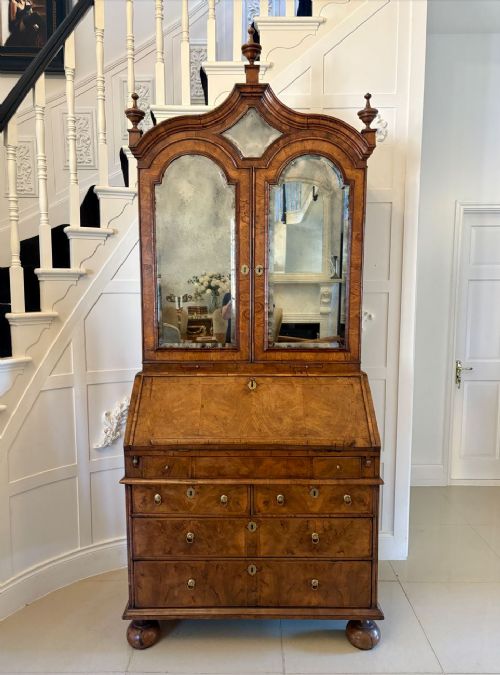
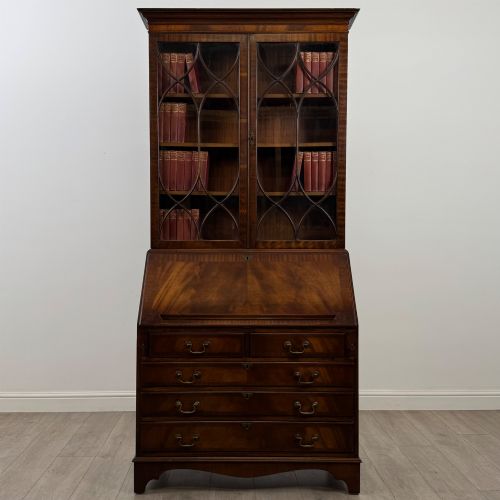
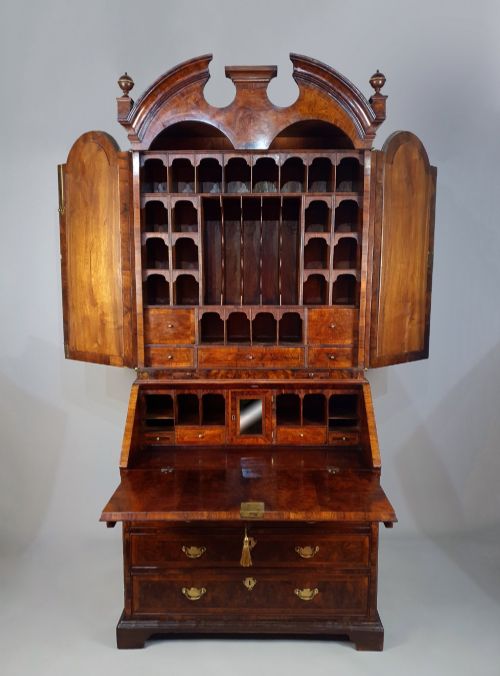
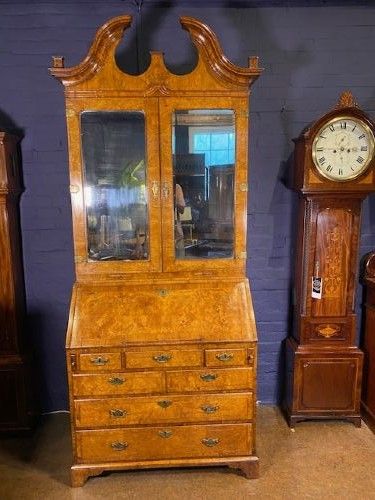
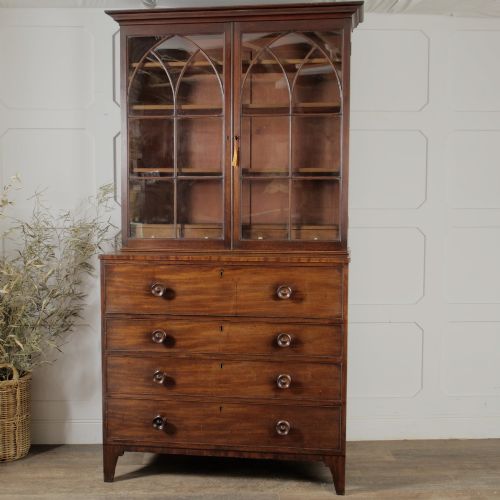
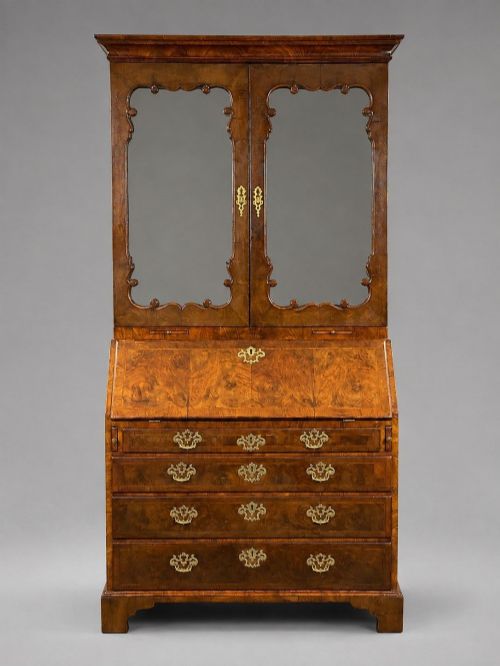
Fall Front Bureau Bookcase
A fall front bureau bookcase combines a writing slope and a shelved cabinet, offering private storage and display space in one substantial piece of furniture.
What a fall front bureau bookcase is
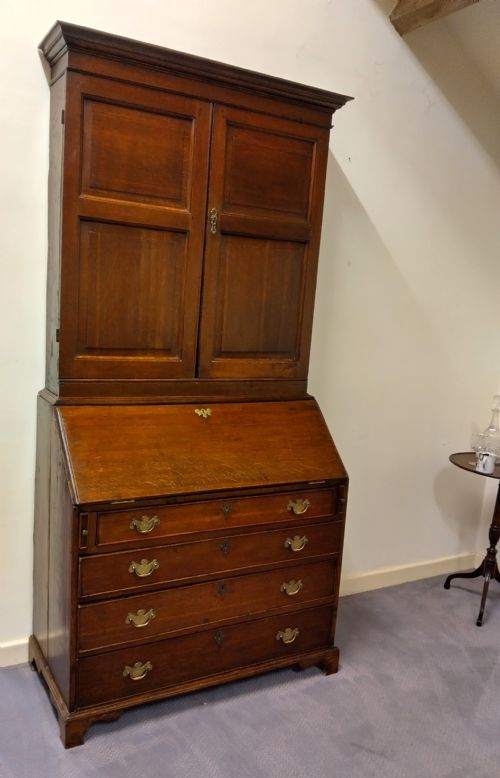
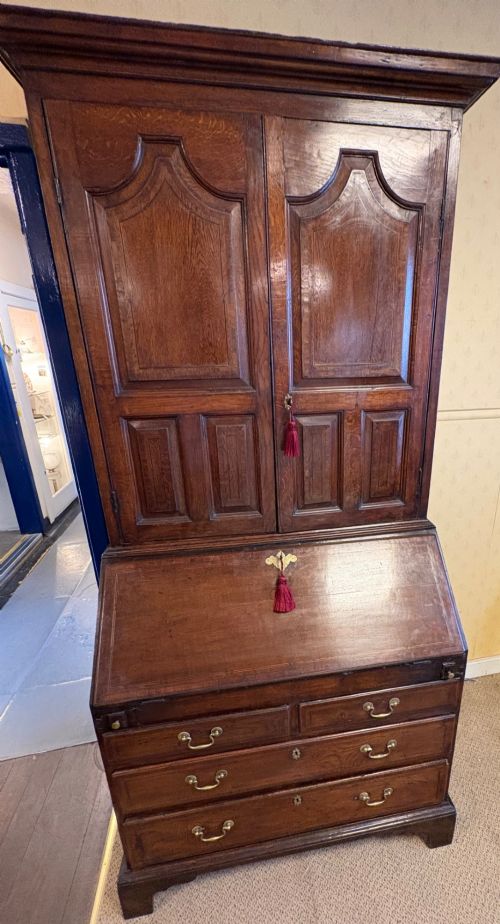
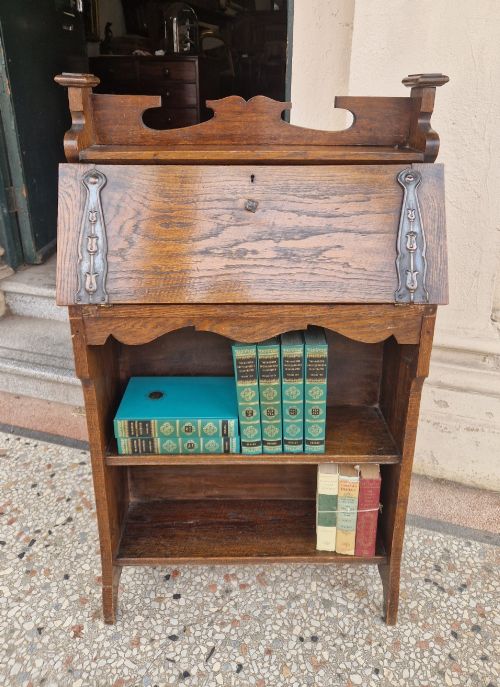
A fall front bureau bookcase serves as a dual-purpose item of furniture, combining an enclosed writing desk with an upper shelving unit. When the hinged flap drops forward, it creates a flat surface for writing, while the cabinet above holds books or papers.
The versions encountered on this page span several distinct eras, stretching from seventeenth-century origins through the Queen Anne, George I, George II, and George III periods, alongside later Victorian, Regency, and twentieth-century interpretations.
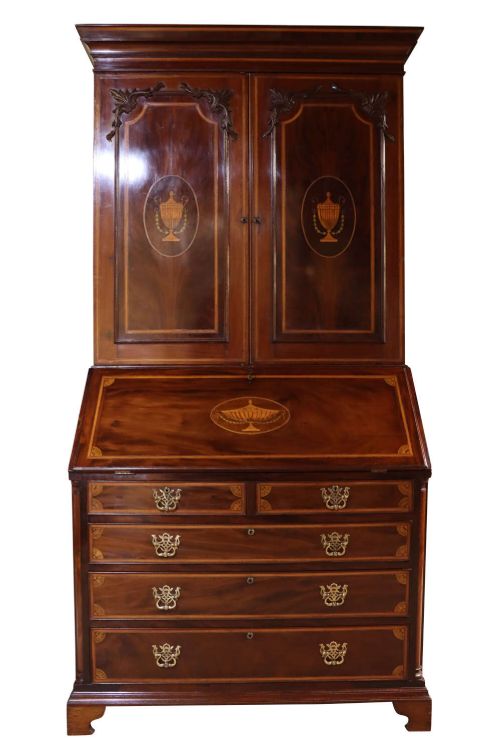
Makers utilised various regional interpretations, producing pieces in solid timber or with decorative veneers, including Dutch marquetry examples and English bureau bookcases made from walnut, oak, and mahogany.
How they were made
Cabinetmakers constructed these bureau bookcases using timber frameworks of oak, walnut, or mahogany, often applying burr walnut veneer to create intricate grain patterns across the exterior surfaces. Marquetry inlay techniques added detailed pictorial decoration to specific regional pieces.
Brass fittings such as handles, key escutcheons, and hinges provided functional and decorative accents, while glass panes were fitted into the upper cabinet doors to protect the contents while keeping them visible.
Mirror glass occasionally appeared in upper door panels, and internal compartments within the bureau section required precise joinery to form small drawers, pigeonholes, and secret spaces.
Retail Price Guide 2026
Typical UK retail prices for fall front bureau bookcase, calculated from the Sellingantiques database of over a million retail prices indexed since 2003. This retail price guide relies exclusively on Sellingantiques data; no external sources or auction records are used, so the figures do not describe the wider market.
Materials recorded across current pieces include solid oak, mahogany, walnut, burr walnut veneer, brass, and glass.
What varies in quality
Quality rests heavily on the selection of timber and the dexterity shown in matching veneer grains across the fall front and drawer fronts. Superior examples display carefully chosen burr walnut or rich mahogany figure that flows coherently across the construction.
The sophistication of the interior cabinet work distinguishes finer items, where secret compartments, shaped pigeonholes, and finely dovetailed small drawers demonstrate greater maker skill. Structural integrity in the hinge mechanisms of the heavy fall front also marks the division between standard and exceptional craftsmanship.
The Fall Front Bureau Bookcase Glossary
- Fall front
- The hinged writing flap that pulls down to form a horizontal desk surface. It conceals internal compartments when closed upright.
- Burr walnut
- Timber taken from a walnut tree growth, yielding highly figured, swirling grain patterns. Cabinetmakers sliced this wood into thin veneers for decorative surfaces.
- Marquetry
- The art of applying small pieces of veneer to a structure to form decorative patterns or pictures. Dutch pieces often employ this technique extensively.
- Escutcheon
- A protective brass plate fitted around a keyhole. It prevents the surrounding wood from wearing away through regular use.
- Pigeonhole
- A small, open compartment inside the bureau section used for sorting letters and papers. These compartments often sit above small internal drawers.
Frequently Asked Questions
What is a fall front bureau bookcase?
A fall front bureau bookcase is a combined writing desk and storage cabinet featuring a hinged writing flap that lowers for use. The upper section contains shelving enclosed by doors for books and display.
These items were designed to serve multiple functions in domestic spaces, saving floor area while keeping writing materials and library items together.
How do I date a bureau bookcase?
Dating relies on observing the primary timbers, construction methods, and stylistic details associated with periods like Queen Anne, Georgian, or Regency. Walnut and marquetry frequently point to earlier eighteenth-century origins, while mahogany became prominent later.
Hardware styles, dovetail construction within drawers, and the specific cut of the timber provide further clues to the decade of manufacture.
Where should I place one?
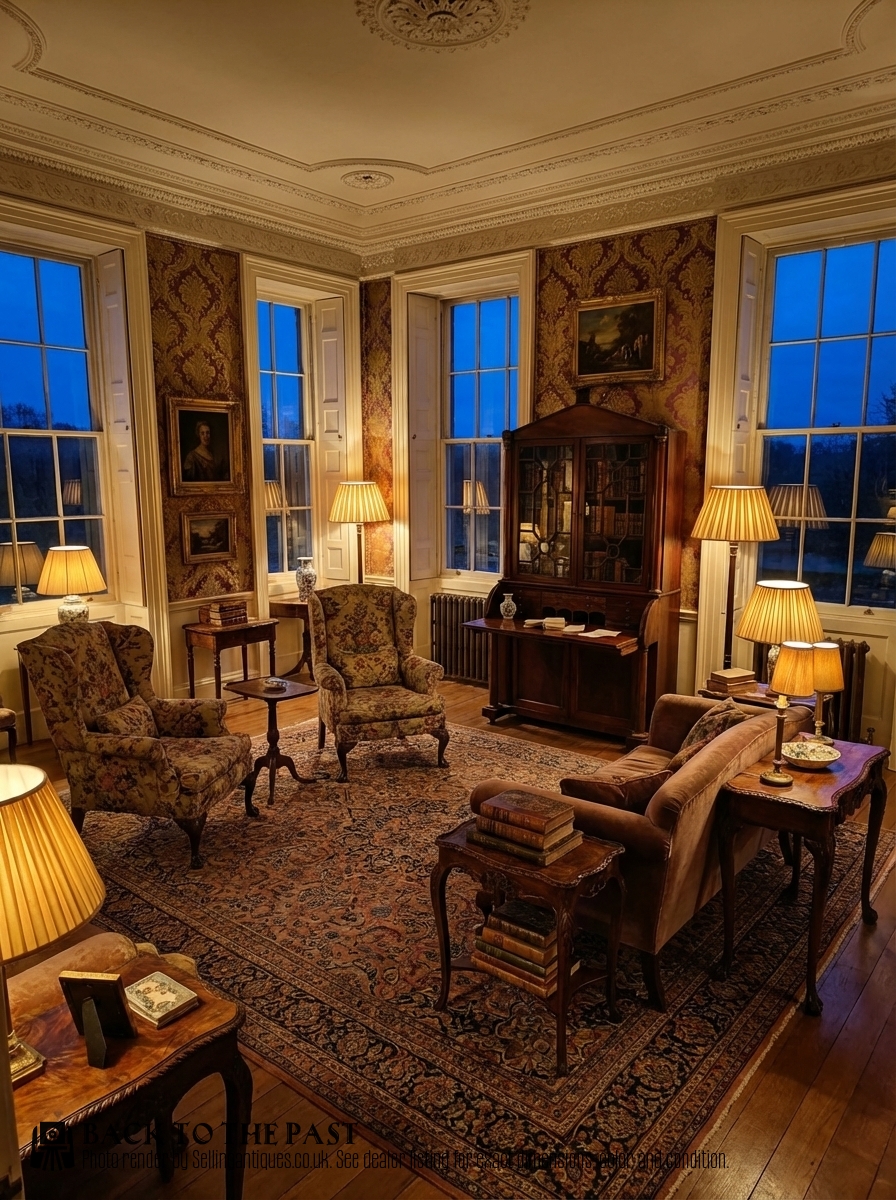
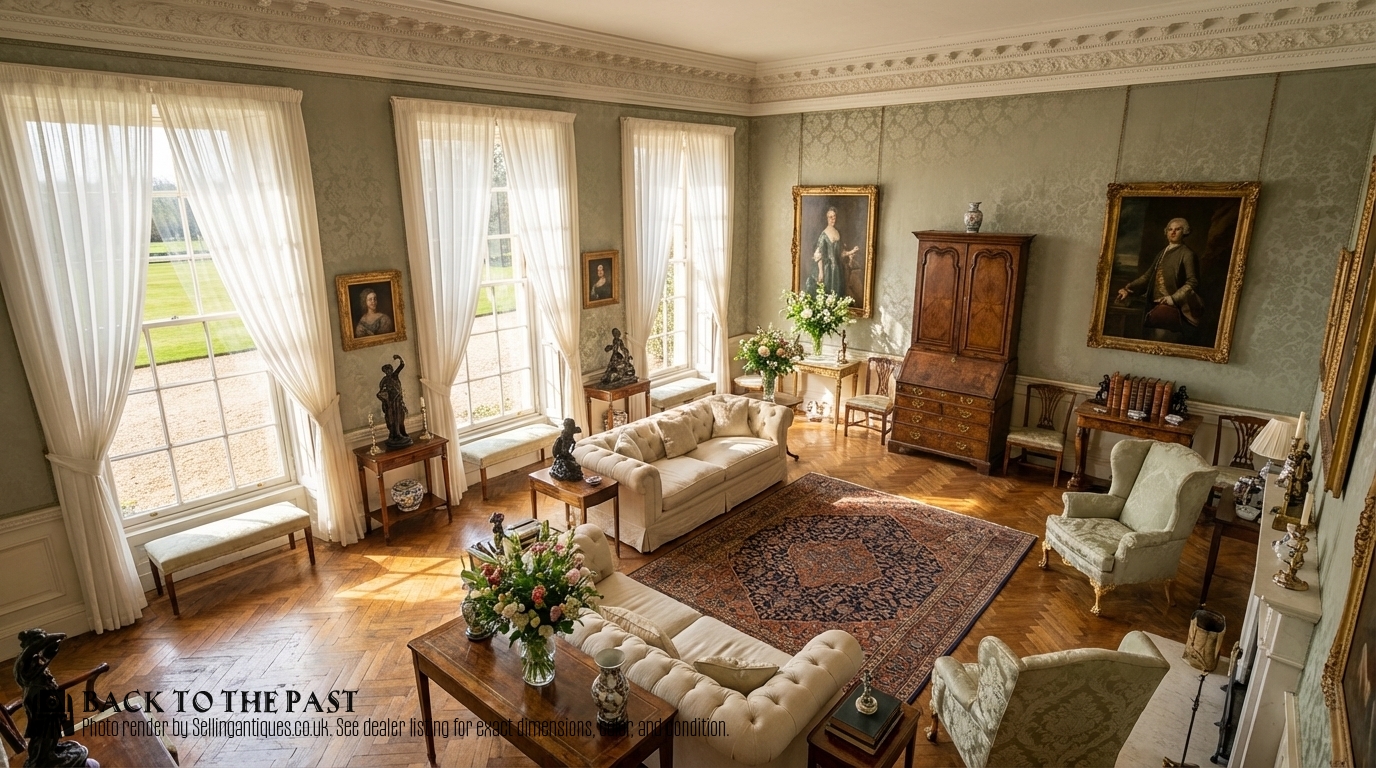
These tall pieces require adequate wall space and a room with stable humidity levels to protect veneered surfaces and solid timbers. Placing them away from direct heat sources prevents the wood from drying out.
They function well in studies, libraries, or living rooms where the writing desk can be actively used and the upper bookcase utilised for storage.