


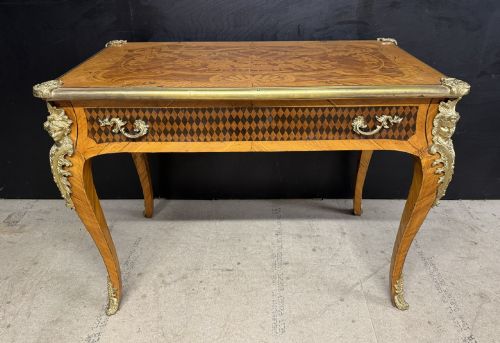
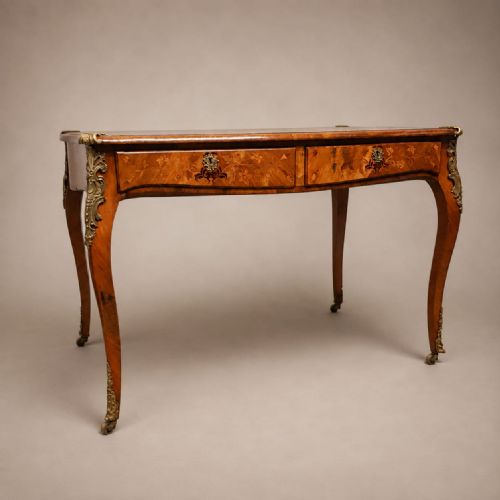
Marquetry Bureau Desk
Marquetry bureau desk designs combine fitted writing compartments with elaborate wood inlay, offering both functional workspace and decorative artistry.
Marquetry Bureau Desk
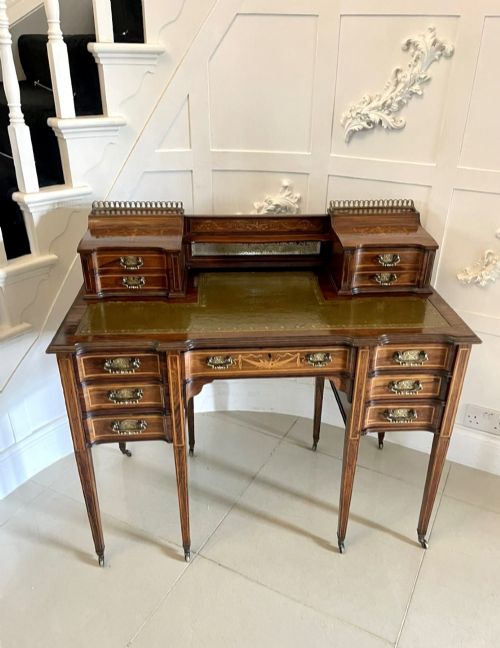
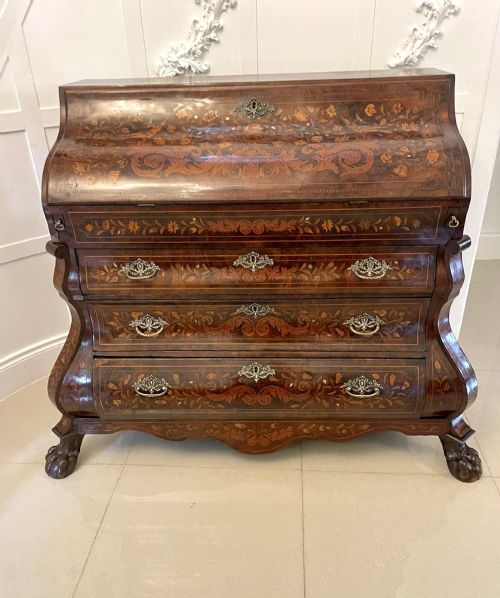
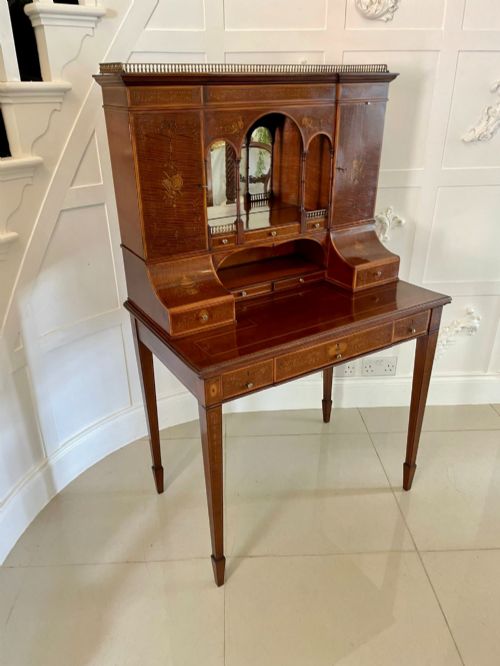
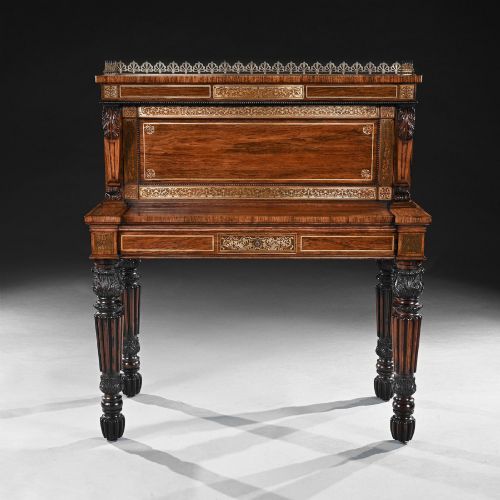
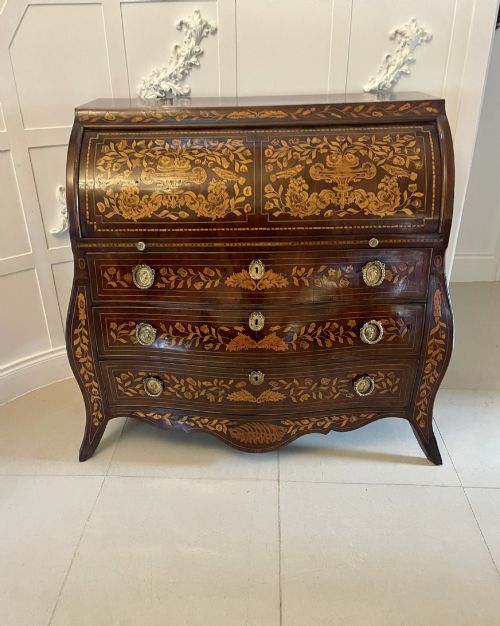
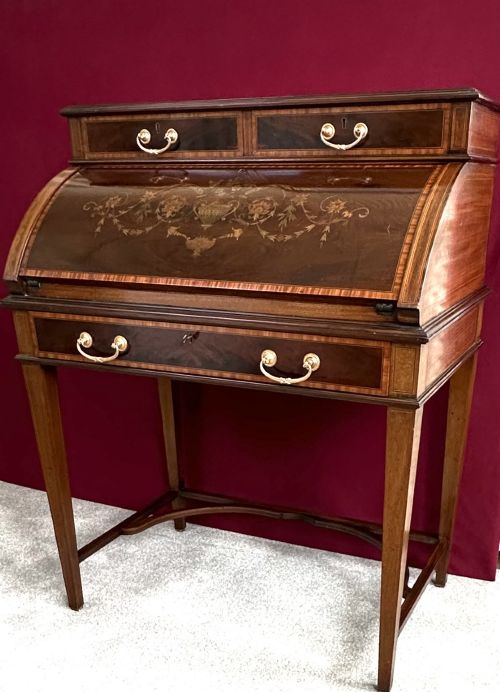
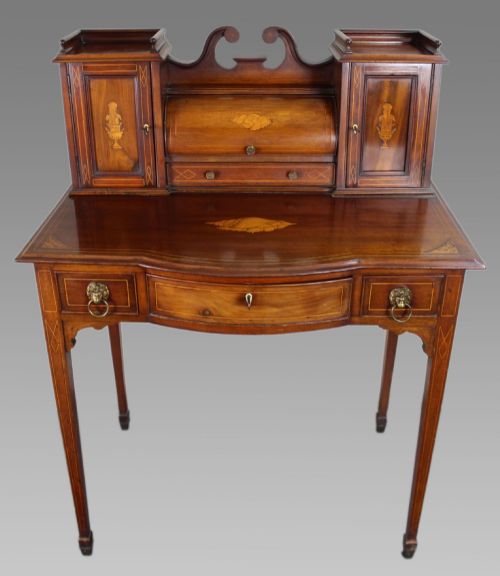
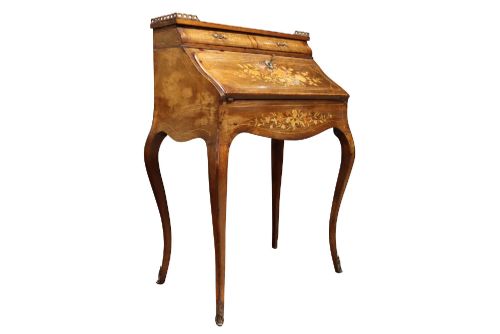
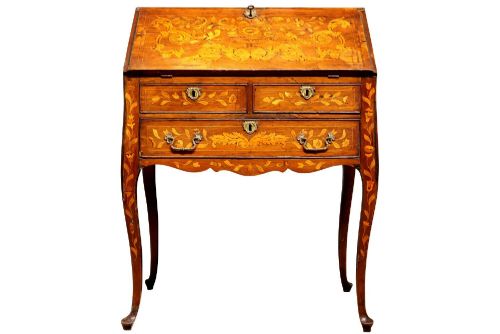
A marquetry bureau desk is a writing surface featuring patterned wood veneer inlay, taking forms such as fall-front fall bureaus, cylinder desks, and bureau bookcases. These pieces emerge from periods spanning the 18th century through the Edwardian era, encompassing both British craftsmanship and continental European workshops.
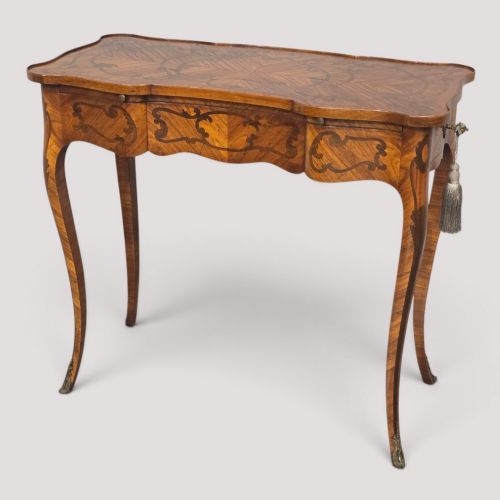
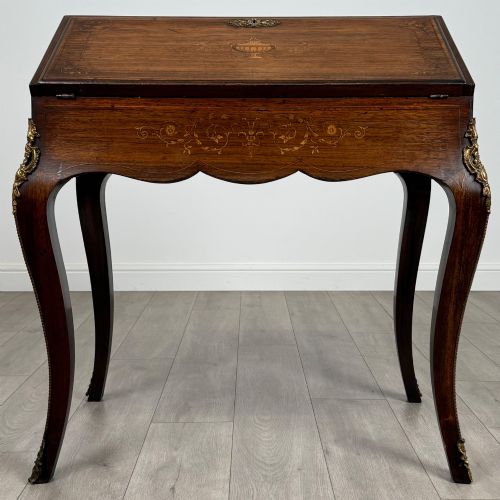
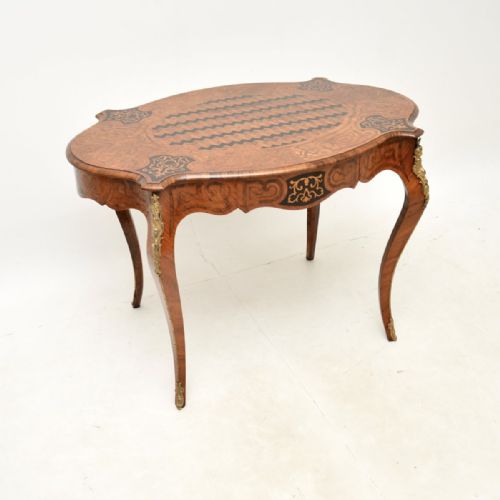
The selections on this page frequently include French bureau de dame pieces, Dutch floral marquetry slopes, and Victorian writing tables. Cabinetmakers utilised diverse forms, from serpentine bureau plats to compact bonheur-du-jour writing desks.
Makers working within Louis XV and Louis XVI revival styles adopted elaborate floral and architectural inlays. Buyers seeking a marquetry bureau desk encounter walnut, mahogany, and exotic timbers shaped into practical writing furniture.
How They Were Made
Cabinetmakers constructed these desks using native hardwoods like mahogany, walnut, and oak as foundational carcasses, applying finer veneers of kingwood, rosewood, satinwood, and tulipwood over the surfaces. Artisans cut intricate pictorial or geometric patterns from contrasting timber veneers to form the characteristic marquetry scenes.
Workshops integrated cast brass, ormolu mounts, and gilt bronze framing around key areas like drawer edges and marble tops. Secondary materials such as leather provided durable writing surfaces inside fold-down slopes or pull-out desk slides.
Listings feature walnut, mahogany, rosewood, kingwood, and satinwood materials across 18th-century, Victorian, and Edwardian periods.
What Varies In Quality
The precision and depth of the timber inlay distinguish finer examples, where varied grain directions and subtle wood shades create pictorial floral arrangements rather than flat patterns. Cabinetmaking standards show in the snug fit of interior pigeonholes, secret drawers, and fall-front mechanisms.
The choice of secondary woods inside drawer linings and the weight of cast ormolu and brass mounts separate workshop tiers. Superior execution involves seamless veneer matching across curved bombe fronts and serpentine desk bodies.
Maple and Co·Gillows Oxford Street Workshop·Maison Krieger·Edwards and Roberts·Durand
The Marquetry Bureau Desk Glossary
- Marquetry
- Decorative veneer inlay arranged in pictorial or geometric patterns using various coloured woods. This technique creates detailed floral motifs and scenes across the desk surface.
- Bureau de dame
- A small lady's writing desk, often featuring a sloping fall-front or cylinder lid. These compact writing pieces frequently appear in French stylistic revivals.
- Ormolu
- Gilded bronze mounts applied to furniture edges and corners for decorative accent. Workshops cast these metallic elements to complement the surrounding wood veneers.
- Bureau plat
- A freestanding flat-topped writing table fitted with drawers across the frieze. These tables originated in France and lack vertical superstructure.
- Parquetry
- Geometric wood inlay forming repetitive patterns such as cubes or chequers. Unlike marquetry, parquetry relies on angular shapes rather than pictorial designs.
Marquetry Bureau Desk: Frequently Asked Questions
What is a bureau de dame?
A bureau de dame is a compact feminine writing desk, typically featuring a sloping fall-front or cylinder lid that opens to reveal small drawers and pigeonholes. These pieces were designed for domestic correspondence and light administrative tasks.
Cabinetmakers often fitted them with delicate marquetry, rosewood or kingwood veneers, and slender cabriole legs. They represent the refined furniture styles popular in 19th-century French and Victorian parlours.
How do cylinder desks work?
A cylinder desk uses a curved quarter-cylinder shutter of wood that rolls backward into the desk body when opened. Pulling the writing slide forward automatically retracts this cylindrical tambour lid.
This mechanism conceals the internal writing surface, pigeonholes, and small drawers when not in use. It kept private papers secure while offering a clean exterior line.
What is the difference between marquetry and parquetry?
Marquetry involves cutting diverse wood veneers into pictorial scenes, floral sprays, or scrolling patterns. It relies on curved lines and naturalistic shading to build complex artistic images across a desk surface.
Parquetry uses geometric shapes like squares, triangles, and diamonds arranged in repeating abstract patterns. While both techniques decorate fine furniture, parquetry creates architectural symmetry rather than pictorial art.