





Bombe Chest Desk
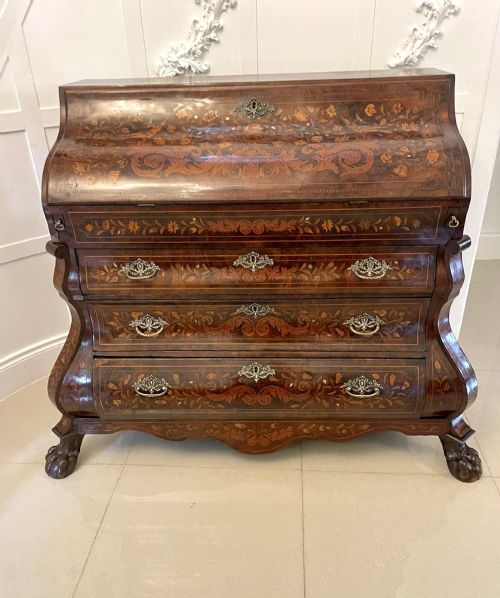
A bombe chest desk offers sweeping, bulbous drawer fronts that command a room, combining practical writing space with dramatic continental cabinetwork.
What a bombe chest desk is
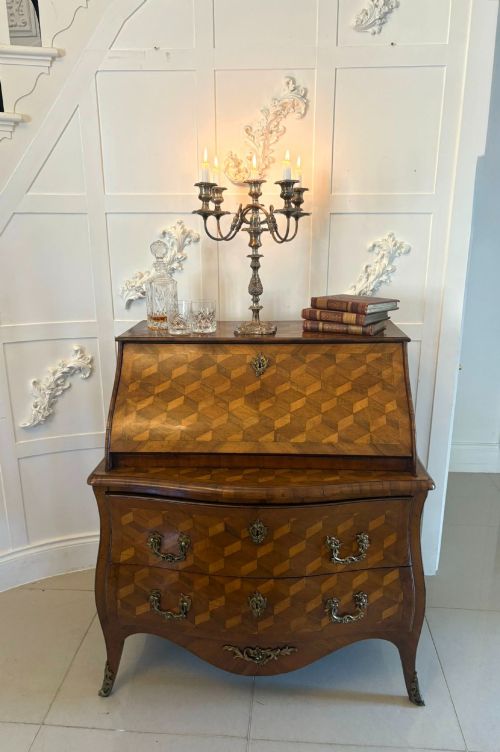
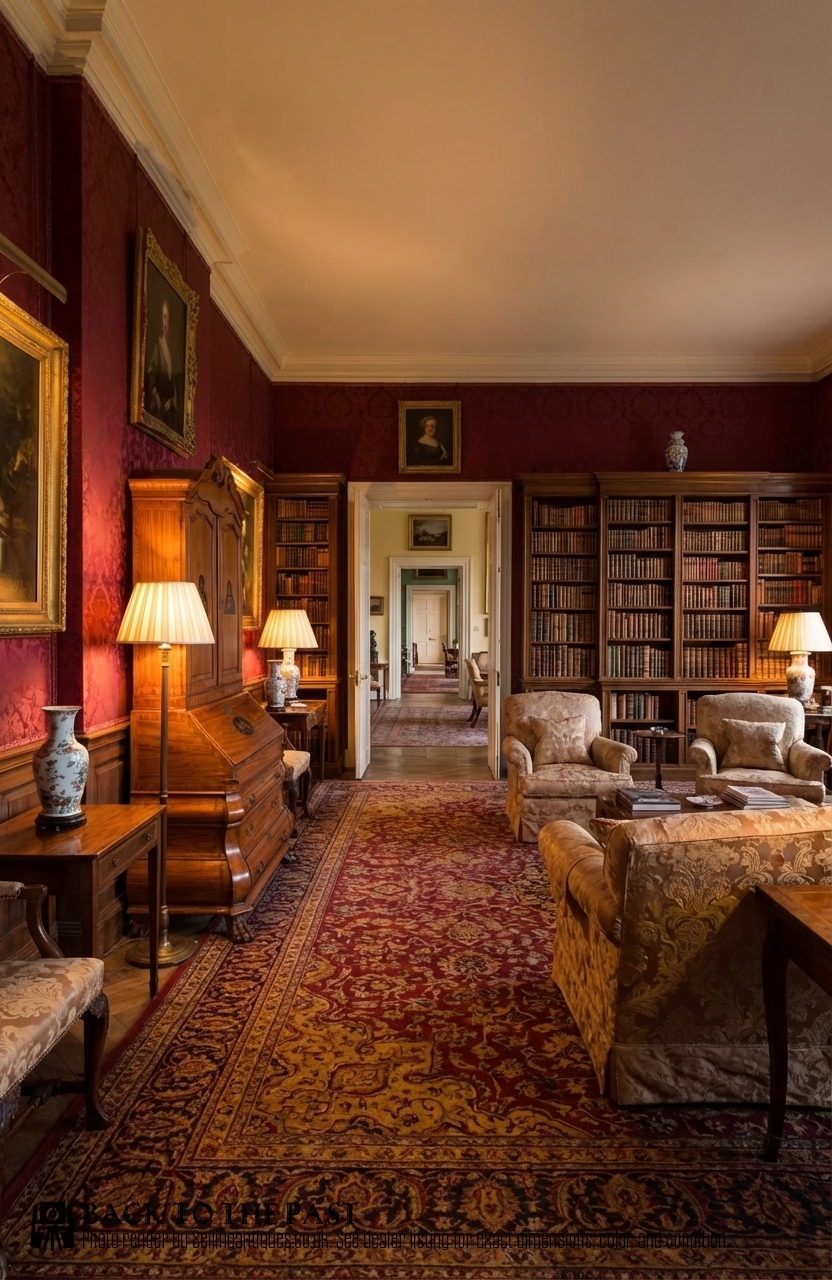
A bombe chest desk takes the form of a bureau, writing bureau, or bureau bookcase, featuring the distinctive convex swell of the bombe front that defines these pieces. These works originate from the eighteenth century, the nineteenth century, and the year eighteen hundred, encompassing Georgian and Dutch Baroque or Dutch Rococo styles.
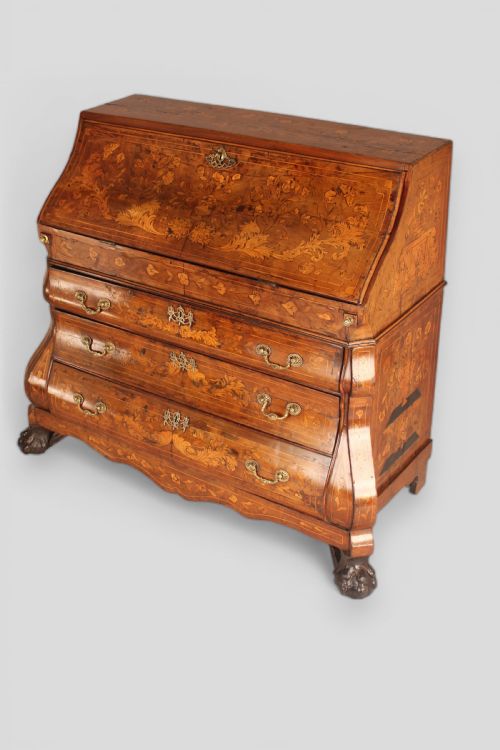
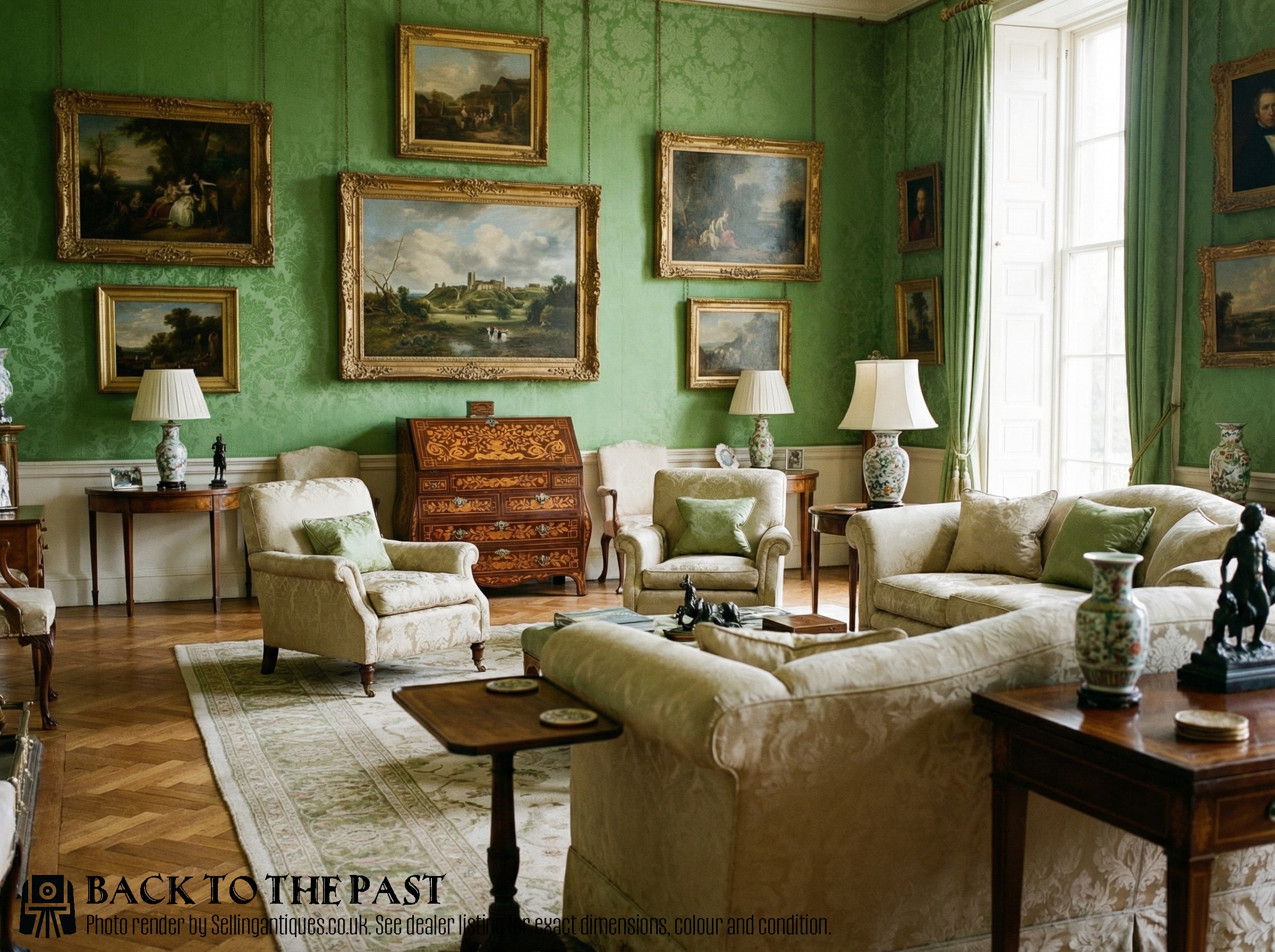
The layout typically pairs a sloping fall-front desk with deep, curved drawers below, or extends upward into a towering bookcase cabinet. Walnut, burr walnut, fruitwood, and oak form the primary body, often enriched by intricate floral marquetry and wood inlay.
Most examples encountered here trace their origin to Dutch workshops, uniting robust storage capacity with complex, bulging profiles. The union of a practical writing surface with sculptural woodwork makes each piece both a functioning desk and a focal point.
How they were made
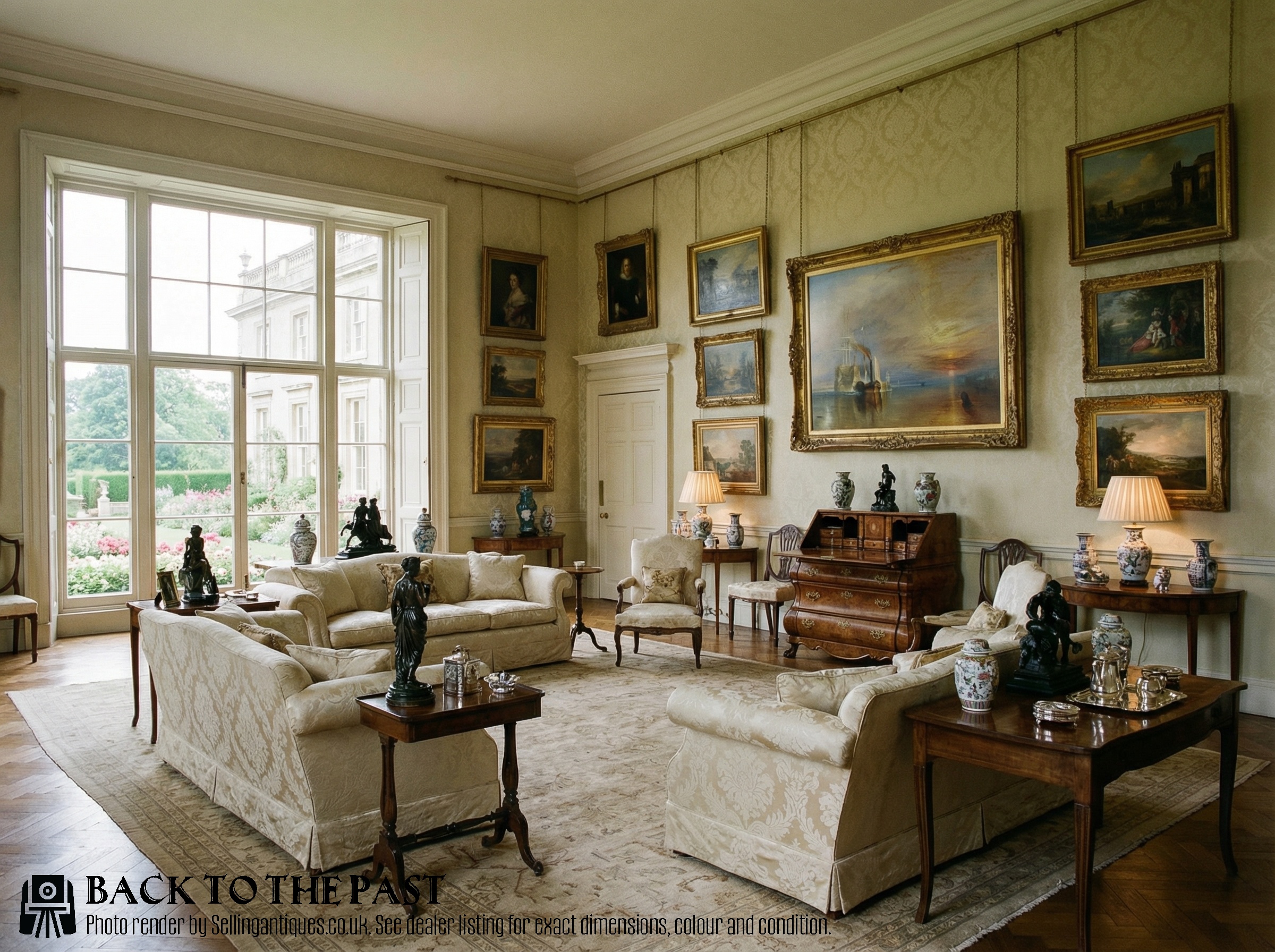
Cabinetmakers constructed these pieces using dense hardwoods like walnut, burr walnut, fruitwood, and oak as the foundational carcass. Skilled hands shaped the characteristic curved bombe contours by building up solid timber or forming shaped framework to achieve the outward swell.
Surfaces frequently showcase elaborate wood inlay and floral marquetry, setting contrasting veneers into the primary timber to create botanical patterns. Brass handles and escutcheons punctuate the drawers, fastened securely to complement the heavy timber construction.
Retail Price Guide 2026
Typical UK retail prices for bombe chest desk, calculated from the Sellingantiques database of over a million retail prices indexed since 2003. This retail price guide relies exclusively on Sellingantiques data; no external sources or auction records are used, so the figures do not describe the wider market.
Current listings feature walnut, burr walnut, fruitwood, and oak, decorated with wood inlay and floral marquetry.
What varies in quality
The ambition of the marquetry and the choice of veneer dictate the visual hierarchy among these desks. Dense burr walnut and masterly floral marquetry spanning the entire fall-front and drawer curves separate the finest cabinetwork from plainer timber surfaces.
The execution of the bombe swell itself defines the structural mastery of the piece, requiring precise joinery to maintain the outward curve without distortion. Cohesive proportions between the upper writing compartment and the bulging lower drawers determine the success of the silhouette.
The Bombe Chest Desk Glossary
- Bombe
- A bulging, convex profile characteristic of continental furniture, swelling outward on drawer fronts and sides. This sculptural form demands advanced cabinetmaking techniques to shape timber accurately.
- Marquetry
- Decorative veneer work arranged in pictorial patterns, such as floral motifs, using various tinted woods. Craftsmen cut precise shapes to fit together like a puzzle across the writing surface or drawer fronts.
- Bureau
- A writing cabinet featuring an angled fall-front that drops down to reveal an interior fitted with pigeonholes and small drawers. This form provides a concealed workspace when closed.
- Burr walnut
- Timber sliced from walnut tree growths, yielding a highly swirled, mottled grain pattern prized for decorative veneers. It adds intense visual texture to the curved surfaces of continental furniture.
- Fall-front
- The hinged writing flap of a desk that pulls down into a horizontal position for writing. When raised, it secures the internal compartments and conceals the workspace.
Frequently Asked Questions
How do I use a bombe chest desk?
Lower the hinged fall-front to access the internal writing surface, pigeonholes, and small document drawers. The deep, curved drawers below provide substantial storage for household papers and large items.
Keep the timber conditioned and avoid placing the desk in direct sunlight or near heat sources to protect the delicate veneers and marquetry.
What periods do these desks come from?
These pieces date primarily from the eighteenth century and the nineteenth century, including works made around eighteen hundred. Georgian and Dutch Baroque or Dutch Rococo stylistic influences dominate the surviving examples.
Construction methods and decorative marquetry shift subtly across these periods, reflecting evolving continental cabinetmaking tastes.
Where were these desks made?
The surviving pieces point heavily toward Dutch workshops, aligning with the Dutch Baroque and Dutch Rococo traditions. Cabinetmakers in these regions specialised in the dramatic bombe silhouette and complex floral inlay.
Walnut, burr walnut, fruitwood, and oak served as the primary materials for these continental ateliers.