






Dutch Bureau Bookcase
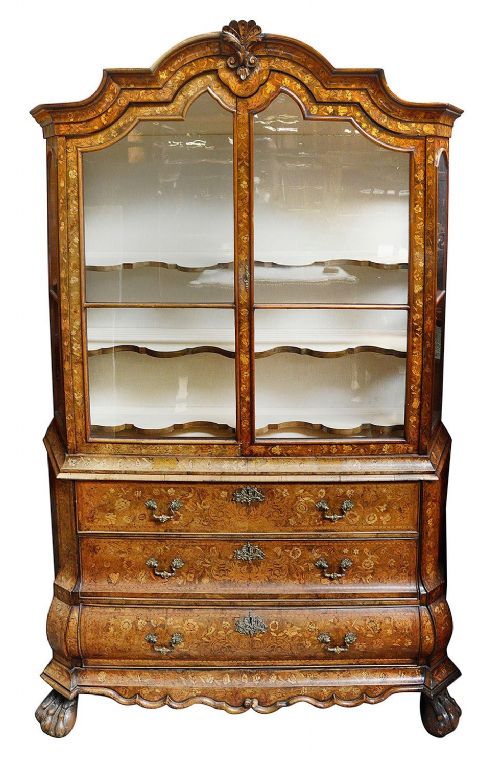
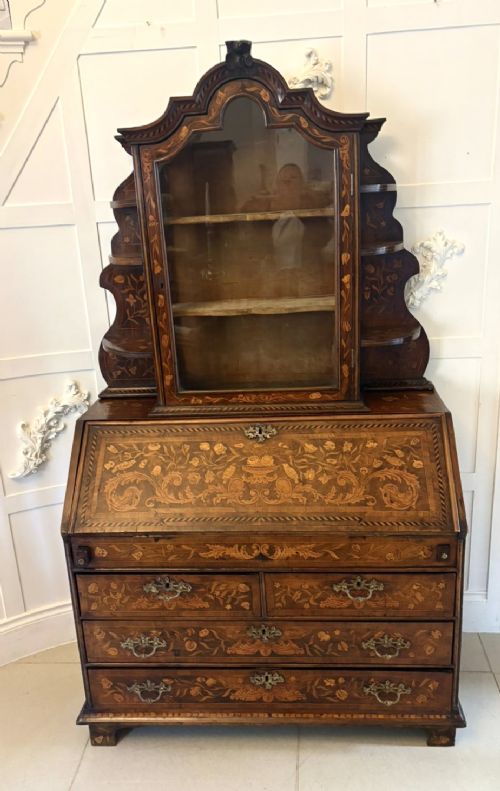
These dutch bureau bookcase pieces combine fitted writing desks with upper shelving, built in walnut, burr walnut, and fruitwood.
Dutch Bureau Bookcase
A dutch bureau bookcase merges a sloped writing flap with upper display shelving or cabinet space, creating a dual-purpose room centrepiece. Buyers search for these items to secure significant storage alongside a functional desktop surface.
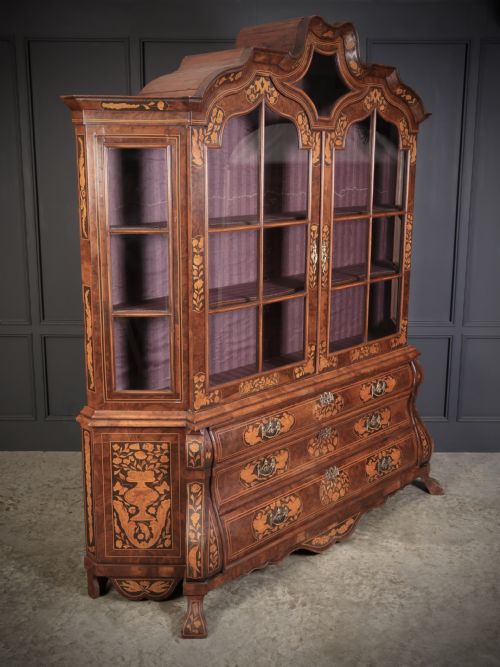
The pieces appearing on this page span the eighteenth century, the nineteenth century, and nineteen twenty, showing both baroque and rococo influences. Walnut and burr walnut dominate the forms, frequently enriched with elaborate fruitwood marquetry and fruitwood inlay.
Bureau bookcases, display cabinets, and bureau cabinets represent the primary object types encountered within this selection. Bombe shaped lower chests appear frequently among the pieces, demonstrating the characteristic swelling profile of the tradition.
Materials and construction methods
Cabinet makers utilised solid and veneered walnut, burr walnut, and fruitwood to build the primary carcass and framing. Glass panels were fitted to upper doors for the display of books or porcelain.
Fruitwood marquetry and fruitwood inlay form detailed floral and pictorial patterns across the exterior surfaces. Brass hardware, including escutcheons and handles, secures the drawers and fall fronts.
Miniature silver versions exist alongside full-sized walnut rooms, proving that cabinet makers loved tiny drawers.
Distinctions in quality
Quality rests upon the precision of the fruitwood marquetry and the choice of burr walnut veneer across the facade. Denser, more fluid floral patterns demonstrate greater skill by the original maker.
Proportion and the handling of bombe swelling dictate the visual success of the lower chest section. Integrated internal small drawers and secret compartments within the bureau section also signal superior manufacture.
The Dutch Bureau Bookcase Glossary
- Marquetry
- Decorative veneer patterns formed by fitting together small pieces of fruitwood and other woods. This technique creates pictorial designs of flowers and foliage across the cabinet front.
- Bombe
- A swelling or bulging contour applied to the lower chest portion of the cabinet. This curvaceous profile defines much of the baroque and rococo output.
- Vitrine
- A glass-fronted display cabinet designed for showing porcelain and precious objects. These upper sections sit directly atop the bureau base.
- Burr walnut
- Wood grain marked by knotty growths that produce intricate, swirling patterns. Cabinet makers prized this material for high-status furniture facades.
Dutch Bureau Bookcase: Frequently Asked Questions
What is a dutch bureau bookcase?
A dutch bureau bookcase is a dual-function furniture piece featuring a lower desk with a sloping writing flap and an upper cabinet for books or display.
These cabinets combine storage, writing space, and display areas into a single tall architectural structure.
How do I date a bureau bookcase?
Dating relies on observing construction methods, timber choices, and stylistic traits such as baroque or rococo carving.
Eighteenth-century examples often feature dense burr walnut and hand-cut marquetry, while later nineteenth-century and nineteen twenty pieces show different execution in the inlay.
How are these cabinets used in a home?
They serve as both working writing desks and display storage for books or decorative objects.
The drop-down flap opens to reveal small drawers and pigeonholes for correspondence.