





Dutch Baroque Bureau
A dutch baroque bureau brings complex floral marquetry and bombé forms into a room, offering both a functional writing slope and a dramatic silhouette.
Dutch Baroque Bureau
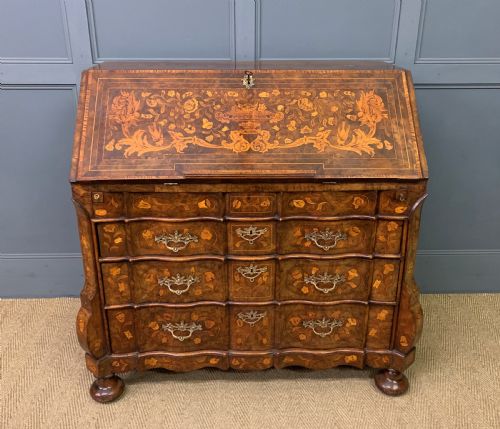
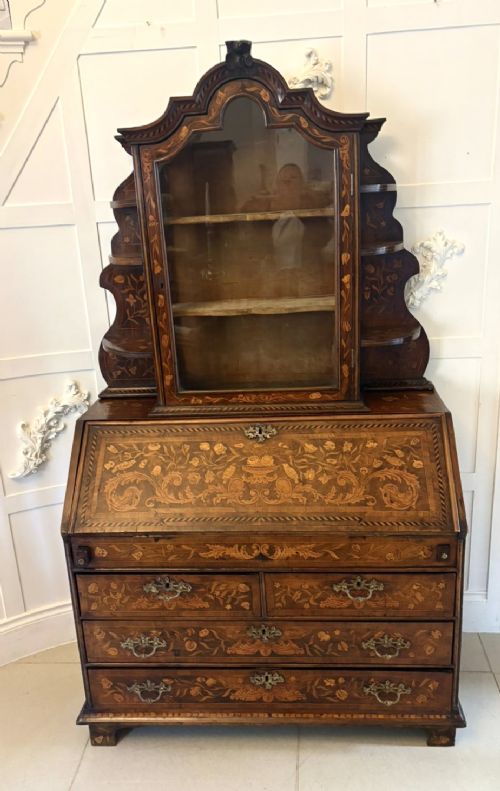
A dutch baroque bureau combines a sloping writing flap with a fitted interior of small drawers and pigeonholes, often standing on bracket feet or ball feet. These pieces emerge in walnut, burr walnut, and mahogany, frequently decorated with elaborate floral marquetry inlay.
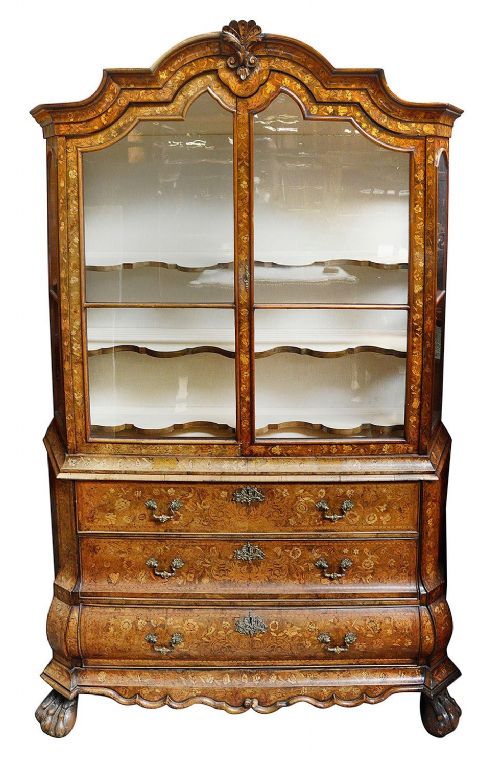
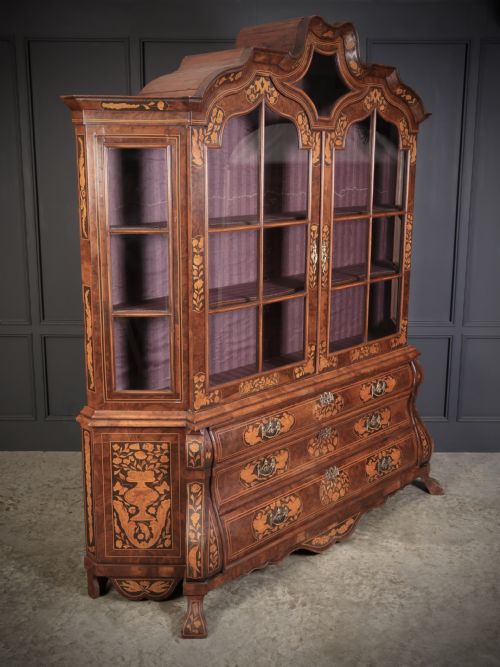
The form frequently extends upward into bureau bookcases or display cabinets, pairing glazed upper sections with lower writing compartments. Alongside standard slope-front desks, the inventory records bombé shapes that swell outward with curved fronts and sides.
The majority of examples date from the eighteenth century, though later revivals from periods like nineteen-twenty also appear. Cabinetmakers of these eras utilised fruitwood marquetry to render botanical motifs across the entire exterior surface.
Materials and Construction
Cabinetmakers constructed the carcase using solid foundational timbers like walnut or mahogany before applying decorative veneers and marquetry inlay. Fruitwood was often stained or chosen in contrasting natural shades to build up complex floral and bird motifs across the panels.
Brass hardware, including key escutcheons and drop handles, was fitted to secure doors and drawers. Glass panels were integrated into the upper doors of bookcase variants to showcase collections behind framed panes.
Listings feature walnut, mahogany, and rosewood combined with fruitwood marquetry inlay across eighteenth-century forms.
Assessing Craftsmanship and Detail
The crispness of the floral marquetry inlay dictates much of the visual success of a dutch baroque bureau. Superior examples maintain precise botanical outlines without visible gaps between the contrasting fruitwood veneers.
The execution of the bombé curve requires advanced woodworking skill to maintain structural integrity while achieving the characteristic swollen profile. Drawer linings, secondary timbers, and the integration of the writing flap interior show the level of care invested by the original maker.
The Dutch Baroque Bureau Glossary
- Bombe
- A swelling, convex curved profile on the front and sides of a piece of furniture. This technique demands advanced carpentry to shape the timber securely.
- Marquetry
- Decorative veneer work arranged in pictorial patterns using various woods. Craftsmen cut pieces of fruitwood and walnut to fit together like a puzzle.
- Escutcheon
- A protective plate surrounding a keyhole, usually cast in brass. These fixtures often feature decorative scrolling appropriate to the period.
- Secretaire
- A desk or cabinet featuring a pull-down writing drawer or flap. It conceals internal compartments designed for correspondence and papers.
- Vitrine
- A glass-fronted cabinet used for displaying precious objects and ceramics. The framework mirrors the timber and inlay of the associated bureau.
Dutch Baroque Bureau: Frequently Asked Questions
How do I use a bureau?
Lower the sloping writing flap to reveal the internal nest of small drawers and compartments, providing a stable surface for writing letters. When finished, simply close the flap to conceal correspondence and maintain a tidy room.
The internal drawers remain accessible for storing stationery and small valuables securely out of sight. Larger bookcase variants also offer upper shelving for displaying books or collections behind glass doors.
Where should I place it?
Position the piece against a principal wall in a study, drawing room, or hallway where the curved silhouette and floral inlay receive adequate light. Keep the timber away from direct heat sources and strong sunlight to protect the fragile fruitwood veneers.
Allow sufficient clearance in front of the bureau so the writing flap can open fully without obstruction. Placing the furniture in a stable room climate prevents the walnut and mahogany carcase from shifting.
How do I spot an eighteenth-century piece?
Examine the secondary timbers inside the drawer boxes and the construction methods used for the dovetails. Eighteenth-century examples rely on hand-cut joints and native European hardwoods rather than modern laminates.
Look closely at the marquetry patterns and the wear on the feet and handles, which should show consistent age. Revivals from later periods often display different internal construction standards and timber selections.
What is fruitwood marquetry?
Fruitwoods such as pear, apple, and cherry are sliced into thin veneers and dyed or shaded with hot sand to create depth in floral designs. Craftsmen assemble these pieces into intricate compositions of flowers and foliage.
This technique allows for subtle tonal variations across the surface of the walnut or mahogany carcase. The resulting patterns define the decorative ambition of these baroque cabinets.