



Dutch Floral Marquetry
Dutch floral marquetry pieces are intricate items of furniture adorned with elaborate wood inlays of blossoms, built to command attention in a room.

Dutch Floral Marquetry
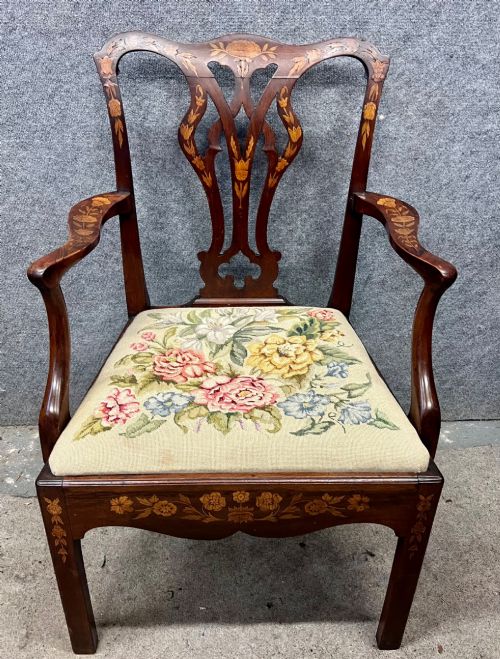
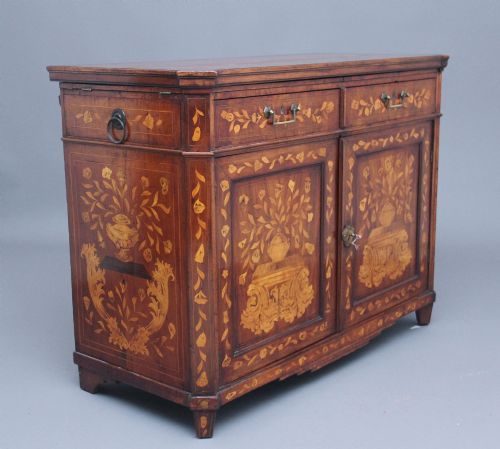
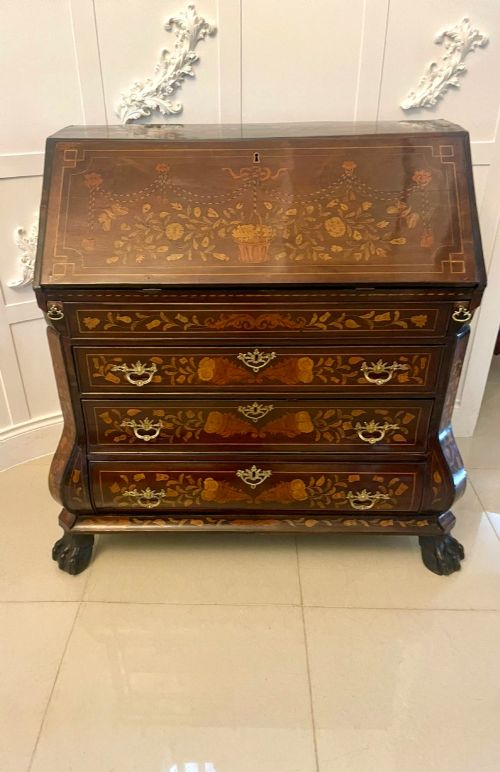
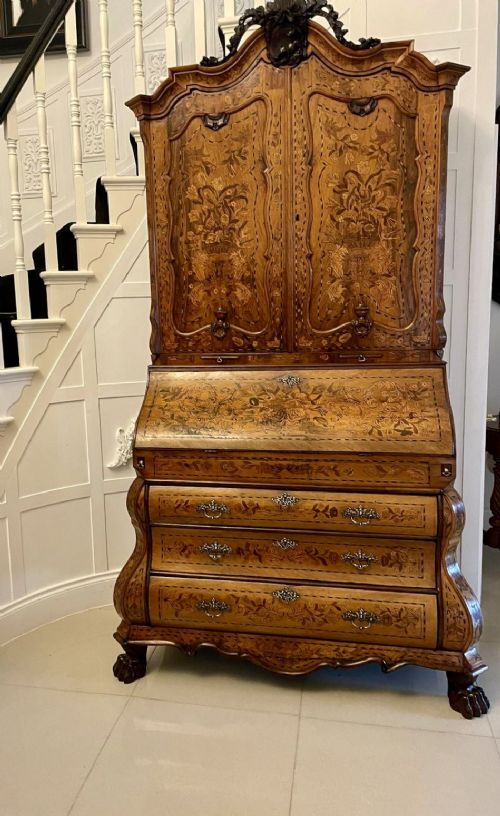
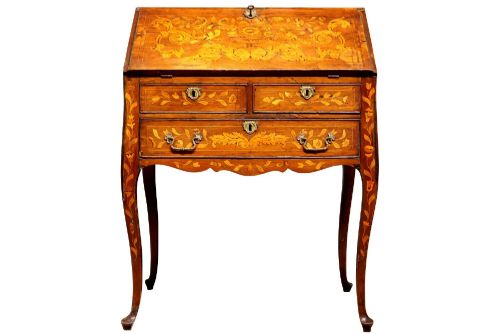
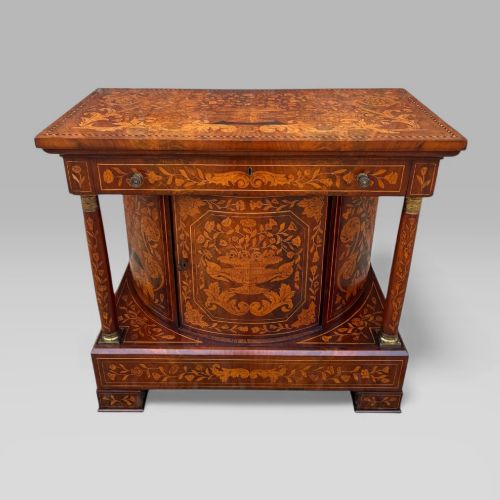
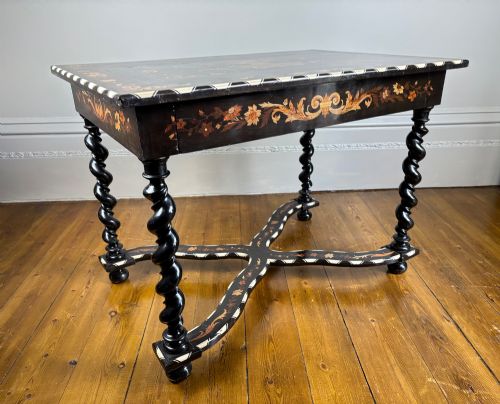
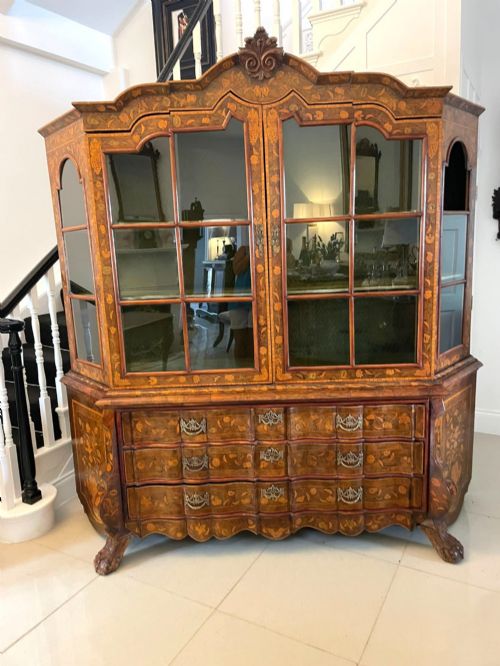
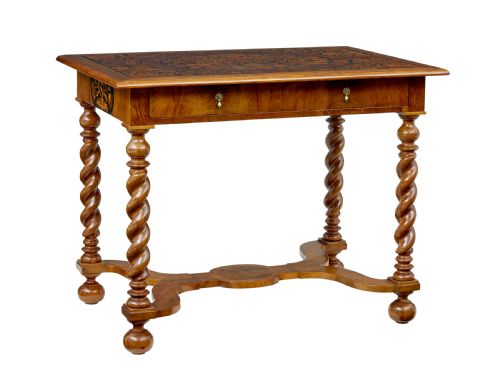
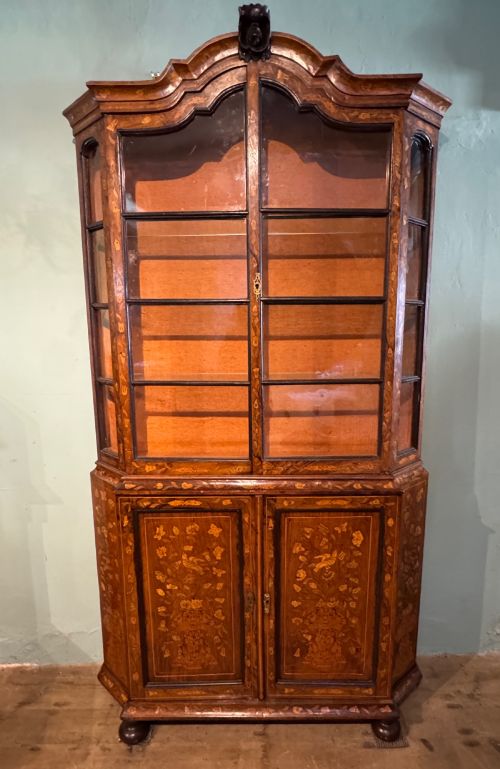
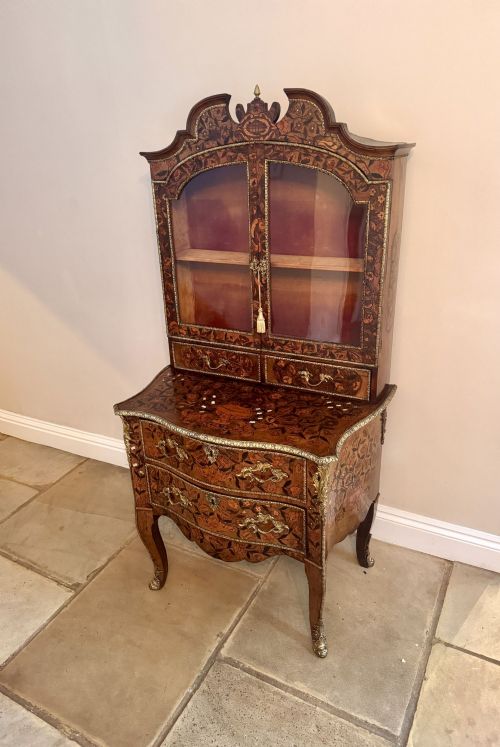
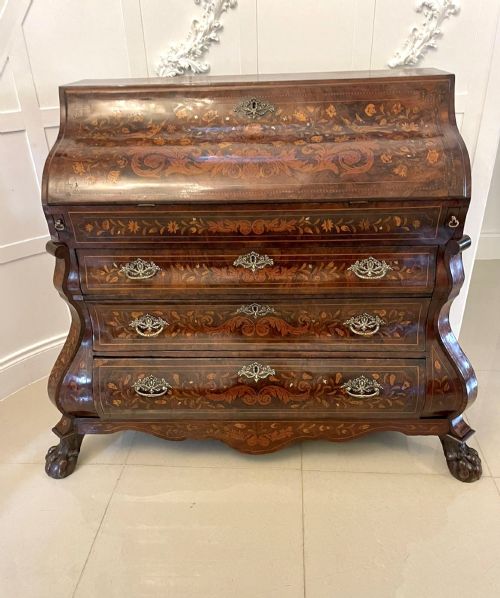
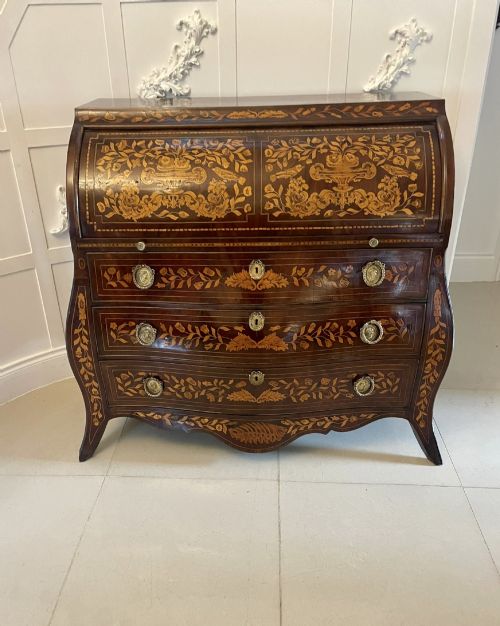
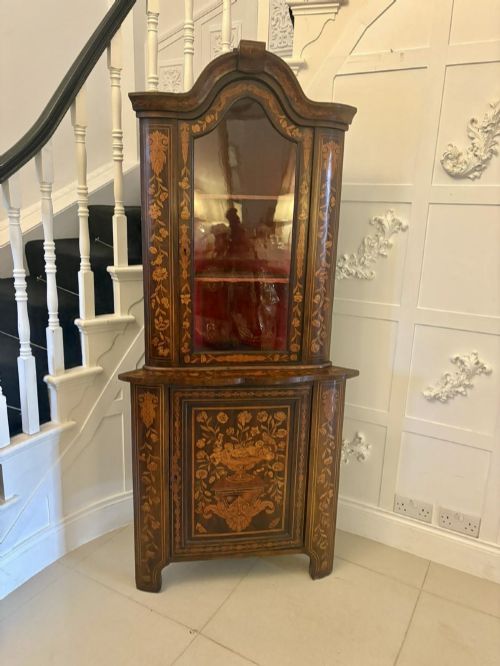
When you search for dutch floral marquetry, you encounter case furniture and tables covered in elaborate floral and foliate veneers. These items originate predominantly from the seventeenth, eighteenth, and nineteenth centuries, taking forms such as bureaus, display cabinets, chests of drawers, and centre tables.
The version you are most likely to meet on this page is an eighteenth-century walnut or mahogany bureau, chest, or table featuring detailed inlaid botanical motifs. Many examples display bombe contours or serpentine shapes, reflecting the prevailing Dutch Baroque, Rococo, and Neoclassical styles of their creation.
The selection extends to mirrors, side tables, and vitrines, often pairing the signature marquetry with rich secondary woods. These furnishings demonstrate a distinct continental European aesthetic, differing markedly from British cabinet-making traditions through their dense pictorial veneer work.
Materials and Techniques
Cabinet-makers constructed the carcases using native and imported timbers, primarily walnut and mahogany, often applying burr walnut or fruitwood veneers to the visible surfaces. They then cut thin sheets of contrasting woods, bone, or pewter to form complex floral patterns.
The artisan assembled the floral motifs by cutting multiple layers of veneer simultaneously, a method known as packet cutting, which ensured tight joints between the different timber species. These shaped pieces were glued to the carcase and engraved with fine lines to delineate petals, leaves, and stems.
Makers occasionally incorporated fruitwood inlay and brass hardware to complement the dense marquetry panels. Once the glue dried, they scraped and polished the surface to highlight the natural colour variations of the woods used in the floral design.
Dutch Floral Marquetry Retail Price Guide 2026
Typical asking prices for dutch floral marquetry among the pieces listed under this phrase on Sellingantiques today, from the lower quarter to the upper quarter. They describe what is for sale here now, not the wider market.
Listings feature walnut, mahogany, and fruitwood across eighteenth-century bureaus, display cabinets, and centre tables.
Assessing Quality and Execution
Quality in these pieces depends on the precision of the veneer cutting and the natural variety of the woods utilised within the floral design. Superior examples display subtle tonal shifts in the fruitwood and walnut to give the blossoms a three-dimensional depth, whereas lesser pieces rely on flat, repetitive patterns with minimal contrast.
The architectural integrity of the underlying furniture carcase also separates the top of the range from the ordinary. Pieces that retain their original bombe shaping, crisp mouldings, and well-fitted drawers demonstrate a higher standard of original craftsmanship from the workshop.
Edwards and Roberts
The Dutch Floral Marquetry Glossary
- Marquetry
- The art of applying decorative pieces of veneer to a furniture structure to form pictorial designs. This technique differs from inlay by covering the entire surface rather than being set into hollowed-out recesses.
- Bombe
- A swollen or bulging contour found on the front and sides of chests of drawers and bureaus. This curved shape requires advanced woodworking skill to veneer successfully.
- Vitrine
- A glass-fronted display cabinet designed for showcasing porcelain and curiosities. These pieces often feature extensive floral marquetry across the lower chest and frame.
- Veneer
- A thin layer of finely figured wood applied to a secondary timber carcase. Burr walnut and fruitwood veneers provided the contrasting backgrounds for the floral marquetry panels.
- Spandrel
- The triangular space between the outer curve of an arch and a rectangular frame. Mirrors and cabinets in the evidence display carved or inlaid spandrels at their corners.
Dutch Floral Marquetry: Frequently Asked Questions
What is dutch floral marquetry?
Dutch floral marquetry is a decorative woodworking technique where contrasting woods are cut and fitted together to create intricate flower patterns on furniture.
Craftsmen applied these pictorial veneers to the surfaces of walnut and mahogany bureaus, tables, and cabinets during the seventeenth, eighteenth, and nineteenth centuries.
How do I date a piece?
Dating relies on examining the furniture form, the underlying structural timbers, and the style of the floral motifs. Eighteenth-century pieces frequently employ walnut and display Baroque or Rococo curves.
Later nineteenth-century examples often utilise mahogany or incorporate revival styles. Secondary woods inside drawers can also help determine the age of the object.
Where were these pieces used?
These decorative furnishings were placed in principal reception rooms, parlours, and hallways of affluent homes. Cabinets and bureaus served to display valuable possessions and store correspondence.
Centre tables and wall mirrors added visual interest to drawing rooms, often positioned to catch the natural light and highlight the detailed wood veneers.
How do I care for the veneer?
Maintenance involves protecting the wood from direct sunlight and sudden humidity changes, which can cause the delicate fruitwood veneers to dry and lift. Regular dusting with a soft, dry cloth preserves the finish.
Applying traditional wax polish sparingly helps maintain the natural lustre of the walnut and fruitwood without building up excessive residue on the marquetry.