


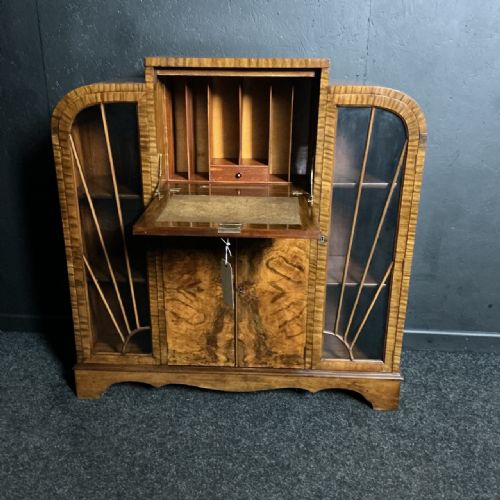
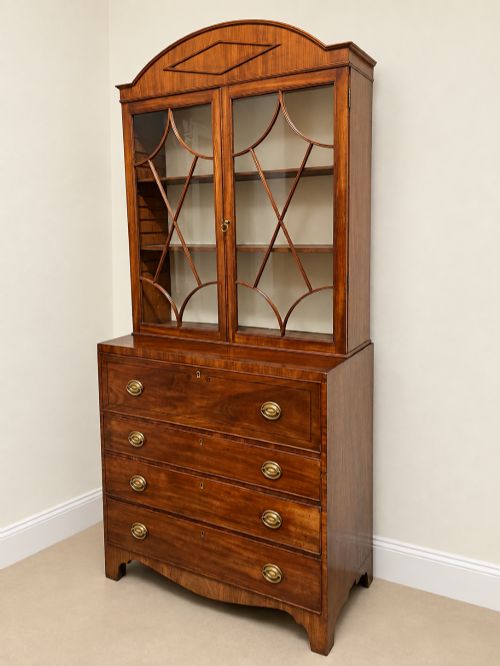
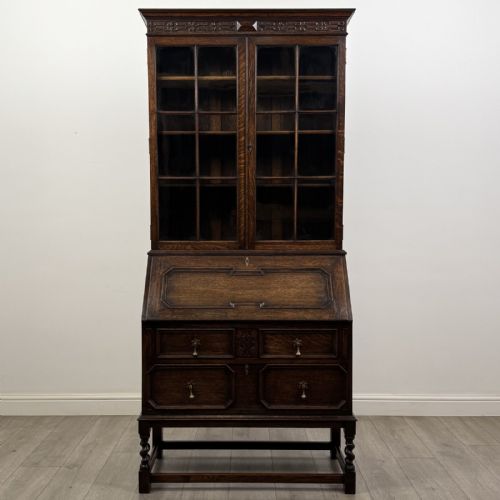

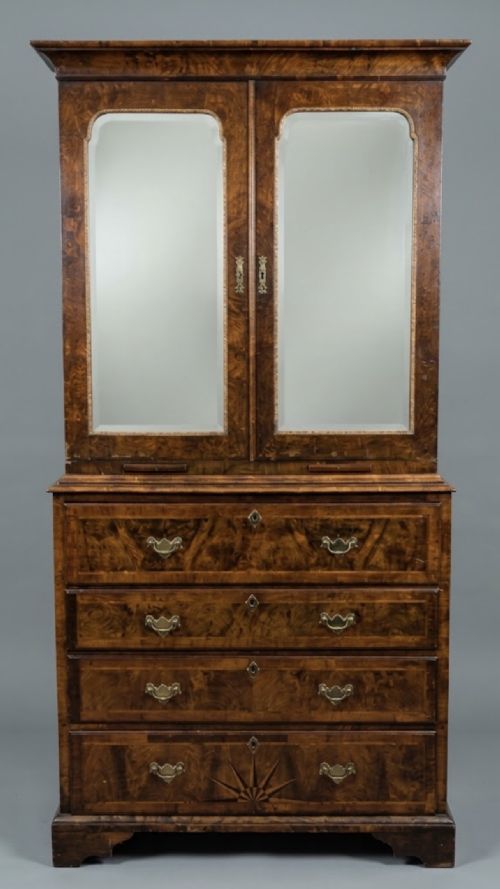
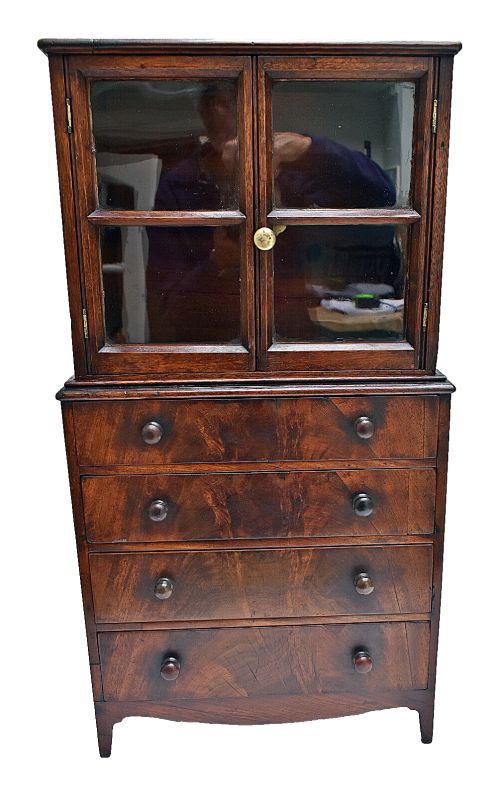
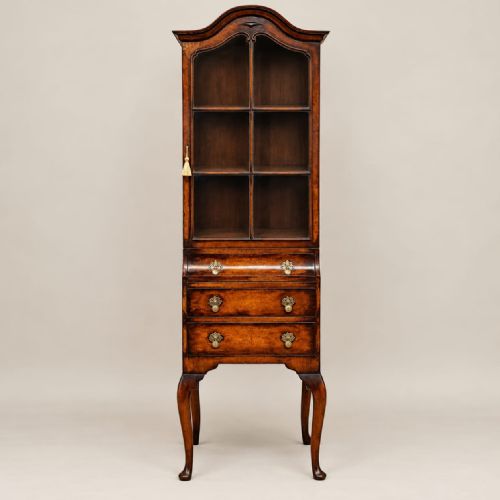
Antique Bureau with Bookcase
An antique bureau with bookcase combines a drop-front writing slope and upper shelving to solve two storage needs in one stately piece.
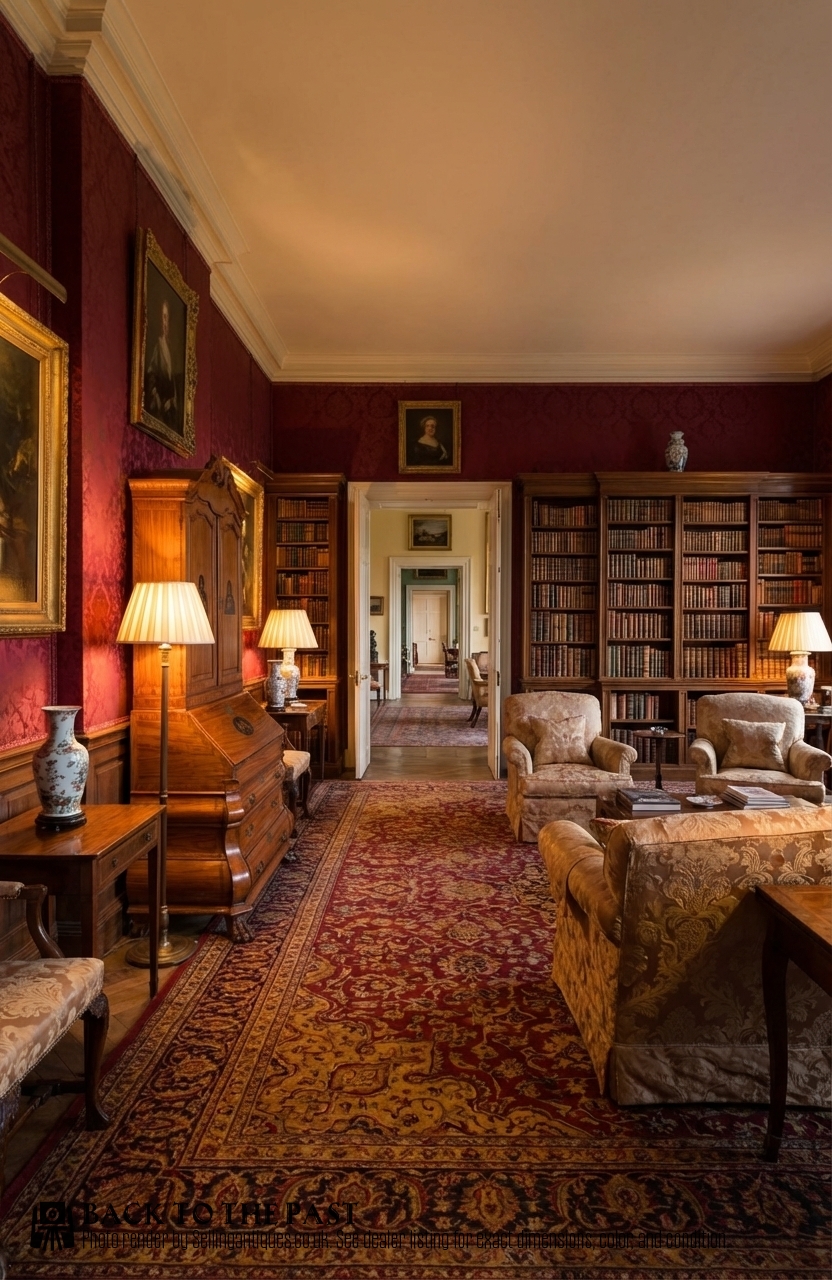
Antique Bureau with Bookcase
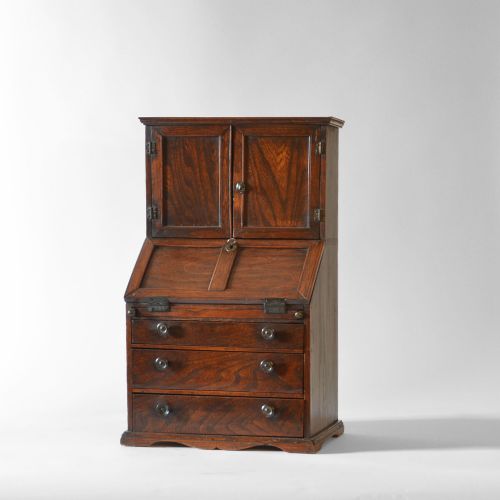
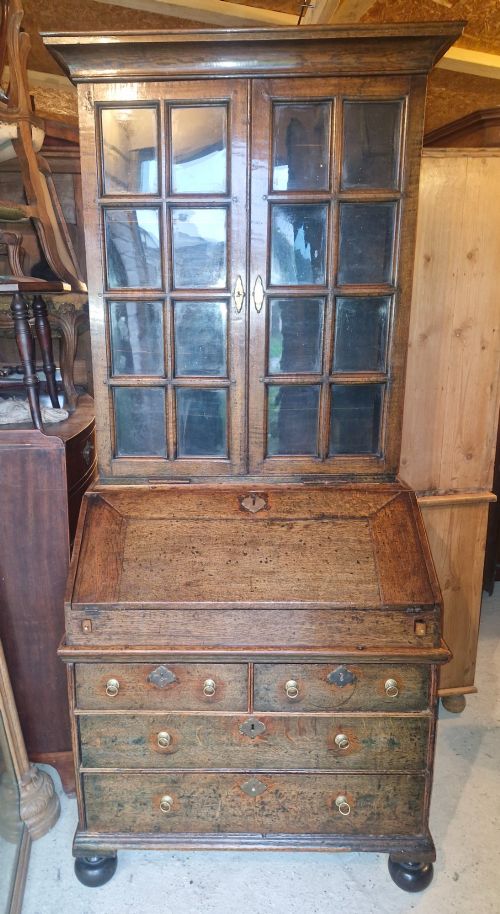
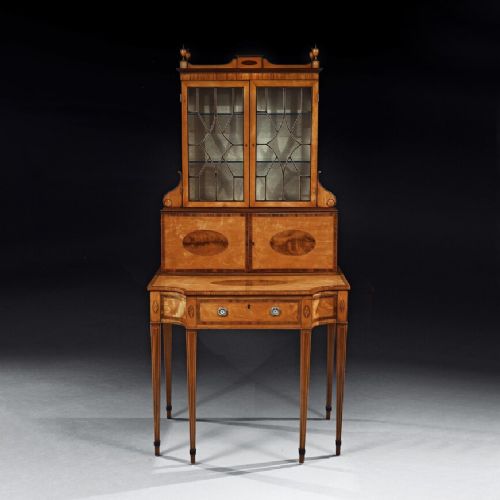
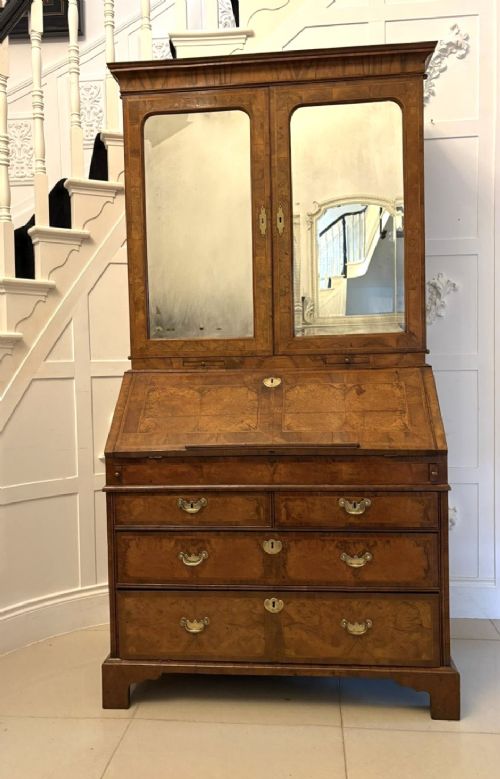
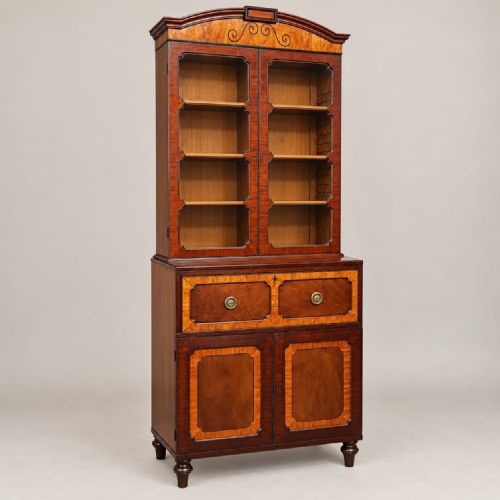
An antique bureau with bookcase pairs a fitted writing cabinet below with an enclosed shelved top, designed to keep correspondence and volumes orderly in a single footprint. Buyers most frequently meet mahogany and oak examples from the Georgian and nineteenth-century periods, often standing on bracket feet or plinth bases.
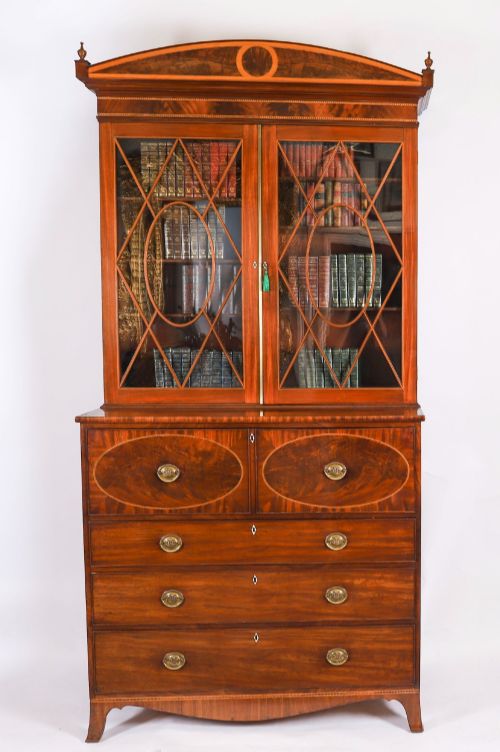
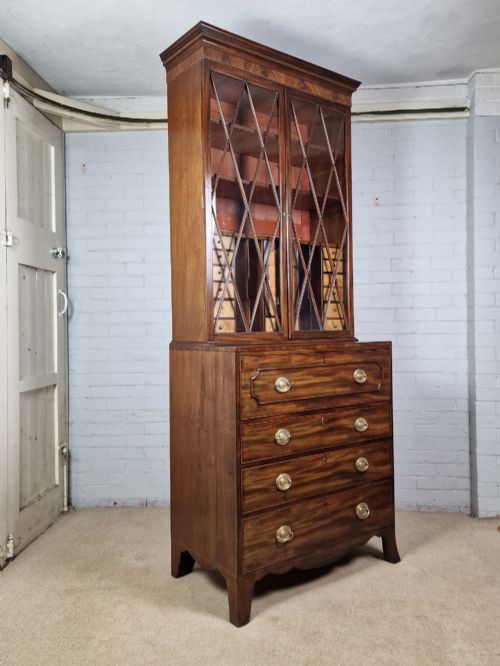
Upper sections typically feature glazed doors to display books or china, though solid wooden panels also appear across earlier oak and walnut iterations. Lower portions rely on a sloping fall-front that opens to reveal pigeonholes, small drawers, and occasionally secret compartments for private papers.
Materials and construction
Cabinetmakers built these carcases primarily using solid and veneered mahogany, oak, and burr walnut, applying fine figured grains to the primary exterior surfaces while reserving secondary softwoods for drawer linings and internal dividers.
Glazing bars on upper doors required delicate joinery to hold individual panes of glass securely, while interior drawers utilised hand-cut dovetails and brass hardware to withstand daily use.
Antique Bureau with Bookcase Retail Price Guide 2026
Typical asking prices for bureau with bookcase among the pieces listed under this phrase on Sellingantiques today, from the lower quarter to the upper quarter. They describe what is for sale here now, not the wider market.
The listings span eight distinct periods, stretching from seventeenth-century oak pieces up to early twentieth-century satinwood and mahogany creations.
Assessing quality and craftsmanship
Superior examples display continuous grain matching across drawer fronts and fall-fronts, proving that the maker selected timber from a single board to create a harmonious facade.
The complexity and depth of the internal fittings dictate the tier of craftsmanship, where secret compartments, carved pigeonholes, and inlaid cockbeading separate standard utility pieces from masterworks.
Tudor and Burrey Shrewsbury·Edwards and Roberts
The Antique Bureau with Bookcase Glossary
- Secretaire
- A writing cabinet or desk featuring a drop-front panel that conceals small drawers and pigeonholes.
- Fall-front
- The hinged sloping or vertical writing flap of a bureau that lowers to form a horizontal desk surface.
- Glazing bars
- The wooden strips that hold individual panes of glass within a cabinet door.
- Cockbeading
- A narrow raised moulding fitted around the edges of a drawer front to protect the edges and frame the timber.
- Pigeonholes
- Small, open compartments built into the interior of a desk to sort letters and documents.
Antique Bureau with Bookcase: Frequently Asked Questions
What is a bureau bookcase?
A bureau bookcase is a tall combination furniture piece featuring a lower writing desk with a sloping lid and an upper shelved cabinet for books.
These pieces stack the workspace directly beneath a glazed or panelled cupboard to maximise vertical wall space.
How do I date an old bureau bookcase?
Dating relies on examining the timber species, handle hardware, construction joints, and decorative styles like Georgian crossbanding or Victorian proportions.
Earlier eighteenth-century models frequently utilise oak or walnut with hand-cut dovetails, while nineteenth-century versions lean towards heavily figured mahogany.
Did people write standing up?
Most antique bureaux include a fall-front that opens at traditional desk height, allowing the user to sit on a matching chair while writing.
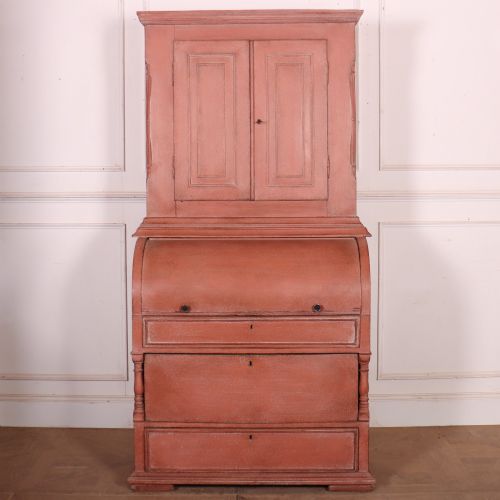
Compact student or cylinder versions maintain standard ergonomic writing levels despite their smaller overall footprints.
How do I care for walnut veneer?
Burr walnut and figured veneers require stable room temperatures away from direct sunlight and excessive dry heat to prevent timber splitting or lifting.
Applying a traditional beeswax polish periodically nourishes the grain without building up synthetic residues.