
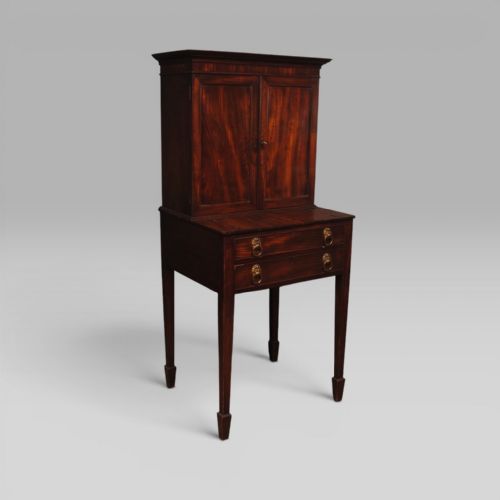

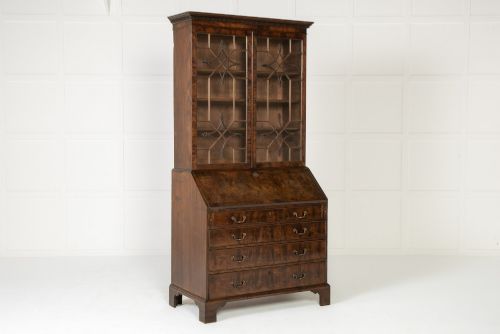


George III Secretaire Cabinet
A george iii secretaire cabinet combines architectural dignity with a fitted writing drawer, serving as both a bookcase and a desk.
George III Secretaire Cabinet
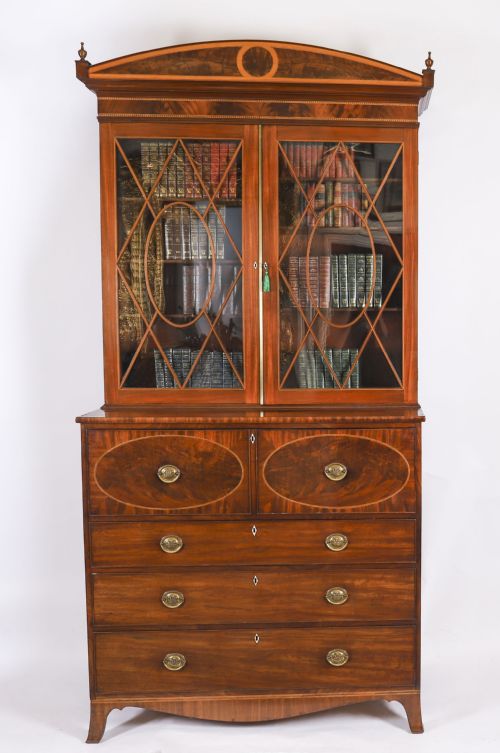
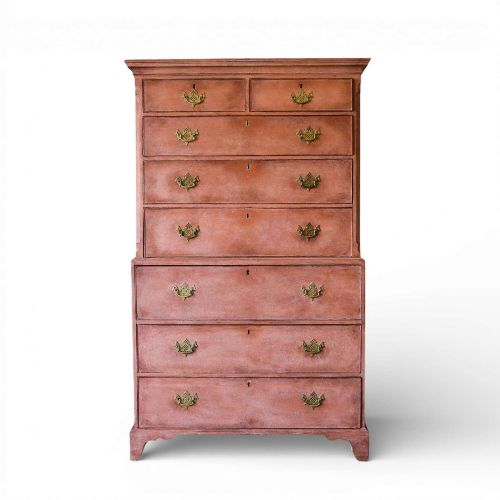
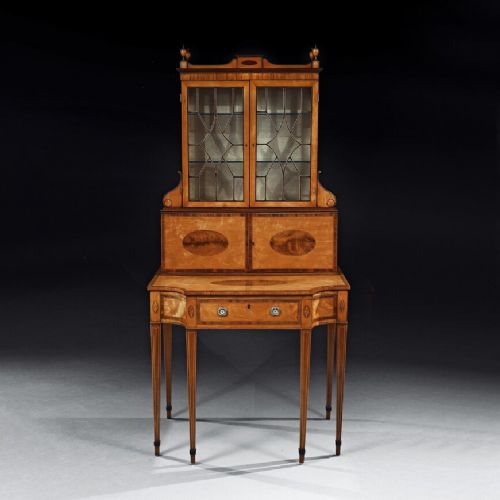
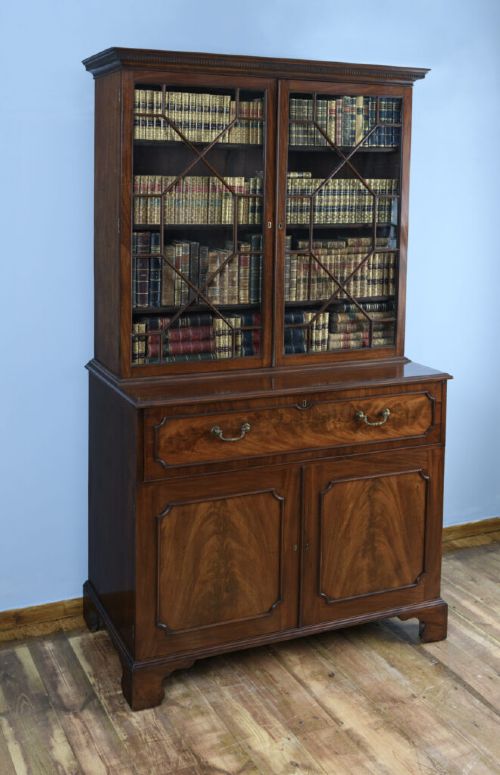
A george iii secretaire cabinet typically appears as a tall bookcase or chest on chest incorporating a drop-front writing drawer. The pieces seen here span the Georgian period and the late eighteenth to early nineteenth centuries.
Most examples take the form of secretaire bookcases with glazed upper doors, though low press cupboards, cylinder desks, and chest on chest variations also occur. They originate from British workshops operating under George III.
The primary variants include breakfront configurations, serpentine fronts, and simple chest forms fitted with writing drawers. Walnut and oak appear alongside the dominant mahogany.
Materials and Technique
Makers utilised solid timber and veneers, frequently selecting flame mahogany and satinwood to figure the primary surfaces. Crossbanding in contrasting woods frames the drawer fronts and cabinet doors.
Brass hardware, including drop handles and escutcheons, fastens drawers and doors while glass panels enclose the upper bookcase sections. Leather lines the fold-down writing surfaces inside the secretaire drawers.
Joinery techniques involve hand-cut dovetails for drawers and pegged framing for large case pieces. Paint is occasionally found on specific chest variations from the eighteenth century.
George III Secretaire Cabinet Retail Price Guide 2026
Typical asking prices for george iii secretaire cabinet among the pieces listed under this phrase on Sellingantiques today, from the lower quarter to the upper quarter. They describe what is for sale here now, not the wider market.
Listings feature mahogany, satinwood, walnut, and oak cabinets, with flame mahogany appearing most frequently as a primary veneer.
The Spectrum of Quality
The selection of timber grain dictates visual impact, with highly figured flame mahogany and matched satinwood marking the upper tier of production. Plain timber surfaces reflect more utilitarian workshop output.
Interior architecture reveals differences in execution, ranging from simple pigeonholes to complex arrangements of small drawers, secret compartments, and inlaid doors. The sophistication of these internal fittings elevates the standing of the piece.
Proportion and scale separate standard regional examples from pieces attributed to notable makers. Crispness in inlay work and carved details such as swan neck pediments distinguishes superior cabinet making.
Gillows
The George III Secretaire Cabinet Glossary
- Secretaire
- A writing drawer with a drop-front that conceals a fitted interior of small drawers and pigeonholes. This feature allows a cabinet to function as a desk without adding a separate piece of furniture.
- Flame mahogany
- Timber cut from the branch forks of the mahogany tree to produce a rippling, tongue-like grain pattern. Cabinet makers used this veneer centrally on drawer fronts for decorative effect.
- Breakfront
- A piece of furniture where the central section projects forward from the flanking wings. This architectural arrangement creates depth and shadow across large bookcases and cabinets.
- Cylinder desk
- A form featuring a quarter-circle rotating wooden shutter that pulls down to enclose the writing surface. It provides a smooth cylindrical closure in place of a drop-down flap.
- Satinwood
- A pale, hard timber from tropical trees utilised for contrasting inlay and veneering. It brings a golden yellow tone to eighteenth-century cabinet work.
George III Secretaire Cabinet: Frequently Asked Questions
How do I use a secretaire drawer?
Pull the main drawer forward using the exterior handles while supporting the fall-front flap as it lowers. Internal stays or hinges hold the writing surface level.
Once lowered, the drop-front provides a leather-lined slant for writing while granting access to the stationary drawers concealed inside.
Where were these cabinets placed in Georgian homes?
Libraries, drawing rooms, and studies housed these large pieces where books and writing materials needed to be kept secure. They served as dual-purpose furniture for reading and correspondence.
The upper bookcase sections held volumes while the lower cupboards stored papers, ledgers, and household records.
How can I tell a genuine eighteenth century piece apart?
Examine the secondary woods inside the drawers, such as oak or pine, and inspect the hand-cut dovetailing. Eighteenth-century construction methods leave distinct tool marks absent in later reproductions.
Check for period-appropriate hardware fixings and the natural ageing of the timber grain beneath the finish.
How do I care for mahogany and satinwood surfaces?
Keep the wood away from direct sunlight and heat sources to prevent the veneers from drying out and lifting. Regular dusting with a dry cloth maintains the finish.
Apply occasional traditional wax polish to nourish the timber and preserve the natural lustre of the grain.