


Vintage Secretary Cabinet
A vintage secretary cabinet combines a practical writing surface with concealed drawers and bookshelves, offering a versatile centrepiece for any study or drawing room.
What these pieces are
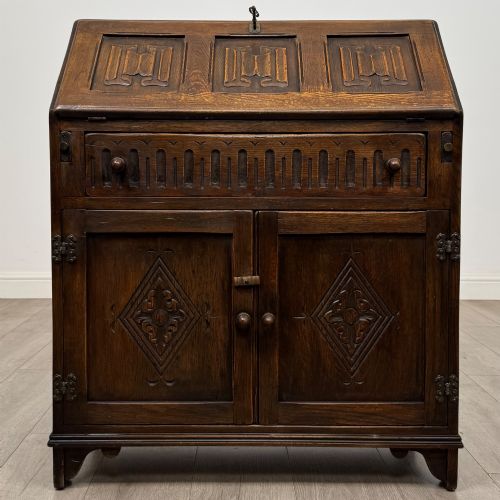
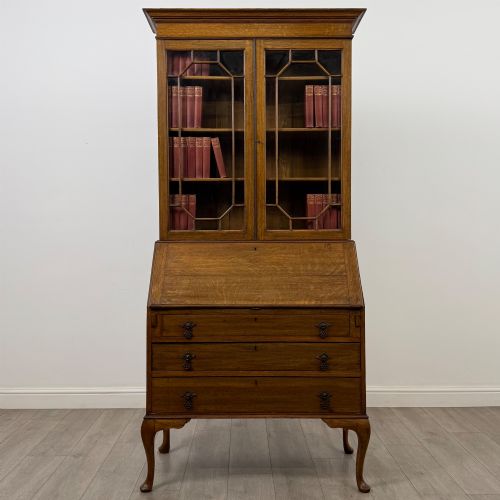
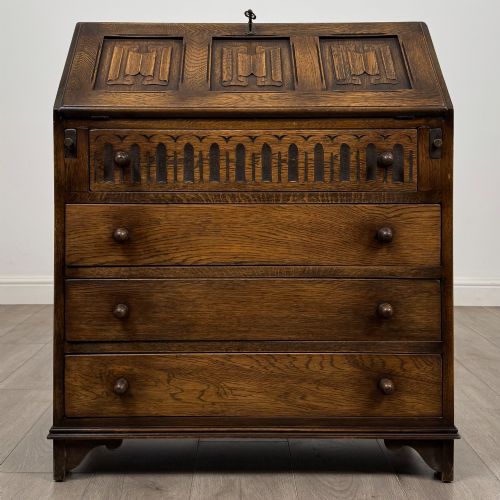
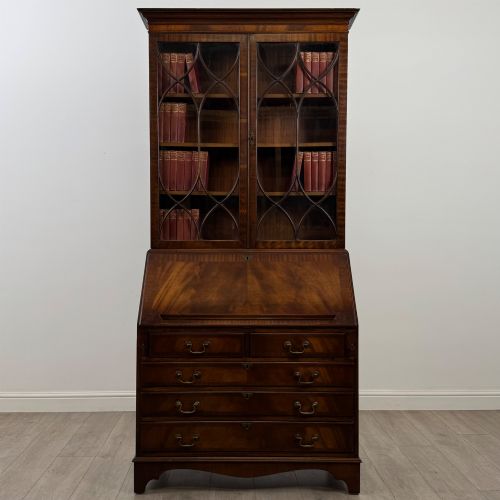
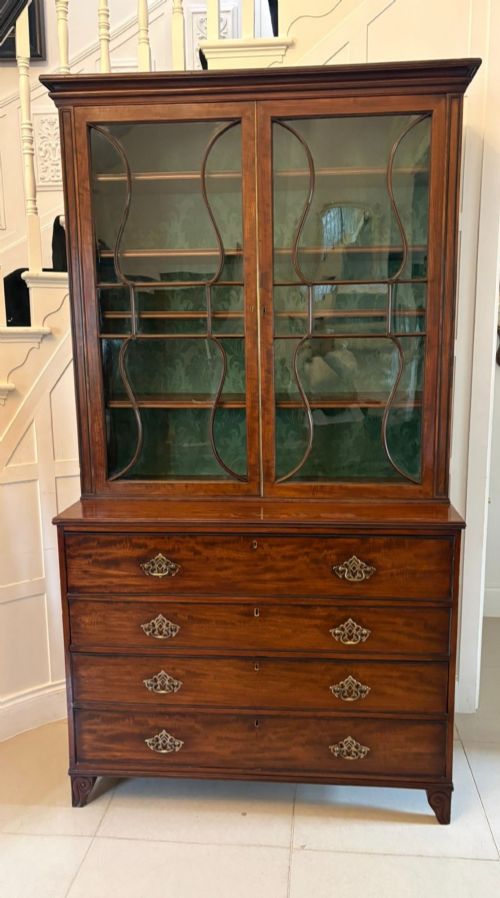
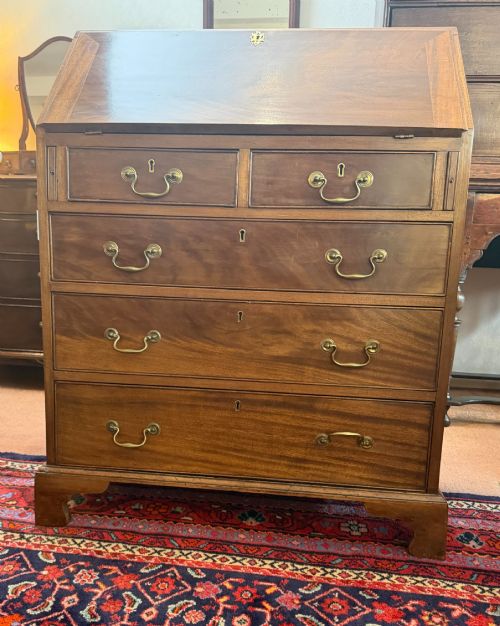
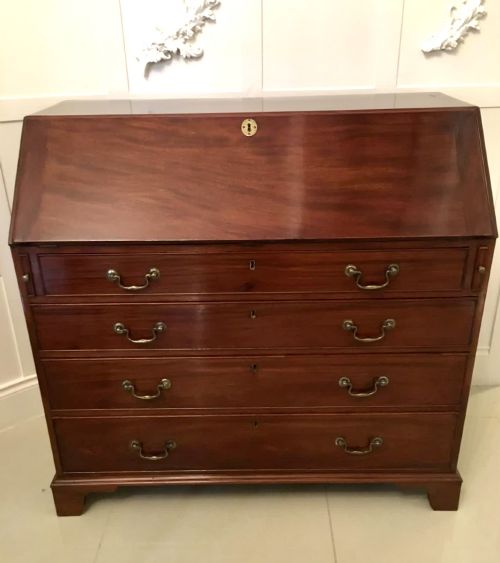
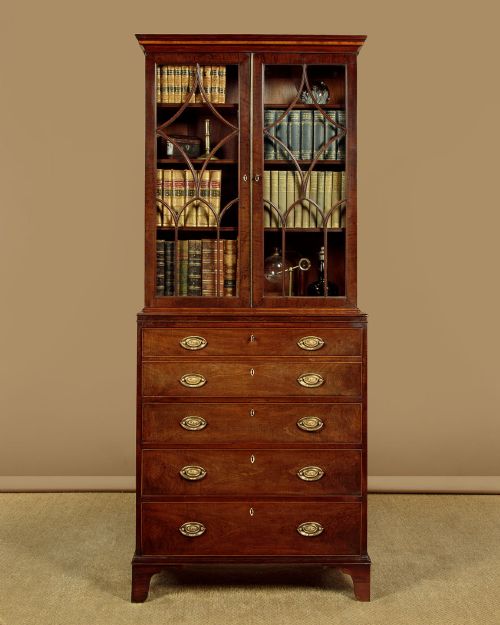
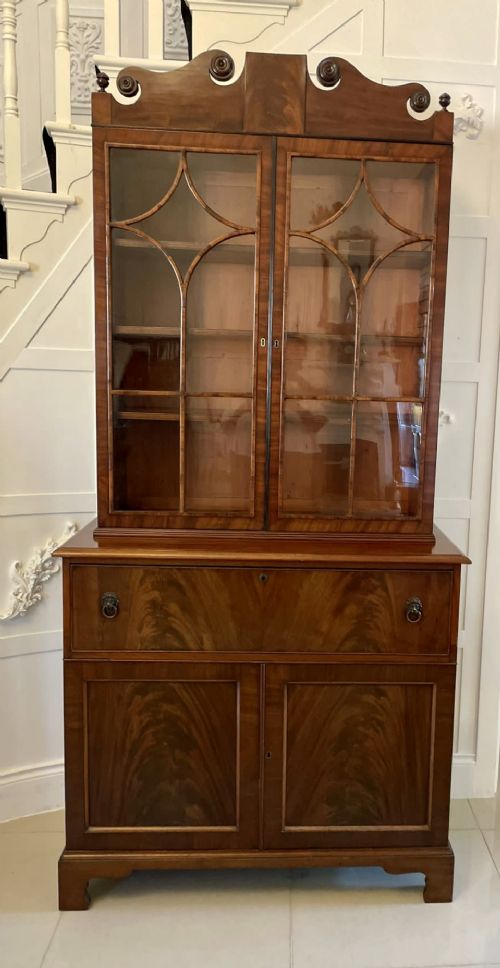
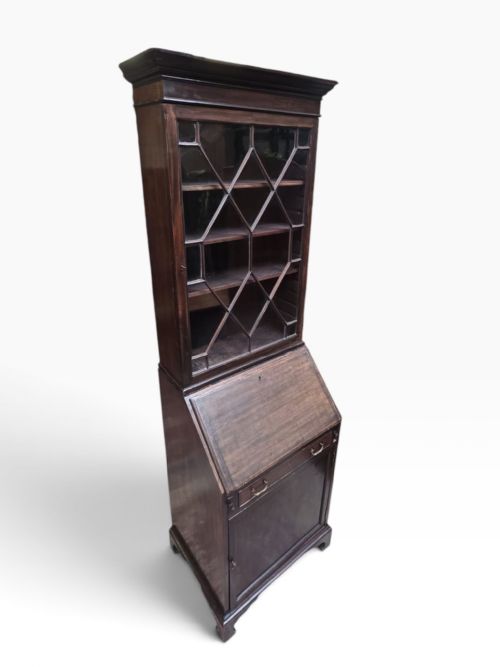
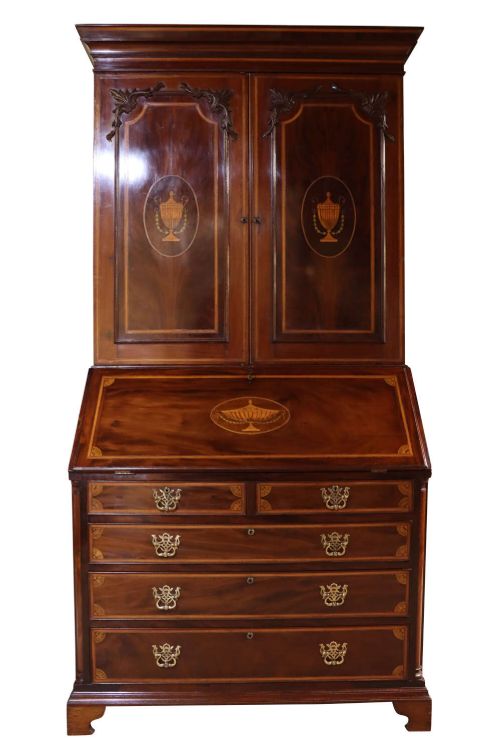
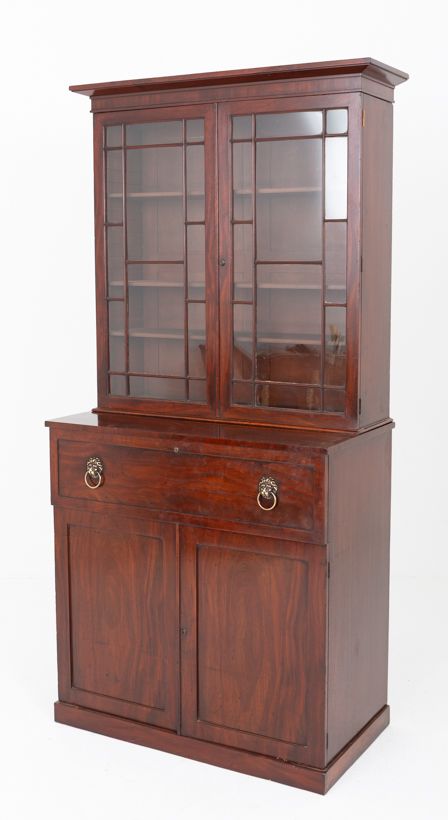
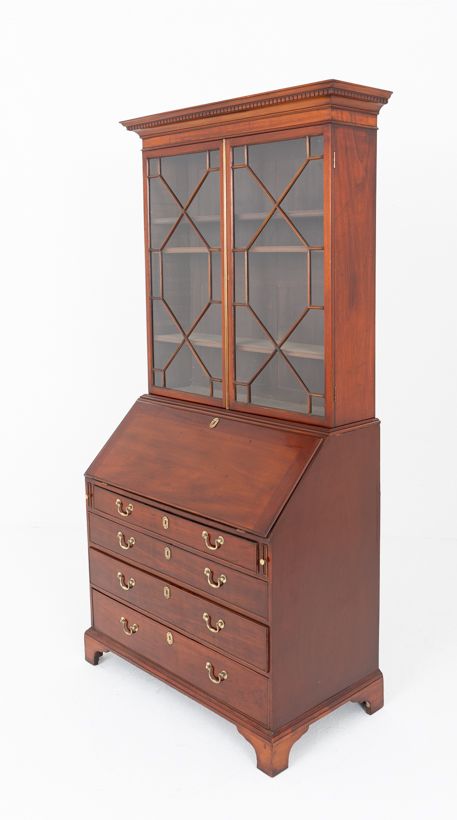
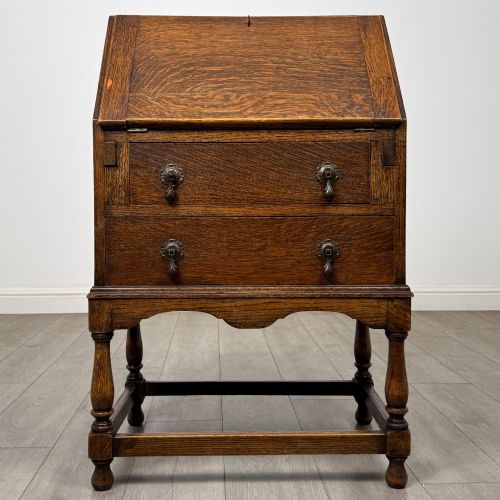
A vintage secretary cabinet, also recorded as a bureau bookcase or secretaire bookcase, combines a drop-front writing desk with upper shelving enclosed by doors. These items appear across multiple periods, including the seventeenth century, eighteenth century, Regency era, and Edwardian period.
The format typically pairs a lower chest of drawers or writing compartment with an upper bookcase section. Examples range from simple Edwardian satinwood inlaid designs to elaborate William and Mary burr elm or Irish Regency pieces.
The form adapts to various stylistic conventions, drawing on Georgian, George III, Regency, and William and Mary aesthetics. Buyers encounter diverse proportions and timber choices depending on the decade of manufacture.
How they were made
Construction relies heavily on traditional cabinet-making timbers such as mahogany, flame mahogany, satinwood, elm, and burr elm. Artisans selected these woods for their distinct grain patterns and structural stability.
Detailing incorporates contrasting inlay work and metal hardware, with brass fittings frequently securing doors and drawers. Glass panels are integrated into the upper bookcase doors to display books and porcelain.
Retail Price Guide 2026
Typical UK retail prices for vintage secretary cabinet, calculated from the Sellingantiques database of over a million retail prices indexed since 2003. This retail price guide relies exclusively on Sellingantiques data; no external sources or auction records are used, so the figures do not describe the wider market.
Secret compartments hidden inside the pigeonholes often waited for forgotten love letters.
What varies in quality
Quality rests in the selection of timbers, such as highly figured flame mahogany or burr elm, paired with precise inlay and joinery. Finer examples display meticulous attention to interior pigeonholes, small drawers, and writing surfaces.
The integration of the upper bookcase with the lower desk section demonstrates the maker's skill. Superior execution ensures balanced proportions and seamless operation of the drop-front mechanism and doors.
Gillington of Dublin
The Vintage Secretary Cabinet Glossary
- Secretaire bookcase
- A tall cabinet featuring an integrated writing desk with a fold-down or sliding front, surmounted by a bookcase. This dual-purpose furniture piece dates across multiple centuries.
- Burr elm
- A distinctive timber harvested from the wart-like growths on elm trees, yielding a swirling, highly decorative grain pattern. Cabinet-makers used this material for high-status surfaces.
- Flame mahogany
- A prized cut of mahogany displaying a flickering, flame-like grain figure. It was favoured by eighteenth-century makers for primary visual surfaces.
- Inlay
- A decorative technique where pieces of contrasting wood or other materials are inserted into recesses in the base wood to form patterns. Edwardian and Georgian pieces frequently utilise this method.
Frequently Asked Questions
What is a secretary cabinet?
A secretary cabinet is a tall piece of furniture that combines a concealed writing desk with upper shelving enclosed by doors.
These pieces provide both storage and a dedicated workspace within a single vertical unit.
How do I identify the period?
Dating relies on observing the timber choices, construction methods, and stylistic details such as inlay patterns and hardware.
Earlier examples from the seventeenth century use timbers like burr elm, while later Edwardian pieces often feature lighter satinwood.
Where should I place it?
These cabinets suit studies, living rooms, or hallways where both display space and a writing surface are useful.
Ensure adequate floor space is available for the drop-front desk mechanism to open fully.
How do I care for the wood?
Maintain the timber by keeping the cabinet away from direct sunlight and sudden temperature fluctuations to prevent warping.
Regular dusting with a dry, soft cloth preserves the finish of mahogany, elm, and satinwood surfaces.