


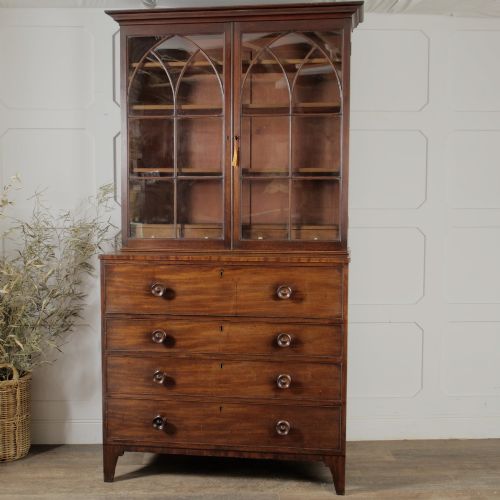
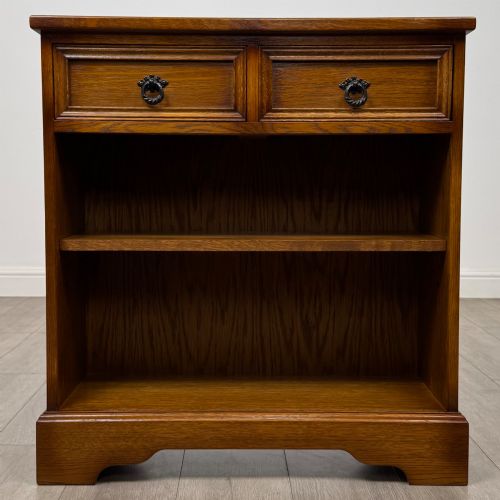
Antique Bookcase with Drawers
An antique bookcase with drawers combines visible shelf storage with concealed lower compartments, offering period character and practical utility for any room.
Defining the antique bookcase with drawers
An antique bookcase with drawers brings together shelved display and enclosed storage within a single timber frame. Buyers searching this phrase will encounter architectural breakfront designs, bureau variants, and open shelf formats from several periods.
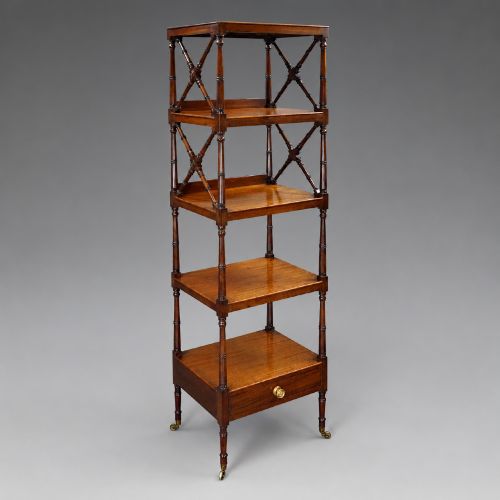
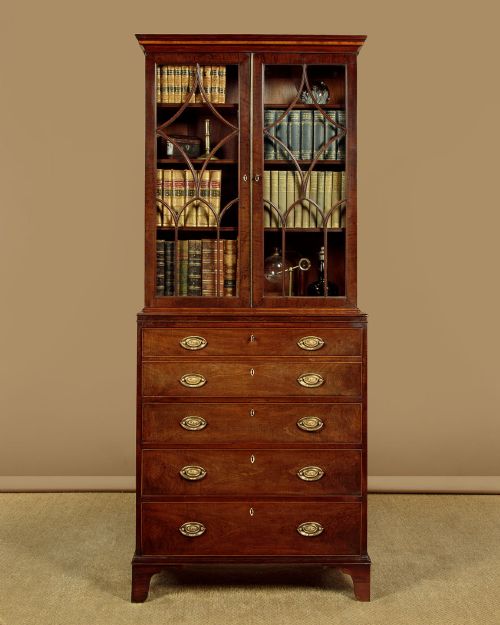
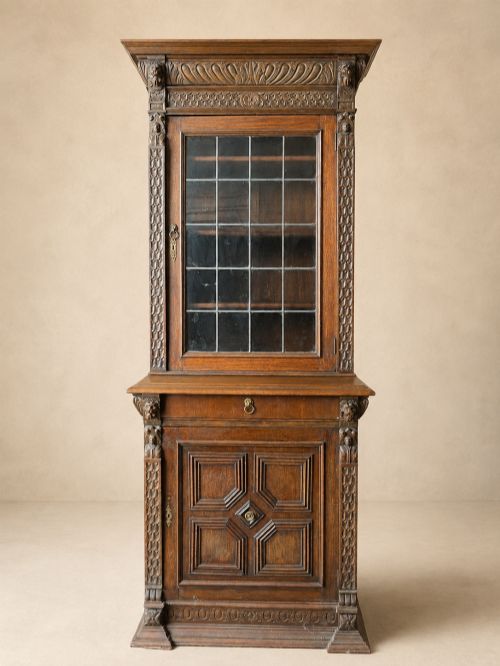
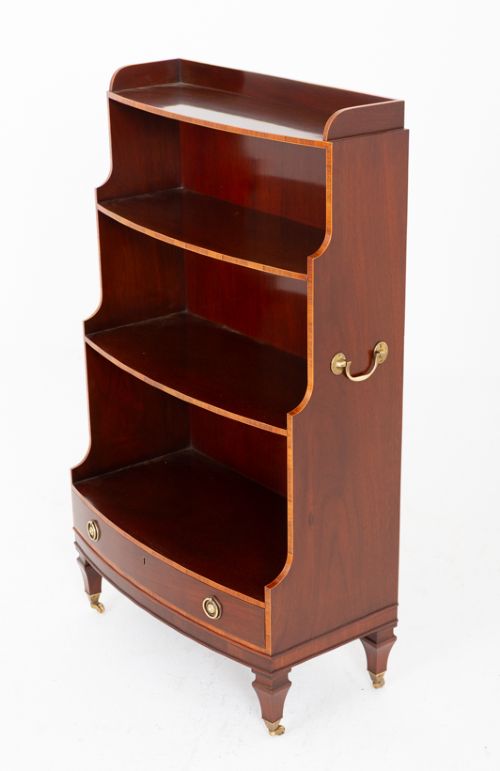
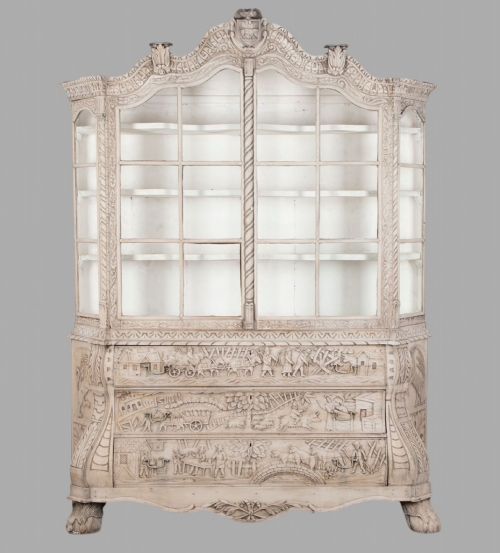
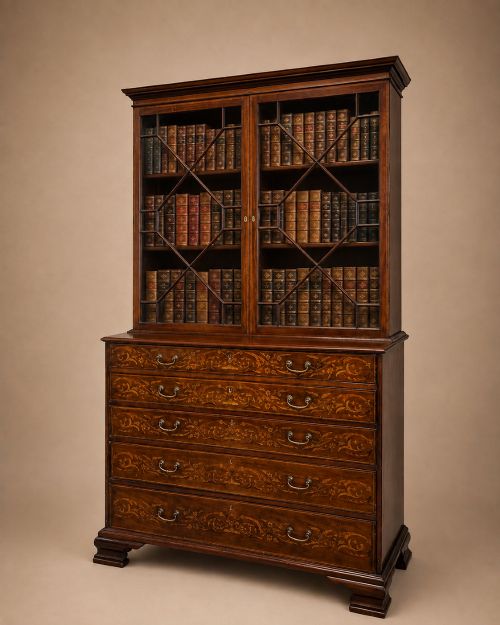
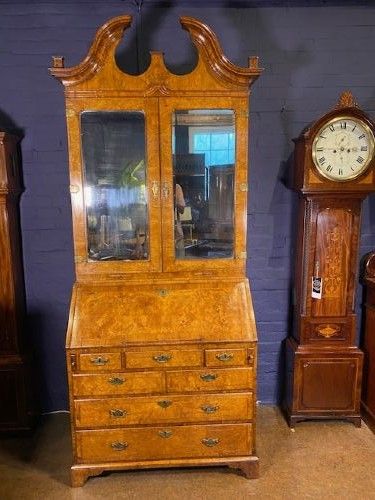
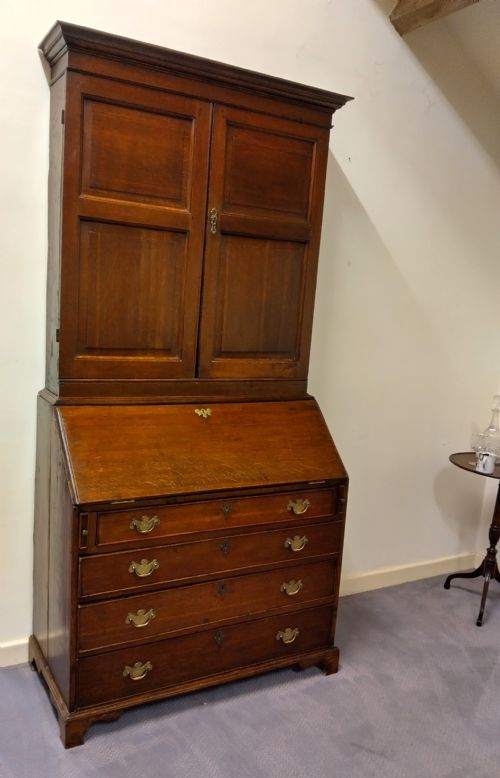
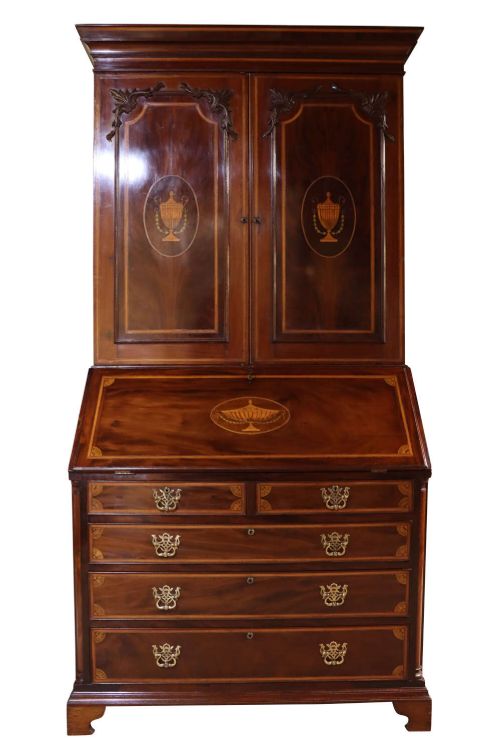
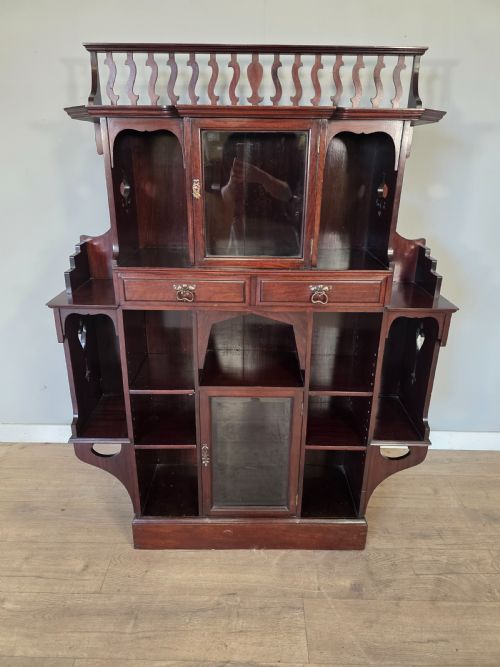
The pieces on this page span the Georgian, Regency, Victorian, Edwardian, and Arts and Crafts eras, executed in mahogany, oak, walnut, and satinwood. Open waterfall bookcases and glazed top variants sitting on chests appear frequently across these listings.
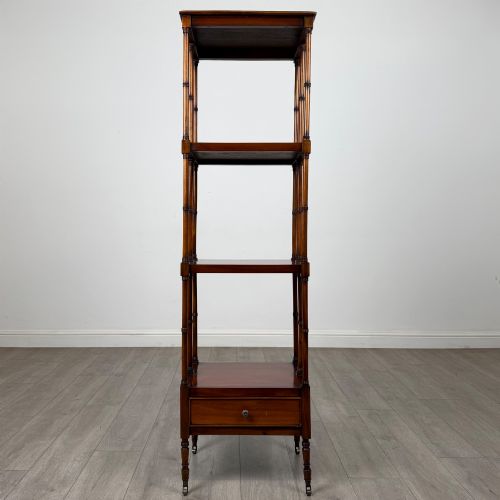
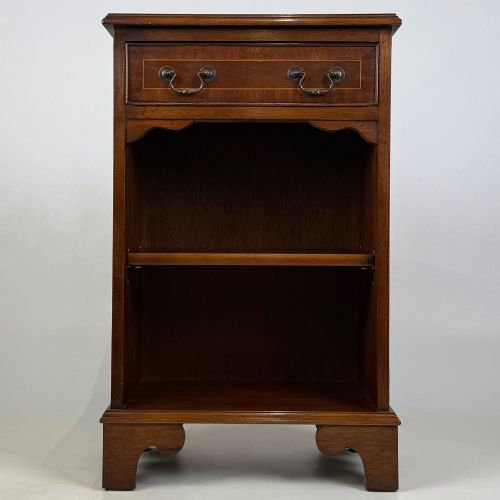
Forms range from large four-door breakfront pieces down to compact library units fitted with adjustable shelving and lower drawer compartments. Each iteration reflects the domestic storage needs and cabinet-making standards of its specific decade.
Materials and construction methods
Cabinet makers utilised dense hardwoods including mahogany, flame mahogany, oak, walnut, and satinwood for the primary carcasses. Drawer linings and secondary framing often relied on native secondary timbers shaped by hand.
Glazing bars divided glass panes on upper cabinet doors, while brass hardware secured doors and pulled out lower drawers. Fretwork details and inlaid banding added decorative contrast to the structural timber surfaces.
Retail Price Guide 2026
Typical UK retail prices for bookcase with drawers, calculated from the Sellingantiques database of over a million retail prices indexed since 2003. This retail price guide relies exclusively on Sellingantiques data; no external sources or auction records are used, so the figures do not describe the wider market.
Trinket drawers hide inside larger compartments, ready to guard misplaced keys or forgotten love letters from prying eyes.
Judging quality and execution
The distinction between standard and superior pieces rests on timber selection, such as matched flame mahogany veneers, and the crispness of cabinet-maker joinery. Well-executed pieces display tight dovetails on drawer boxes and smooth movement in adjustable shelving mechanisms.
Proportion and decorative restraint dictate the visual success of each piece, from restrained Arts and Crafts oak frameworks to elaborate Sheraton Revival inlays. Secondary details like original brass handles and intact glass panes elevate the standing of an example.
The Antique Bookcase with Drawers Glossary
- Breakfront
- A large cabinet design where the central section projects forward from the flanking wings. This architectural arrangement creates depth and visual balance across wide multi-door bookcases.
- Secretaire
- A desk component featuring a drop-front writing surface that conceals small interior drawers and pigeonholes. It integrates writing utility directly into the upper or middle section of the bookcase.
- Waterfall bookcase
- A tiered open shelving unit where each lower shelf steps wider than the one above it. The stepped profile resembles cascading water and dates predominantly to the Victorian period.
- Fretwork
- Openwork decorative carving executed in thin wood, often arranged in geometric or interlaced patterns. Cabinet makers applied it to door panels or cornices for ornamental relief.
- Glazing bar
- A narrow wooden strip that holds individual panes of glass within a cabinet door sash. Also known as muntins, their profile helps indicate the period of manufacture.
Frequently Asked Questions
How do I use a secretaire bookcase?
The drop-front writing flap folds down to reveal a fitted interior of small drawers and pigeonholes for correspondence. When closed, the exterior maintains the tidy appearance of a standard drawer section.
Lower drawers remain accessible beneath the writing surface for storing larger items, combining a desk and a bookcase into one footprint.
Are shelves in these bookcases adjustable?
Many period examples feature wooden or metal rack systems that allow shelves to be repositioned for different book heights. Early open bookcases frequently relied on fixed shelves secured into the carcass sides.
Checking the interior walls reveals whether the original makers incorporated ratchet strips or peg holes for height modification.
How do I care for mahogany finishes?
Mahogany surfaces benefit from occasional application of traditional beeswax to nourish the timber and maintain a soft sheen. Avoid placing antique wood in direct sunlight or near heat sources to prevent veneer lifting and timber shrinkage.
Dusting with a dry, soft cloth preserves the original polish and prevents abrasive particles from scratching the surface.
What distinguishes Arts and Crafts bookcases?
Arts and Crafts pieces emphasise honest construction, visible grain patterns, and simple geometric forms rather than heavy revival ornament. Makers working in this style during the early twentieth century prioritized utility and straightforward craftsmanship.
Oak is the predominant timber for this aesthetic, often finished to highlight the natural medullary rays in the grain.