

Open Display Shelves
Open display shelves combine accessible storage with architectural presence, offering a practical framework for books and decorative objects.
Understanding Open Display Shelves
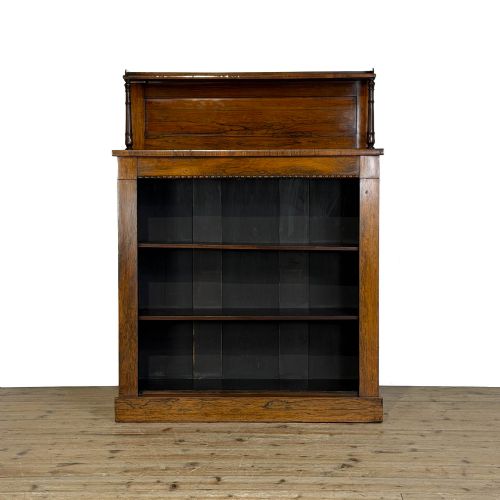
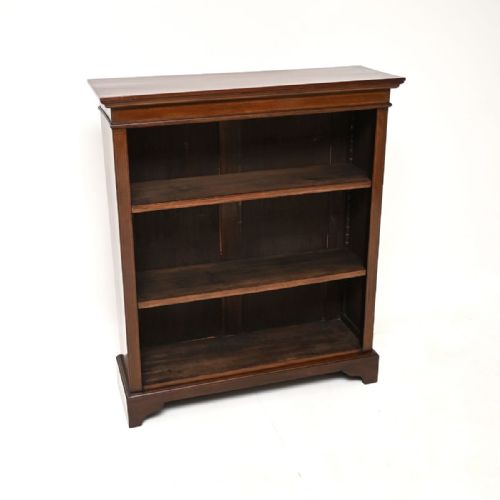
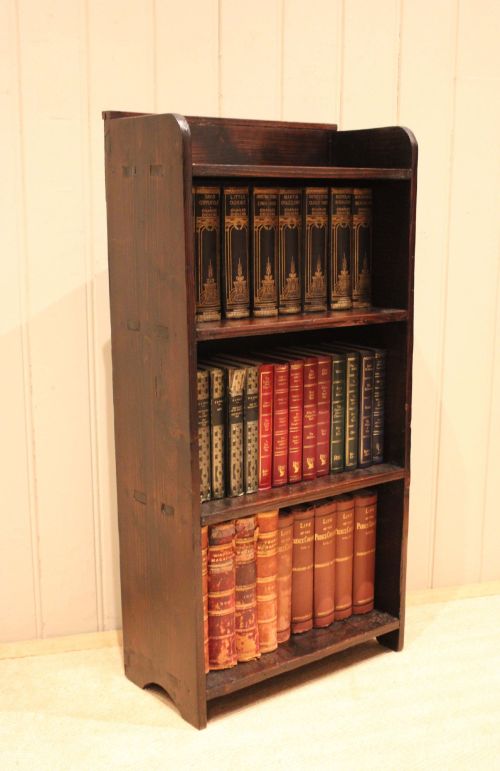
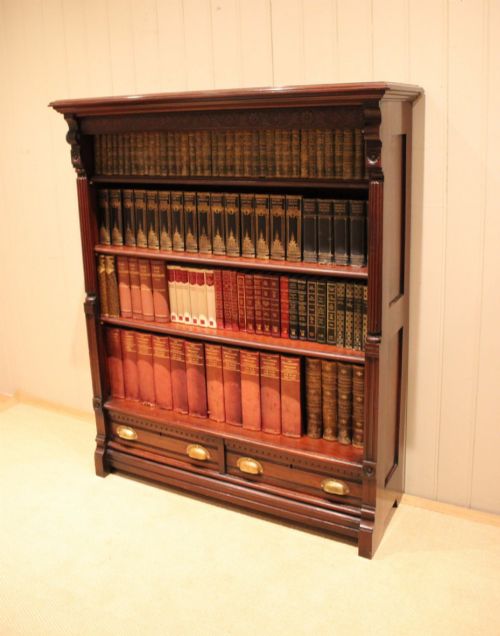
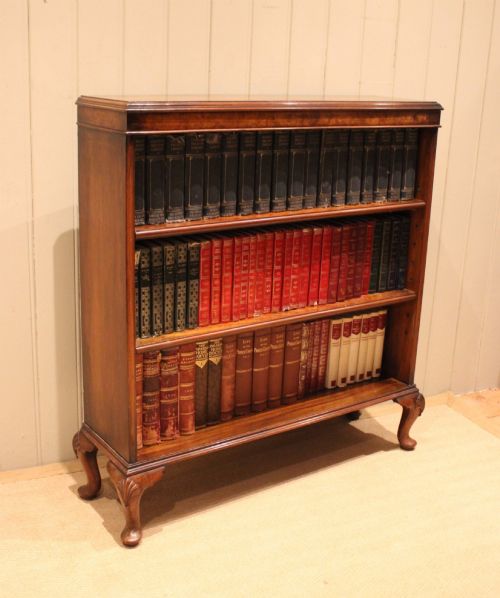
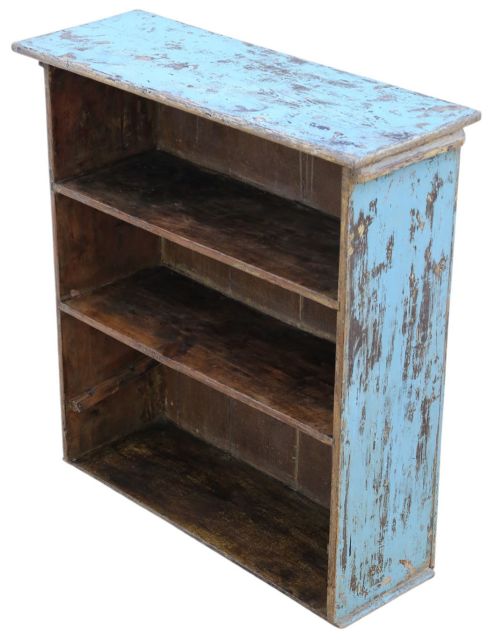
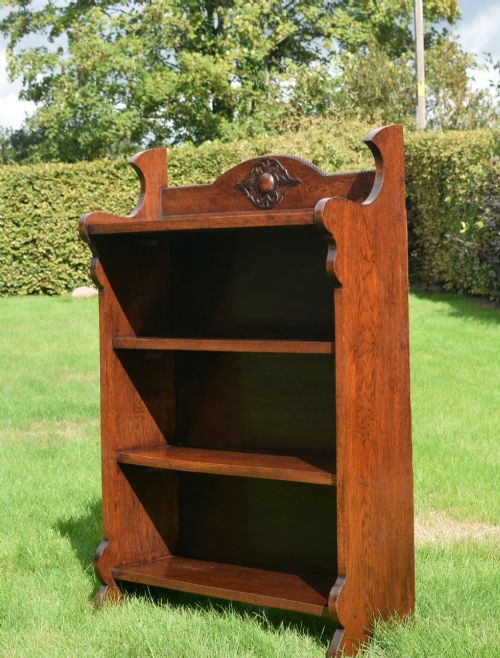
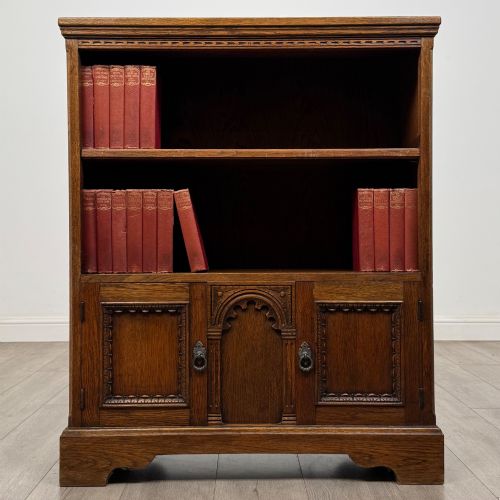
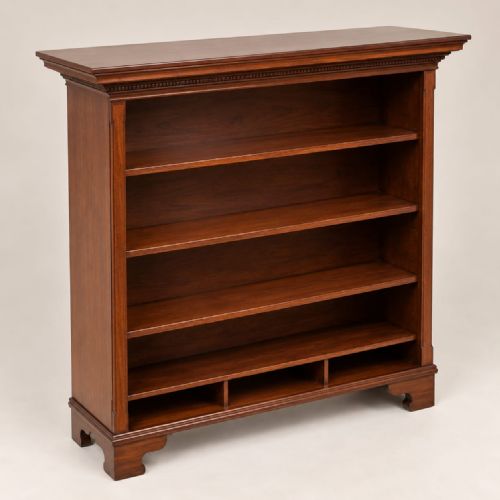
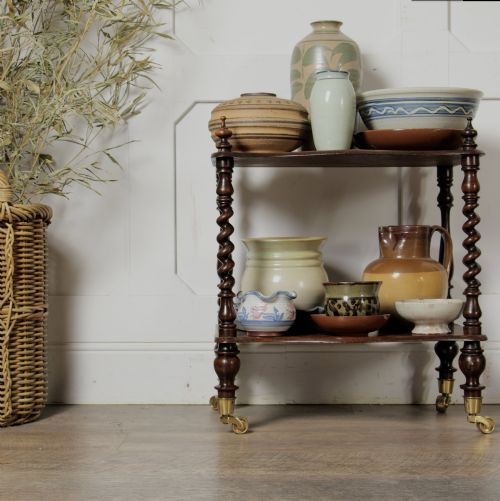
Open display shelves serve primarily as bookcases and display units, combining utilitarian book storage with the presentation of decorative objects. These items appear in various configurations, including tall library cabinets, low bookcases, three-tier stands, corner units, and wall-mounted shelves.
The pieces catalogued here span from the nineteenth century into the twentieth century, encompassing styles such as Victorian, Edwardian, and Georgian style, alongside twentieth-century traditional designs. Materials range from traditional timbers like oak, mahogany, walnut, pine, and pitch pine to accents of brass, gilt metal, and wood inlay.
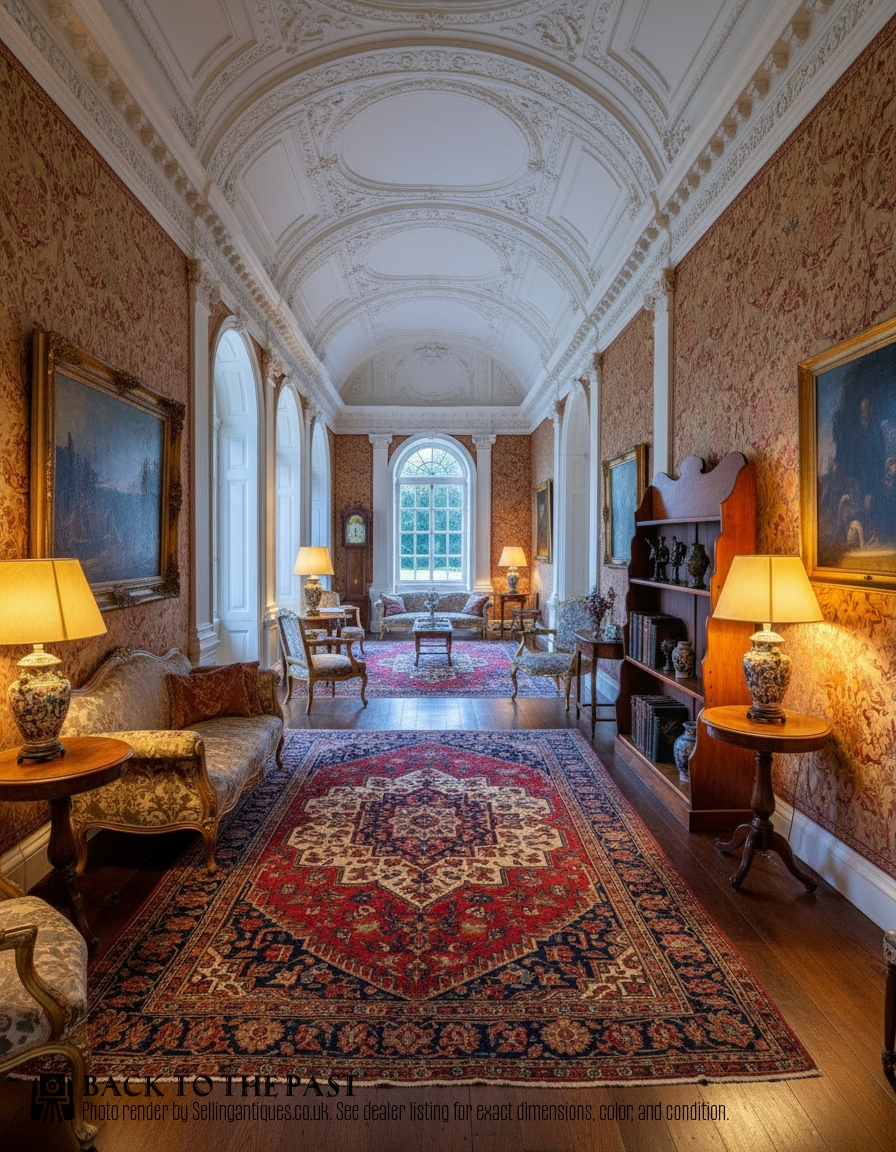
Materials and Construction
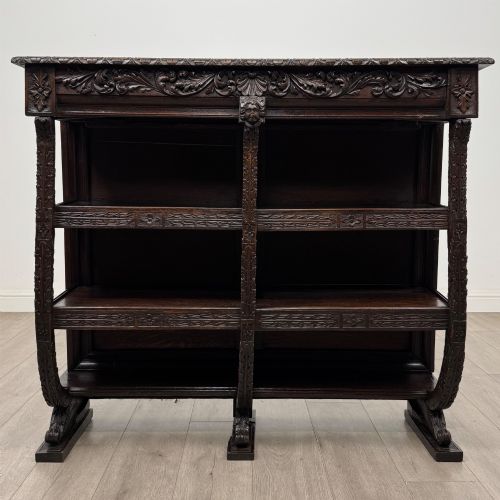
Cabinet makers utilised solid timbers such as oak, mahogany, walnut, and pine, frequently enhancing surfaces with wood inlay, painted finishes, or carved detailing. Structural integrity often relied on thick timber boards, tongue-and-groove backing, and sturdy uprights.
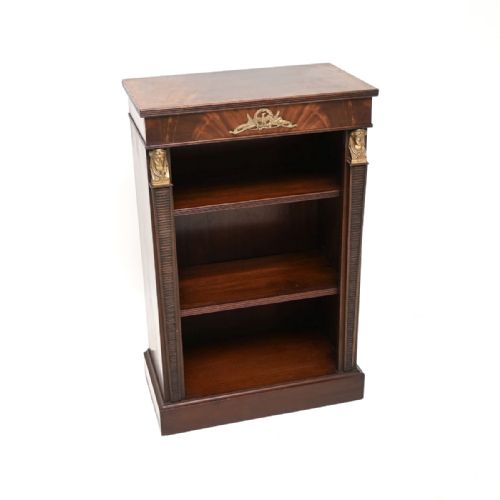
Detailing on these pieces incorporates functional and decorative hardware, including brass and gilt metal mounts, column supports, and tiered structures. Joinery techniques varied from traditional dovetailing in cabinet construction to simpler mechanical fastenings in wall-mounted and corner formats.
Retail Price Guide 2026
Typical UK retail prices for open display shelves, calculated from the Sellingantiques database of over a million retail prices indexed since 2003. This retail price guide relies exclusively on Sellingantiques data; no external sources or auction records are used, so the figures do not describe the wider market.
Distinguishing Quality
Quality in these units rests upon the selection of timber, where dense, figured mahogany, quarter-sawn oak, or rich walnut elevate a piece beyond standard utilitarian pine. The choice of secondary woods and the grain matching across visible surfaces signal the maker's intent.
Construction methods and decorative ambition also divide standard utility items from finer library pieces. The inclusion of carved architectural elements, brass column supports, and fine wood inlay demonstrates a higher tier of craftsmanship than plain, unadorned shelving.
The Open Display Shelves Glossary
- Breakfront
- A cabinet design where the central section projects forward from the flanking sections. This configuration adds architectural depth to larger library bookcases.
- Whatnot
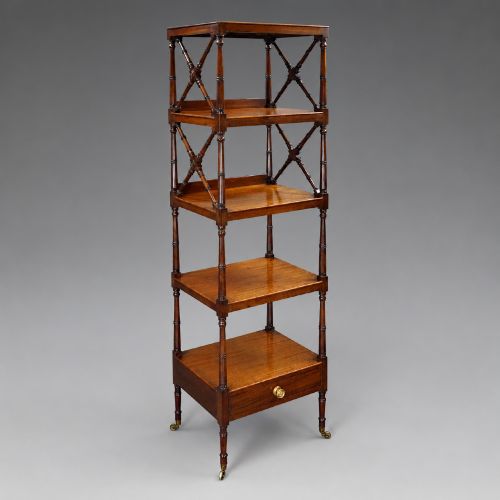
- A piece of furniture consisting of a set of open shelves for displaying small objects or books. These freestanding or wall-mounted units became popular during the nineteenth century.
- Waterfall bookcase
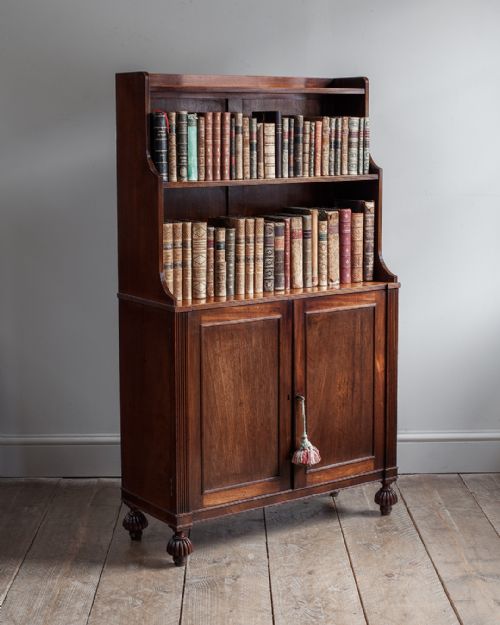
- A shelving unit where each tier is set back from the one below, creating a stepped profile reminiscent of cascading water. This form is frequently encountered in oak and mahogany.
- Inlay
- A decorative technique where contrasting materials such as lighter wood or metal are inserted into recesses within the primary timber surface. This creates geometric or floral patterns across the front of the cabinet.
- Tier
- A single level in a structure of stacked shelves or display surfaces. Multiple tiers provide structured organisation for books and decorative items.
Frequently Asked Questions
What are open display shelves?
Open display shelves are freestanding or wall-mounted storage units designed without doors, allowing direct access to books and decorative objects.
These pieces function primarily as bookcases, library cabinets, or multi-tiered display stands across various historical periods.
How were these shelves used historically?
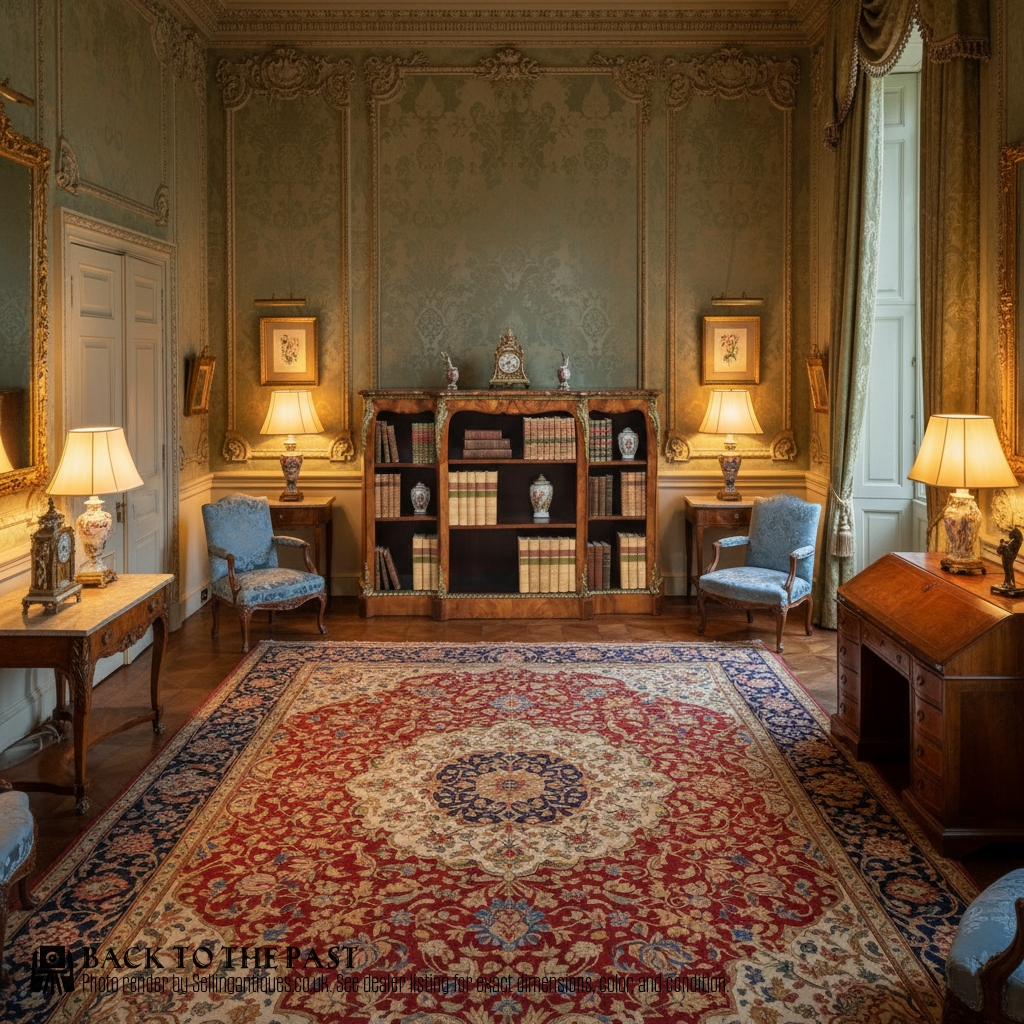
Historically, these shelves served in libraries, parlours, and studies to hold working volumes, reference books, and prized ornaments.
Tall cabinets housed extensive book collections, while smaller tiered units and whatnots displayed porcelain, small sculptures, and curiosities.
How do I date an open bookcase?
Dating relies on identifying the prevailing timber choices, hardware styles, and structural characteristics associated with specific periods.
For instance, heavy carved oak often points to the Victorian era, whereas lighter mahogany with delicate inlay frequently aligns with Edwardian or Georgian style pieces.
Where should I place these shelves?
These units suit living rooms, studies, and hallways where books and decorative objects benefit from high visibility and easy access.
Freestanding bookcases require stable wall placement for taller cabinets, while corner units and wall-hanging shelves maximise compact spaces.