
Open Library Shelves
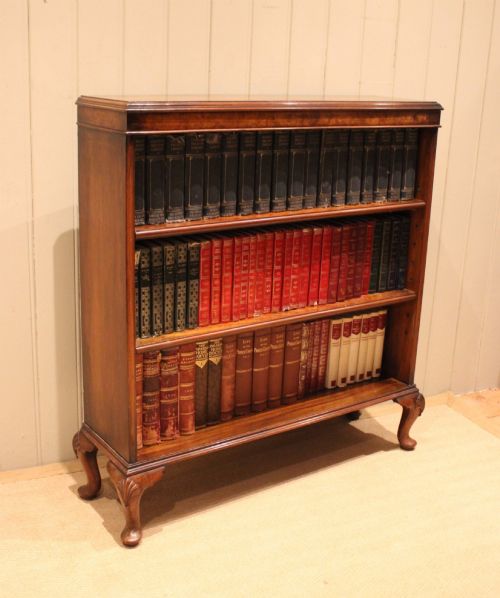
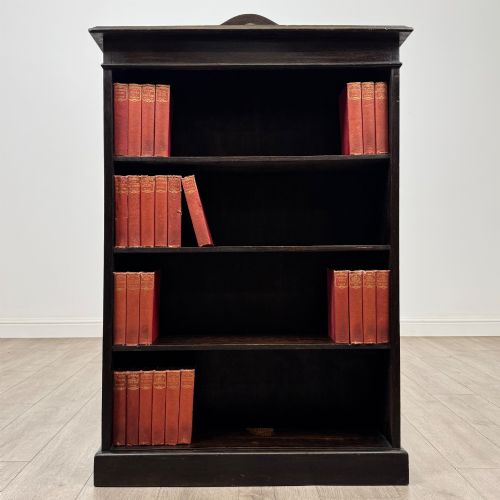
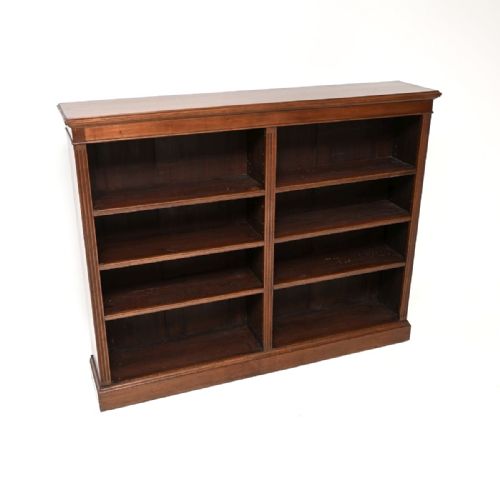
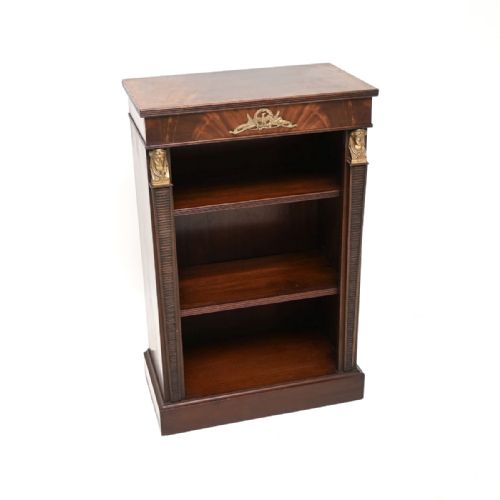
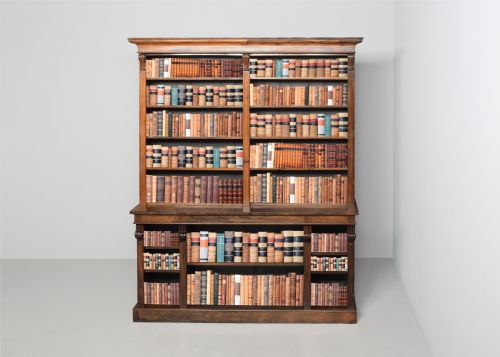
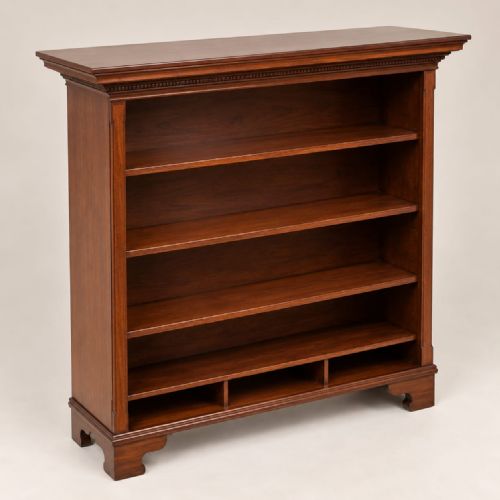
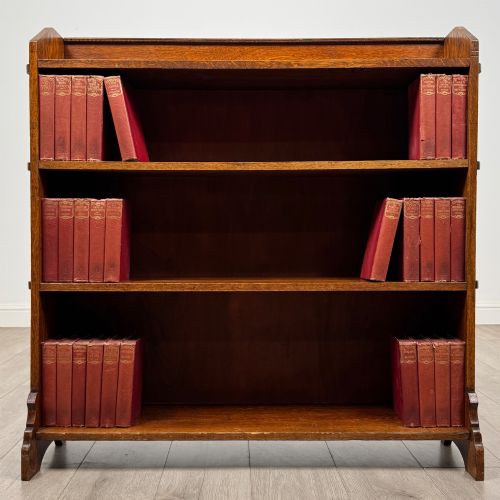
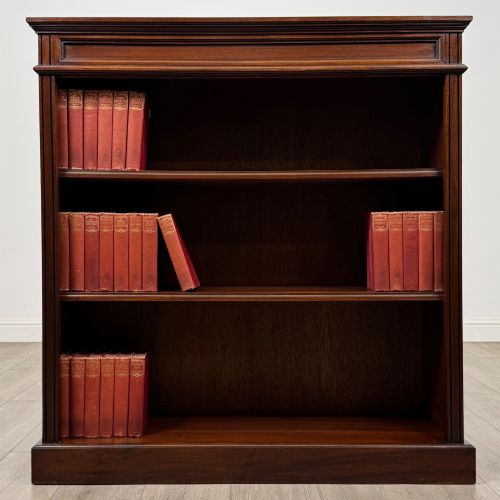
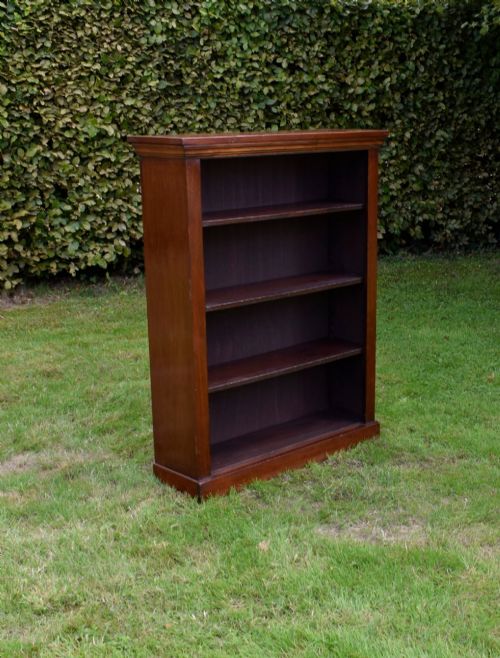
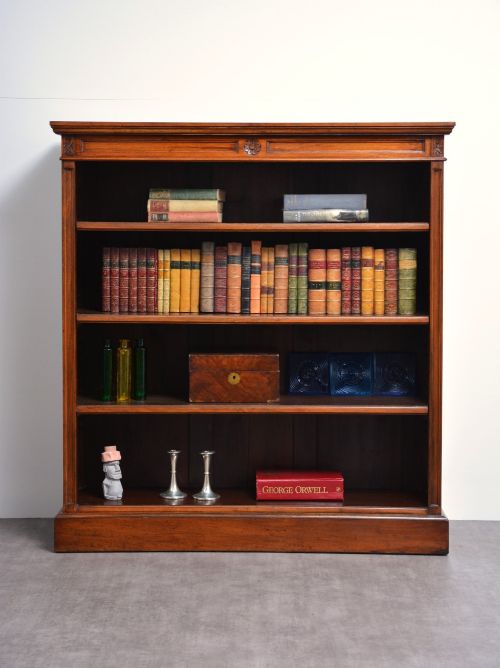
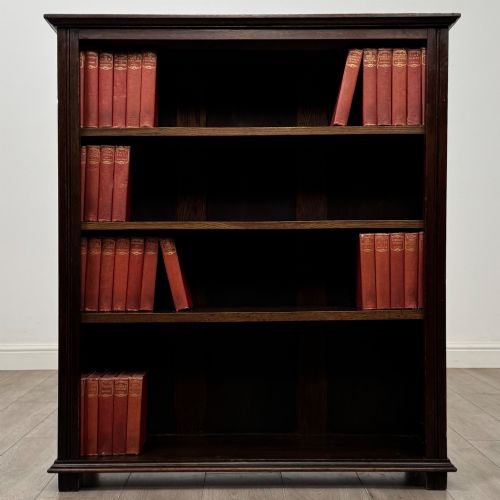
Open library shelves bring accessible storage into a room, offering immediate visibility for books and display pieces.
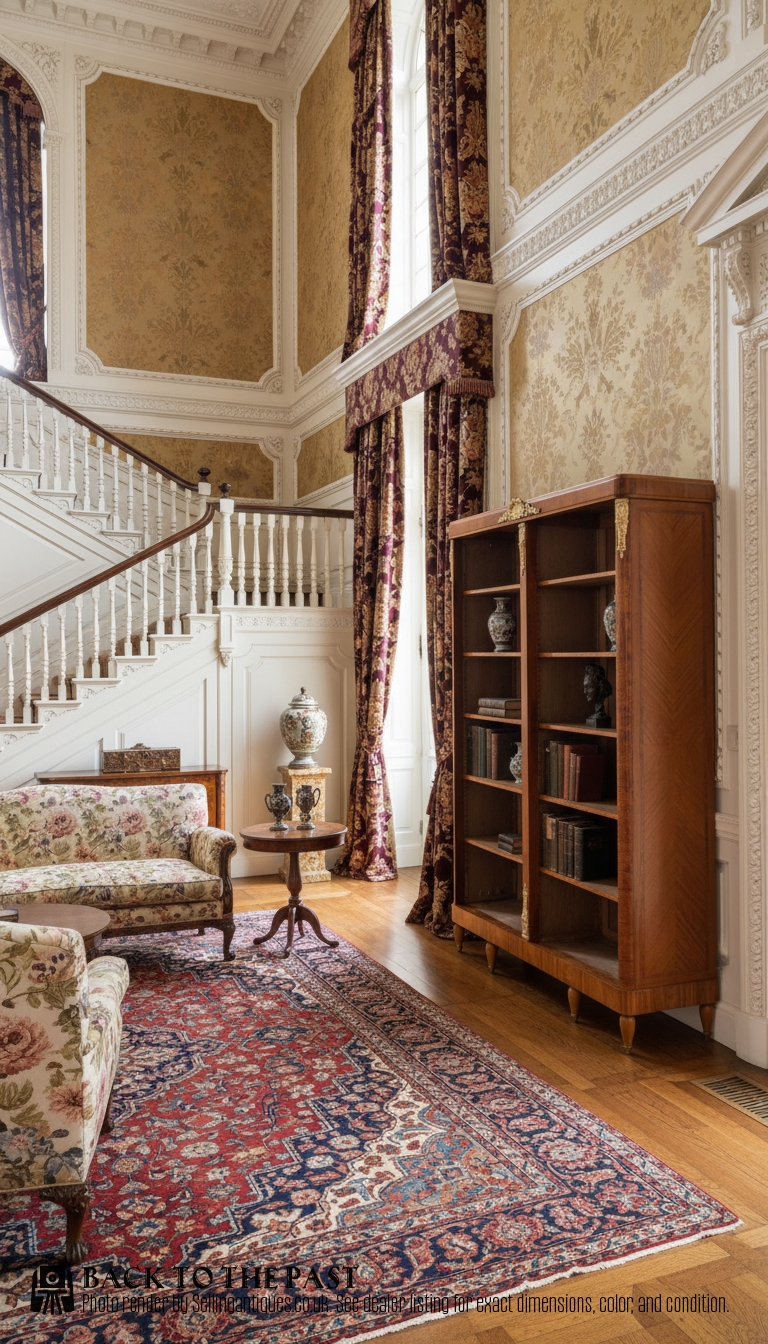
Open Library Shelves
Open library shelves provide accessible storage for volumes and decorative objects without the barrier of glazed or solid doors. When searching for open library shelves, a buyer encounters pieces originating from the 19th century through the early 20th century, spanning periods such as Victorian, Edwardian, and Regency.
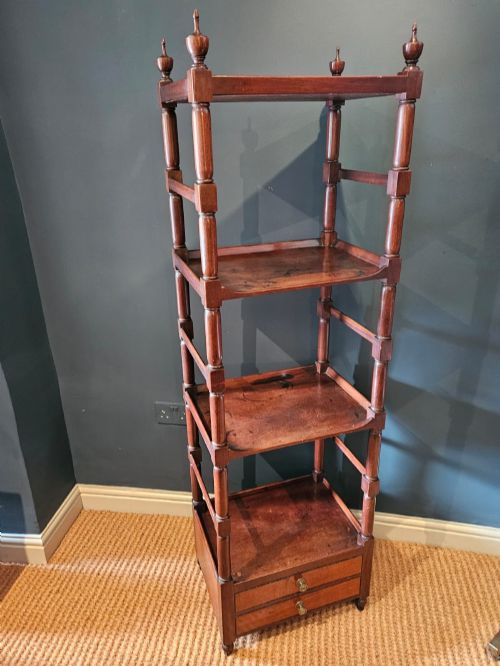
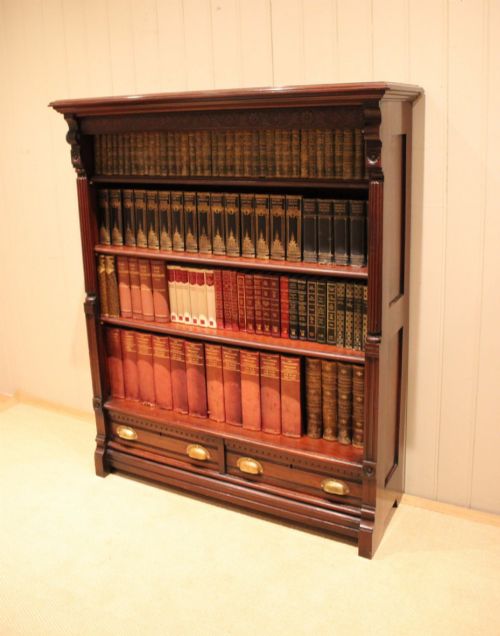
The dominant forms on this page include bookcases and open shelving units constructed from timber. Examples range from low dwarf bookcases and tiered what-nots to tall library cabinets with adjustable shelves.
Stylistic variations draw upon Victorian, Edwardian, Regency, William IV, Arts and Crafts, and Queen Anne Revival influences. Pieces frequently feature simpler utilitarian designs alongside more ornate carved or stepped frameworks.
How they were made
Construction relies heavily on hardwoods such as mahogany, oak, walnut, burr walnut, rosewood, and satinwood, supported by pine for secondary elements. Timber selection dictates the grain pattern and structural weight of each bookcase.
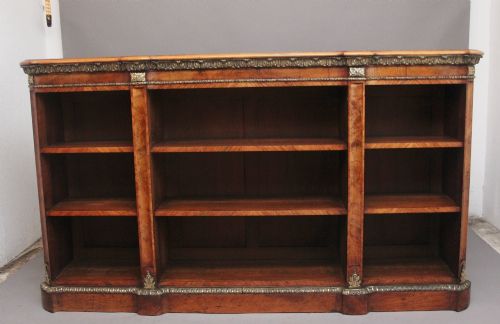
Metal accents including brass and ormolu appear on mounts, shelf supports, and fittings. Leather edging is utilised on specific shelves to protect book bindings, whilst carving and ebonising define decorative styles like the Aesthetic Movement and Gothic revivals.
Listings feature woods spanning mahogany, oak, walnut, burr walnut, rosewood, pine, and satinwood across the 19th and early 20th centuries.
What varies in quality
Quality rests upon the selection of timbers, where figured grains like burr walnut or satinwood elevate a piece above standard oak or mahogany. The presence of secondary materials such as brass fittings and leather-edged shelving indicates higher workmanship.
Construction details such as adjustable shelving mechanisms distinguish superior examples from fixed alternatives. Carved ornamentation, whether executed in a restrained neoclassical manner or intricate green man motifs, determines the sophistication of the design.
Johnstone and Jeanes·Gillows
The Open Library Shelves Glossary
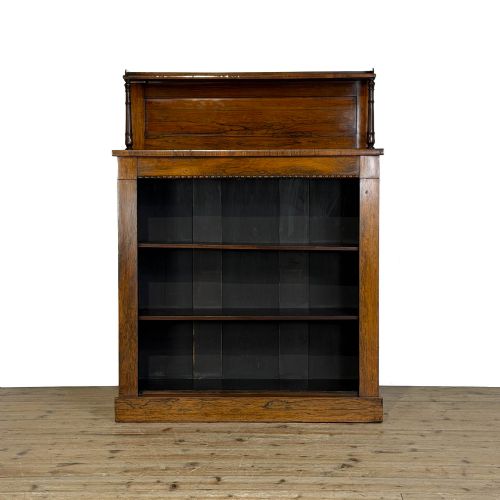
- Open Bookcase
- A freestanding storage unit with exterior shelving and no doors enclosing the front. This format allows direct access to the contents.
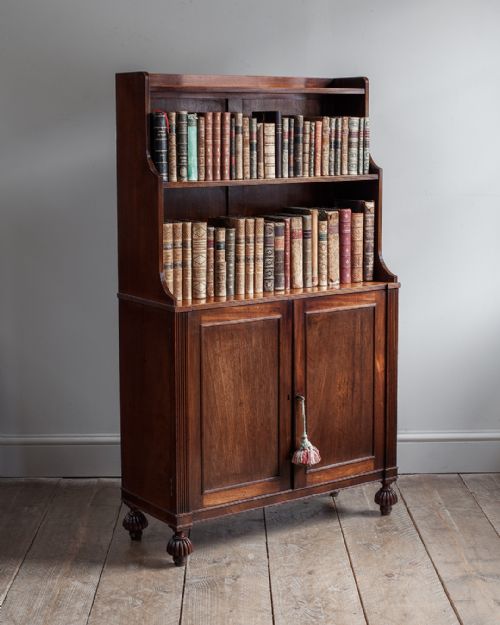
- Waterfall Bookcase
- A stepped shelving unit where each tier is narrower than the one below, creating a cascading profile. These pieces often date from the Regency and later periods.
- What-Not
- A multi-tiered piece of furniture designed for displaying ornaments or books. They frequently feature slender vertical supports.
- Adjustable Shelves
- Shelving that can be moved to different heights using internal racks, pins, or tracks. This mechanism permits customisation for volumes of varying sizes.
- Dwarf Bookcase
- A low-standing bookcase designed to sit beneath window height or within smaller rooms. They preserve sightlines across a library or study.
Open Library Shelves: Frequently Asked Questions
How do I style open library shelves?
Arrange books vertically and horizontally to break up straight lines, interspersed with decorative objects and ceramics. Leave small empty spaces to prevent the unit from looking cluttered.
Keep heavier volumes on the lower shelves for visual and physical stability. Lighter items and smaller paperbacks sit comfortably higher up.
Are these shelves suitable for heavy books?
Solid timber construction in oak, mahogany, and walnut provides strong structural support for substantial volumes. Many examples feature adjustable shelving supported by sturdy internal mechanisms.
Check the thickness of individual timber boards before loading them with encyclopaedias or folio editions. Most library-scale pieces handle heavy daily use with ease.
How do I tell Victorian shelves apart from Edwardian ones?
Victorian pieces tend to employ darker, heavier timbers like rosewood and dense mahogany with deeper carved detailing. Styles often reference Gothic revival or Aesthetic Movement design principles.
Edwardian examples frequently utilise golden oak or lighter walnut finishes. Their lines lean towards simpler, brighter aesthetics associated with early twentieth-century domestic spaces.
Do adjustable shelves affect the authenticity of a piece?
Adjustable shelving systems are a standard feature found in many nineteenth and early twentieth-century library cabinets. Original tooth-and-rack or pin mechanisms indicate period manufacture.
Modern modifications to shelf supports are uncommon in untouched pieces. Inspect the interior uprights to verify that the adjustment channels match the timber of the cabinet.