
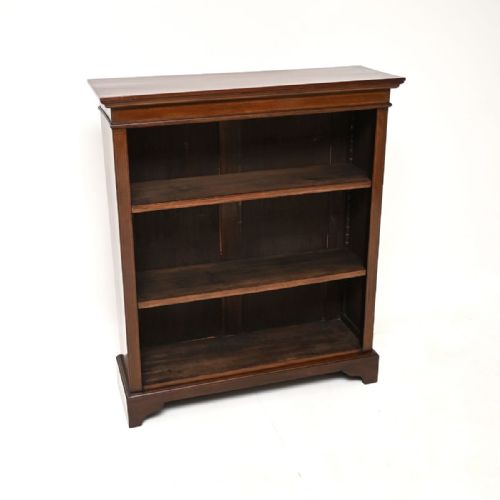
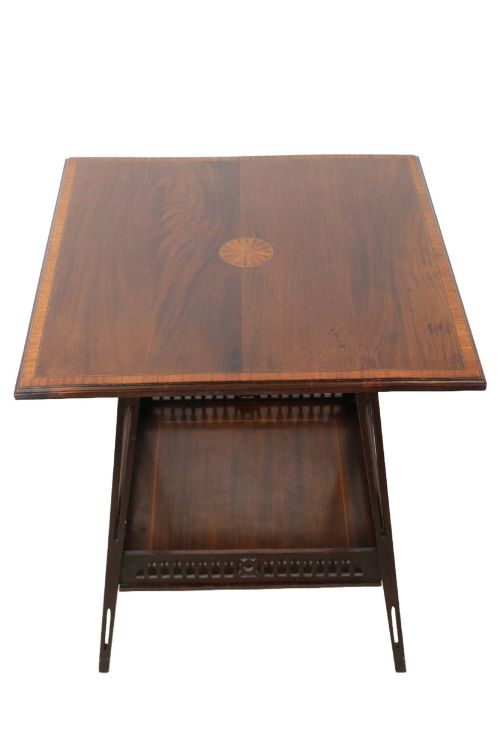
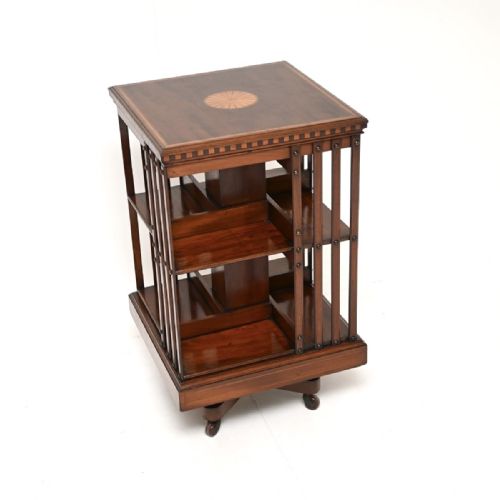
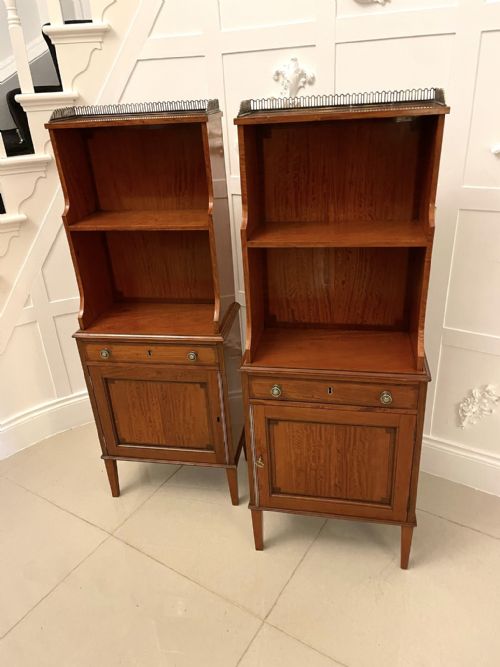


Satinwood Display Shelves
Satinwood display shelves bring a pale, figured timber and refined form into a room to hold books and small treasures.
Satinwood Display Shelves
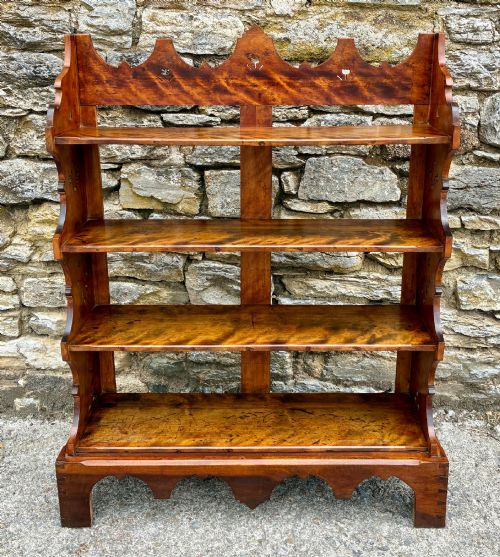
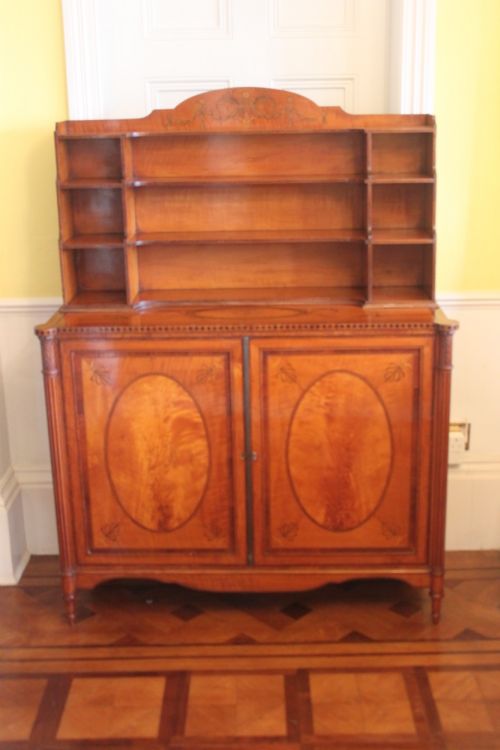
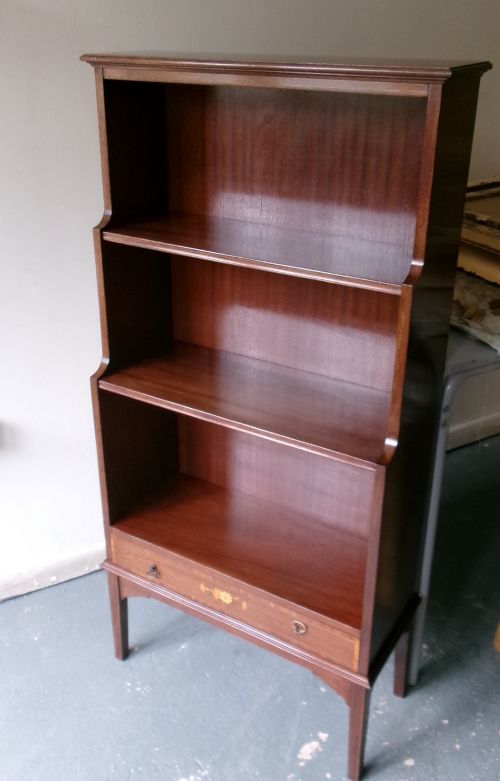
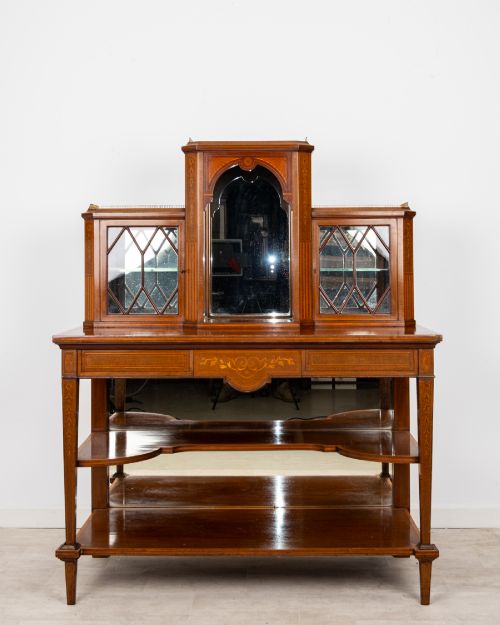
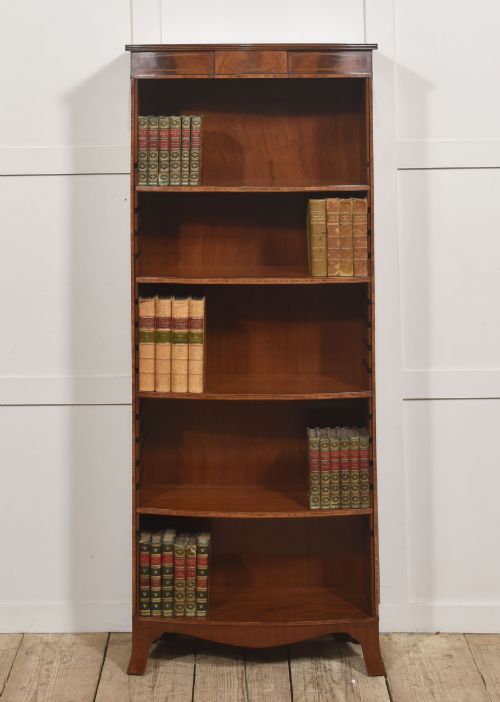
When searching for satinwood display shelves, a buyer encounters pieces primarily from the nineteenth and early twentieth centuries, spanning periods from the Regency era through the Edwardian years and into the Art Deco period. These items typically manifest as open bookcases, wall shelves, hanging shelves, and cabinets designed to showcase objects.
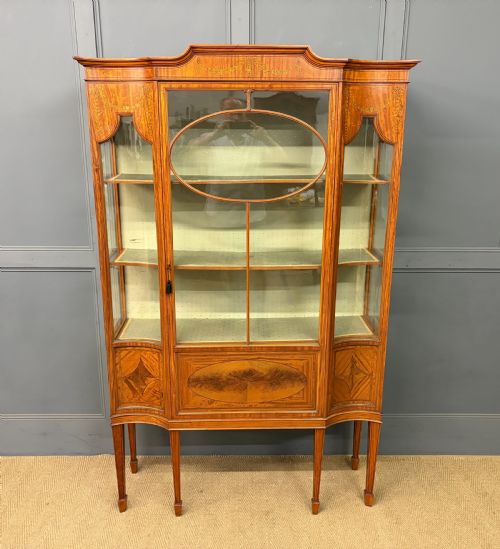
The most common examples on this page are Edwardian and nineteenth-century pieces that combine satinwood with mahogany, often featuring timber inlay or boxwood and ebony stringing. Makers such as Gillows and Maple & Co. produced notable examples, while simpler hanging shelves and open bookcases also appear across different eras.
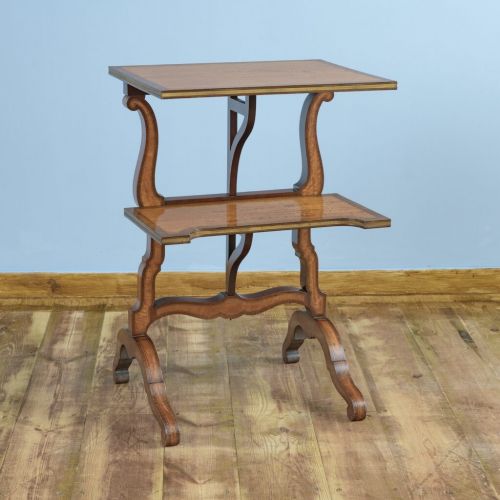
Beyond standard bookcases, the category includes specialised display furniture like étagères, whatnots, and side cabinets with glass or open shelving. These forms allow collectors to house small collections while introducing the distinctive light grain of satinwood to an interior.
What varies in quality
The quality of these pieces rests on the choice of satinwood veneer and the precision of the timber inlay. Superior examples display highly figured grain patterns that catch the light, combined with crisp, tight stringing and well-matched borders.
Construction details also separate the finest pieces from standard workshop output, including the weight of the brass fittings, the clarity of the glass, and the stability of tiered wall shelves. Maker attributions to firms like Gillows or Maple & Co. often align with a higher standard of overall execution and material selection.
Satinwood Display Shelves Retail Price Guide 2026
Typical asking prices for satinwood display shelves among the pieces listed under this phrase on Sellingantiques today, from the lower quarter to the upper quarter. They describe what is for sale here now, not the wider market.
The inventory includes items spanning the Regency period, Victorian era, Edwardian years, and Art Deco movement.
Trevor Page & Co·Gillows·Maple & Co·Maison Giroux
The Satinwood Display Shelves Glossary
- Satinwood
- A dense tropical timber known for its pale yellow colour and luminous, chatoyant grain that resembles satin. It was frequently used for veneers and fine cabinetmaking during the eighteenth and nineteenth centuries.
- Stringing
- Thin lines of contrasting wood, such as boxwood or ebony, inlaid into grooves on table tops, cabinet doors, and shelf edges. This technique creates delicate borders that define the contours of the piece.
- Étagere
- A piece of furniture consisting of a set of open shelves for displaying small ornaments or books. Originating in France, these tiered stands appeared in various woods including satinwood and mahogany.
- Marquetry
- The art and craft of applying pieces of veneer to a structure to form decorative designs and pictures. Cabinetmakers used various tinted and natural woods to create floral or geometric motifs.
- Bonheur du jour
- A small lady's writing desk featuring a set of drawers, shelves, or a cabinet on the upper surface. These desks often incorporated satinwood panels and delicate inlay work.
Satinwood Display Shelves: Frequently Asked Questions
What periods do these shelves come from?
The pieces span several centuries, with examples originating from the Regency period around eighteen hundred, through the Victorian and Edwardian eras, up to the nineteen-thirties.
Design characteristics often reflect the prevailing style of their manufacture, ranging from Sheraton Revival neoclassical lines to Arts and Crafts simplicity and Art Deco forms.
How do I distinguish satinwood from mahogany?
Satinwood is recognised by its pale golden-yellow tone and reflective, shimmering grain that shifts in the light. Mahogany is generally darker with a reddish-brown hue and a coarser, deeper grain pattern.
Many pieces on this page combine both timbers, using satinwood for the primary visible surfaces and veneers while employing mahogany for secondary structure and framing.
Where were wall shelves placed in a period room?
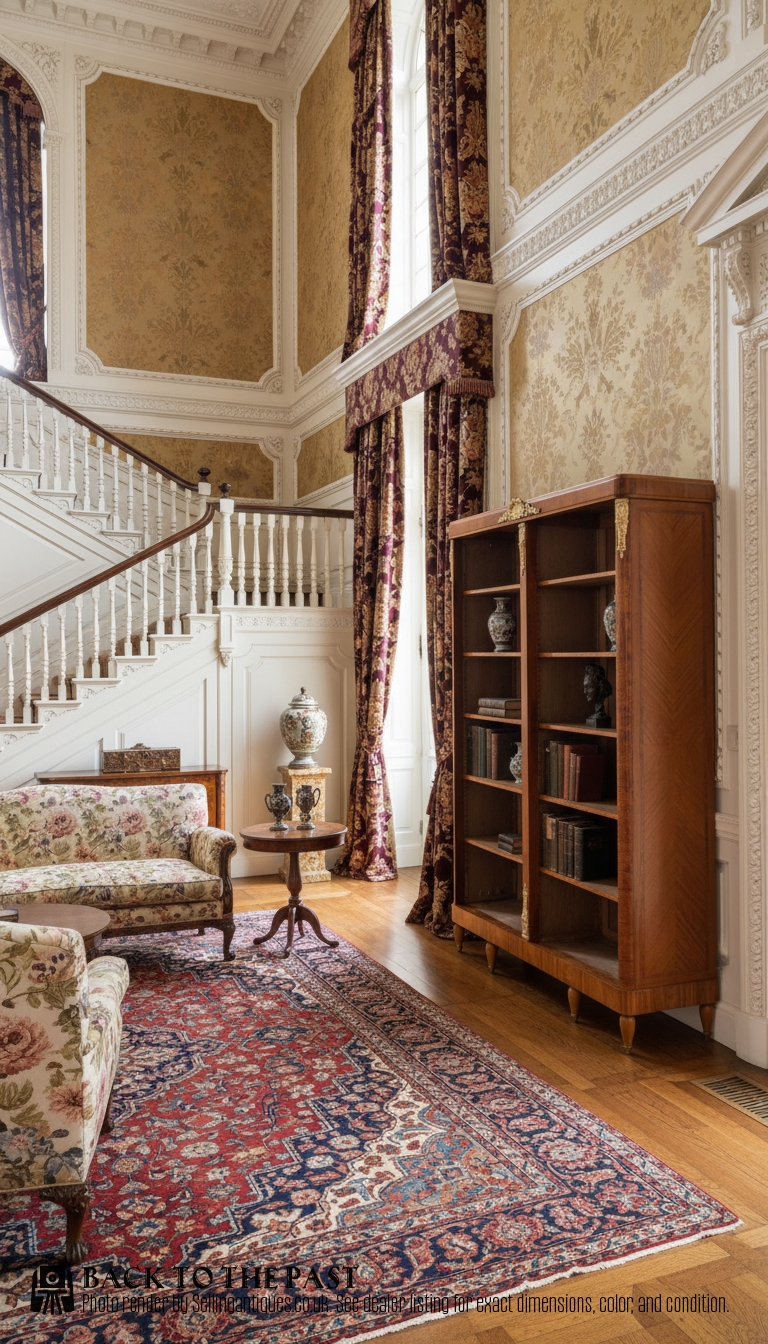
Hanging shelves and wall-mounted display units were typically hung in reception rooms, libraries, or boudoirs to hold small books, ceramics, and ornaments. Their compact designs made efficient use of wall space above tables or seating.
They provided a method for displaying cabinet porcelain and small collected items without occupying floor space in smaller rooms.
Are these pieces suitable for everyday use?
These shelves and bookcases are functional items that can hold books and display objects in a modern interior. Care should be taken with placement to avoid direct sunlight, which can alter the tone of pale satinwood veneers over time.
Gentle dusting and occasional application of appropriate furniture wax help maintain the polished surface and protect the historic timber.