

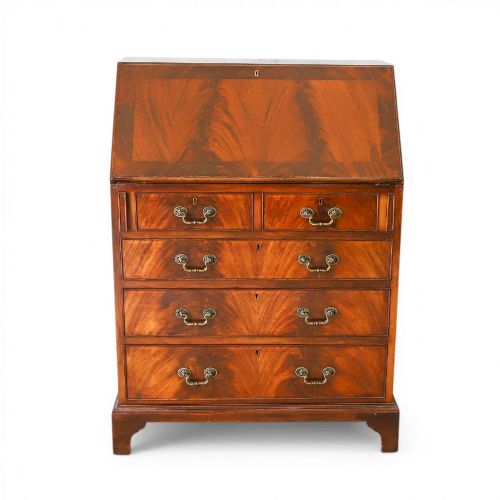
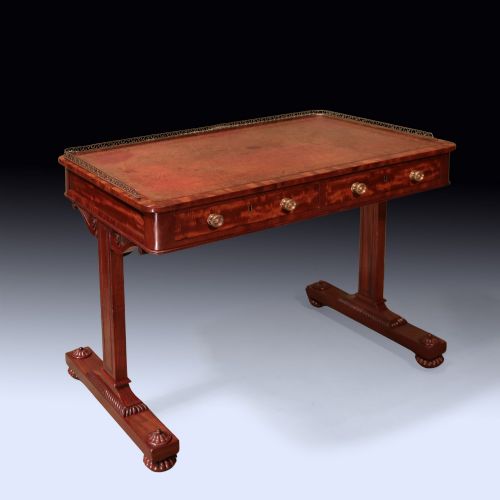
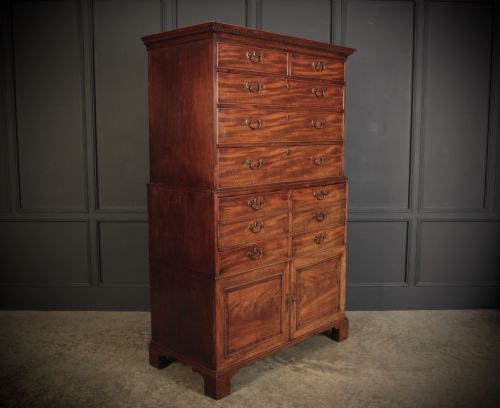
Georgian Flame Mahogany Desk
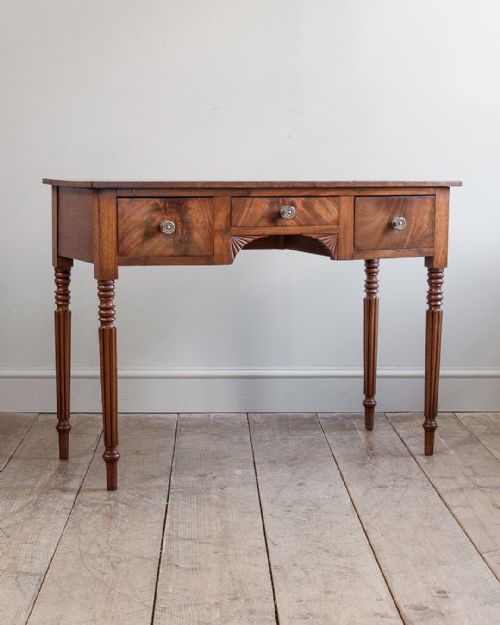
A georgian flame mahogany desk brings rich grain patterns and classical proportions into a study.
Georgian Flame Mahogany Desk
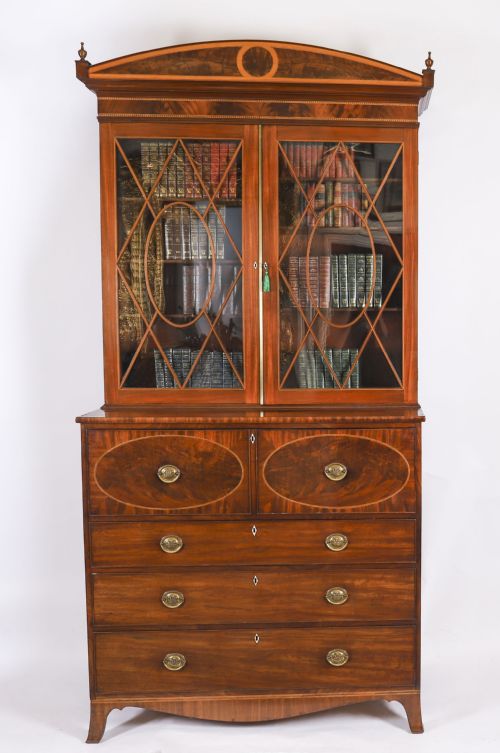
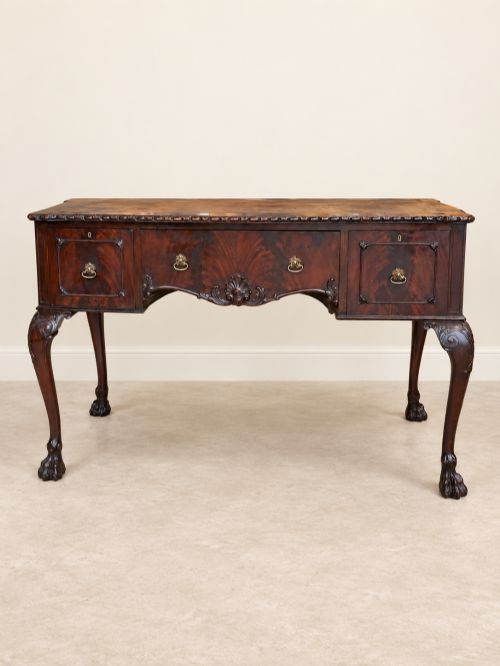
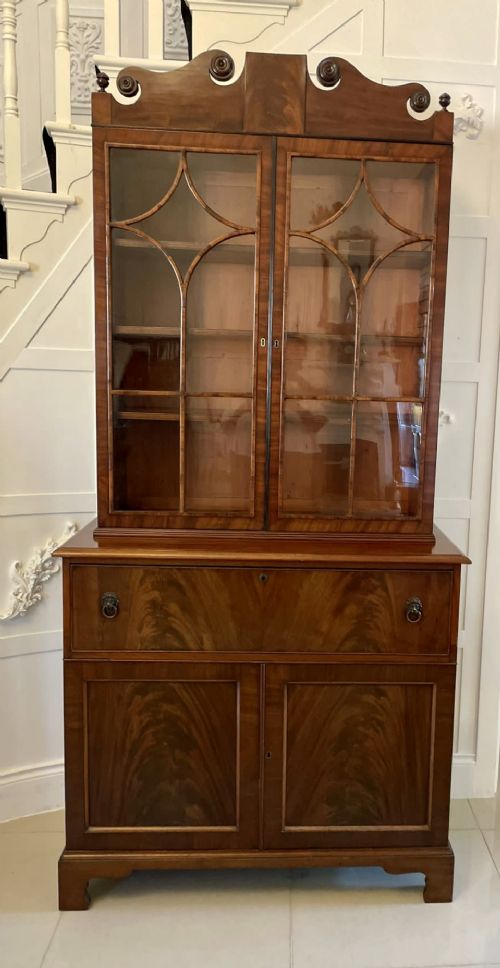
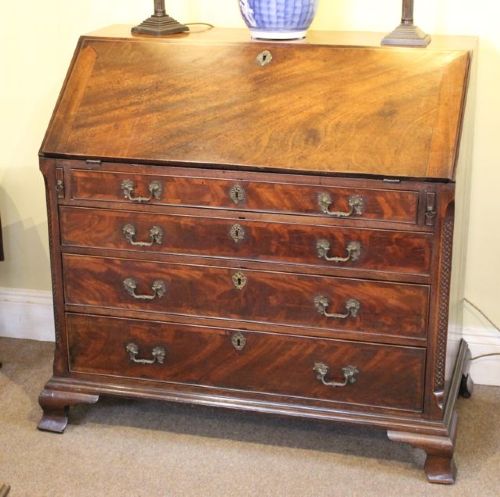
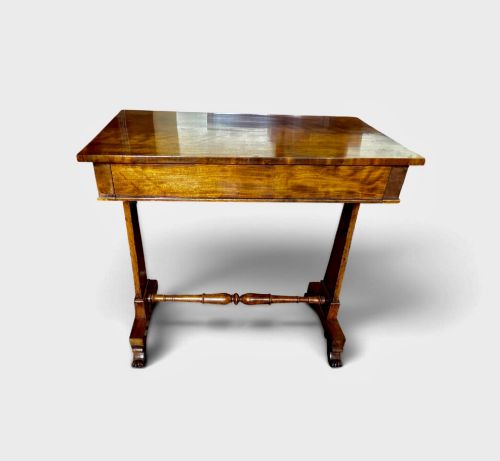
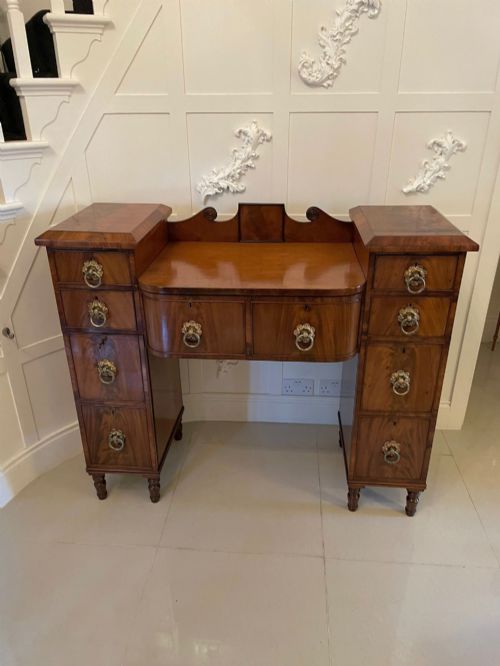
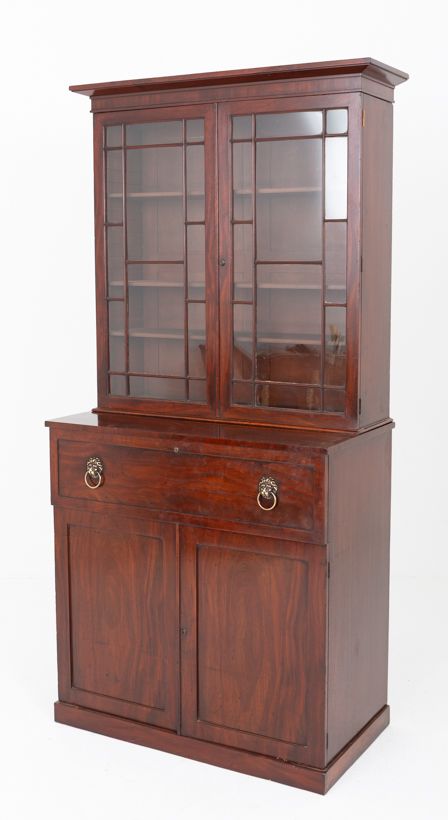
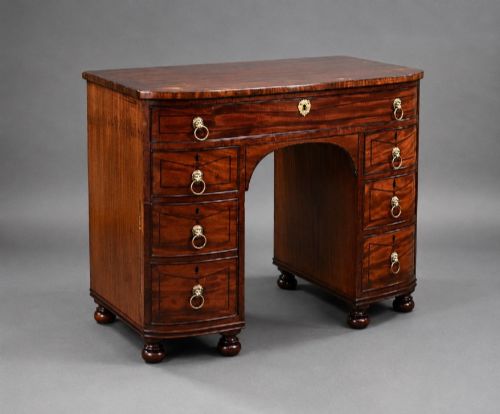
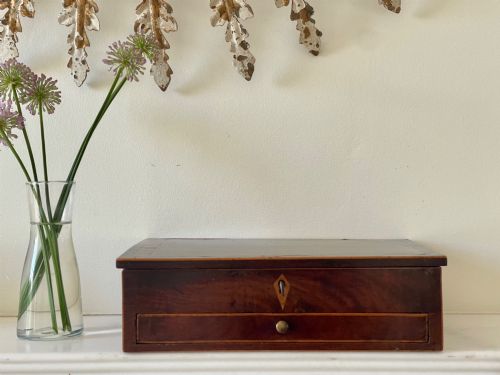
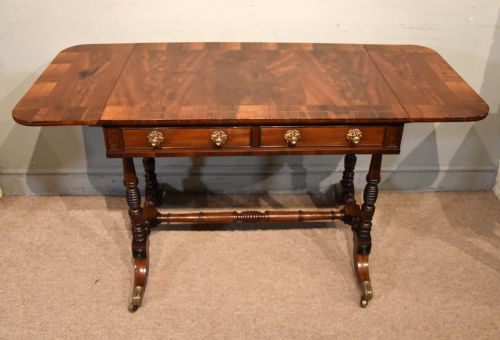
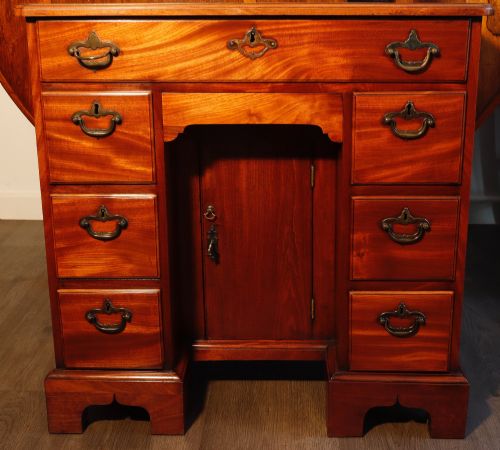
A georgian flame mahogany desk encompasses writing tables, bureaux, and secretaire bookcases originating from the eighteenth and nineteenth centuries, alongside later revival pieces. Buyers seeking this phrase typically encounter writing desks, twin pedestal forms, and secretaire bookcases showcasing distinct figured wood.
The selection ranges from strict eighteenth-century George III bureaux to Regency writing tables and later Georgian Revival interpretations from the twentieth century. These items served functional writing and storage needs in period homes, featuring fitted drawers and drop-front writing surfaces.
How they were made
Cabinet makers utilised dense timber foundations overlaid with carefully sliced flame mahogany veneer to achieve striking figuring across the primary surfaces. Boxwood and brass inlay frequently accent the drawer fronts and borders, demonstrating precise joinery and decorative restraint.
Secondary woods such as oak and pine provide structural integrity within the drawer linings and internal divisions. Traditional hand-cut dovetails secure the drawer construction, while applied mouldings frame the secondary grain patterns.
Georgian Flame Mahogany Desk Retail Price Guide 2026
Typical asking prices for georgian flame mahogany desk among the pieces listed under this phrase on Sellingantiques today, from the lower quarter to the upper quarter. They describe what is for sale here now, not the wider market.
Secret compartments inside secretaire drawers often hide behind dummy book spines.
What varies in quality
The visual impact depends on the symmetry and boldness of the flame grain figure selected across the principal writing surfaces and drawer fronts. Superior examples display continuous grain matching across adjacent panels rather than mismatched veneer patches.
Proportion and execution of secondary details like brass hardware, inlay work, and interior pigeonhole configuration distinguish standard utility pieces from high-status workshop production.
The Georgian Flame Mahogany Desk Glossary
- Flame mahogany
- A veneer cut from the fork of the mahogany tree where branches join the trunk, producing a distinctive fire-like ripple pattern. This timber forms the visual centrepiece of high-end case furniture.
- Secretaire
- A piece of furniture containing a pull-down writing drawer fitted with small drawers and pigeonholes. It combines storage capacity with a concealed writing surface.
- Bureau
- A sloping desk with a hinged lid that opens to reveal fitted compartments for writing materials. These units typically sit above a chest of graduated drawers.
- Pedestal desk
- A heavy writing table supported by two vertical banks of drawers rather than four separate legs. This form provides substantial storage beneath the main writing surface.
- Inlay
- A decorative technique where contrasting materials such as boxwood are inserted into depressions carved into the primary wood surface. This creates crisp geometric borders and patterns.
Georgian Flame Mahogany Desk: Frequently Asked Questions
How do I care for flame mahogany?
Keep wooden surfaces away from direct sunlight and excessive heat sources to prevent the veneer from drying and lifting. Regular dusting with a soft cloth maintains the natural lustre without heavy chemical polishes.
Apply traditional beeswax sparingly when the timber appears dry, buffing gently along the grain. Avoid placing damp items directly onto the polished writing surface.
What is a secretaire bookcase?
A secretaire bookcase combines a shelved upper cabinet enclosed by glass or wooden doors with a lower chest containing a fitted drop-front writing drawer. This dual-purpose design served as a combined library and correspondence station in period interiors.
The hinged writing flap conceals a structured interior of small drawers and pigeonholes for stationery. Below the desk section, additional graduated drawers provide enclosed storage.
How do I identify a Georgian desk?
Examine the secondary timbers inside the drawer boxes, such as oak or pine, alongside the hand-cut dovetail joints typical of eighteenth-century workshop construction. Georgian proportions favour classical architectural symmetry and restrained decorative carving.
Check for period-appropriate brass hardware fixing methods and timber seasoning marks. Later revival pieces from the twentieth century often display machine-made elements or different internal construction standards.
Where were these desks placed?
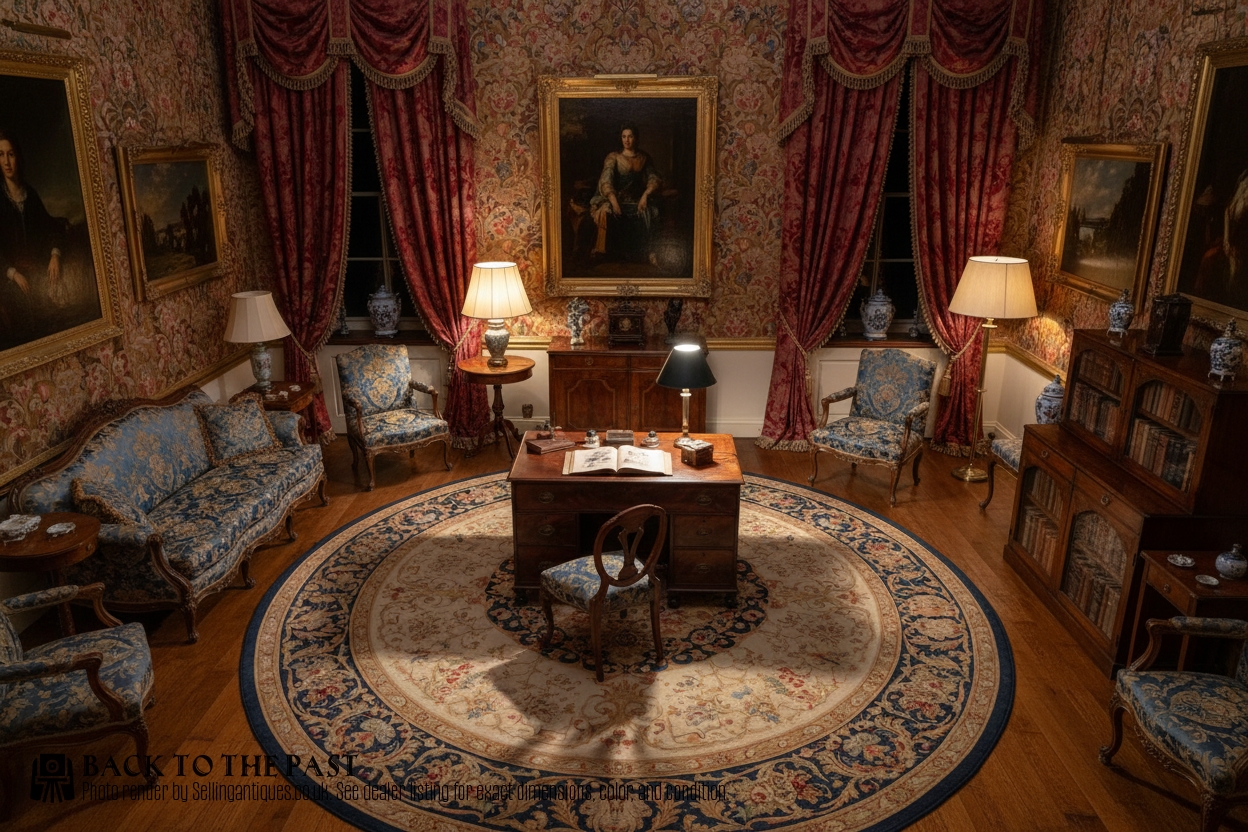
Period writing furniture typically occupied private studies, libraries, or withdrawing rooms where correspondence and estate management took place. Twin pedestal versions often stood freestanding in the centre of a room.
Secretaire bookcases and tallboys lined the walls of drawing rooms and bedrooms to maximise vertical storage. Writing tables were positioned near windows to capture optimal daylight for reading and writing.