


Georgian Brass Handle Desk
A georgian brass handle desk brings practical writing space and period timber warmth into a room.
Georgian Brass Handle Desk
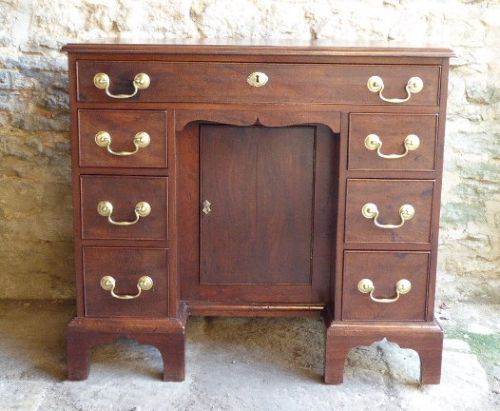
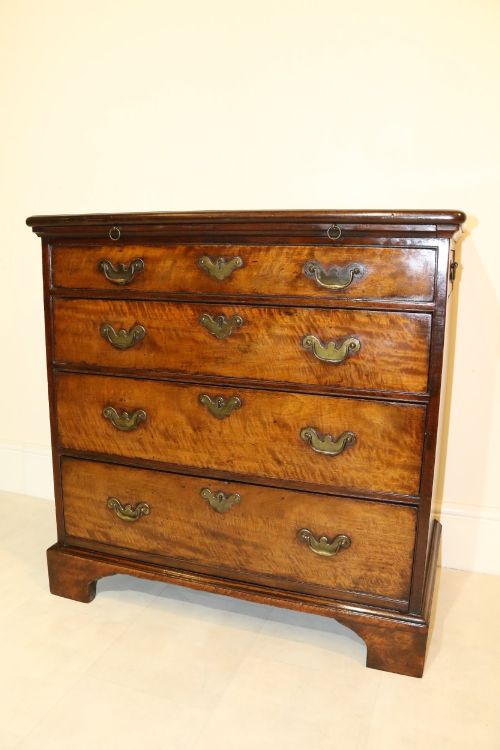
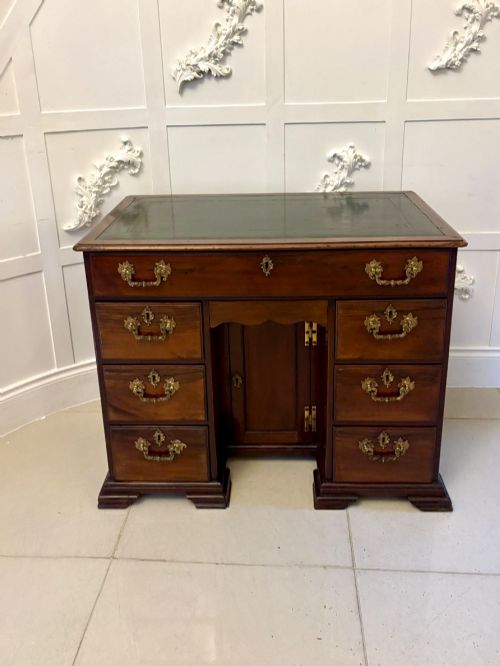
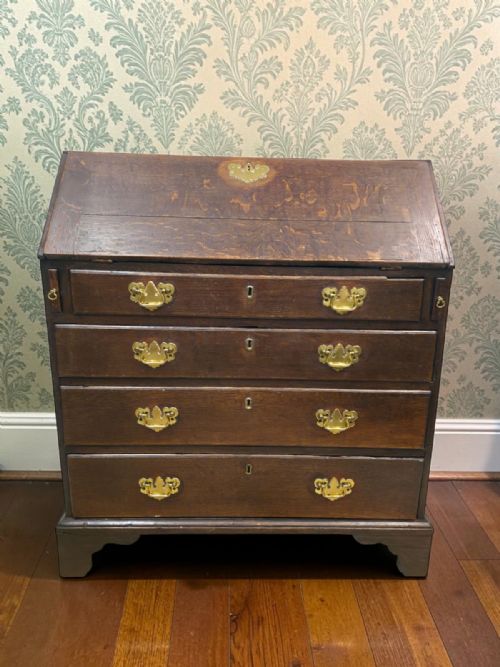
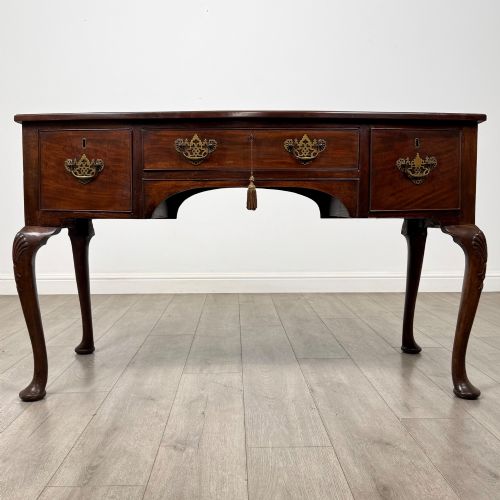
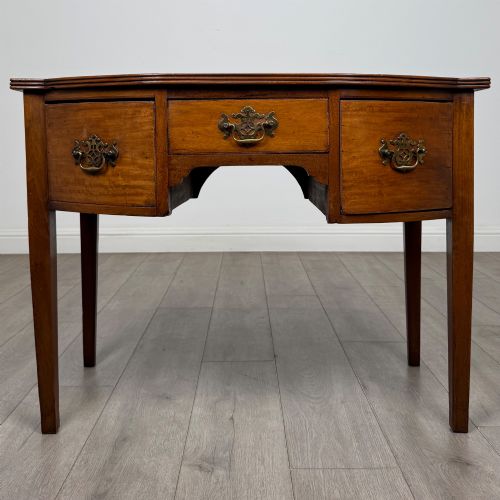
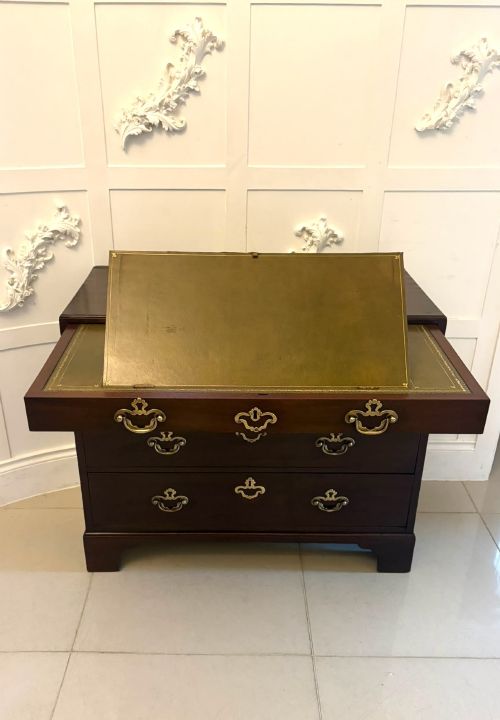
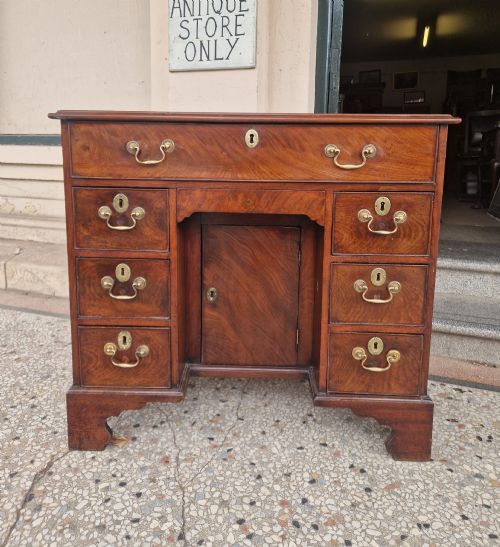
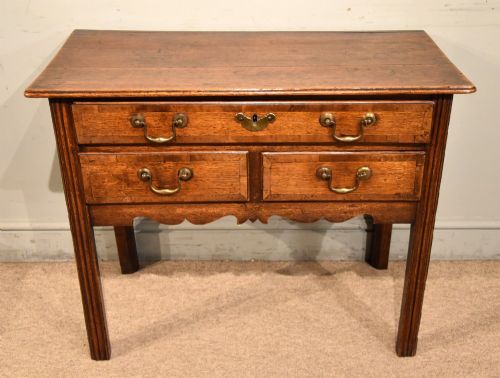
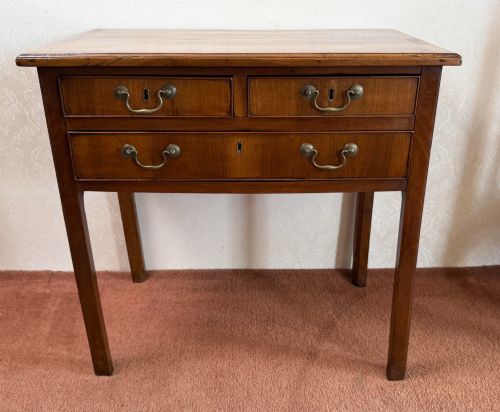
A georgian brass handle desk encompasses compact kneehole writing tables, drop-front bureaux, and pedestal forms fitted with brass hardware. These pieces originate predominantly from the Georgian and eighteenth-century periods, alongside later revival interpretations in mahogany, oak, and walnut.
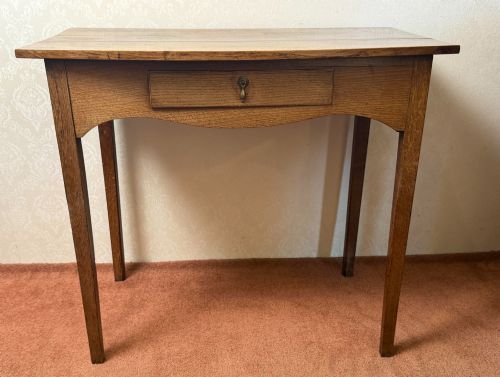
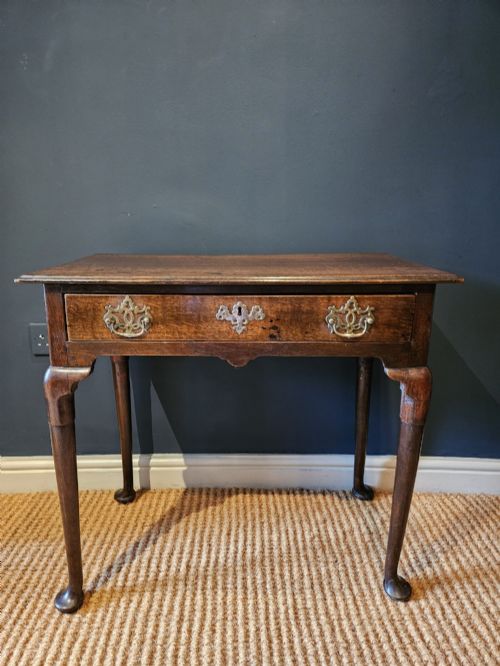
Buyers most frequently encounter mahogany kneehole desks and oak side tables equipped with fitted drawers and drop handles. The selection ranges from modest writing surfaces to larger pedestal desks incorporating leather tops and wood inlay.
The form adapts to various domestic settings, functioning as a primary writing station or a decorative side table. Cabinetmakers built these items to serve structured daily correspondence and storage needs.
Materials and construction
Cabinetmakers utilised dense hardwoods such as mahogany, oak, and walnut, frequently applying burr walnut veneers or decorative wood inlay to primary surfaces. These timbers provide structural rigidity and distinct grain patterns that develop rich patination over centuries.
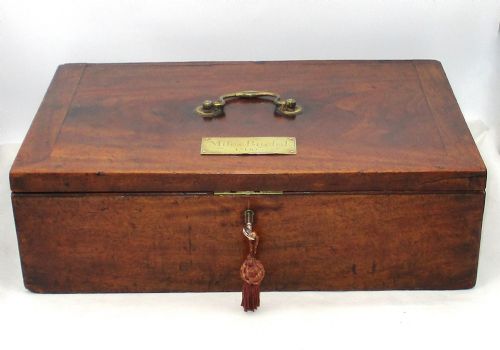
Brass hardware, including drop handles, backplates, and occasional paw feet, secures onto drawer fronts using original pins or threaded posts. Dovetail joinery connects drawer corners, while secondary woods line the internal compartments of writing drawers and document boxes.
Georgian Brass Handle Desk Retail Price Guide 2026
Typical asking prices for georgian brass handle desk among the pieces listed under this phrase on Sellingantiques today, from the lower quarter to the upper quarter. They describe what is for sale here now, not the wider market.
Some nineteenth-century makers hid secret compartments behind pigeonholes, rewarding future owners who knew which concealed spring to press.
Distinctions in quality
The sophistication of the timber selection and the precision of the cabinetwork set finer examples apart from standard utility pieces. Finer desks display carefully matched grain veneers, crisp hand-cut dovetails, and substantial brass mounts that integrate harmoniously with the proportions of the carcass.
The integrity of the original writing surface, whether polished wood, inset leather, or a tambour cylinder mechanism, influences the overall character of the piece. Consistency between primary timbers and internal secondary woods indicates careful workshop execution.
maples of london·Mappin & Webb
The Georgian Brass Handle Desk Glossary
- Kneehole desk
- A compact writing desk featuring a central recessed space for the legs, flanked by pedestals of small drawers. This form became popular during the eighteenth century for domestic studies.
- Bureau
- A writing cabinet featuring an angled fall-front flap that lowers to reveal an internal arrangement of small drawers and pigeonholes. When closed, it conceals correspondence and writing materials.
- Lowboy
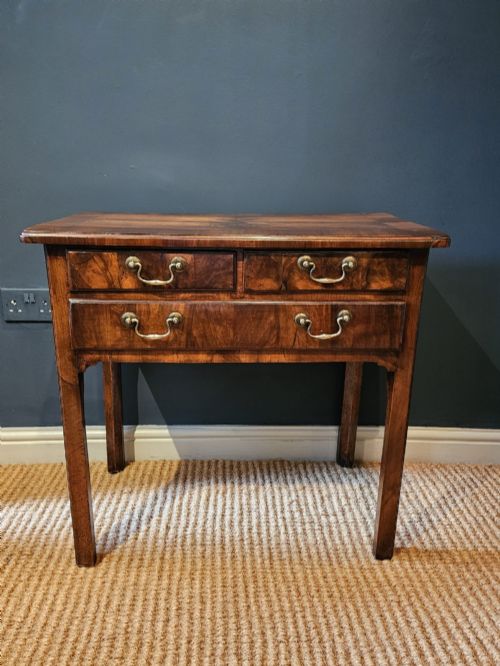
- A small side table with one or more rows of drawers, commonly supported on slender cabriole or straight legs. These versatile pieces functioned as dressing tables or writing surfaces.
- Tambour
- A flexible shutter made from narrow vertical strips of wood glued to a canvas backing, sliding along a track. This mechanism conceals the interior fittings of cylinder desks.
- Dovetail
- A joint formed by interlocking wedge-shaped fingers, used to join drawer corners securely without relying on metal fasteners.
Georgian Brass Handle Desk: Frequently Asked Questions
How do I identify a genuine period desk?
Examine the construction methods visible within the drawer linings and back panels, looking for hand-cut dovetails and tool marks consistent with eighteenth or nineteenth-century production. Original brass hardware often leaves distinct ghost impressions in the timber if repositioned.
Compare the secondary woods used inside the carcass with the primary exterior timbers to confirm period consistency. Subtle irregularities in symmetry and hand-finished surfaces distinguish older workshops from later revival pieces.
How should I care for a antique wooden writing surface?
Maintain the wood by applying microcrystalline wax sparingly to nourish the grain and protect the finish from moisture. Avoid placing desks near direct heat sources or strong sunlight, which can dry out timber and cause veneers to lift.
Dust regularly with a soft, dry cloth to prevent particulate accumulation. Leather writing inserts require gentle cleaning with specialised saddle soap rather than harsh household solvents.
Where were lowboys typically used in the home?
Lowboys served multifaceted roles within domestic interiors, functioning as dressing tables in bedchambers or auxiliary writing surfaces in parlours. Their modest proportions allowed them to fit easily into smaller alcoves and narrow hallways.
The single or multiple drawers provided secure storage for personal documents, cosmetics, and small writing implements. Their lightweight construction made them portable enough to move between rooms as household needs shifted.