


Antique Mahogany Office Desk
An antique mahogany office desk brings solid wood construction and period character to a workspace, offering sturdy writing surfaces shaped by Georgian and Victorian cabinet-makers.
Understanding antique mahogany office desks
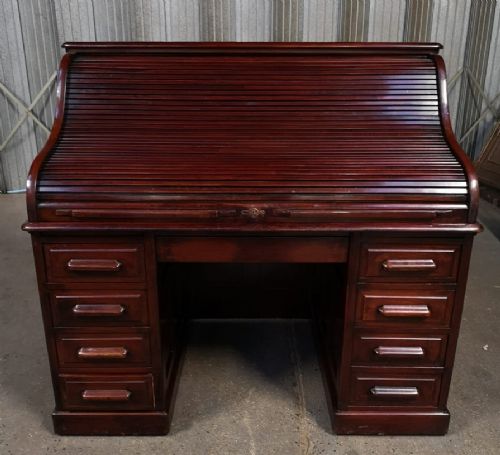
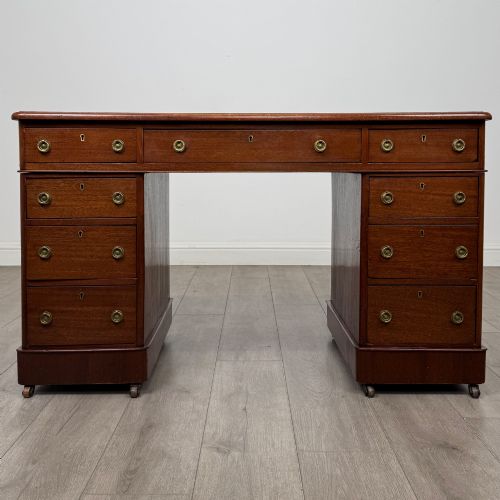
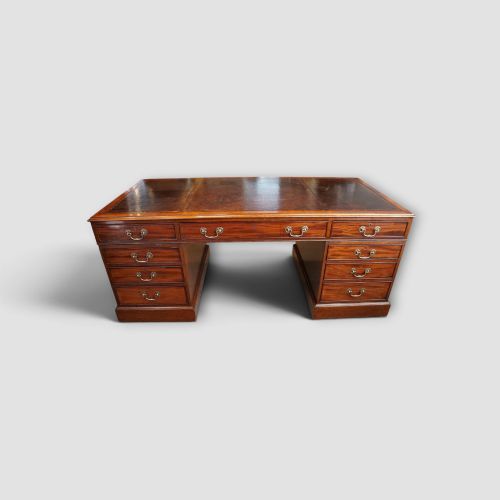
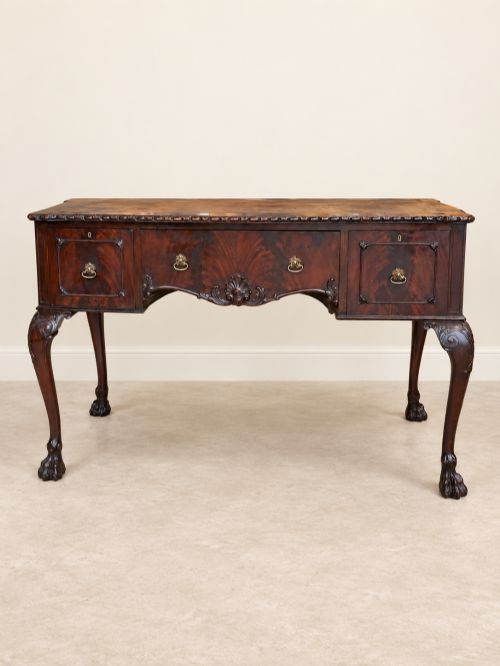
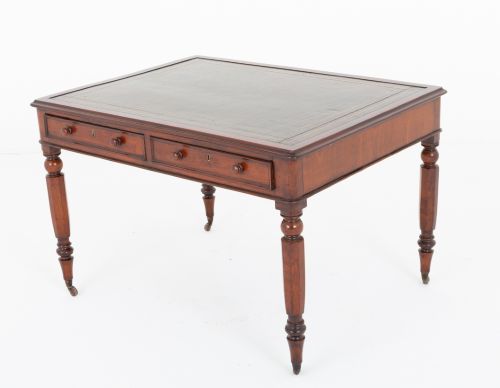
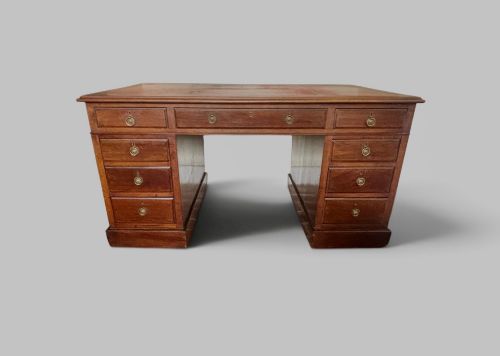
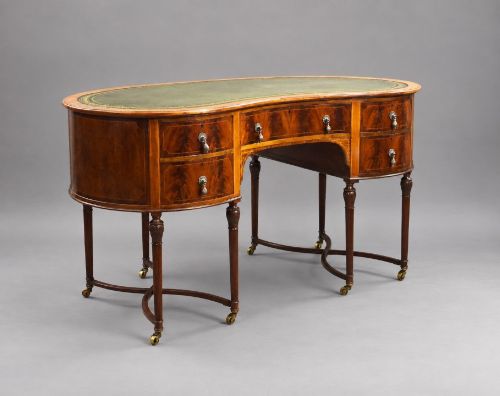
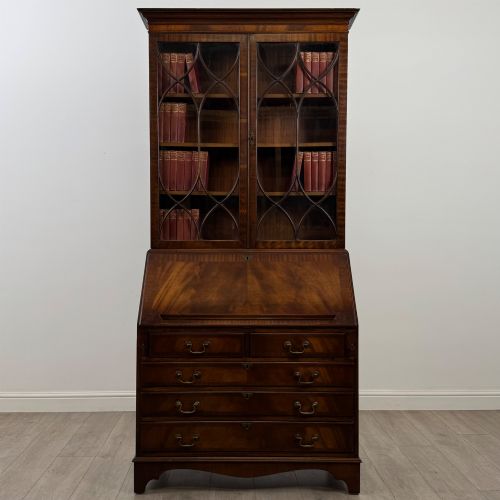
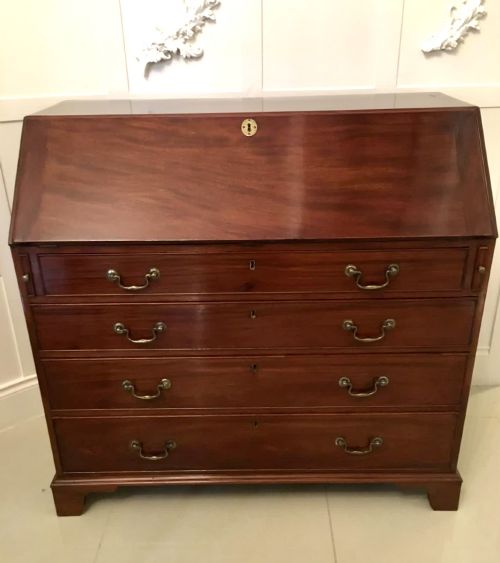
An antique mahogany office desk spans several distinct historical eras, appearing most frequently in Georgian, Regency, and Victorian iterations on this page. These pieces include pedestal desks, kneehole desks, partners desks, and writing tables designed for serious clerical work or library study.
The materials recorded in these listings rely primarily on solid wood and timber veneers, complemented by leather inserts and brass hardware. Cabinet-makers constructed these items to handle daily administrative tasks while providing substantial workspace.
Buyers encounter freestanding designs and double-sided partners desks meant to occupy the centre of a room rather than sit flush against a wall. Proportions vary from compact tray-topped examples to large five-foot writing tables.
Materials and construction methods
Craftsmen utilised mahogany timber for its dense grain and durability, frequently pairing solid framing with figured wood veneers on large surfaces. Brass handles, key escutcheons, and castors provided functional metallic contrast to the dark timber.
Writing surfaces incorporated inset panels of green or red leather, often framed by decorative gilt tooling. Internal drawer construction relied on traditional hand-cut dovetails and solid secondary woods.
Makers shaped structural components through sawing, turning, and polishing, finishing the timber with oil or wax to highlight the natural grain patterns.
Retail Price Guide 2026
Typical UK retail prices for mahogany office desk, calculated from the Sellingantiques database of over a million retail prices indexed since 2003. This retail price guide relies exclusively on Sellingantiques data; no external sources or auction records are used, so the figures do not describe the wider market.
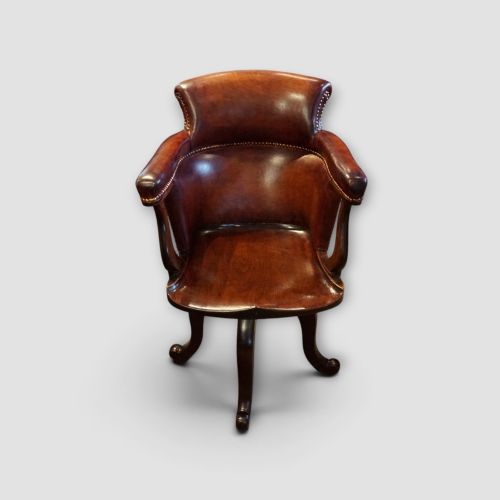
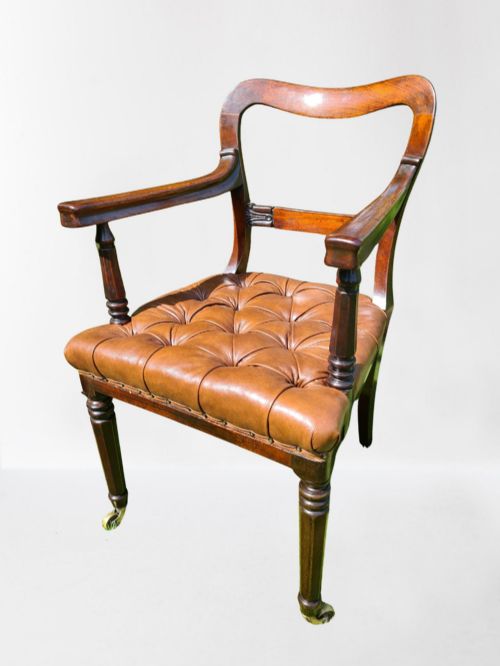
More than a few Victorian desks come paired with revolving armchairs designed to save clerks from constantly standing up.
Distinctions in craftsmanship and materials
The grade of timber dictates visual appeal, with highly figured mahogany veneers commanding greater attention than plain stock. Superior examples display careful book-matching on drawer fronts and top panels.
Hardware integrity separates standard utility items from finer productions, particularly in the weight of cast brass pulls and working lock mechanisms. Original leather writing surfaces in good preservation elevate the integrity of a piece.
Joinery execution defines structural longevity, visible in the precision of drawer dovetails and the rigidity of pedestal framing.
Thomas Chippendale·Hepplewhite·Morris And Co·Gillows
The Antique Mahogany Office Desk Glossary
- Pedestal desk
- A heavy writing desk consisting of two independent banks of drawers supporting a single top. The user sits in the central kneehole space between the pedestals.
- Partners desk
- A double-sided pedestal desk designed for two people to work opposite each other. These large pieces feature drawers and cupboards on both faces.
- Kneehole desk
- A compact desk featuring a central recessed space beneath the desktop, often flanked by single stacks of drawers. They typically sit flush against walls or within smaller studies.
- Tray-topped
- A desktop design featuring a raised rim or gallery around the perimeter. This edge prevents pens and papers from rolling off the surface.
- Dovetail
- A traditional wood joint formed by interlocking wedge-shaped fingers. This method secures drawer corners without relying on metal fasteners.
Frequently Asked Questions
What is a partners desk?
A partners desk is a large pedestal writing table built with storage drawers and cupboards on both sides. This symmetrical layout allowed two people to work face to face in a shared office.
These pieces usually occupy the centre of a room rather than standing against a wall. They represent some of the most substantial office furniture produced during the Georgian and Victorian periods.
How do I care for leather desk inserts?
Leather desk inserts require regular dusting with a dry cloth and occasional treatment with specialist leather balms to prevent drying and cracking. Avoiding direct sunlight helps preserve the colour of green and red hides.
Writing surfaces benefit from protective blotters when used heavily for daily paperwork. Keeping moisture away from the leather prevents staining and warping of the underlying wood.
How can I tell a Georgian desk from a Victorian one?
Georgian desks, particularly those from the George III era, tend to feature cleaner architectural lines, subtle bracket feet, and understated brass hardware. Cabinet-makers prioritized structural balance and figured mahogany veneers during this period.
Victorian desks often present heavier proportions, deeper pedestals, and more pronounced ornamentation such as turned wooden knobs or elaborate brass handles. Many Victorian examples also incorporate revolving office armchairs en suite.
Were these desks used in actual offices?
These desks served administrators, merchants, and professionals in private studies, libraries, and commercial counting houses. Their deep drawers accommodated ledgers, correspondence, and writing implements.
Over time, many of these administrative tables transitioned into domestic libraries and home studies while retaining their functional storage capacity.