
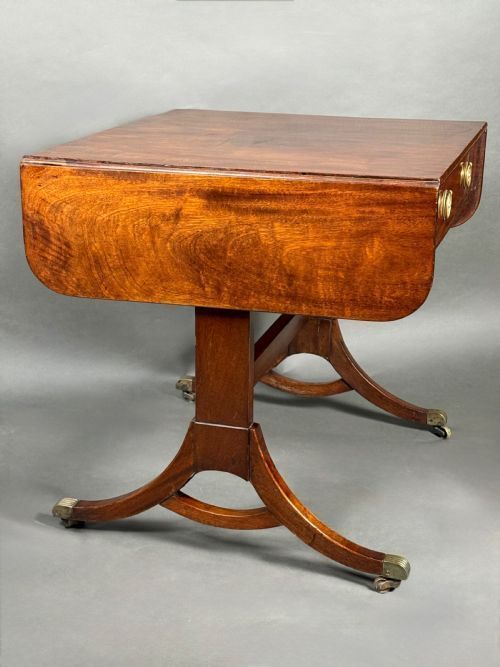
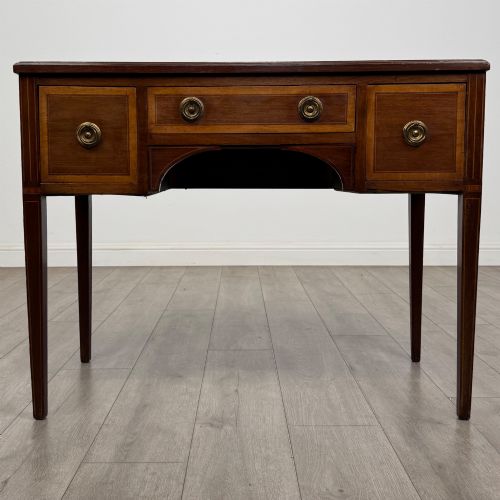
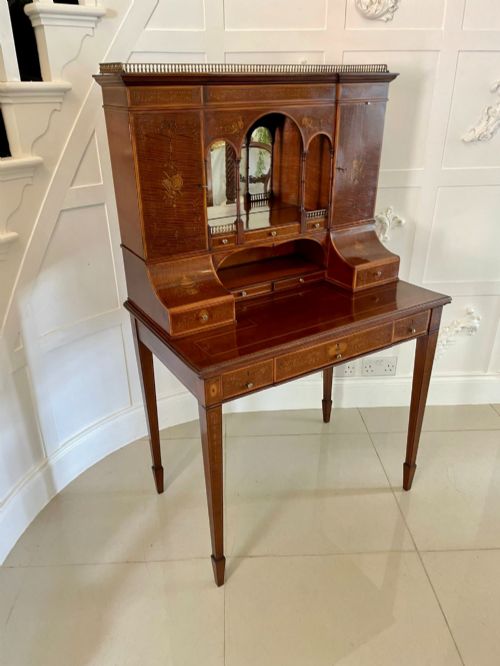
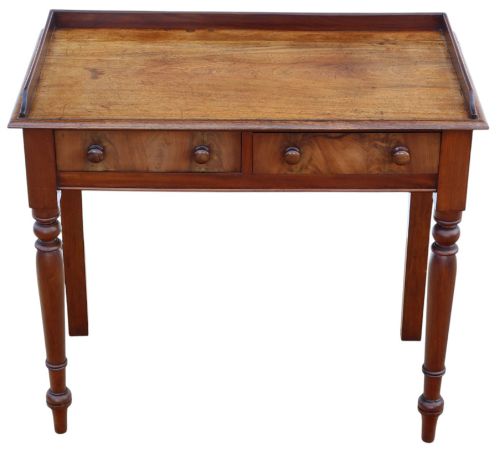


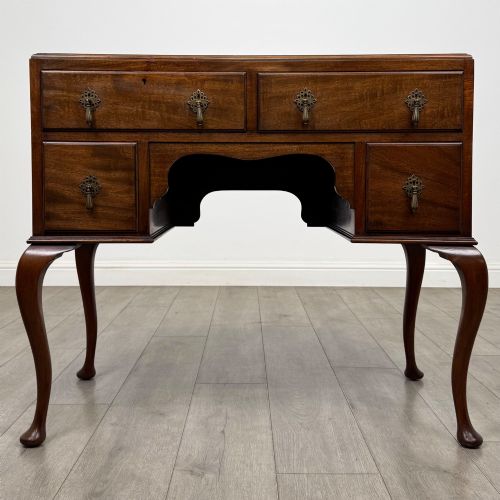
Brown Mahogany Writing Table
These brown mahogany writing table pieces offer genuine period character and practical surfaces, bringing traditional craftsmanship directly into a modern study.
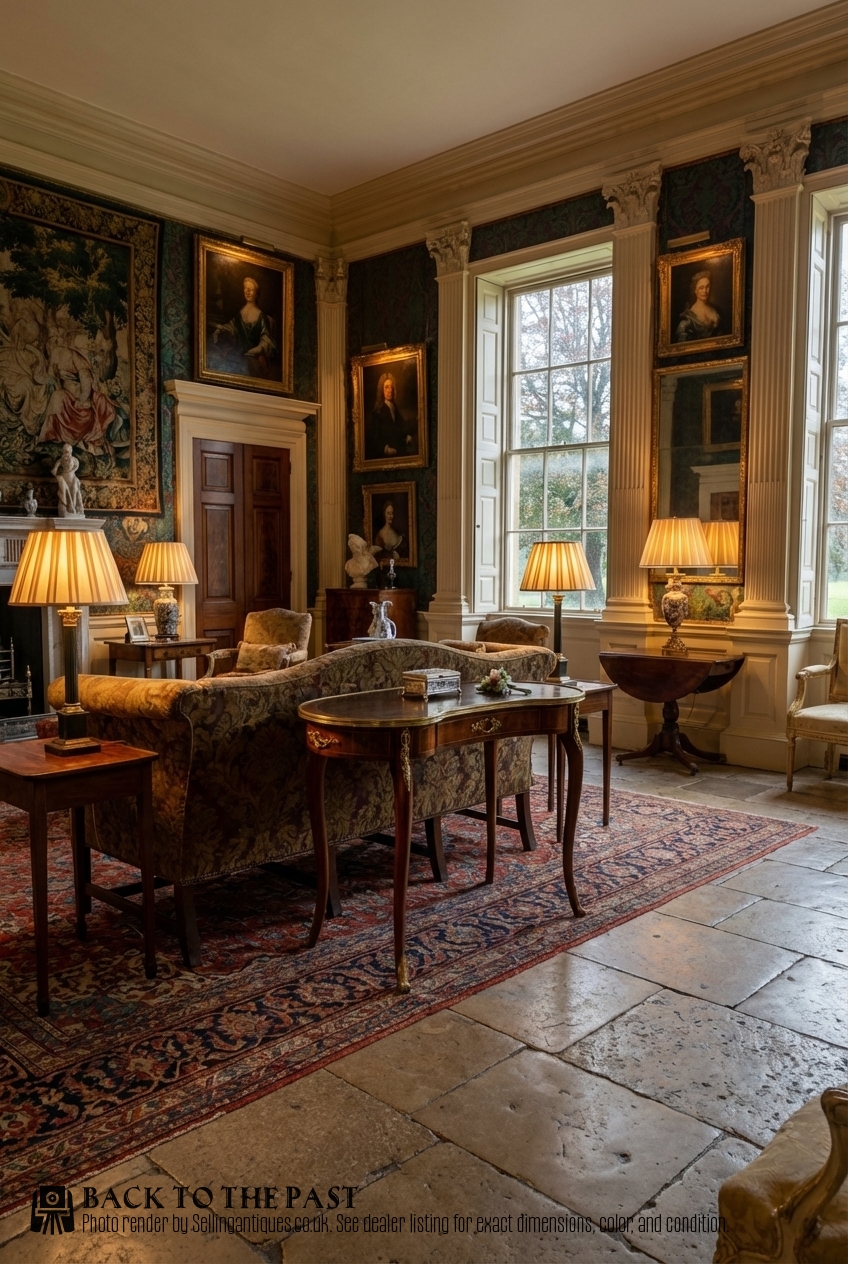
Identifying a brown mahogany writing table
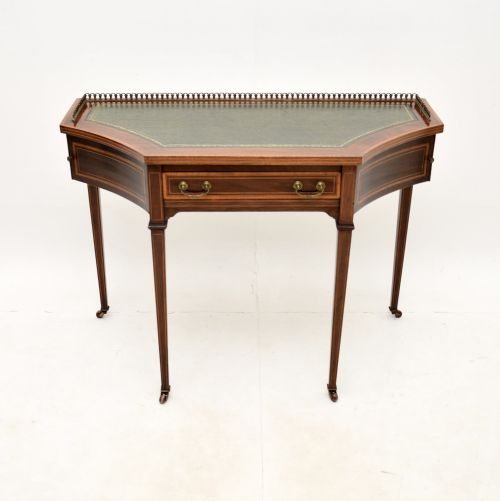
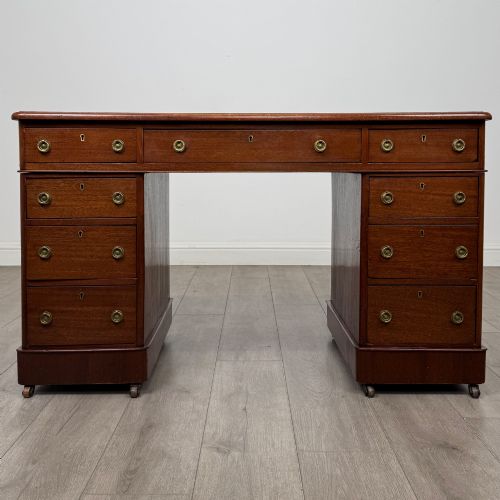
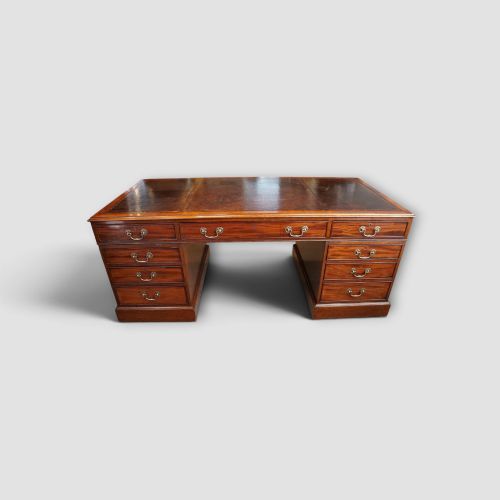
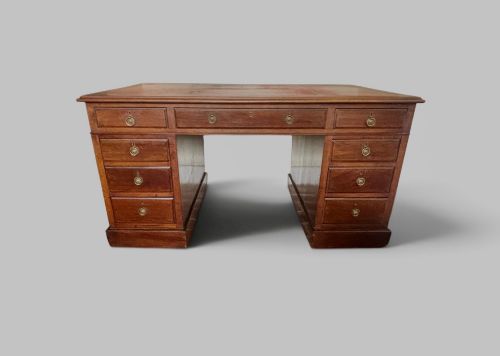
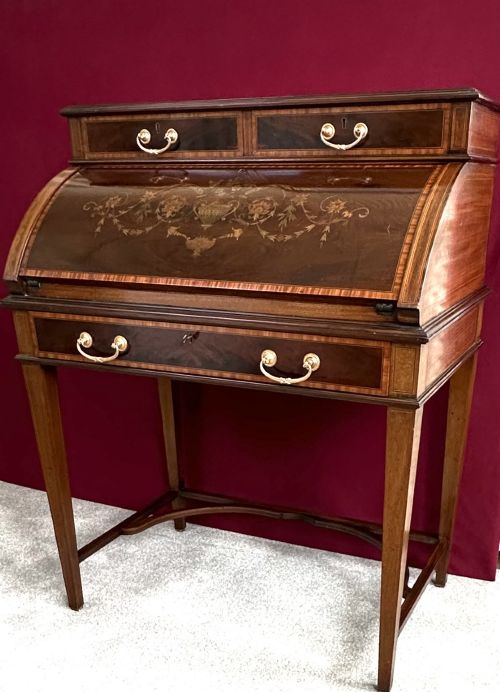
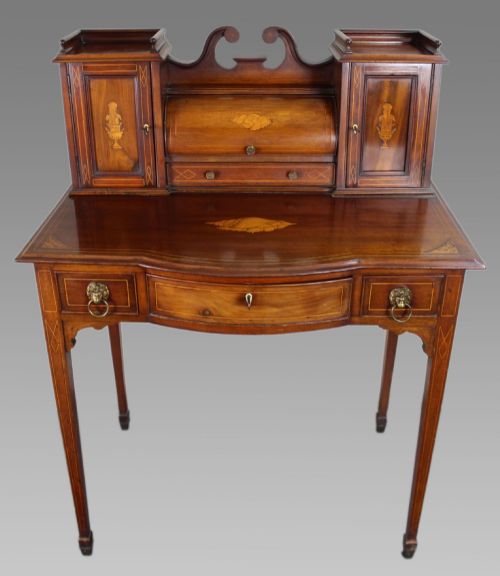
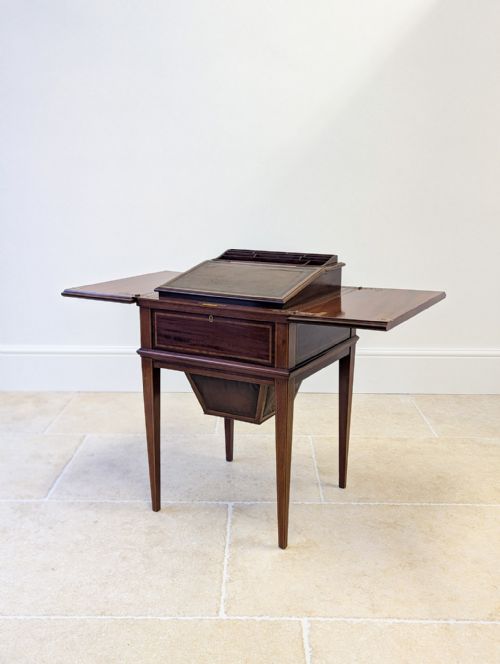
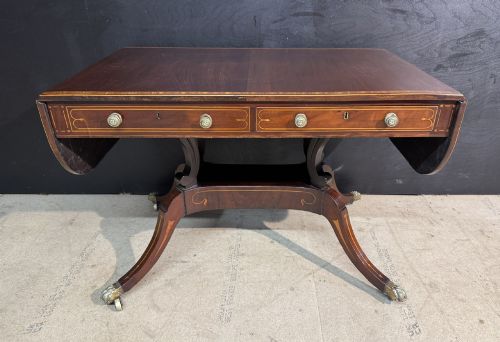
A brown mahogany writing table serves as a functional workspace, appearing across multiple eras including the Georgian, Victorian, and later revival periods. Buyers searching this phrase encounter several distinct forms, from pedestal desks and bonheur du jour items to kidney-shaped writing tables and cartographer's folio tables.
The pieces listed on this page span the nineteenth century up to nineteen-twenty, incorporating both English and French origins. Occasional tables and slide-front davenport designs also emerge within this selection, each offering specific proportions for writing and storage.
Victorian pedestal desks and Georgian revival pieces dominate the visual landscape, showing the enduring appeal of rich timber tones. Every brown mahogany writing table carries the distinct structural hallmarks of its specific decade and stylistic inspiration.
Construction and materials
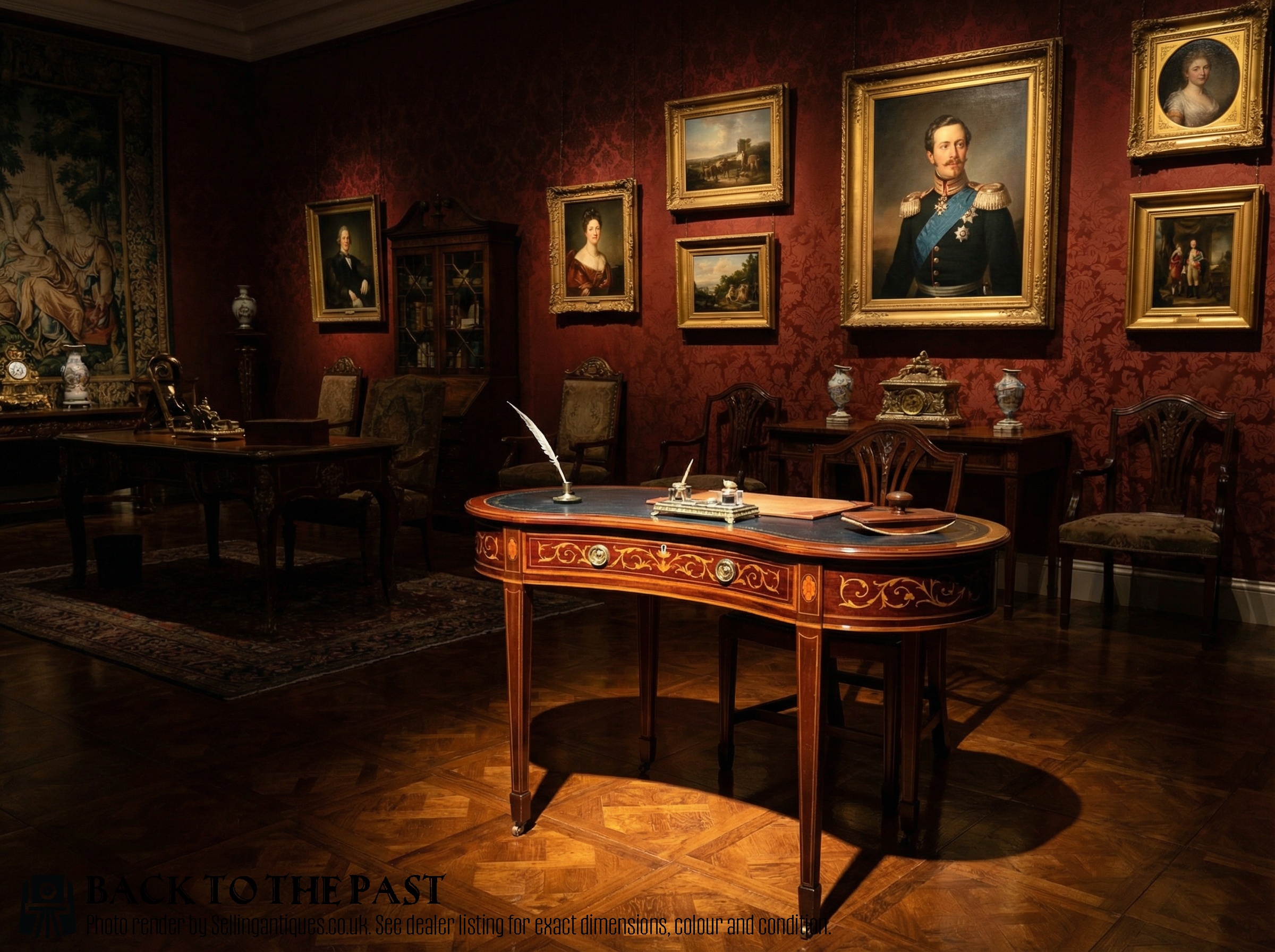
Construction relies primarily on solid and veneered mahogany timber, often complemented by contrasting satinwood inlay details. These materials provide both structural durability and a deep, warm surface appearance.
Metal and leather components appear frequently across the pieces, with brass hardware and ormolu accents adding functional and decorative contrast. Inset leather writing surfaces provide the traditional texture required for daily use.
Retail Price Guide 2026
Typical UK retail prices for brown mahogany writing table, calculated from the Sellingantiques database of over a million retail prices indexed since 2003. This retail price guide relies exclusively on Sellingantiques data; no external sources or auction records are used, so the figures do not describe the wider market.
Current listings demonstrate periods ranging from eighteen hundred to nineteen-twenty, utilising mahogany, brass, leather, satinwood inlay, and ormolu.
Assessing quality and finish
Quality rests in the subtlety of the timber grain, the precision of satinwood inlay, and the integrity of brass or ormolu mounts. Faded mahogany finishes demonstrate genuine age and exposure, distinguishing naturally weathered surfaces from uniform modern staining.
The refinement of hardware and the smoothness of operating mechanisms, such as slide fronts or lift-over folio tops, separate standard examples from finer cabinet work. Structural harmony between the primary mahogany carcase and secondary decorative elements dictates the overall standing of each piece.
The Brown Mahogany Writing Table Glossary
- Mahogany
- A durable tropical hardwood known for its reddish-brown colour and stability in furniture construction. It accepts polish exceptionally well and forms the primary material for these tables.
- Ormolu
- Gilded bronze detailing applied as decorative mounts on furniture, particularly prominent in French revival styles. This technique adds metallic contrast to the timber surface.
- Satinwood Inlay
- Contrasting light-coloured wood inserted into the mahogany surface to create decorative borders and patterns. It requires considerable skill from the cabinet maker.
- Davenport
- A compact pedestal desk featuring a sloping writing surface and side drawers. The slide-front variant provides concealed storage for stationery and writing materials.
- Bonheur du Jour
- A light lady's writing desk featuring a small cabinet or superstructure on the top surface. This form became popular during revival periods referencing eighteenth-century French design.
Frequently Asked Questions
What periods do these writing tables cover?
The pieces span from eighteen hundred through the nineteenth century and up to nineteen-twenty. They include Georgian, Victorian, and later revival eras.
Each period brings distinct proportions and decorative details, reflecting the changing interior tastes of the time.
What materials are used in these desks?
Construction centres on mahogany timber, supplemented by brass hardware, ormolu mounts, and leather writing surfaces. Satinwood inlay frequently appears as a decorative border element.
These materials combine structural strength with the refined appearance expected of antique writing furniture.
How do I identify a French style table?
French influence appears through Louis XV revival styling, occasional table forms, and ormolu decorative mounts. These pieces often feature softer curves and lighter proportions.
Kidney shapes and bonheur du jour designs also point toward continental inspiration within the selection.
Are these tables suitable for daily writing?
Most pieces provide functional writing surfaces, with pedestal desks and slide-front davenports offering internal storage compartments. Leather inserts create a traditional surface for paperwork.
Buyers should check specific dimensions to ensure the writing height matches modern seating requirements.