

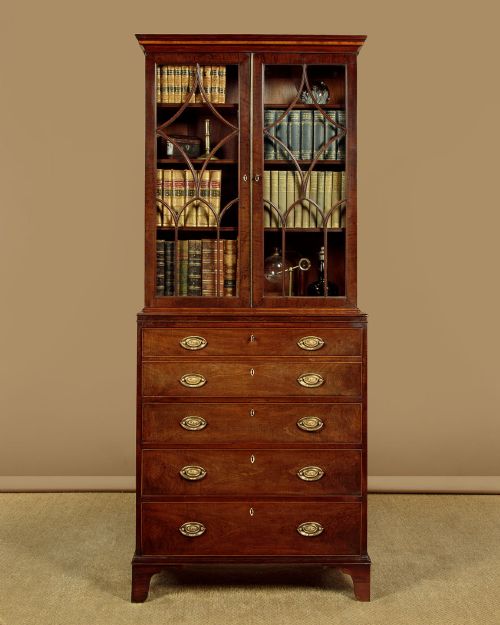
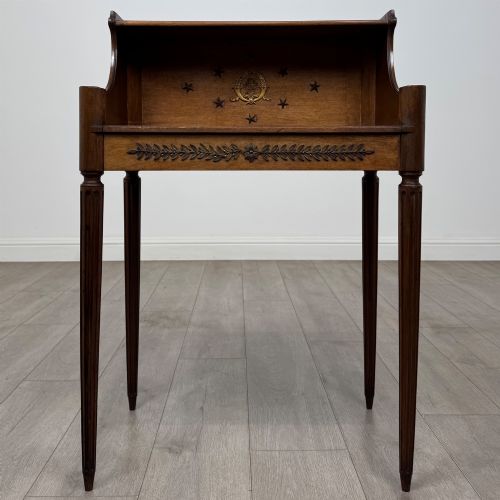
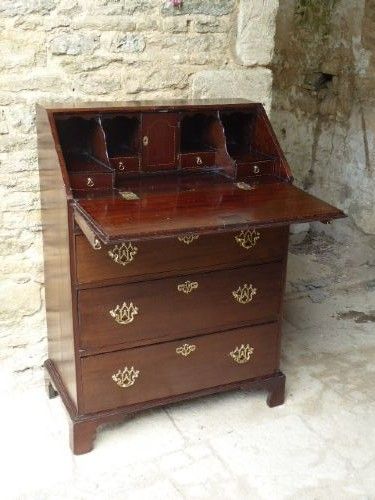
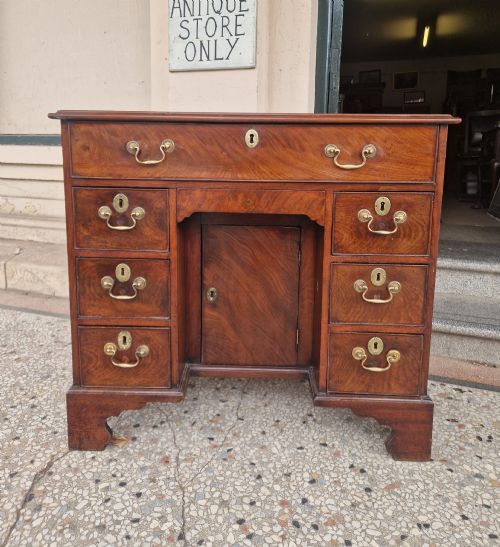

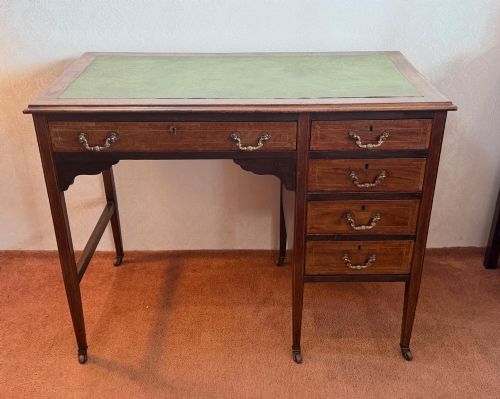
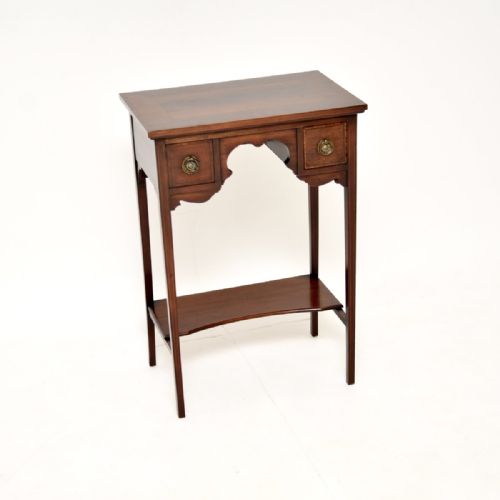
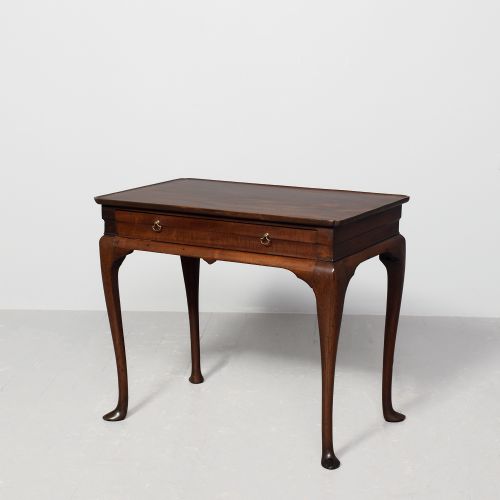
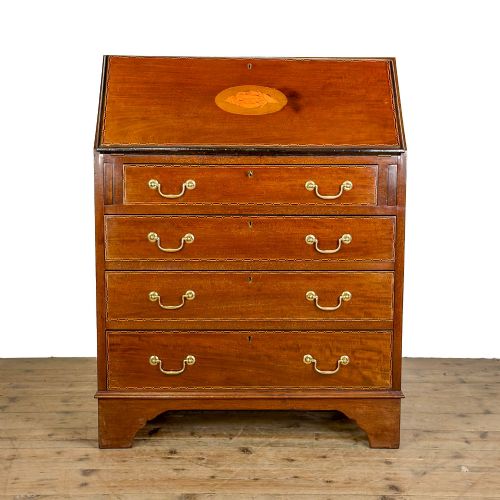
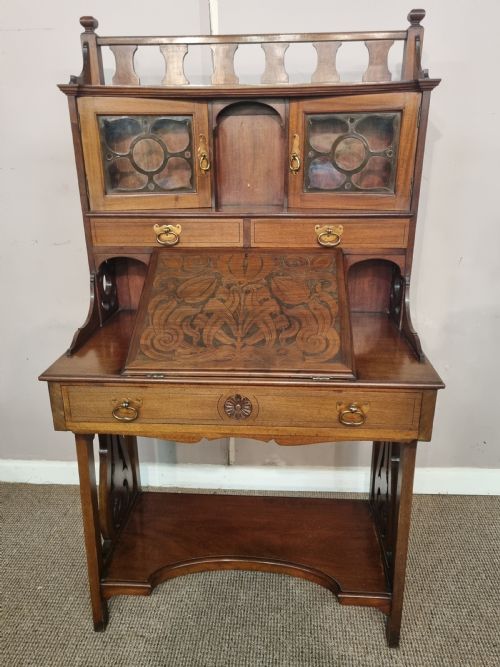
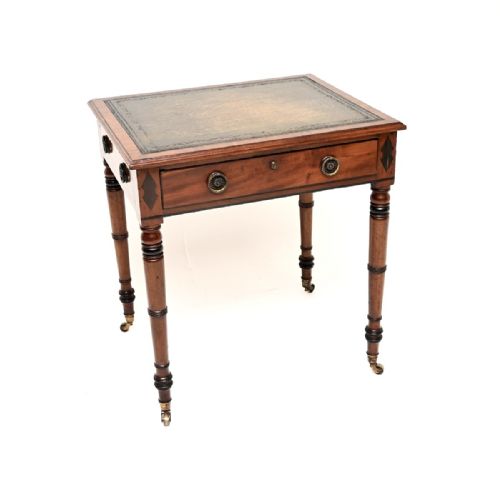
Small Mahogany Writing Desk
A small mahogany writing desk brings compact practicality and rich timber grain to a room, offering a dedicated surface for correspondence.
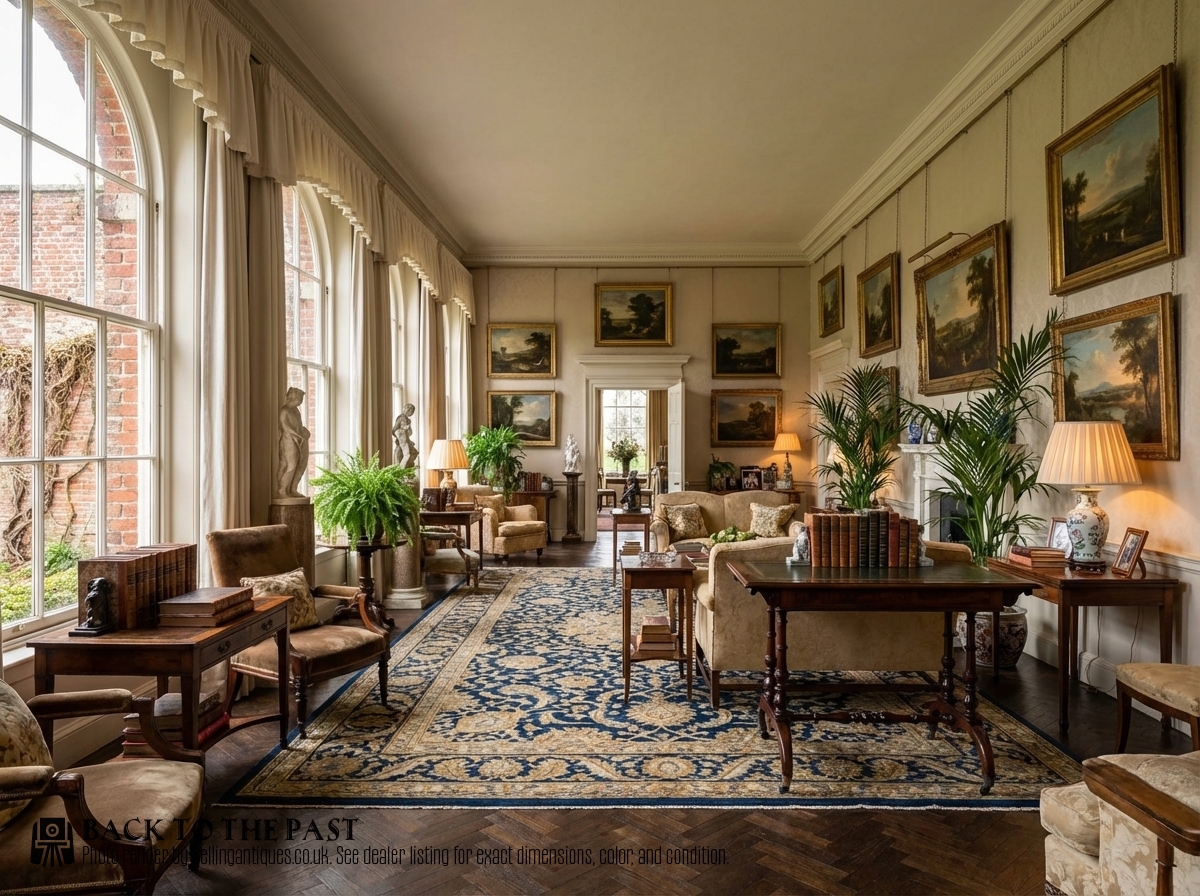
Small mahogany writing desks
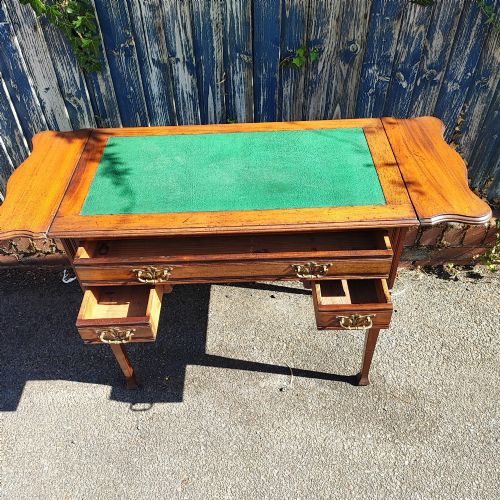
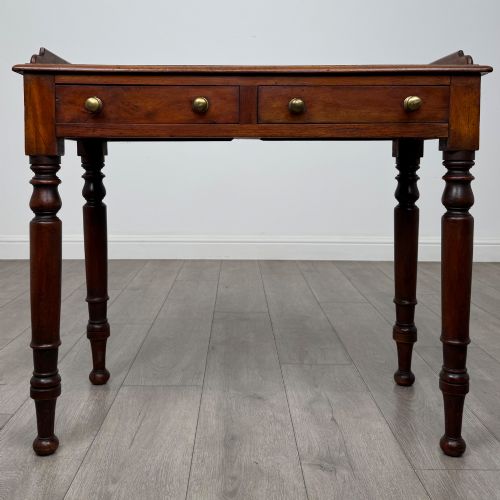
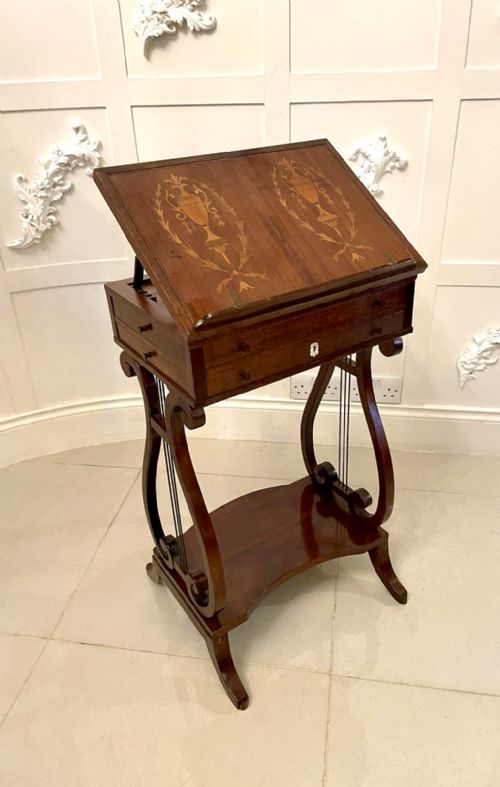
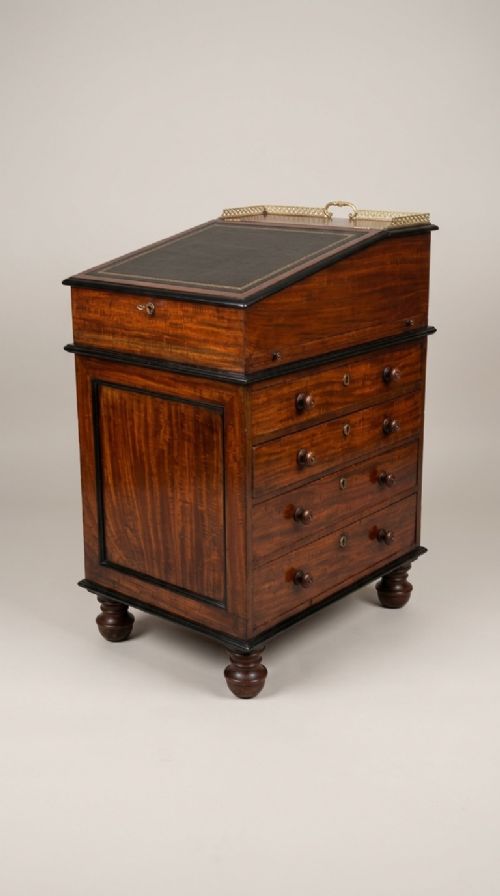
A small mahogany writing desk is a compact item designed for letters and paperwork, appearing across several centuries of British and continental design. You encounter forms ranging from simple George III lowboys and side tables to Edwardian inlaid kneehole desks, Regency davenports, and Victorian ladies tables.
The pieces span the 18th century, the Regency era, the Victorian period, and the Edwardian epoch, alongside later revivals. They include side tables, occasional tables, pedestal desks, and bureau chests adapted for writing.
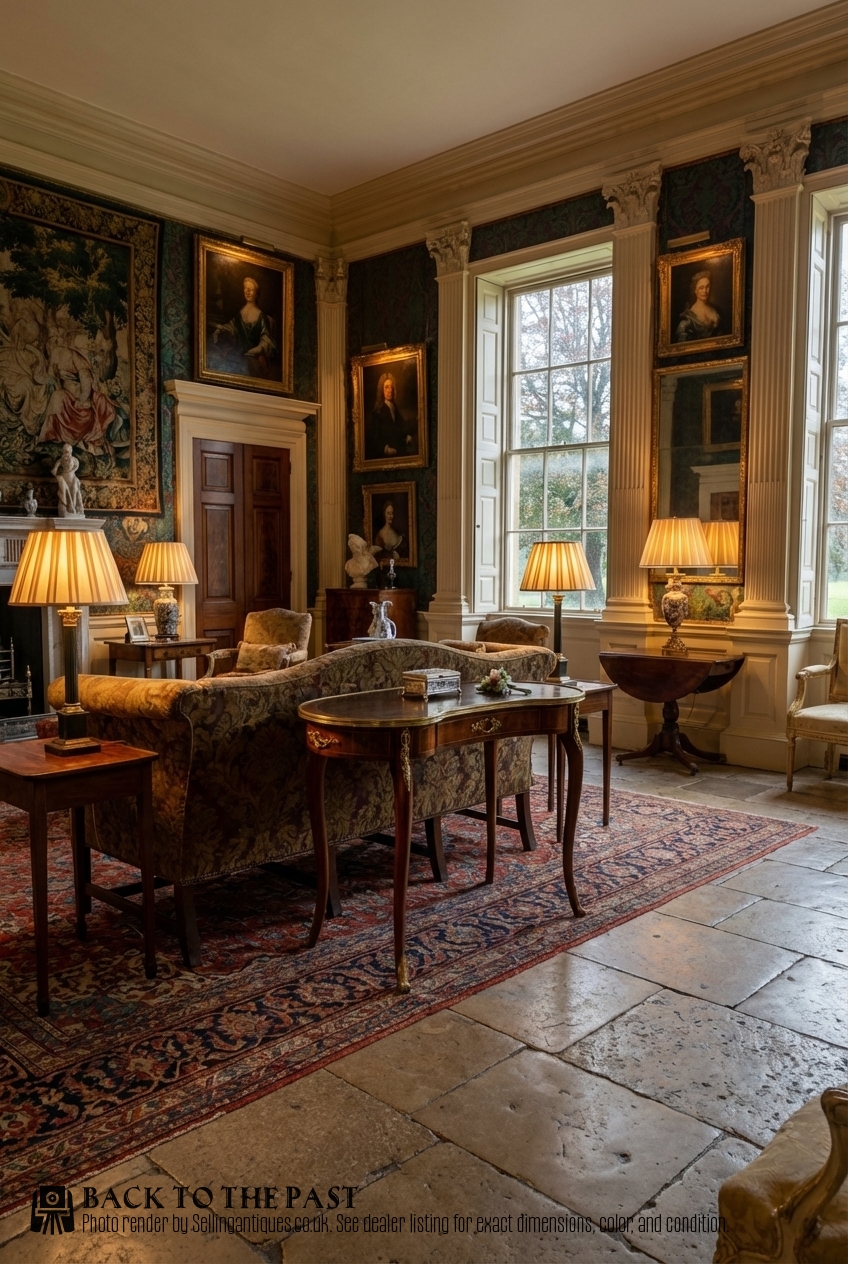
Most examples serve domestic spaces, functioning as writing tables, lamp tables, or compact bureaus. Their proportions suit smaller rooms while providing functional drawers, compartments, and sometimes leather writing surfaces.
Evaluating quality and execution
Quality rests on the choice of timber figure, such as flamed mahogany, and the precision of inlaid details like satinwood and fruitwood. Superior pieces display harmonious proportions and refined secondary woods in drawer linings.
The integration of original brass hardware, leather writing panels, and functional internal stationery compartments elevates an example. Finer specimens maintain crisp carved or inlaid ornament without losing structural integrity.
Retail Price Guide 2026
Typical UK retail prices for small mahogany writing desk, calculated from the Sellingantiques database of over a million retail prices indexed since 2003. This retail price guide relies exclusively on Sellingantiques data; no external sources or auction records are used, so the figures do not describe the wider market.
The archive and active listings demonstrate that mahogany is paired with brass, leather, satinwood, ormolu, and fruitwood inlay.
CV Smith·Gillows
The Small Mahogany Writing Desk Glossary
- Lowboy
- A small side table with one or more rows of drawers, commonly produced in the 18th century. These pieces often doubled as dressing or writing tables.
- Davenport
- A compact desk featuring a sloping writing surface above a pedestal of drawers. The form gained popularity during the Regency period.
- Kneehole desk
- A bureau or pedestal desk with a central recess for the user's legs. They often incorporate an arrangement of small flanking drawers and a central cupboard.
- Inlay
- A technique where contrasting materials such as fruitwood or satinwood are inserted into recesses within the mahogany surface to create decorative patterns.
- Ormolu
- Gilded bronze mounted onto furniture as decorative hardware or trim. This finish appears frequently on pieces influenced by French revival styles.
Frequently Asked Questions
What periods do these desks come from?
The pieces span the 18th century, the Regency and William IV periods, the Victorian era, and the Edwardian period, alongside turn of the century examples. Stylistic influences also include Georgian and French revival designs.
Specific eras bring distinct proportions and decorative vocabulary, allowing collectors to trace changes in domestic furniture design from early lowboys to later inlaid lady's desks.
What materials are used in their construction?
Mahogany serves as the primary timber across the inventory, appearing both as solid wood and figured veneer. Secondary materials include brass for handles and fittings, leather for writing surfaces, and ormolu mounts.
Cabinetmakers also incorporated satinwood and fruitwood for inlay and crossbanding, while drawer linings frequently utilise oak.
How were these small desks used?
These pieces provided a dedicated domestic surface for correspondence, keeping accounts, and handwriting before the widespread use of modern office furniture. Ladies writing desks, davenports, and lowboys served bedchambers, withdrawing rooms, and halls.
Many incorporated internal compartments, stationery backs, and inkwells to organise writing implements close at hand.
How do I identify an Edwardian piece?
Edwardian examples often feature light wood inlay, satinwood banding, and refined kidney or inverted breakfront shapes. They frequently reflect a Georgian revival aesthetic popular in the early 20th century.
Construction methods and lighter framing distinguish these later interpretations from their 18th and early 19th century predecessors.