

Antique Kidney Shaped Table
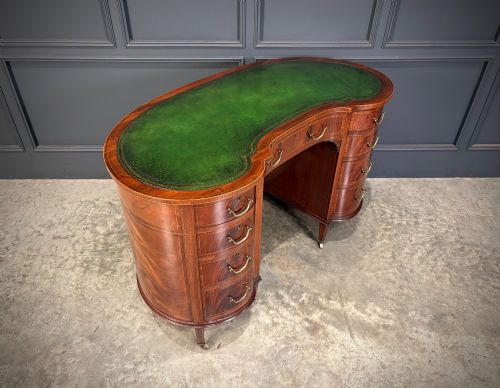
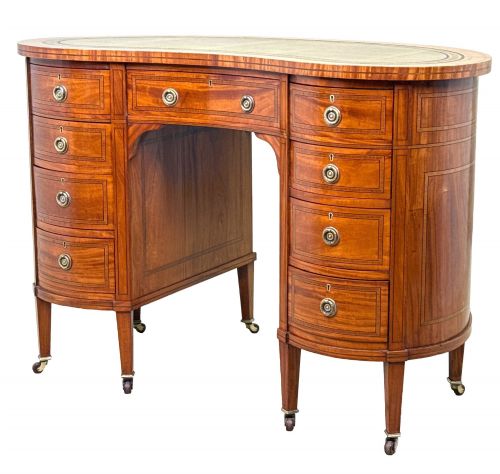
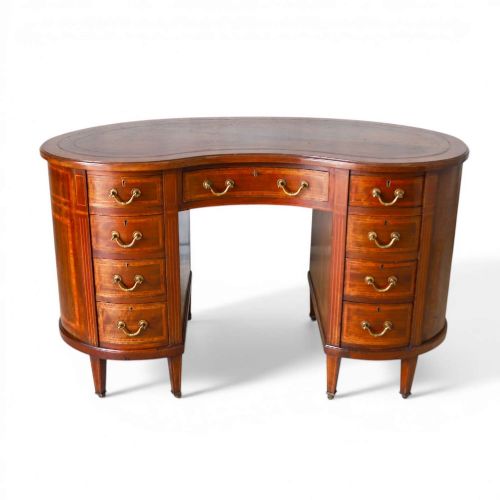
An antique kidney shaped table offers a distinctive serpentine curve that hugs the body, making it a graceful choice for writing or display.
Form and Period
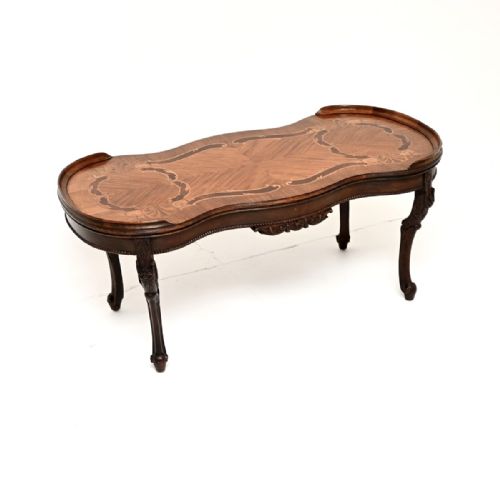
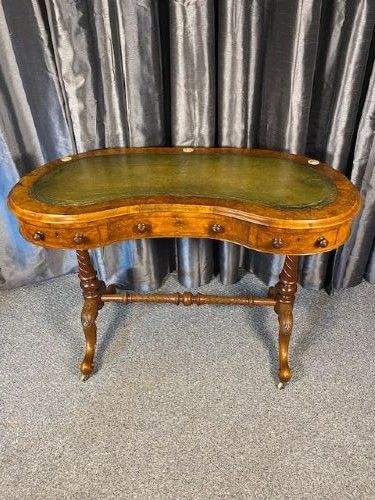
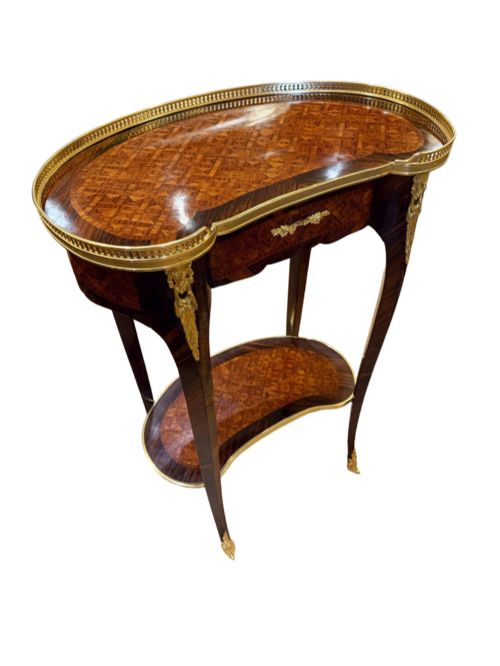
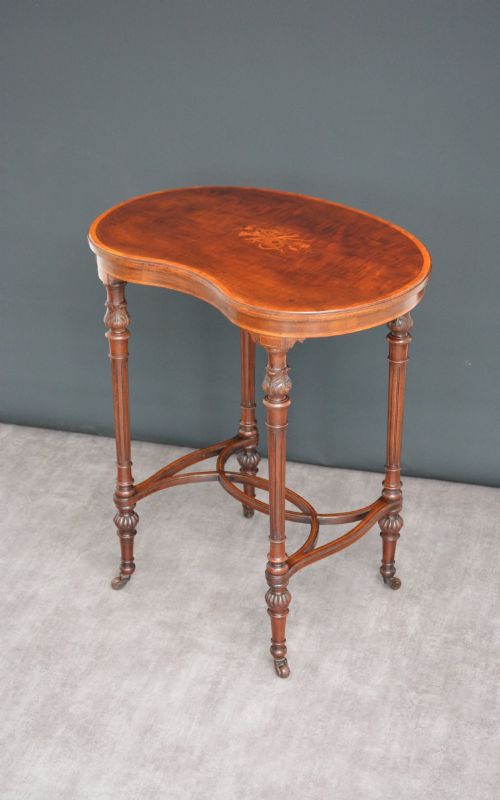
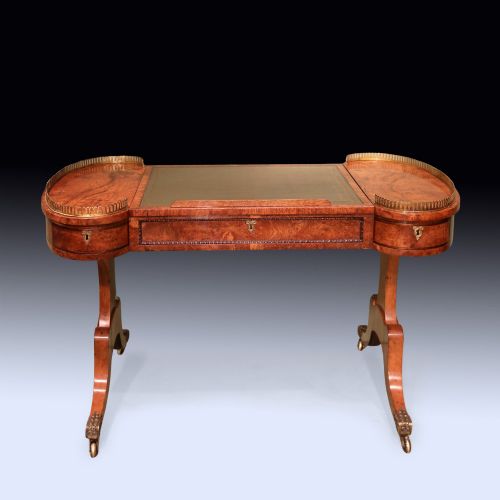
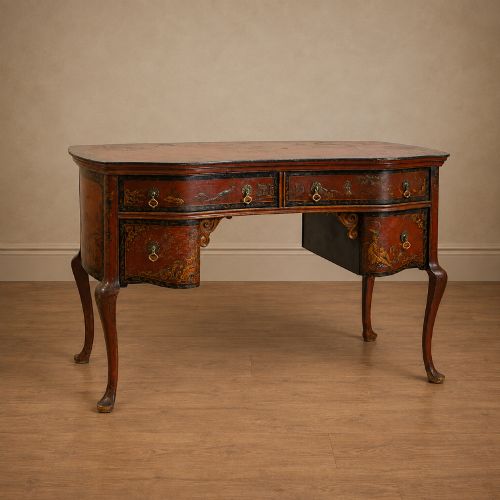
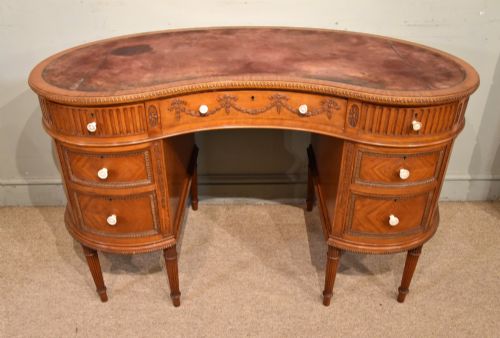
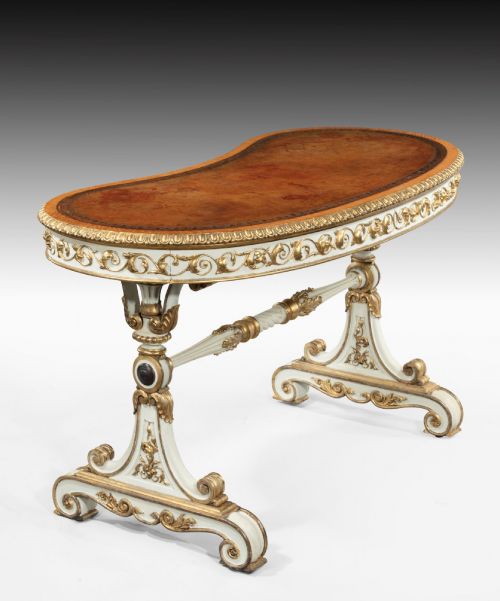
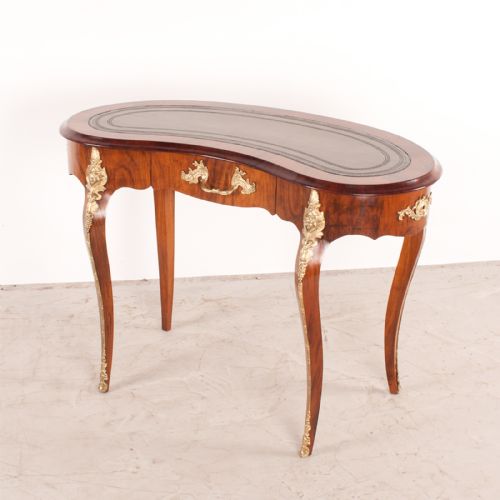
The antique kidney shaped table appears in various forms across the nineteenth and early twentieth centuries, encompassing occasional tables, desks, library tables, and dressing tables. These pieces emerge across Victorian, Edwardian, William IV, Regency, and Louis XV Revival styles, reflecting both English and French origins.
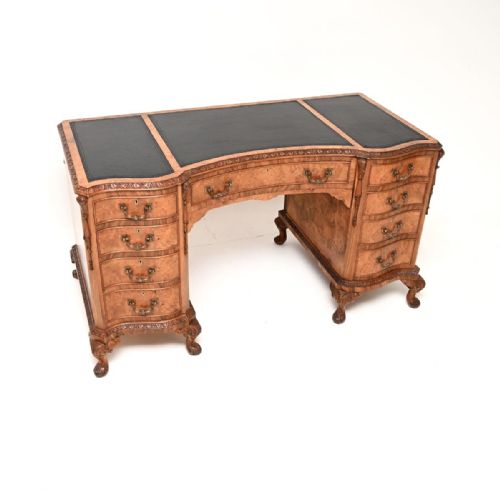
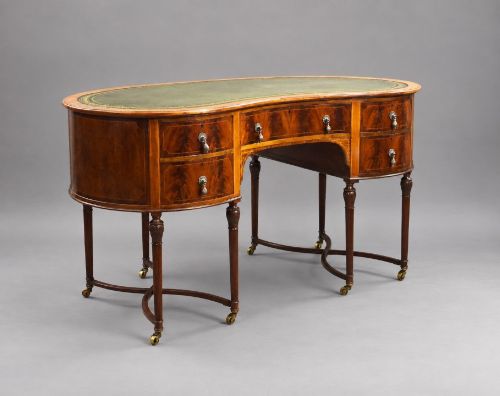
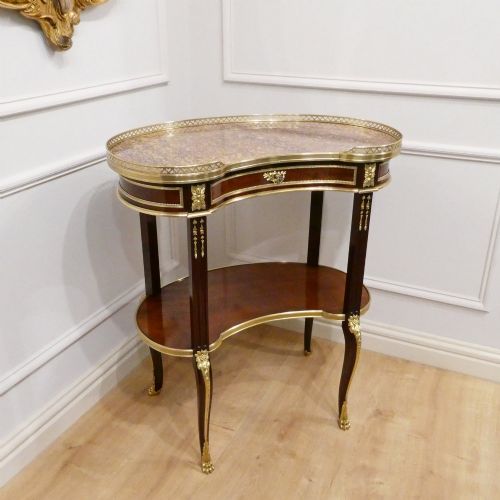
Writing desks and side tables dominate the selection, often featuring leather insert tops or marquetry decoration. Occasional and lamp tables also appear regularly, alongside larger twin pedestal desks and dressing tables complete with mirrors.
Materials and Technique
Cabinetmakers utilised rich timber veneers such as burr walnut, pollard oak, mahogany, rosewood, and satinwood, frequently paired with solid framing. Inlaid decoration, marquetry, and brass mounts or ormolu embellishments appear across many examples.
Curved aprons and serpentine surfaces required precise woodworking techniques to achieve the characteristic kidney outline. Leather writing surfaces were typically tooled and inset into the timber top.
Retail Price Guide 2026
Typical UK retail prices for kidney shaped table, calculated from the Sellingantiques database of over a million retail prices indexed since 2003. This retail price guide relies exclusively on Sellingantiques data; no external sources or auction records are used, so the figures do not describe the wider market.
Several dressing tables retain their original matching stools, surviving together across the decades.
Design and Execution
Quality rests in the depth of timber figure, particularly the choice of burr walnut or figured mahogany, and the crispness of any marquetry inlay. Finer examples display meticulous attention to the curved edge and seamless veneer matching.
Construction details such as freestanding finished backs, quality brass fittings, and secondary timbers elevate certain pieces above standard utility furniture.
Williams and Gibton of Dublin·JAS Shoolbred·Waring and Gillow·Maple and Co
The Antique Kidney Shaped Table Glossary
- Marquetry
- Decorative veneer work arranged in pictorial or geometric patterns. Craftsmen cut contrasting woods to form intricate designs across tabletops.
- Ormolu
- Gilded bronze mounts applied to furniture. This French technique adds metallic enrichment to legs and framing.
- Burr walnut
- Timber taken from the abnormal growth of a walnut tree, yielding swirling grain patterns. It is highly prized for cabinet fronts and table surfaces.
- Pollard oak
- Wood harvested from trees that were pollarded, creating dense clusters of growth rings. This timber provides a distinctive speckled texture.
Frequently Asked Questions
What was an antique kidney shaped table used for?
These tables served primarily as writing desks, dressing tables, and occasional side surfaces.
The curved indentation allowed the user to sit closer to the surface, making them practical for correspondence and grooming.
How do I date an antique kidney shaped table?
Dating relies on secondary timbers, construction methods, and stylistic cues such as Edwardian inlay or Victorian burr walnut veneers.
Cabinetmaking trends shifted from Regency and William IV formal designs toward lighter Edwardian and French revival pieces by nineteen hundred.
Are these tables suitable for modern living rooms?
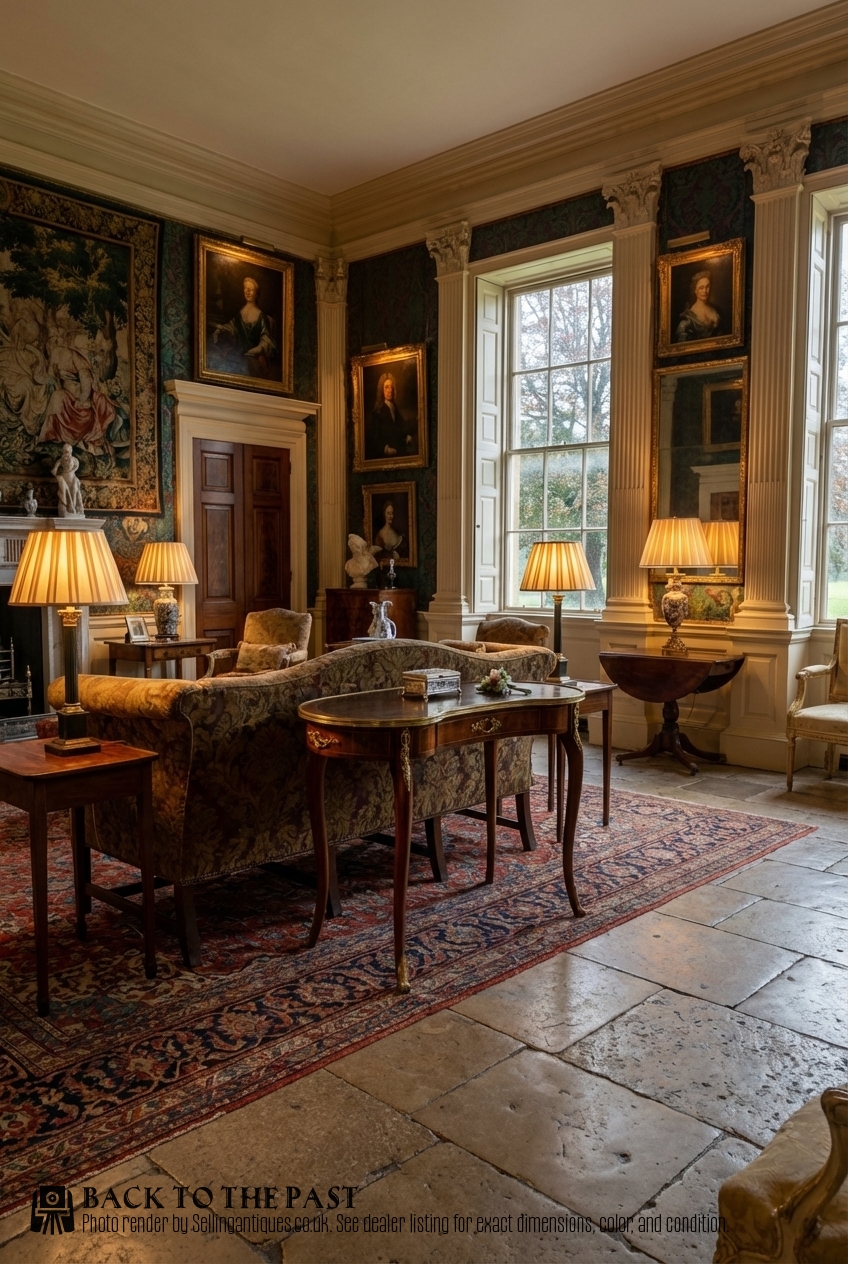
Their compact serpentine shape allows them to fit easily beside upholstery or function as small writing desks in domestic studies.
Side and lamp tables work well beside seating where rectangular furniture might obstruct flow.
What is the difference between a writing table and a desk?
Writing tables are typically finished on all sides for freestanding placement, while traditional desks often feature banks of drawers underneath.
Many kidney shaped examples function as both, offering kneeholes flanked by small drawers or plain serpentine aprons.