



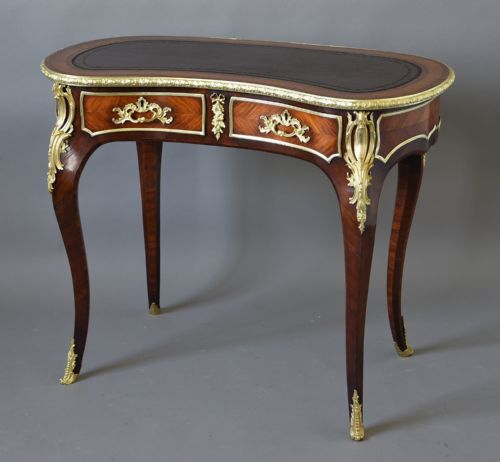
Victorian Ladies Writing Desk
A victorian ladies writing desk brings compact elegance to a study, offering a refined space for correspondence in burr walnut, mahogany or rosewood.

Forms and Origins
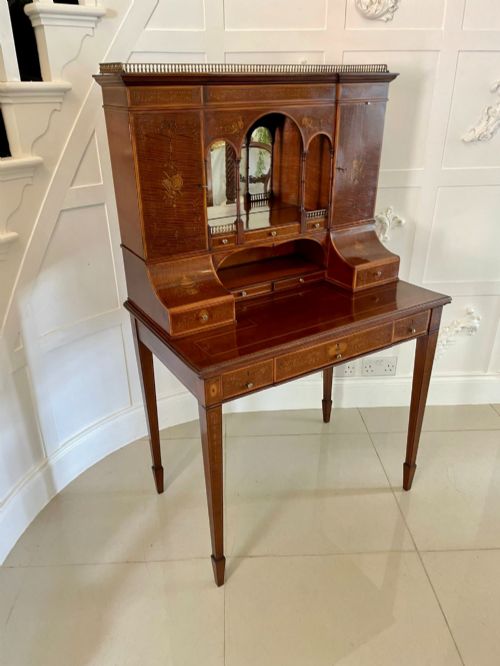
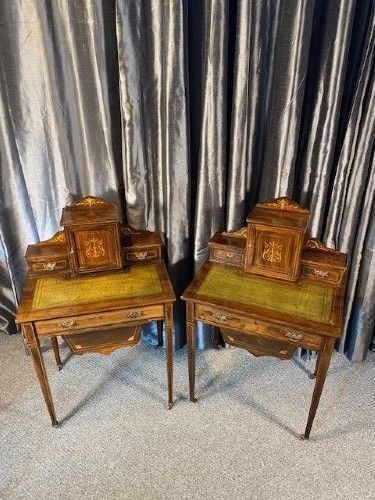
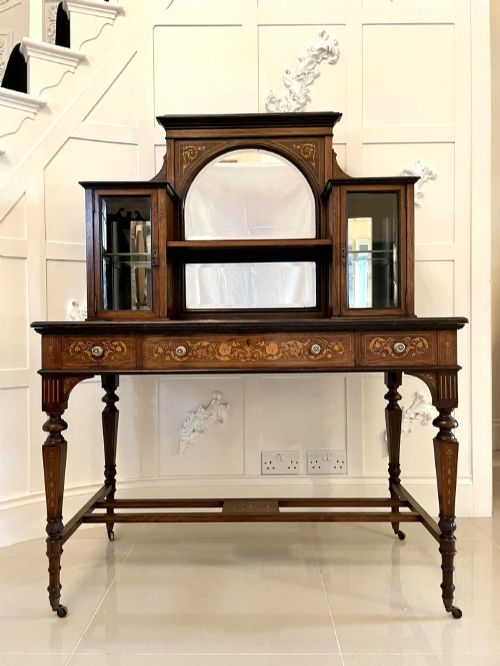
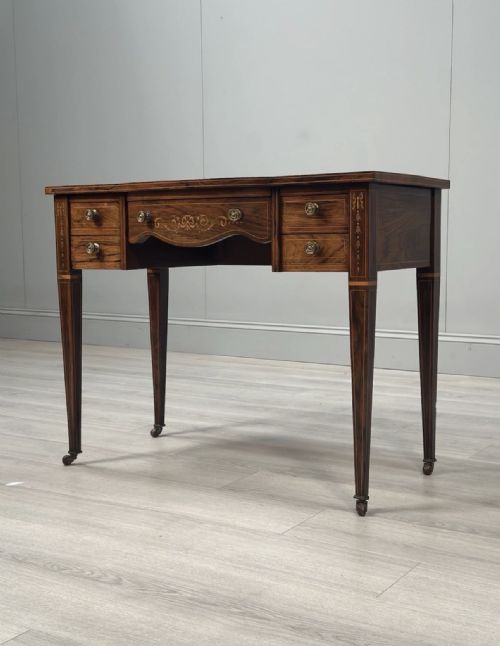
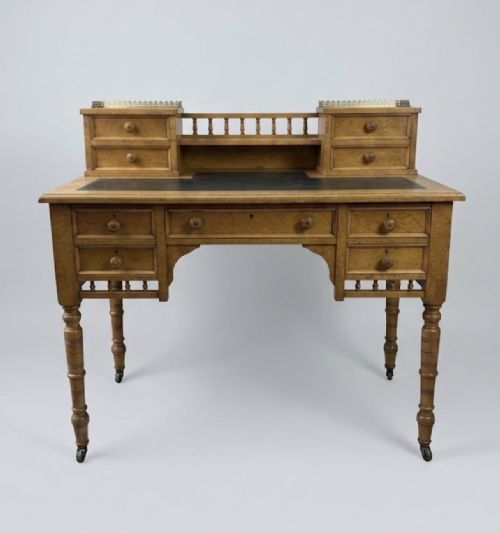
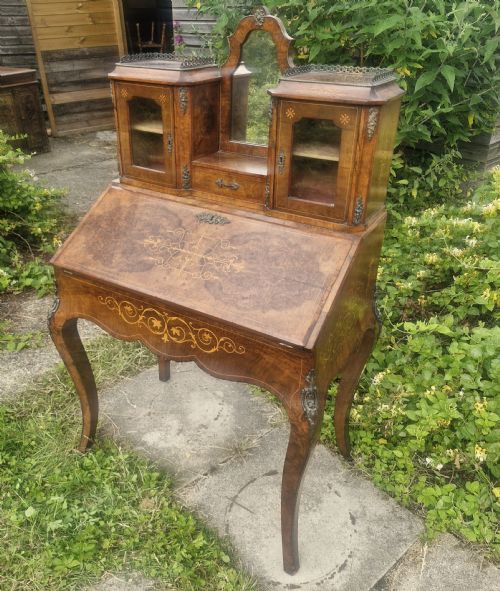
A victorian ladies writing desk encompasses varied compact forms designed for private correspondence and personal paperwork during the nineteenth century. Buyers encounter standard writing tables alongside freestanding desks, kneehole variants, and ornate bonheur du jour designs.
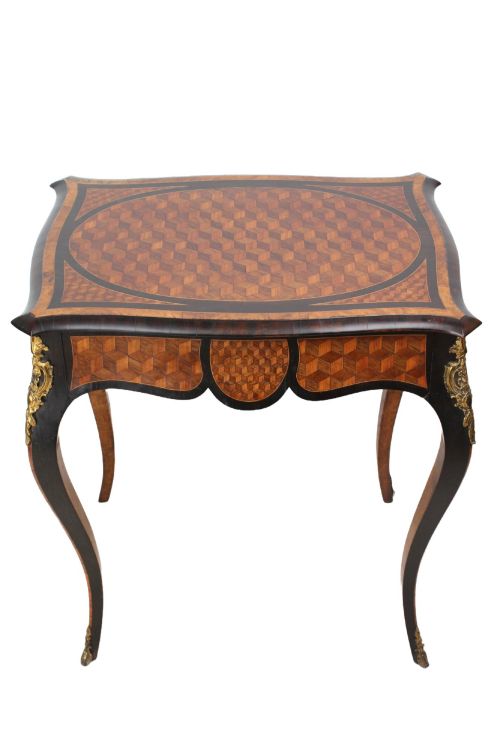
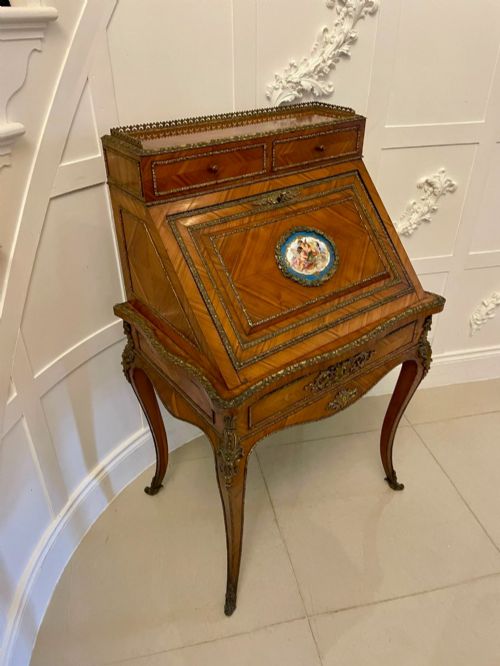
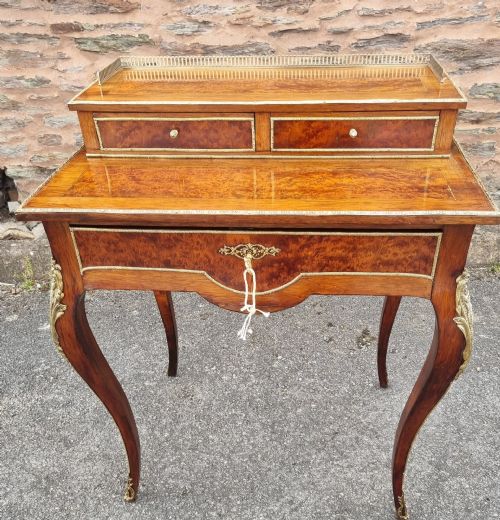
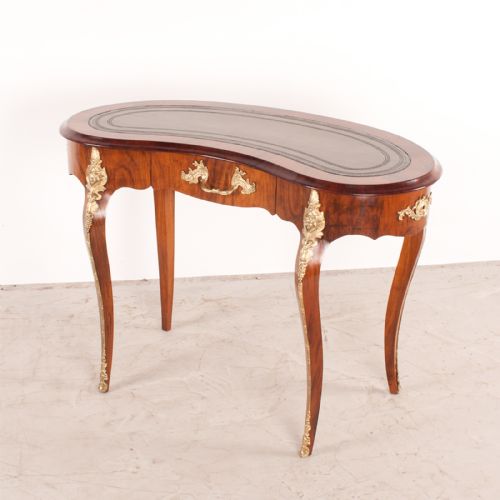
Burr walnut and mahogany dominate the surviving examples, often enriched with marquetry inlay or satinwood interiors. Rosewood and ebonised wood appear frequently, sometimes complemented by brass or ormolu mounts reflecting Louis XV Revival influences.
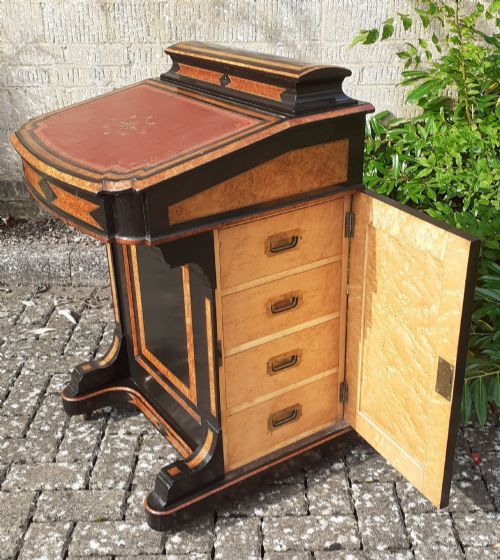
Kidney-shaped side tables and Davenport desks represent specialised variations within the period output. Most pieces date from the middle decades of the Victorian era, particularly around eighteen sixty, utilising richly figured timbers.
Design and Execution
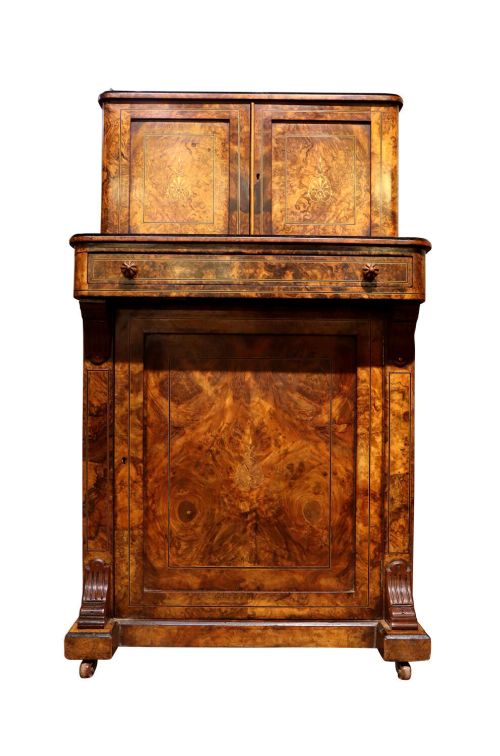
Superior examples display exceptional timber selection, such as heavily figured burr walnut or carefully matched rosewood grains. The complexity of inlaid parquetry and the crispness of cabinet joints distinguish finer productions from standard workshop output.
The integration of secondary timbers, fine brass hardware, and fitted satinwood interiors separates high-end pieces. Signed works by notable cabinet makers carry distinct manufacturing provenance that elevates their standing.
Retail Price Guide 2026
Typical UK retail prices for victorian ladies writing desk, calculated from the Sellingantiques database of over a million retail prices indexed since 2003. This retail price guide relies exclusively on Sellingantiques data; no external sources or auction records are used, so the figures do not describe the wider market.
Listings feature Victorian pieces predominantly from eighteen fifty through eighteen eighty, utilising burr walnut, mahogany, rosewood, and ebonised wood.
JAS Shoolbred·Maple & Co.·Marsh Jones of Leeds
The Victorian Ladies Writing Desk Glossary
- Bonheur du jour
- A small, light lady's writing desk featuring a tiered superstructure with drawers, shelves, or a cabinet above the writing surface. This French form gained popularity in Victorian boudoirs.
- Davenport desk
- A compact box desk featuring a sloping, hinged writing lid above a pedestal of side drawers. It typically incorporates a stationery compartment on the upper section.
- Parquetry
- Geometric wood inlay forming patterned surfaces using contrasting timbers. Cabinet makers applied this technique to tabletops and fall-fronts.
- Ormolu
- Gilt-bronze mounts applied to furniture for decorative effect. It appears on revival pieces influenced by French eighteenth-century designs.
- Ebonised wood
- Timber stained or painted black to imitate ebony. This finish found favour in Victorian design for creating sharp contrasts.
Frequently Asked Questions
What is a bonheur du jour?
A bonheur du jour is a small lady's writing desk featuring a small cabinet or shelving superstructure above the writing surface. The name translates from French as day's good fortune.
These pieces served as elegant writing stations for correspondence within private rooms during the Victorian period.
How do I identify a Davenport desk?
A Davenport desk consists of a small cabinet with a sloped, leather-inset writing lid that lifts to reveal a storage compartment. A bank of small drawers sits on one side while dummy drawers balance the other.
This compact form made efficient use of smaller interior spaces in nineteenth-century homes.
What timbers were used for these desks?
Cabinet makers predominantly used mahogany, burr walnut, and rosewood. Satinwood frequently appeared inside compartments for decorative contrast.
Ebonised wood and maple also feature in specific Victorian revival styles.
Are leather writing surfaces original?
Many Victorian desks retain original or early replacement leather inserts decorated with gilt tooling. The leather provided a smooth, durable surface for writing with ink.
Condition varies depending on past usage and exposure to light over the decades.