
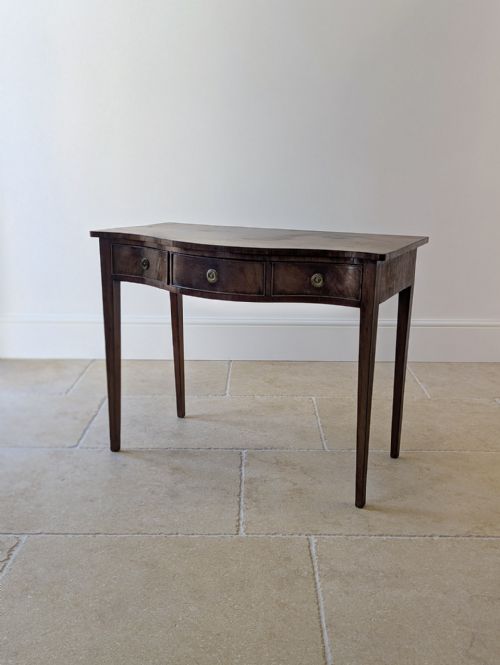

Curved Writing Desk
A curved writing desk offers a sweeping silhouette that refines any study, combining practical workspace with elegant period joinery.
Identifying the curved writing desk
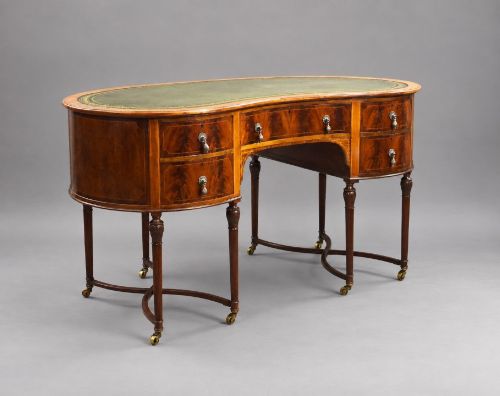
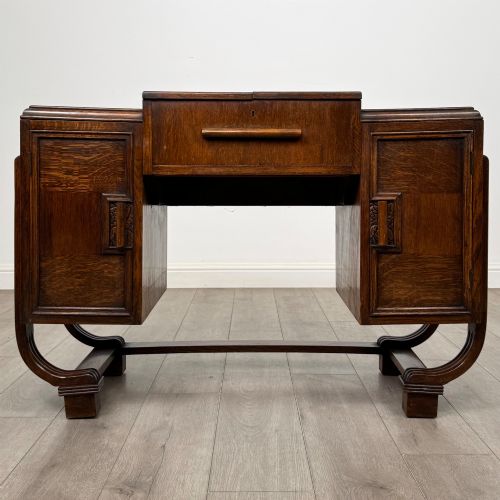
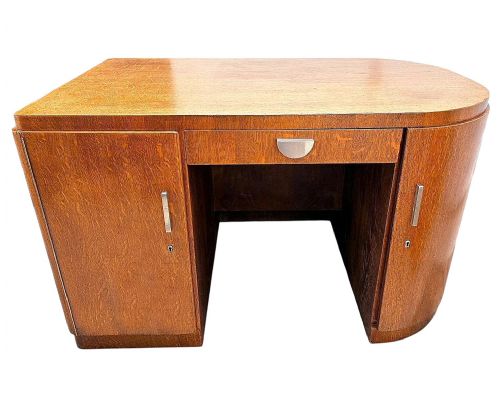
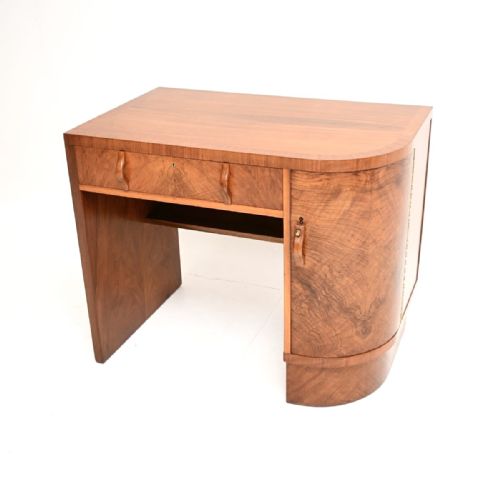
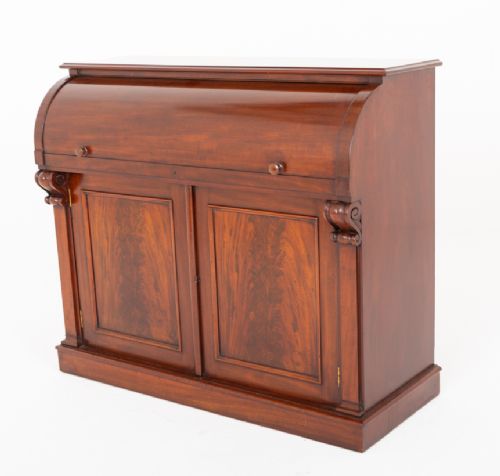
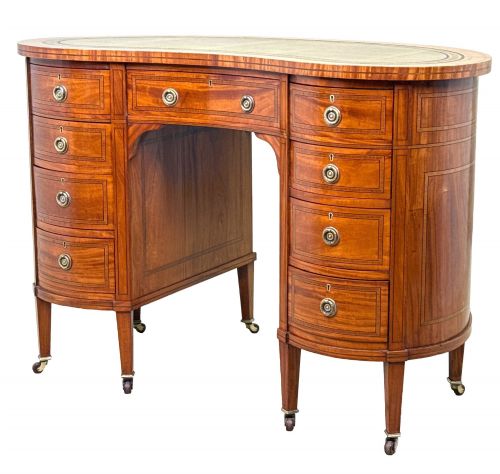
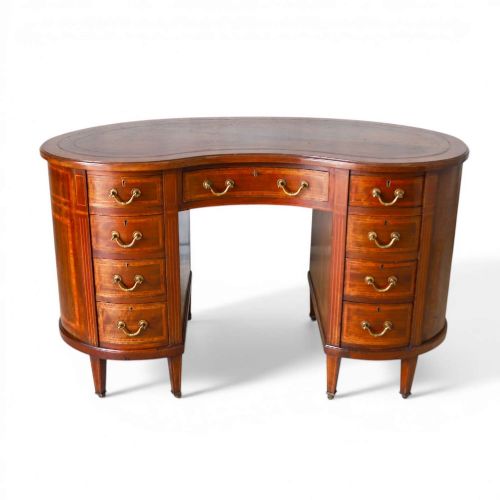
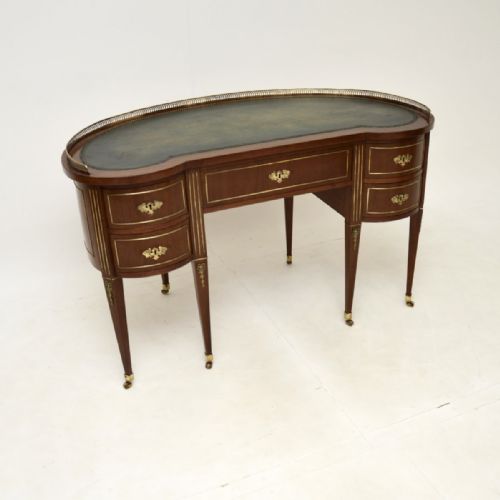
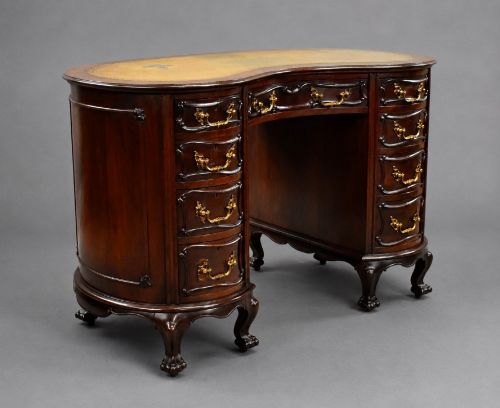
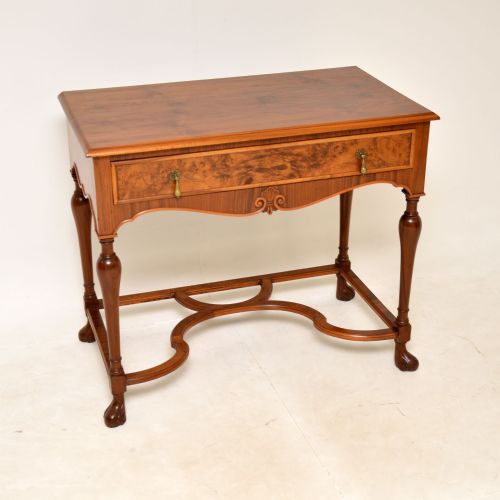
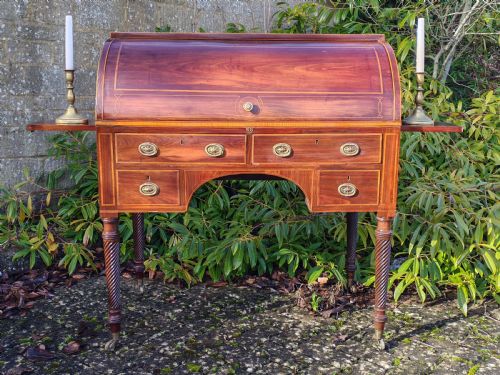
A curved writing desk encompasses kidney shaped library tables, dressing tables, and twin pedestal writing desks with curved fronts. These pieces emerge across the nineteenth century and the Edwardian period, styled in the Victorian taste and Louis XV Revival.
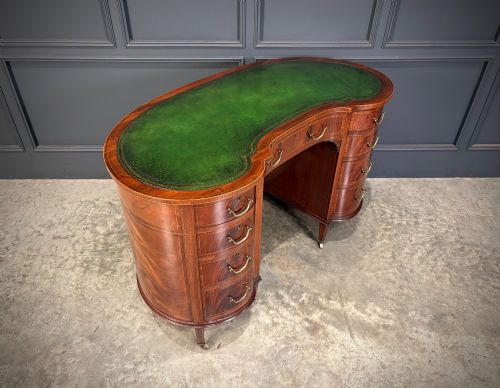
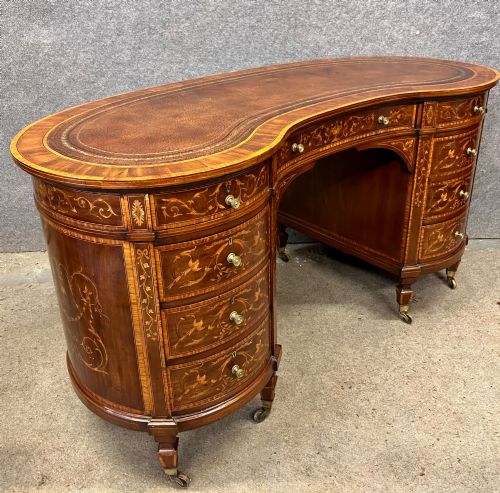
The kidney shaped writing table dominates the selection, featuring a continuous concave curve at the front to accommodate the seated writer. Buyers also encounter twin pedestal forms with bowed fronts and freestanding library tables designed to sit centrally in a room.
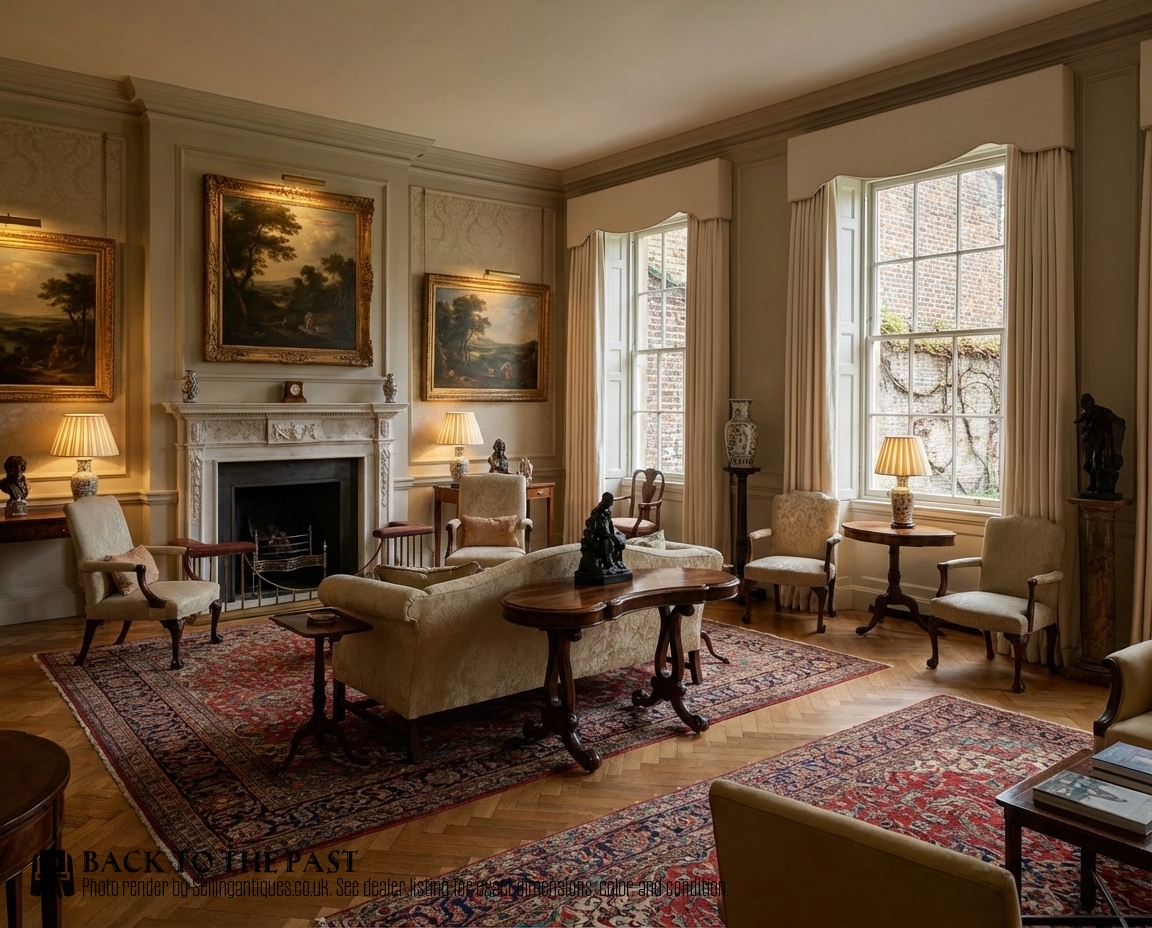
Originating in English workshops, these desks utilise classic cabinet woods and distinct decorative motifs. They serve as functional workspaces and focal points in period interiors.
Materials and construction
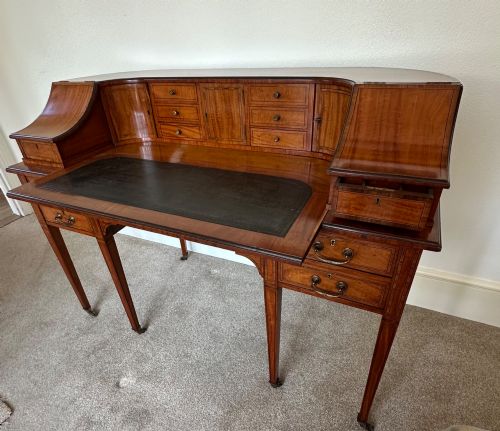
Cabinetmakers built these desks using solid and veneered timbers including mahogany, rosewood, satinwood, burr walnut, and walnut. Surfaces often incorporate contrasting marquetry inlay, while desktop areas feature inset leather writing panels.
Curved aprons and drawers require specialised steaming and bending techniques or careful segment construction. Mounts and handles cast in brass and ormolu provide structural and decorative accents across the designs.
Retail Price Guide 2026
Typical UK retail prices for curved writing desk, calculated from the Sellingantiques database of over a million retail prices indexed since 2003. This retail price guide relies exclusively on Sellingantiques data; no external sources or auction records are used, so the figures do not describe the wider market.
A well-curved drawer box requires patience, as wood stubbornly refuses to bend without a fight and a skilled hand.
Distinctions in quality
Quality rests in the selection of timber veneers, where highly figured burr walnut, satinwood, or rich rosewood elevate the visual impact. The precision of marquetry inlay and the integration of the curved writing surface demonstrate the joiner's skill.
Finer examples maintain finished back panels for freestanding placement, coupled with substantial brass or ormolu mounts and carefully tooled leather inserts. Secondary timbers and the smooth operation of curved drawer boxes further separate standard output from superior craftsmanship.
The Curved Writing Desk Glossary
- Kidney shaped
- Describing a desk or table with a concave front curve resembling a kidney bean. This shape allows the user to sit closer to the centre of the workspace.
- Marquetry inlay
- Decorative patterns formed by fitting contrasting veneers into a prepared wooden surface. Craftsmen utilise this technique to create floral or geometric motifs on tabletops.
- Ormolu
- Gilded bronze mounts applied to furniture for decorative effect. This French technique appears frequently on revival pieces.
- Twin pedestal
- A desk structure featuring two separate stacks of drawers supporting the top surface. The evidence shows curved fronts applied to these traditional pedestal forms.
- Satinwood
- A pale, lustrous hardwood prized for fine cabinetmaking. It yields a smooth, reflective surface that brightens Edwardian writing furniture.
Frequently Asked Questions
How do I date a curved writing desk?
Dating relies on timber choices, construction methods, and stylistic markers recorded in the period evidence. Victorian and Edwardian examples often display distinct revival influences like Louis XV curves.
Examining secondary woods and hardware also helps establish the era of manufacture.
Where should I place a library table?
Library tables feature finished backs and detailed timber work on all sides, allowing them to float in the middle of a room rather than press against a wall.
Ensure adequate clearance around the curved front so the chair moves freely.
Are these desks suitable for daily use?
These desks offer functional writing surfaces often lined with durable leather inserts. Their sturdy timber construction handles modern writing and computing needs.
Care for the polished wood surfaces and leather tops with appropriate period-safe maintenance.