
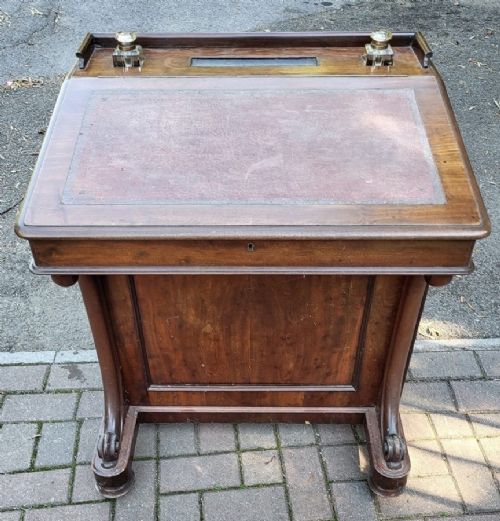
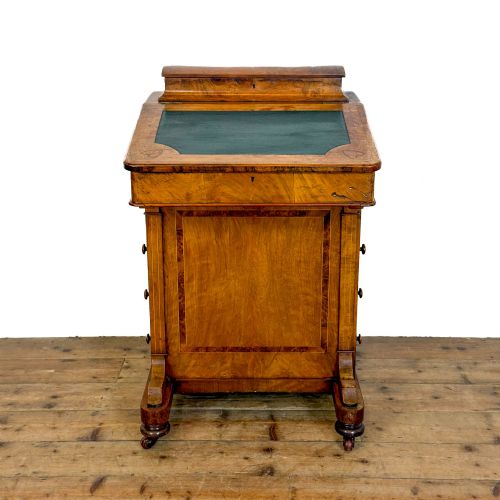
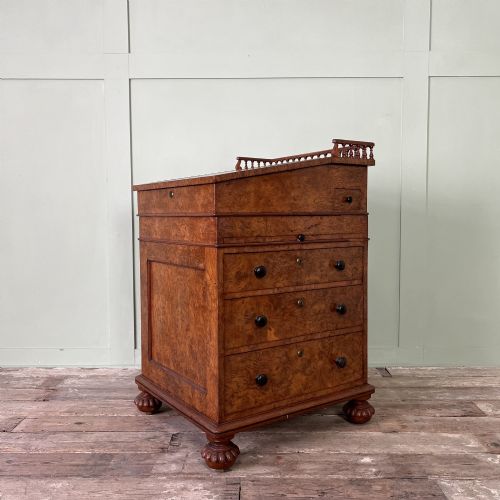


Captains Davenport Desk
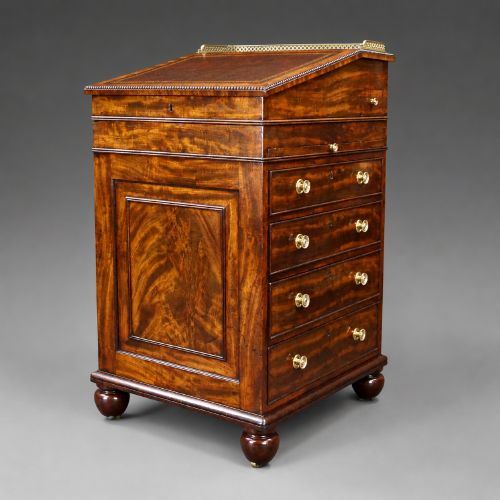
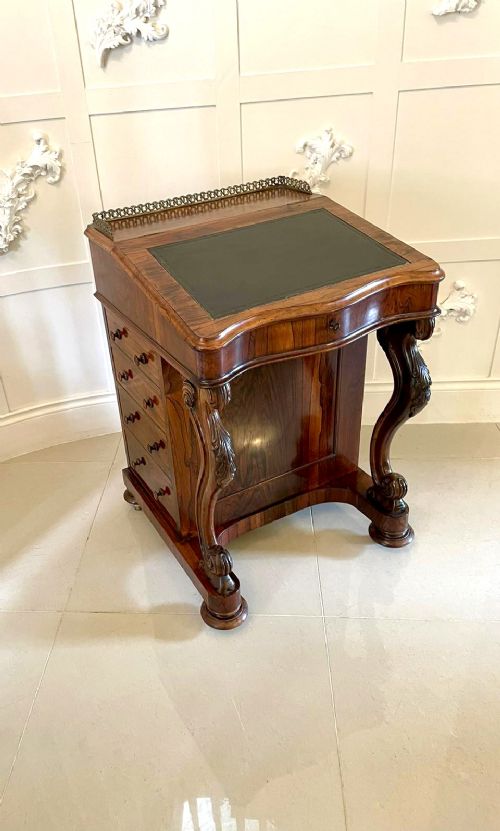
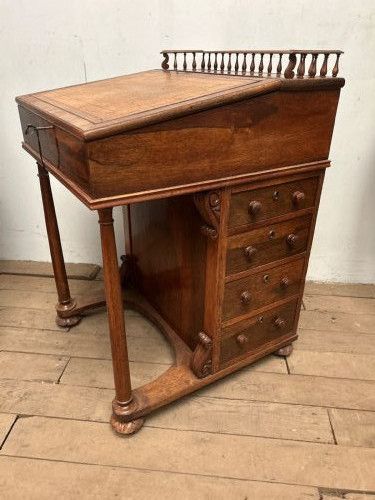
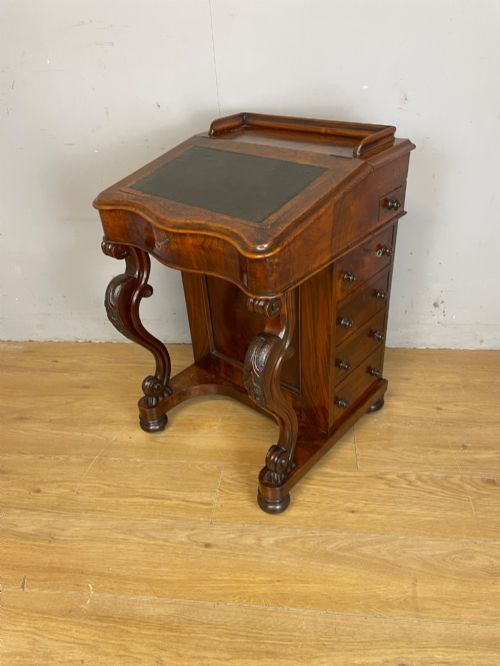
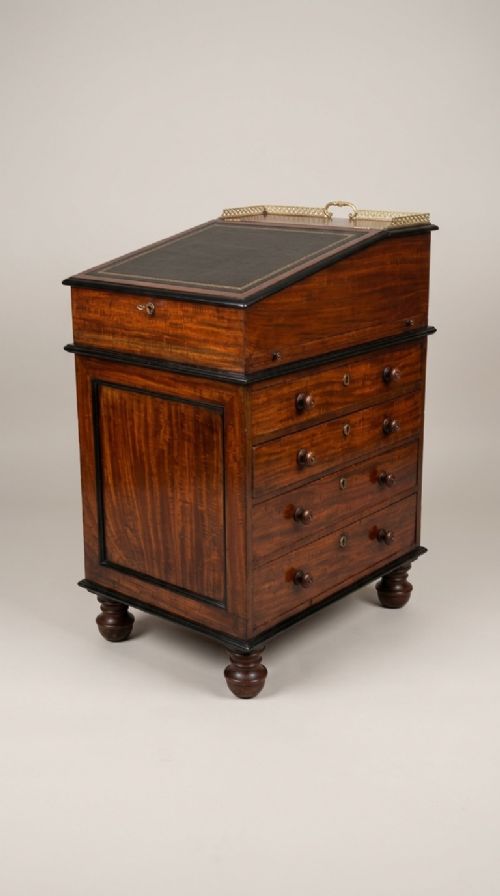
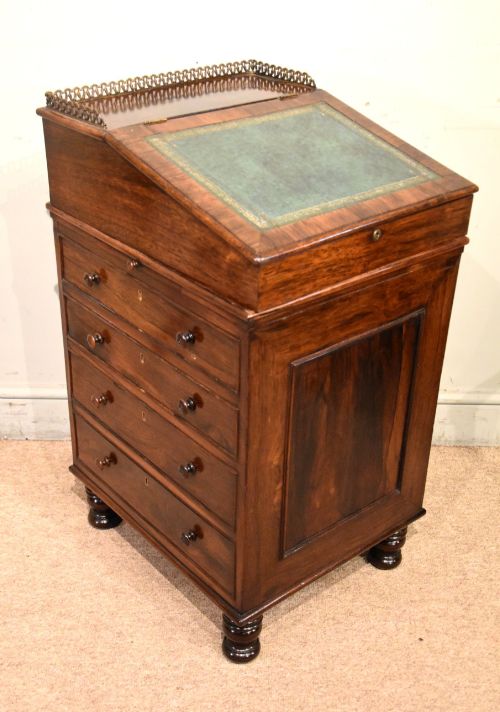
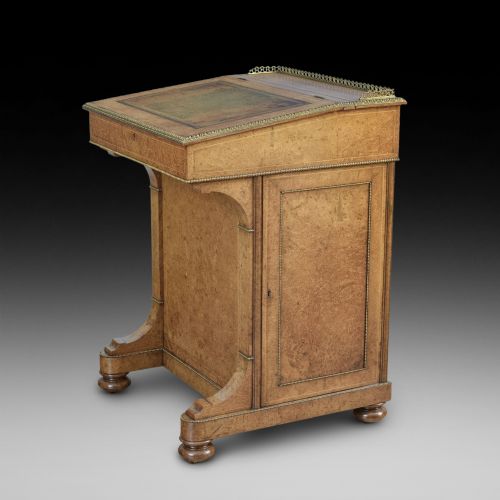
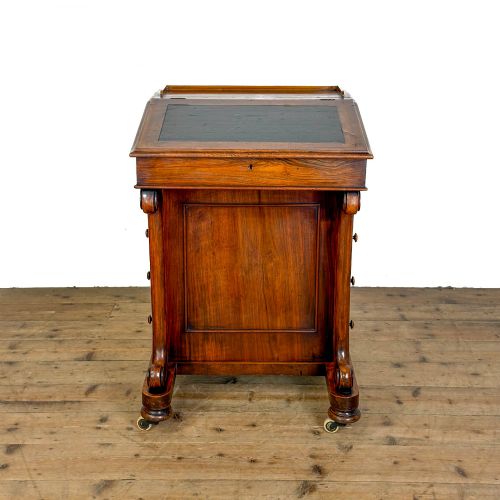
These captains davenport desk examples are compact writing boxes set on pedestals, offering drawers and a sloping top for practical daily correspondence.
Understanding Captains Davenport Desk
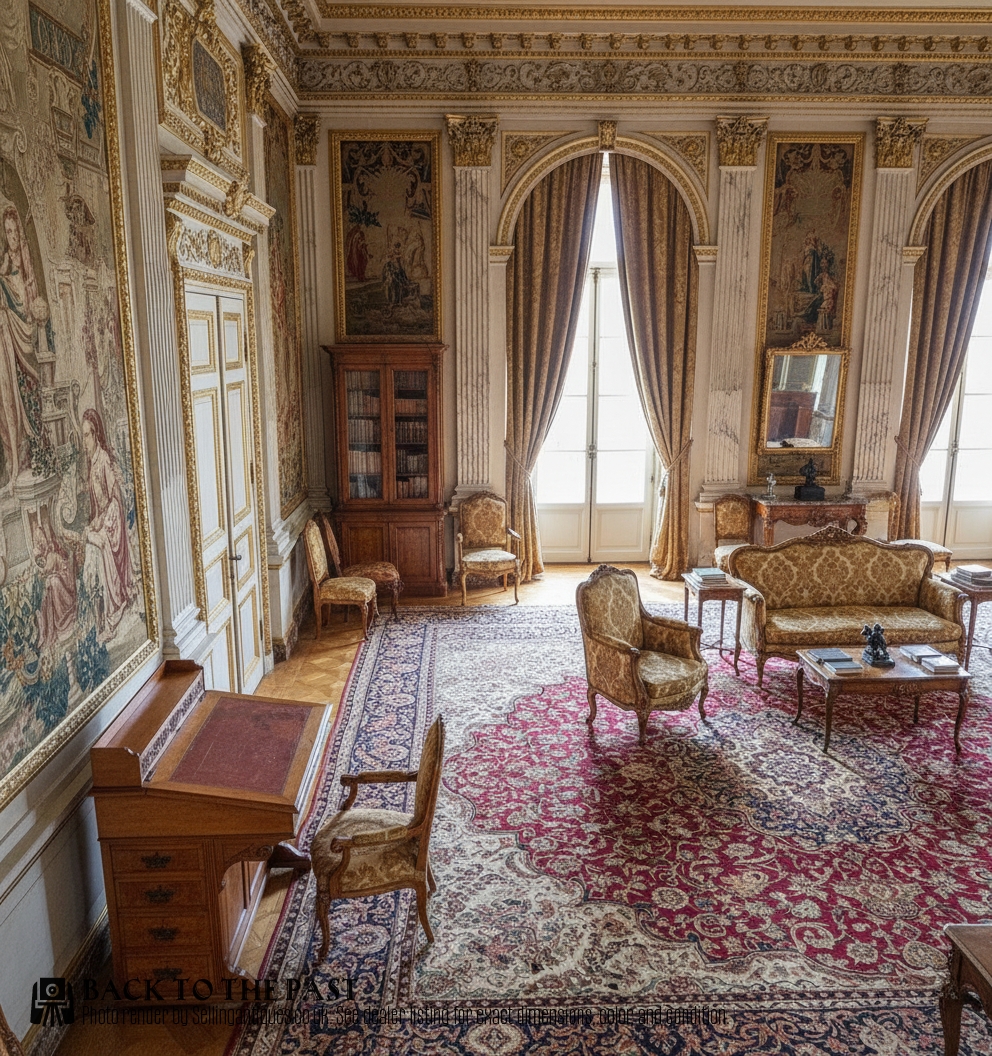
A captains davenport desk combines a small writing surface with built-in storage, designed for domestic use where space is limited. The listings show forms spanning the Regency, Victorian, and Edwardian eras, alongside pieces dated to eighteen fifty and the nineteenth century.
Most pieces present as compact pedestals featuring drawers on one or both sides, paired with a hinged or slide front sloping writing surface. Walnut, mahogany, and burr walnut dominate the current selection, reflecting the materials most commonly encountered in this category.
Materials and Construction
Cabinet makers utilised dense timbers such as mahogany, rosewood, and pollard oak, often applying figured veneers like burr walnut and amboyna to the primary surfaces. These woods provide both structural stability and rich natural grain patterns across the desktop and body.
Fine brass hardware secures the compartments and drawers, while inset leather panels form the writing surface on selected variants. Satinwood inlay appears on specific Edwardian examples, adding contrasting detail to the timber framework.
Retail Price Guide 2026
Typical UK retail prices for captains davenport desk, calculated from the Sellingantiques database of over a million retail prices indexed since 2003. This retail price guide relies exclusively on Sellingantiques data; no external sources or auction records are used, so the figures do not describe the wider market.
Many davenports include secret compartments and hidden side drawers designed to keep private letters safe from prying eyes.
Judging Quality
The distinction between standard and superior pieces rests on the choice of veneer and the integration of functional elements like double-sided drawers. Highly figured timbers such as golden burr walnut and amboyna elevate the visual impact of the piece.
Precision in the joinery and the harmonious arrangement of secondary woods demonstrate the maker's skill. Finer examples maintain crisp inlay work and well-fitted interior compartments that operate smoothly within the compact frame.
The Captains Davenport Desk Glossary
- Davenport desk
- A small writing desk featuring a sloping top above a pedestal of drawers. This form became popular during the nineteenth century for use in parlours and studies.
- Burr walnut
- Timber taken from the warted growths on walnut trees, prized for its swirling grain patterns. Cabinet makers used it as a decorative veneer on prominent furniture surfaces.
- Pollard oak
- Oak timber derived from trees that were cut back close to the trunk to encourage dense, knotty growth. This creates a distinctive textured grain used for statement furniture.
- Pedestal
- A structural support base containing drawers or shelves. In these desks, it supports the upper writing slope and houses the main storage volume.
Frequently Asked Questions
What is a captains davenport desk used for?
These pieces serve as compact writing stations intended for correspondence and household administration. The sloping top provides a comfortable angle for writing while the lower drawers store paper and stationery.
Their small footprint allows them to fit easily into corners or tight spaces where a full-sized partner desk would prove too large.
How do I date a davenport desk?
Dating relies on identifying the prevailing timber choices, hardware styles, and decorative techniques of specific eras. Regency pieces show different proportions and veneers compared to later Victorian or Edwardian examples.
Examining the secondary woods inside the drawers and the construction methods underneath also helps confirm the period of manufacture.
Are drawers always on both sides?
Drawer configurations vary significantly across different examples found in the listings. Some pieces feature functional drawers on one side with dummy drawers on the reverse to balance the appearance.
Other variants incorporate working drawers on both sides of the pedestal for increased storage capacity.
How do I care for the leather writing surface?
Leather inserts require gentle cleaning with a dry or slightly damp cloth to prevent the material from drying out. Avoid harsh chemical cleaners that can strip the original finish or discolour the hide.
Applying a specialist leather conditioner occasionally helps maintain suppleness and preserves the gold-tooled borders often found on these desks.