




Curved Front Desk
A curved front desk brings together organic wood grains and a sweeping silhouette, offering a practical workspace shaped with elegance.
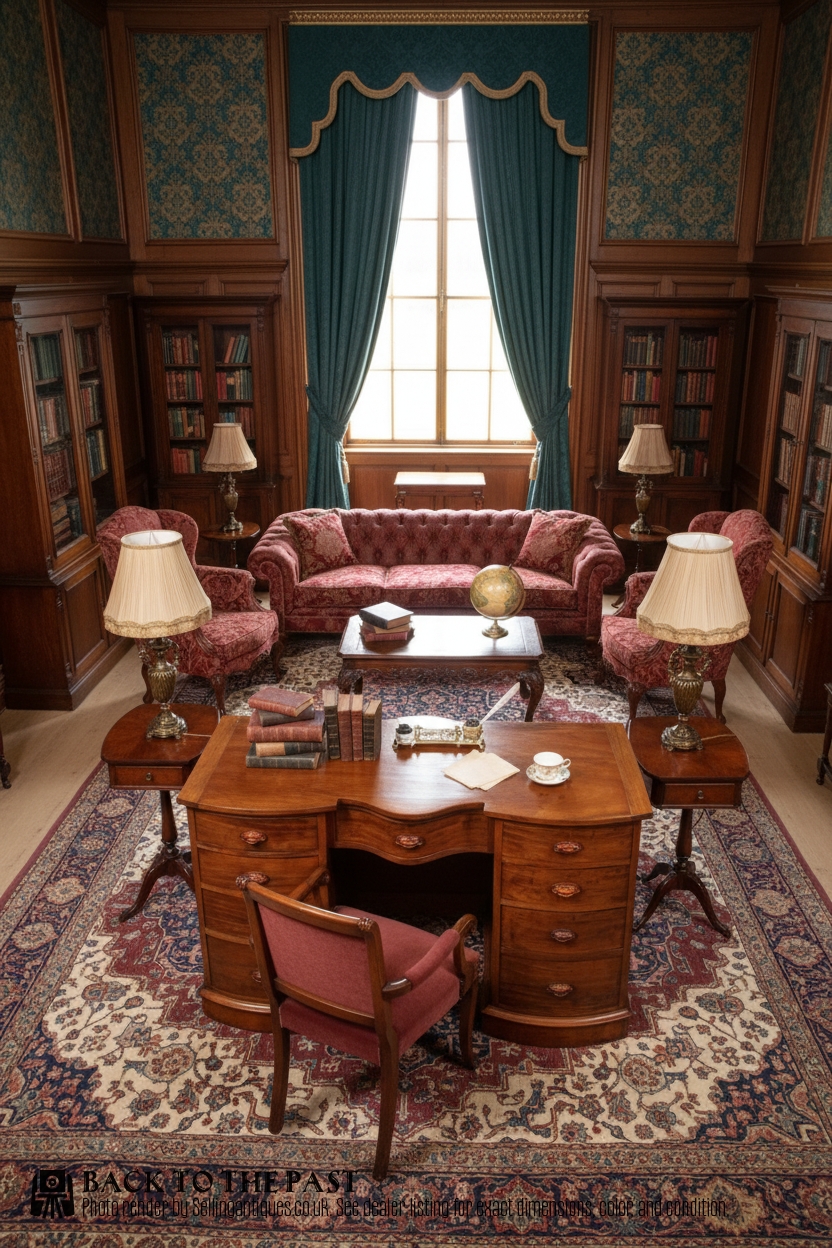
Curved Front Desk
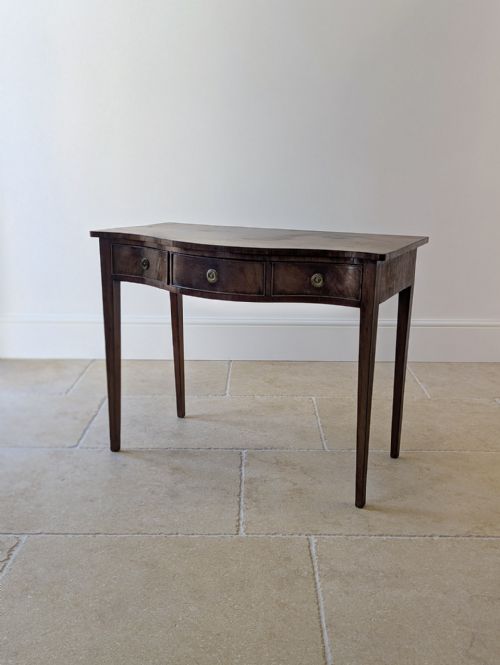
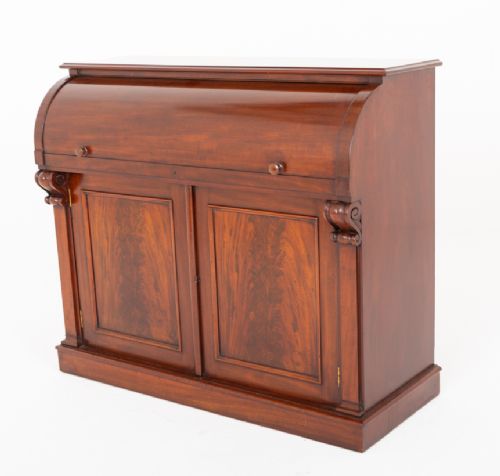
A curved front desk encompasses forms where the main writing surface follows an arc, commonly described in listings as serpentine, bow front, or cylinder shapes. These pieces appear across periods from the Georgian and Regency eras through the Victorian age and into the early twentieth century.
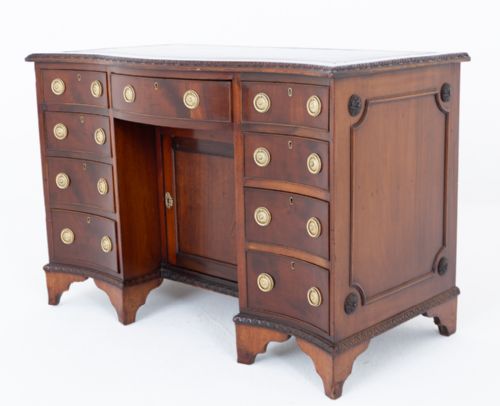
The assortment includes pedestal writing tables with leather inserts, compact cylinder desks, and side tables adapted for writing. Walnut, oak, rosewood, and mahogany provide the primary timbers seen across these items.
Buyers meet variations influenced by Sheraton style, William IV design, and Queen Anne revival aesthetics. Many examples incorporate multiple drawers whilst maintaining their characteristic rounded profile.
Markers of quality
The calibre of a curved front desk rests on the selection of timber figure, such as well-matched flame mahogany veneer or burr walnut. Precision in the joinery of curved drawers and crispness of inlaid details distinguish finer examples.
Makers who integrated secondary woods thoughtfully and maintained structural integrity through changing humidity produced durable pieces. Original brass fittings and well-preserved leather inserts further influence the standing of an item.
Curved Front Desk Retail Price Guide 2026
Typical asking prices for curved front desk among the pieces listed under this phrase on Sellingantiques today, from the lower quarter to the upper quarter. They describe what is for sale here now, not the wider market.
Mahogany and walnut dominate the listings, appearing alongside oak and rosewood across Georgian, Victorian, and early twentieth-century periods.
Collinson and Lock
The Curved Front Desk Glossary
- Serpentine
- A furniture front characterised by a central convex curve flanked by two concave curves. This contour requires skilled carpentry to shape accurately from solid timber or veneer.
- Bow front
- A convex curved front profile that swells outward from the corners. It appears frequently on sideboards, dressing tables, and writing desks from the Georgian period onward.
- Cylinder desk
- A writing cabinet featuring a quarter-circle rotating wooden cylinder that conceals the writing surface and interior compartments. When closed, it presents a smooth curved upper profile.
- Pedestal desk
- A heavy writing table supported by two upright stacks of drawers flanking a central kneehole. Many Victorian iterations incorporate inset leather writing surfaces.
Curved Front Desk: Frequently Asked Questions
How do I date a mahogany desk?
Dating relies on observing timber selection, construction methods, and hardware styles across periods like the Georgian and Victorian eras. Deeper analysis of secondary woods and drawer linings often confirms the decade.
Makers frequently adopted specific revival styles or marquetry techniques that align with nineteenth and early twentieth-century production.
Are cylinder desks practical for daily use?
Cylinder desks offer a secure way to conceal paperwork by pulling down the wooden roll to cover the writing surface. Internal drawers and pigeonholes keep documents organised.
They function well in modern studies where closing the cylinder restores a tidy appearance.
What timber was used for curved desks?
Mahogany served as the predominant wood, accompanied by rosewood, oak, walnut, and kingwood. Veneers like flame mahogany and burr walnut added decorative grain patterns.
Brass handles and leather writing inserts frequently complemented these primary timbers.