

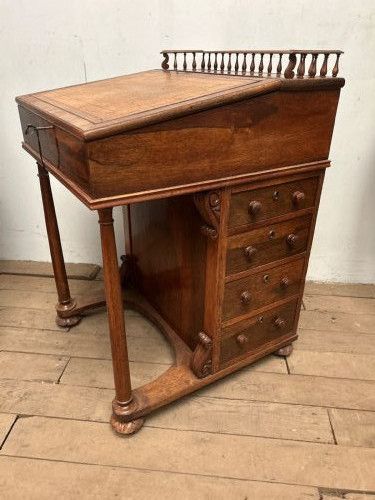
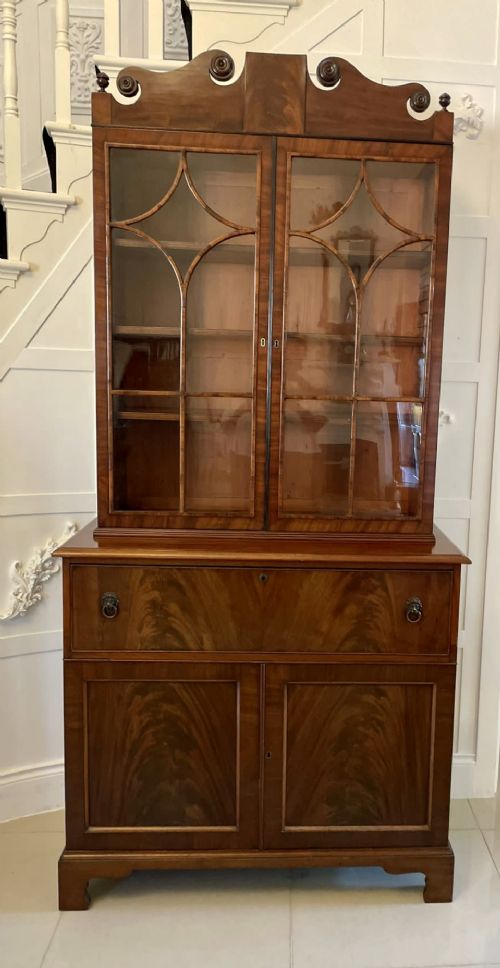
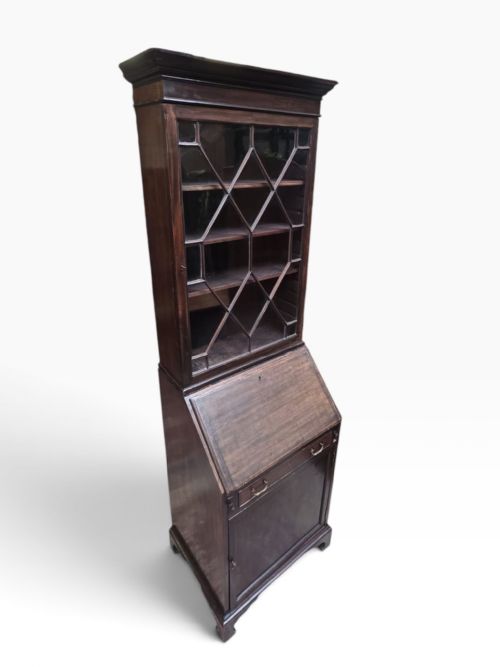
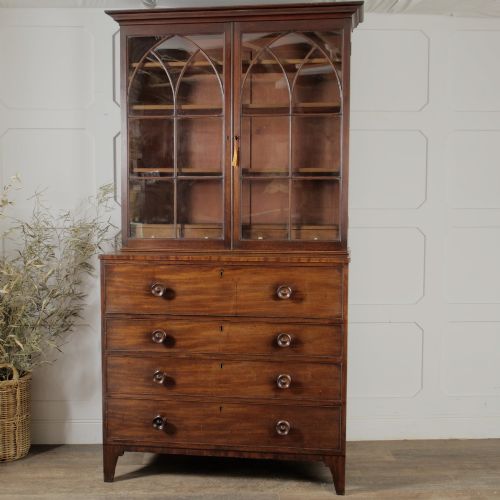
Dark Wood Writing Cabinet
These dark wood writing cabinets combine practical storage with rich timber surfaces, offering a dedicated workspace that anchors a room with understated character.
What dark wood writing cabinets are
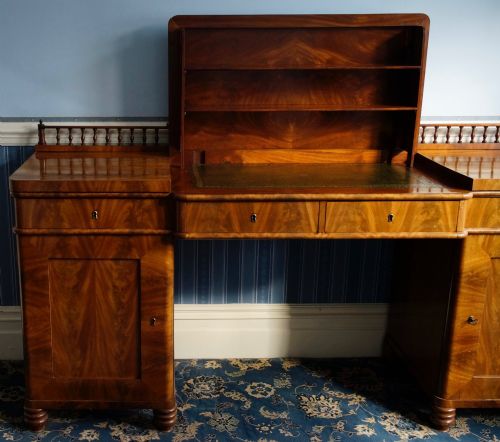
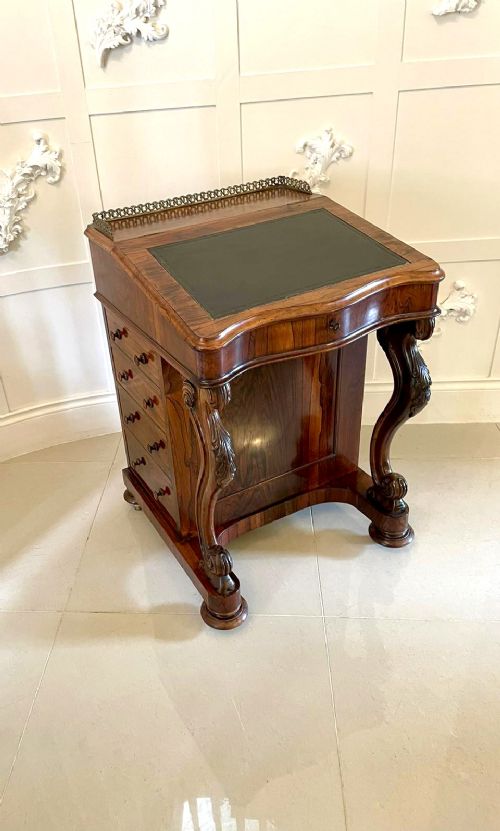
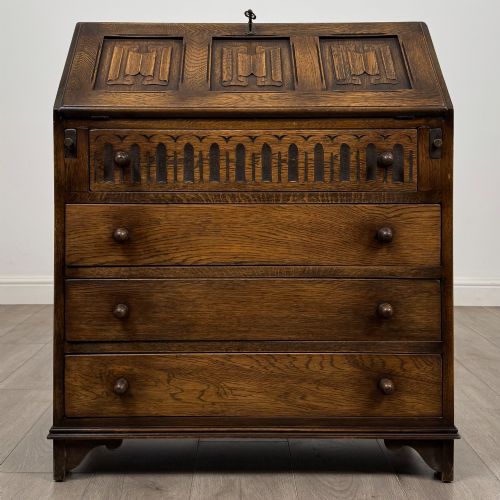
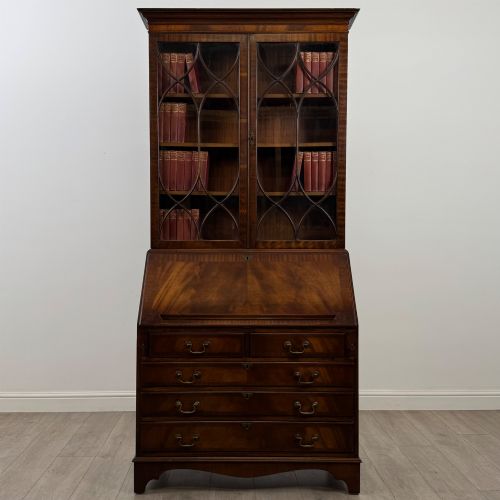
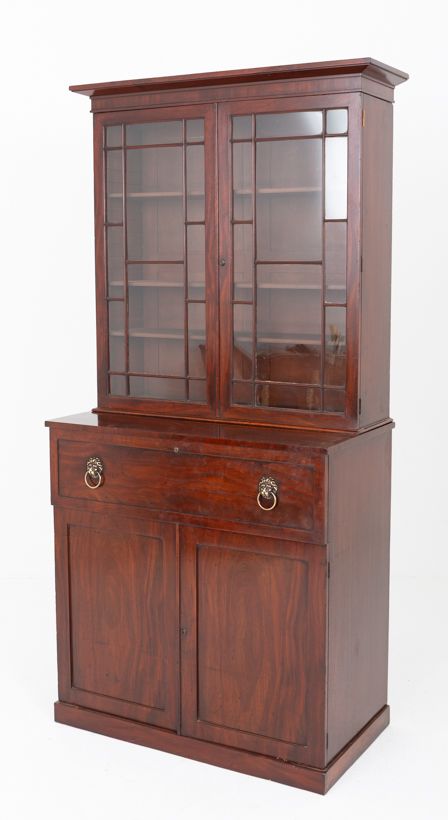
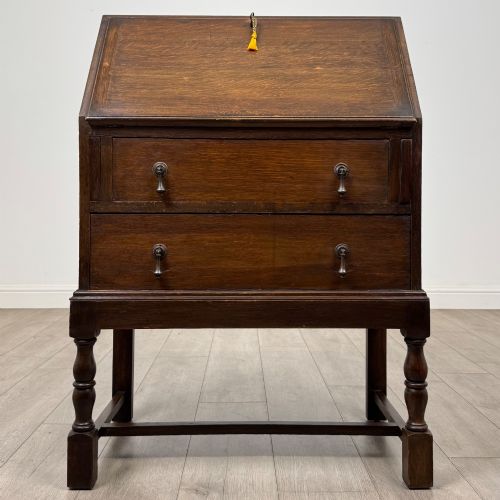
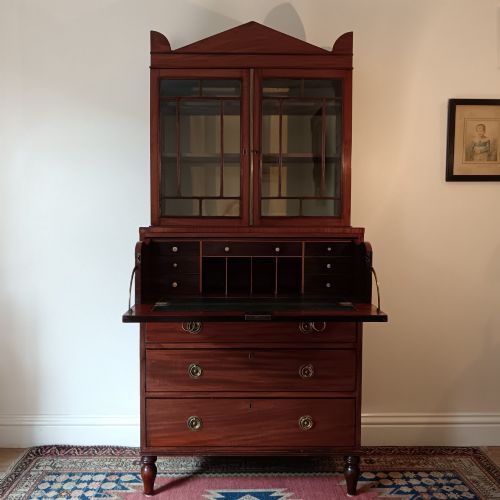
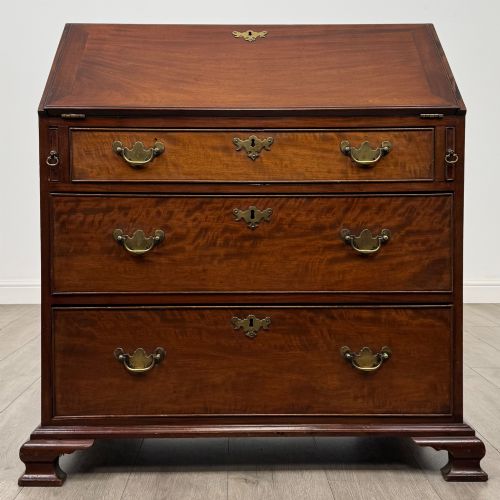
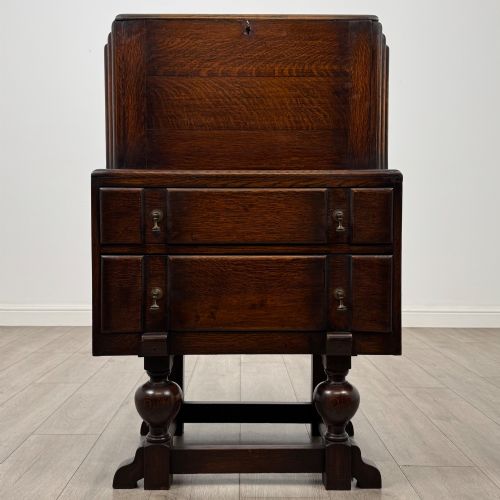
A dark wood writing cabinet encompasses several practical forms designed for correspondence and storage, ranging from compact pop-up davenports to tall bureau bookcases. These pieces frequently appear in rich timbers like mahogany, walnut, and rosewood, reflecting periods from the eighteenth century through to the early twentieth century.
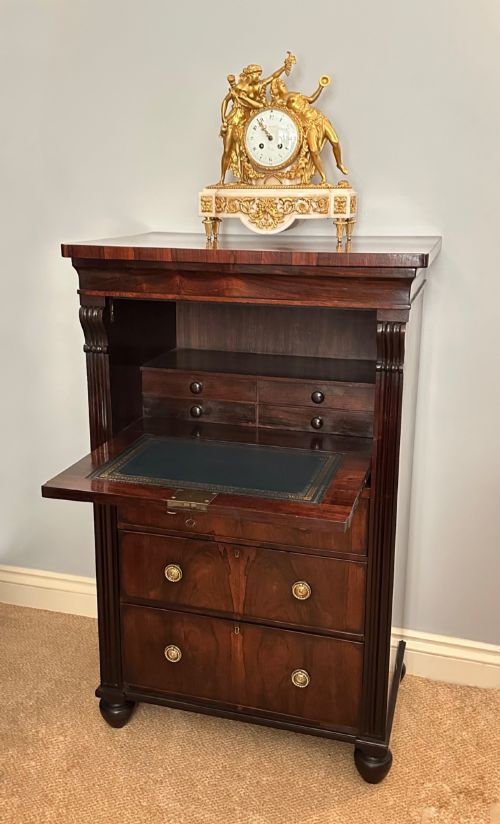
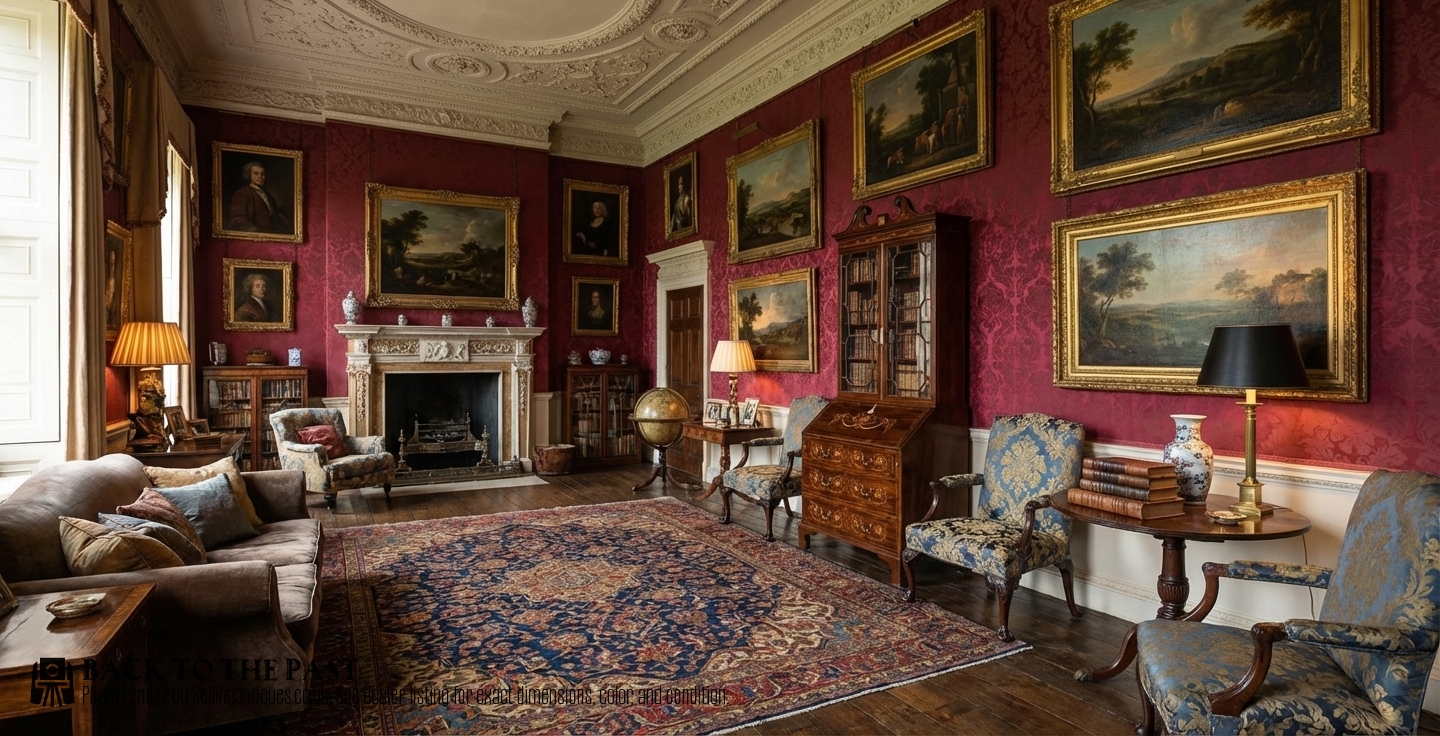
The most substantial examples on this page are bureau bookcases and secretaire bookcases, which combine enclosed shelving with fitted writing surfaces. More compact variants include escritoires and davenports, offering clever internal compartments while occupying a smaller footprint in a room.
How they were made
Cabinet makers utilised dense, durable timbers such as Cuban mahogany and walnut, often selecting figured veneers to create striking surface patterns on fronts and drop-down flaps. These foundational woods were seasoned carefully to prevent warping across large panels and structural sides.
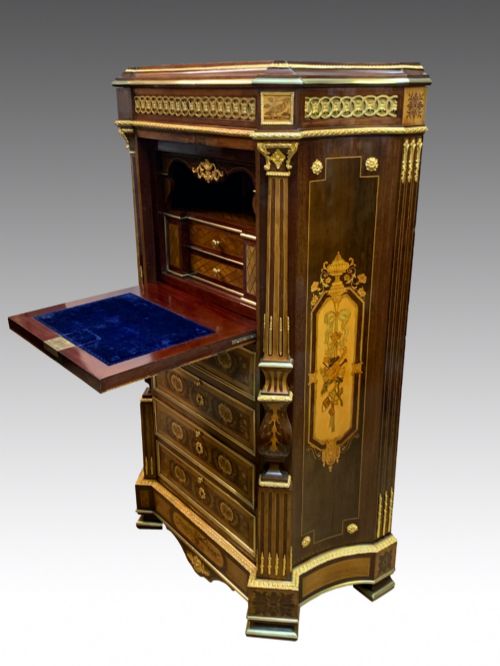
Construction relied on traditional joinery reinforced by brass hardware, interior velvet writing surfaces, and occasional ormolu mounts. Glass panelling appeared on upper bookcase doors, while internal drawers and pigeonholes were meticulously hand-fitted to house stationery and inkwells.
Retail Price Guide 2026
Typical UK retail prices for dark wood writing cabinet, calculated from the Sellingantiques database of over a million retail prices indexed since 2003. This retail price guide relies exclusively on Sellingantiques data; no external sources or auction records are used, so the figures do not describe the wider market.
The listings span the eighteenth century, the Victorian era, and early twentieth-century revivals, utilising mahogany, walnut, rosewood, and kingwood.
What varies in quality
Quality rests primarily on the selection of timber and the precision of the internal fittings. Superior cabinets display continuous grain matching across drawer fronts and intricate marquetry inlay, whereas simpler examples rely on plain surfaces and standard construction.
The sophistication of the secretaire mechanism and the depth of the carving distinguish finer workshops from standard production. Well-executed bureau bookcases feature secondary woods of equal grade inside their pigeonholes and secret compartments, showing attention to hidden details.
Maison Krieger
The Dark Wood Writing Cabinet Glossary
- Bureau bookcase
- A tall furniture piece combining a sloping writing flap or pull-out secretaire drawer with upper shelving enclosed by doors. It provides both workspace and a display library.
- Secretaire
- A desk or cabinet featuring a concealed writing drawer or fold-down panel that drops to reveal small drawers and pigeonholes. This mechanism keeps correspondence private when closed.
- Escritoire
- A writing cabinet or stand, typically taller than it is wide, designed for formal letter writing. It often incorporates multiple small internal compartments behind a drop front.
- Marquetry
- The art of forming decorative patterns on woodwork by fitting together small pieces of tinted wood, shell, or ivory veneers. It creates pictorial or geometric designs across cabinet fronts.
- Ormolu
- Gilded bronze ornamentation applied to furniture mounts and feet during the eighteenth and nineteenth centuries. It adds metallic contrast to dark timber surfaces.
Frequently Asked Questions
How do I clean a dark wood writing cabinet?
Dust the exterior regularly with a soft, dry cloth to prevent particle buildup on the polished timber surface. Apply a quality beeswax periodically to nourish the grain without leaving a heavy residue.
Avoid placing these cabinets near direct heat sources or strong sunlight, which can dry out walnut or mahogany and fade delicate marquetry. Clean internal velvet surfaces gently with a soft brush attachment on a low-suction vacuum.
Can I use a writing cabinet as a modern desk?
Many of these pieces suit laptop use and light correspondence, provided the interior writing height aligns with your chair. The fold-down flaps and pull-out drawers offer adequate space for contemporary writing tasks while hiding equipment when closed.
Consider the depth and height of the internal surface before daily use, as nineteenth-century dimensions can vary significantly from modern ergonomic standards. Ensure the support brackets or lopers are sturdy enough to bear weight.
How do I identify a Georgian cabinet?
Georgian pieces, dating from the eighteenth century, often feature dense Cuban mahogany, hand-cut dovetails, and restrained proportions. Their brass hardware tends to be understated and cast by hand rather than stamped.
Later Victorian and revival interpretations incorporate heavier proportions, sometimes utilising walnut or elaborate marquetry influenced by earlier French styles like Louis XVI. Look at the secondary timbers inside drawers, such as oak or pine, to help determine the period.