
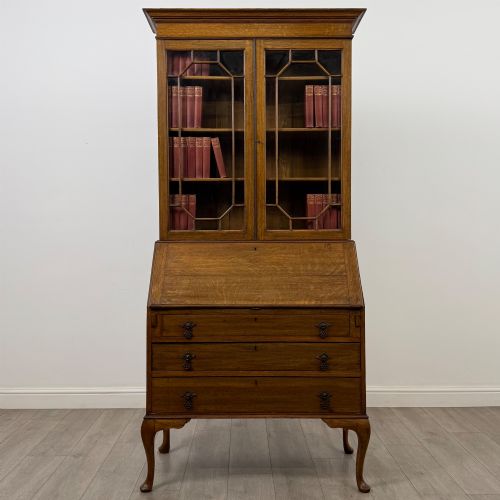

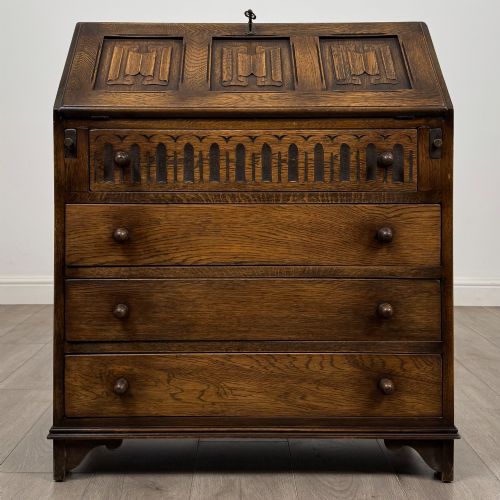
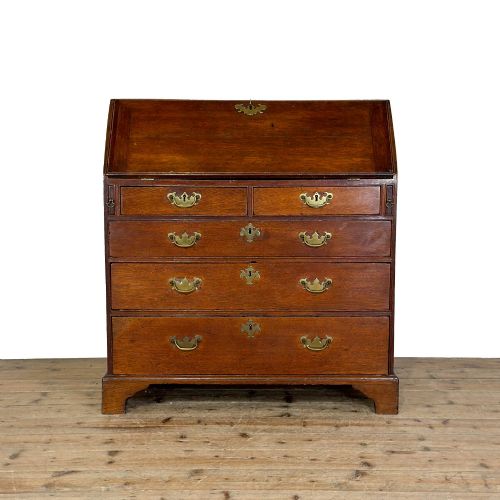
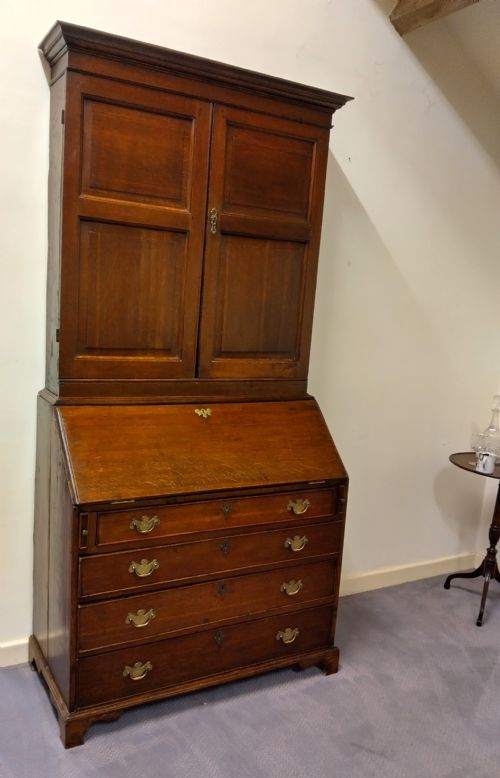
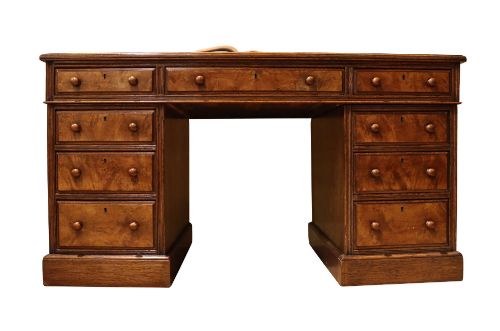
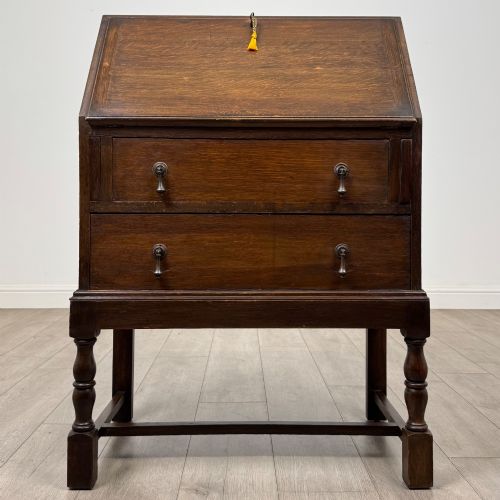
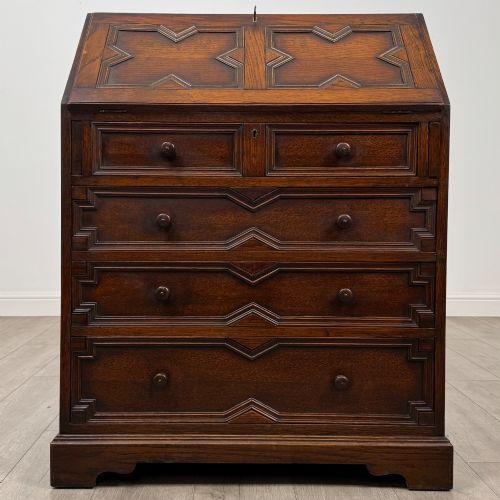
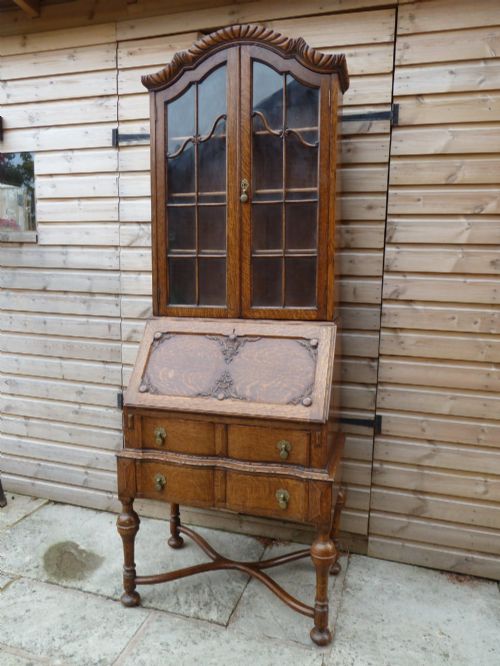
Traditional Oak Bureau
These traditional oak bureau pieces offer sturdy writing space and storage, combining practical utility with lasting character.
What a traditional oak bureau is
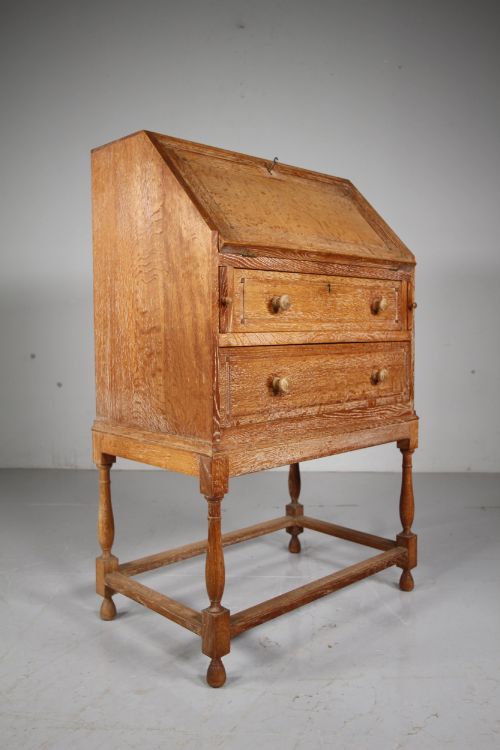
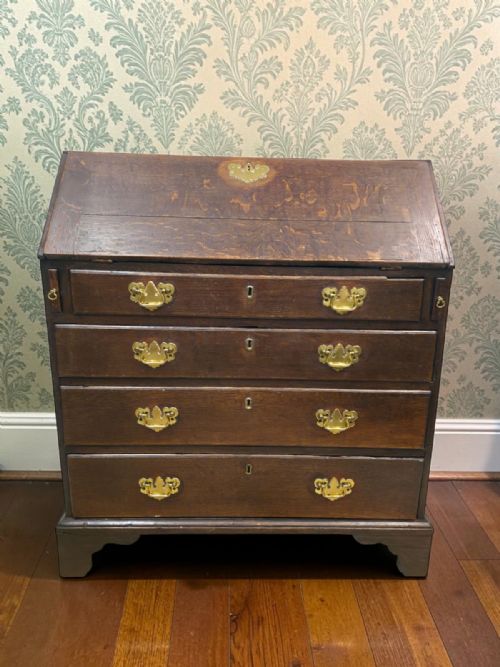
A traditional oak bureau provides a dedicated writing surface alongside integrated storage drawers, suited to domestic organisation. These items serve as functional writing desks with fitted compartments concealed behind hinged or fall-front panels.
The versions met most frequently on this page span the Georgian and Edwardian periods, stretching into twentieth-century interpretations. Examples range from large fall-front writing cabinets to compact roll-top desks constructed entirely in oak.
How they were made
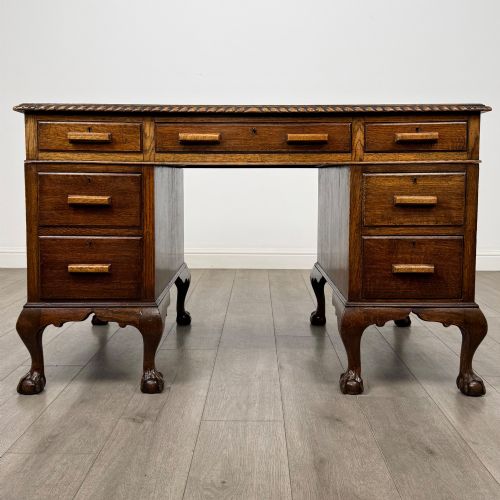
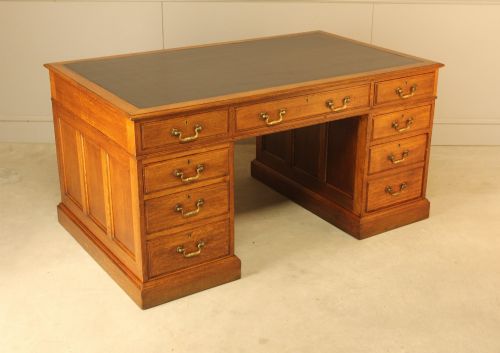
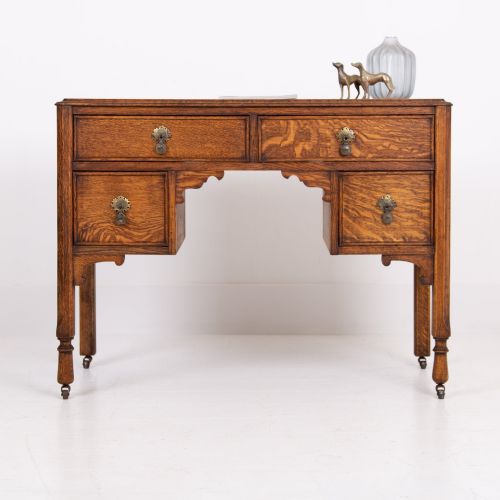
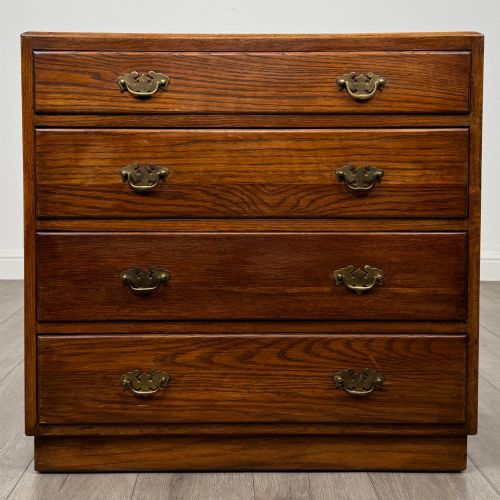
Construction relies upon solid oak timbers, often showing the distinctive grain patterns and warm tones characteristic of the wood. Metal elements such as brass handles and hardware provide functional contrast and secure fastening points.
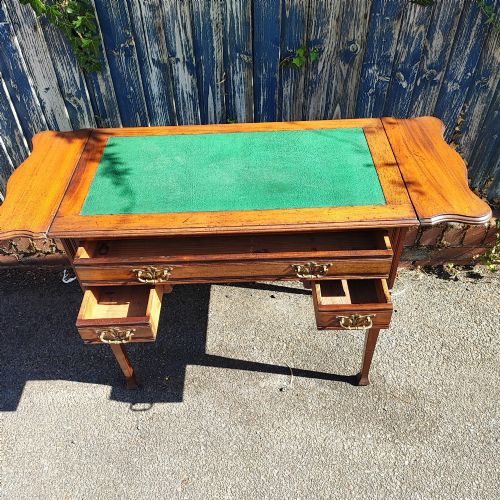
Internal writing surfaces frequently incorporate green baize inserts to create a smooth, tactile surface for correspondence. Cabinetry techniques join timber panels to house internal stationery compartments and deep drawer sets securely.
Retail Price Guide 2026
Typical UK retail prices for traditional oak bureau, calculated from the Sellingantiques database of over a million retail prices indexed since 2003. This retail price guide relies exclusively on Sellingantiques data; no external sources or auction records are used, so the figures do not describe the wider market.
Listings feature pieces spanning the Georgian period, the Edwardian era, and the twentieth century, constructed from oak with brass and green baize details.
What varies in quality
Quality rests upon the selection of timber figures and the structural integrity of the joinery within the carcase and drawers. Superior examples display thoughtful grain matching and robust internal partitioning for stationery.
Finer pieces balance the utilitarian demands of a writing desk with refined proportions and carefully fitted brass hardware. Lesser examples may show heavier, less articulated timber work without the subtle detailing found on Georgian and Edwardian items.
The Traditional Oak Bureau Glossary
- Fall-front bureau
- A writing desk featuring a hinged writing flap that pulls down to reveal internal compartments and pigeonholes. This design conceals correspondence and writing materials when closed.
- Roll top desk
- A workspace featuring a slatted tambour shutter that slides over the desktop to secure the contents. It provides enclosed storage for papers while maintaining quick access.
- Green baize
- A woven woollen fabric traditionally used to line writing surfaces and gaming tables. It offers a soft, protective layer for writing instruments and paper.
- Edwardian
- A period spanning the early twentieth century known for adopting earlier cabinet styles with lighter proportions. Furniture from this era often utilises golden oak timber.
Frequently Asked Questions
What is a traditional oak bureau used for?
A traditional oak bureau serves as both a writing desk and a storage chest for household papers. The drop-down or roll-top mechanism conceals internal compartments designed for stationery organisation.
Beneath the writing surface, multiple drawers provide generous storage capacity for household documents or personal belongings.
Are Edwardian bureaus different from Georgian ones?
Edwardian pieces generally date from the early twentieth century and frequently utilise golden oak with lighter structural lines. They reflect revival tastes while maintaining practical workspace functionality.
These items often present cleaner surfaces and updated hardware styles while retaining the traditional fall-front or roll-top desk format.
How do I care for oak furniture?
Keep oak furniture away from direct heat sources and strong sunlight to prevent the timber from drying out or splitting. Dust regularly with a dry cloth to protect the finish.
Periodic application of appropriate wax polish helps maintain the natural lustre of the oak timber and protects the surface.