
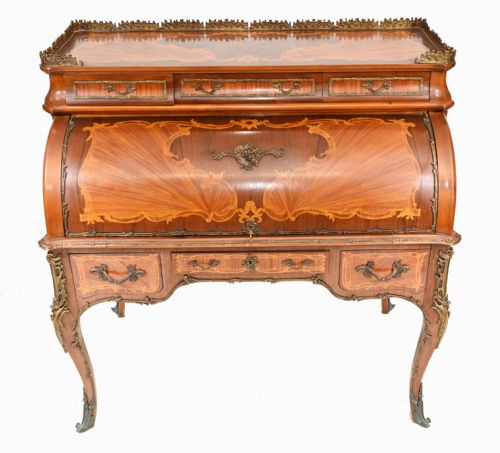

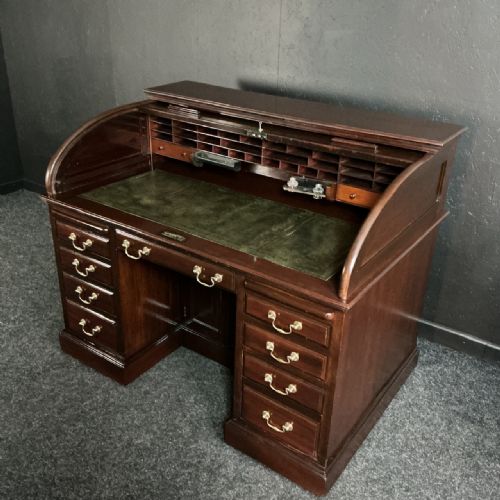

Vintage Cylinder Bureau
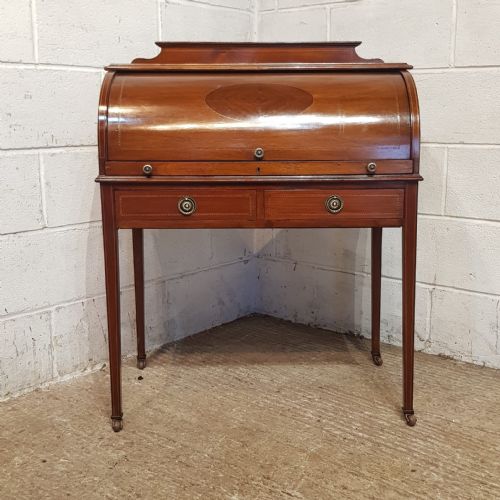
A vintage cylinder bureau conceals a fitted writing interior beneath a curved roll, offering both a neat facade and a practical workspace.
Vintage Cylinder Bureau
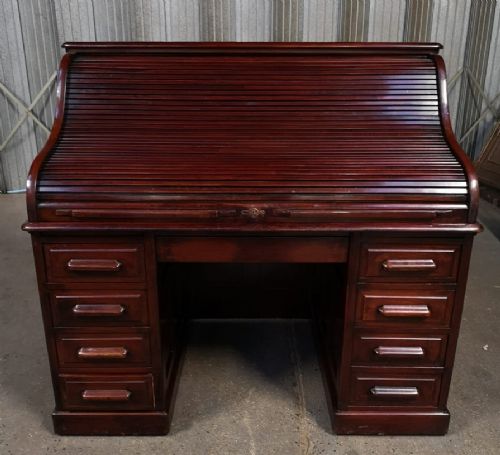
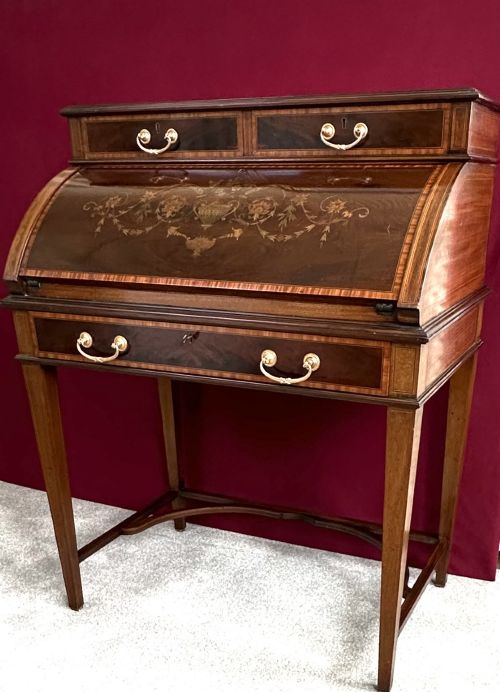
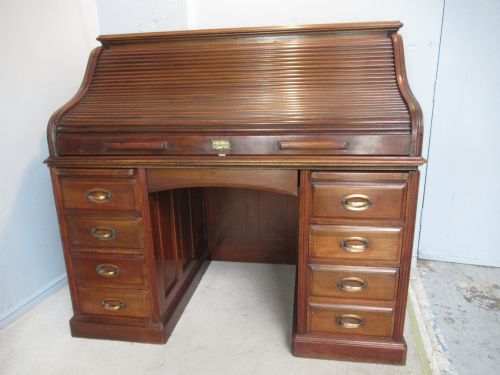
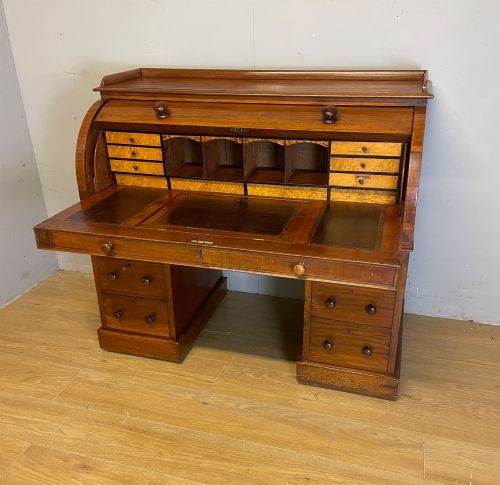
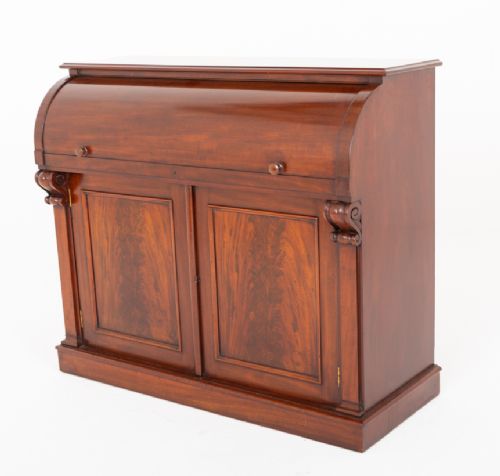
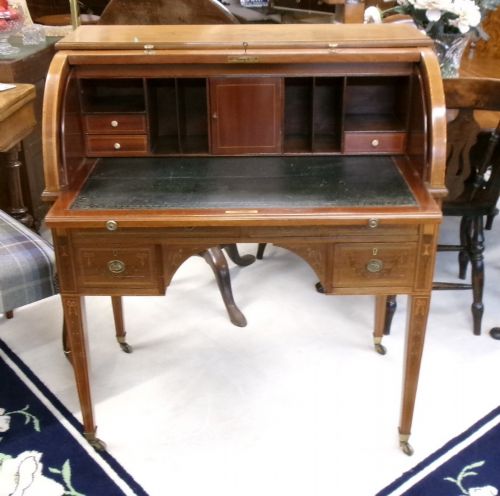
When you search for a vintage cylinder bureau, you encounter a specialised form of writing furniture designed to keep correspondence and papers neatly out of sight. These pieces feature a curved wooden shutter that rolls back to reveal pigeonholes, small drawers, and a pull-out writing surface.
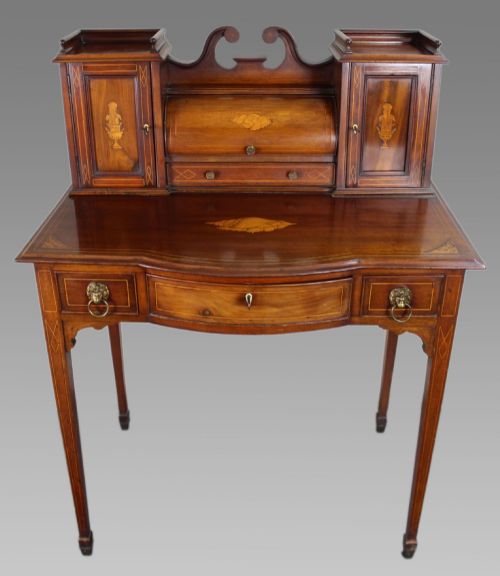
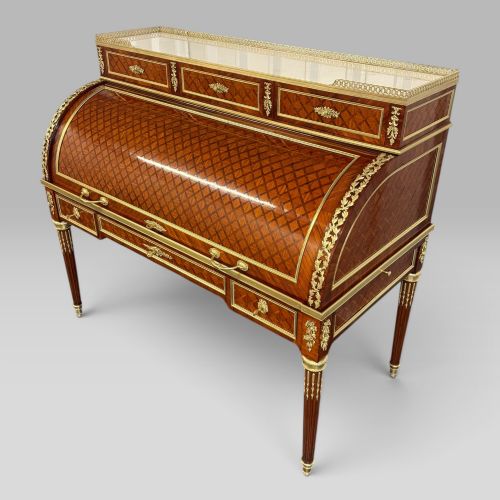
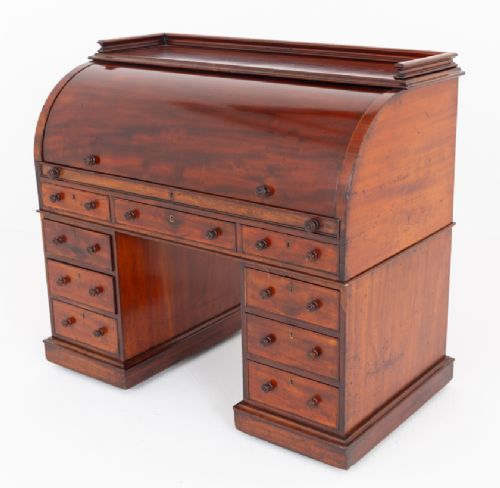
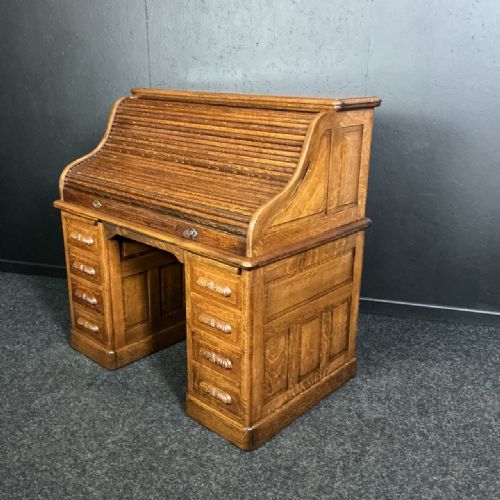
The versions most commonly met on this page span the Victorian and Edwardian eras, alongside pieces influenced by French revival styles. You will find freestanding pedestals, compact ladies desks, and larger bureau bookcases constructed in various timbers.
Materials and Construction
Makers relied heavily on mahogany as the primary timber, frequently pairing it with satinwood inlay, walnut, or oak. Brass handles, ormolu mounts, and leather writing inserts provide functional contrast and decorative detail.
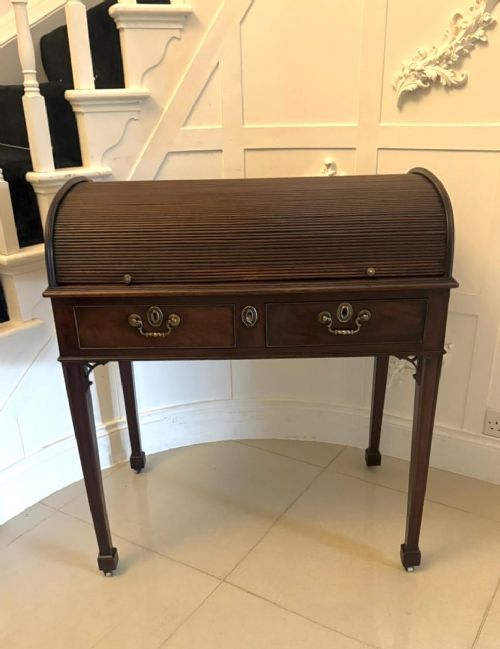
The defining mechanical feature is the curved shutter, formed either of narrow wooden slats running on tracks or a solid quarter-cylinder panel. This mechanism requires precise joinery to ensure the roll glides smoothly without binding.
Listings feature woods such as mahogany, walnut, satinwood, and oak, alongside brass and leather components.
Distinctions in Quality
Quality rests in the precision of the rolling mechanism and the stability of the timber housing it. A superior bureau operates smoothly, with slats or panels that align evenly in both open and closed positions.
The refinement of the internal fittings also sets pieces apart, distinguishing simple utility desks from elaborate examples featuring marquetry, parquetry, and finely dovetailed internal drawers.
The Vintage Cylinder Bureau Glossary
- Cylinder desk
- A writing desk featuring a curved, quarter-cylinder roll top that conceals the workspace when closed. This form protects the contents while presenting a tidy exterior.
- Tambour top
- A flexible writing surface constructed from narrow strips of wood glued to a canvas backing. It slides along a groove to open and close the desk.
- Parquetry
- Geometric wood mosaic work used for decorative surface patterns on furniture. It often appears on French revival pieces from the nineteenth century.
- Ormolu
- Gilt-bronze mounts applied as decorative ornaments to furniture. This technique adds metallic contrast to mahogany and walnut surfaces.
- Bureau bookcase
- A dual-purpose piece combining a writing desk bureau with upper shelving enclosed by doors. These taller items provide both workspace and storage.
Vintage Cylinder Bureau: Frequently Asked Questions
How do cylinder desks work?
A curved wooden shutter slides backwards along tracks to reveal the interior writing surface and pigeonholes. Pulling the writing slide forward often coordinates with the mechanism to retract the cylinder automatically.
This clever design keeps correspondence concealed and dust-free when not in use.
How do I care for the leather writing surface?
Keep the leather insert clean by dusting it gently with a dry cloth and avoiding excessive moisture. Occasional specialist leather balms help maintain suppleness without staining the surrounding wood.
Protect the surface from direct sunlight to prevent fading and cracking over time.
Where were most of these desks made?
The pieces on this page originate primarily from British workshops during the Victorian and Edwardian periods. Continental makers, particularly in France, also produced notable Louis revival examples.
Regional differences appear in the choice of secondary timbers and the style of decorative brassware.