

Carved Oak Desk Drawers
Carved oak desk drawers bring substantial timber, deep period carving, and practical storage straight into a room.
Carved Oak Desk Drawers
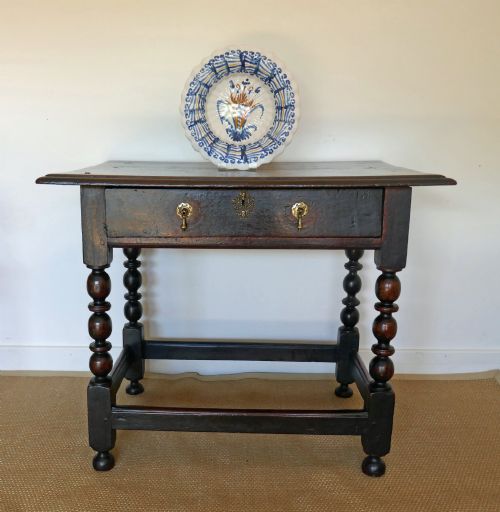
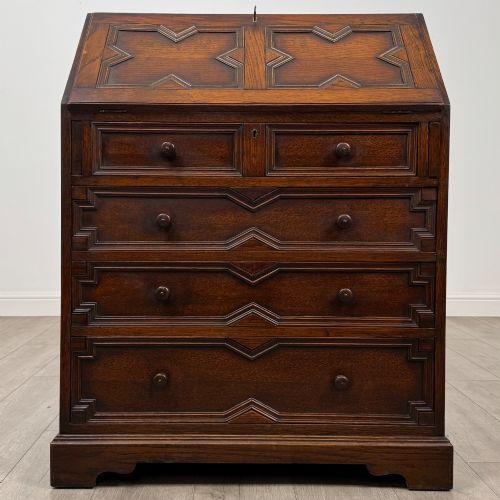
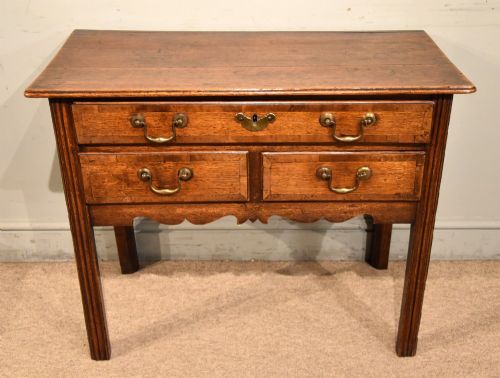
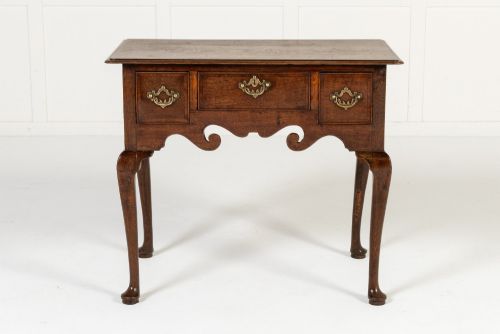
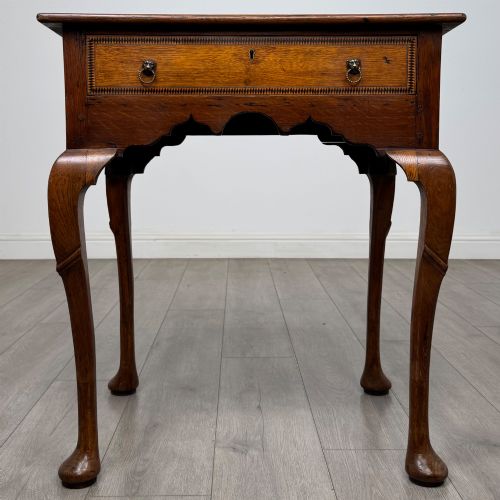
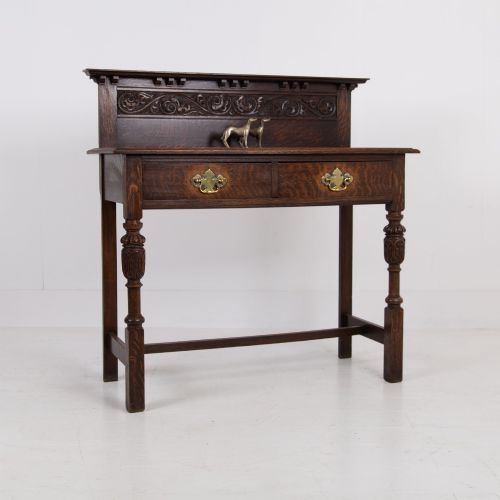
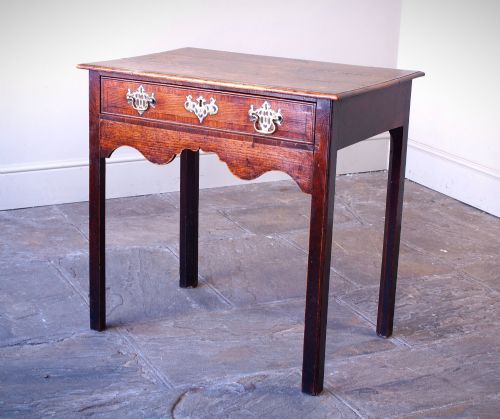
Carved oak desk drawers appear across diverse furniture forms, including lowboys, writing tables, side tables, and bureaux spanning multiple centuries. Buyers searching for carved oak desk drawers encounter pieces ranging from seventeenth-century vernacular oak to Edwardian revival iterations.
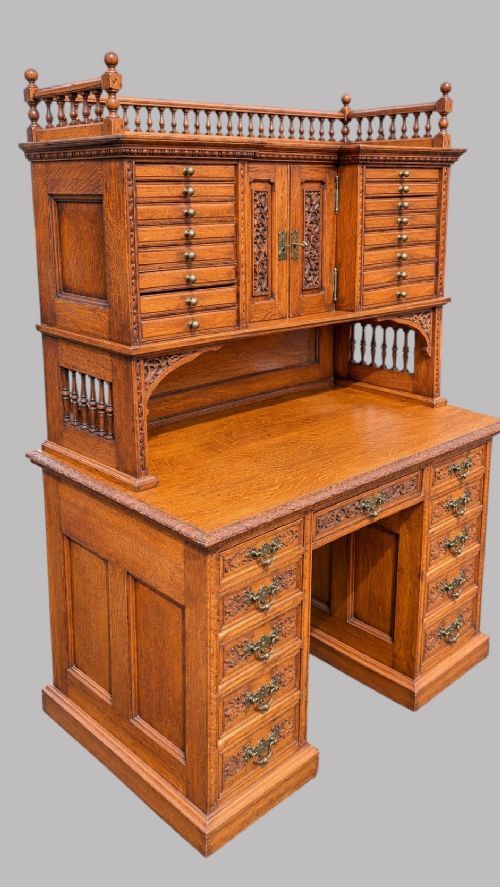
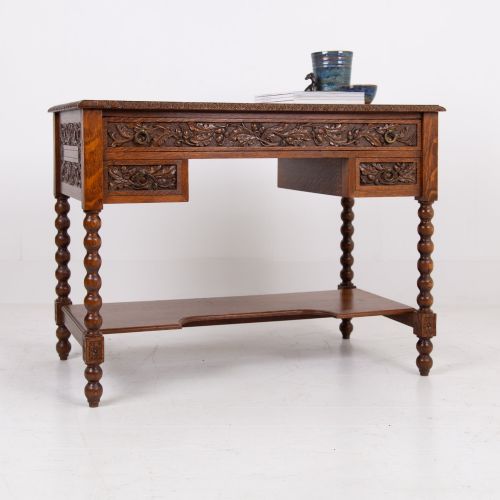
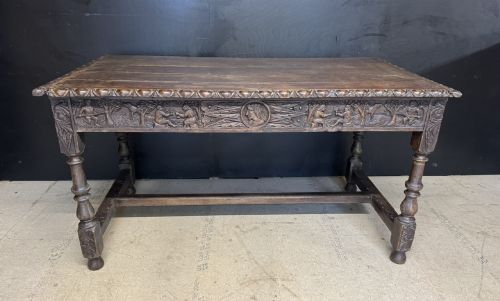
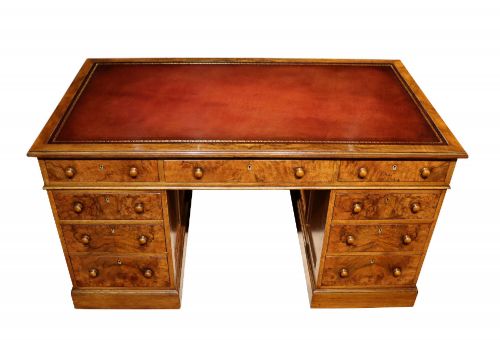
The selection encompasses seventeenth-century side tables with drawers, eighteenth-century lowboys, and nineteenth-century kneehole desks featuring heavy relief work. These storage components form integral parts of functional writing furniture rather than isolated architectural fragments.
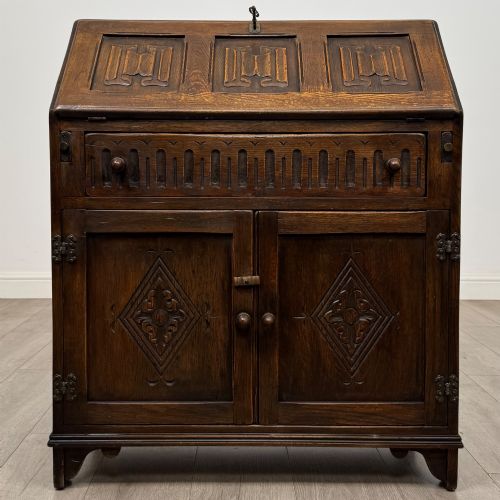
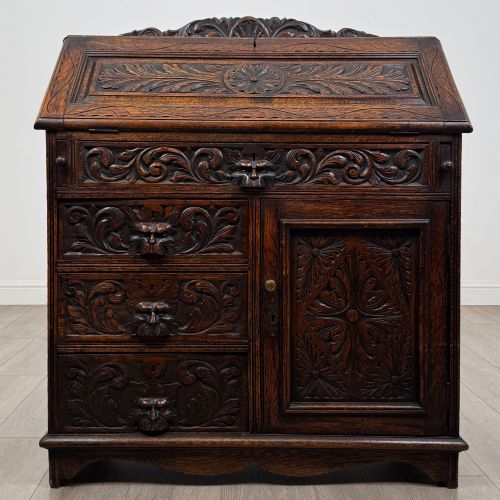
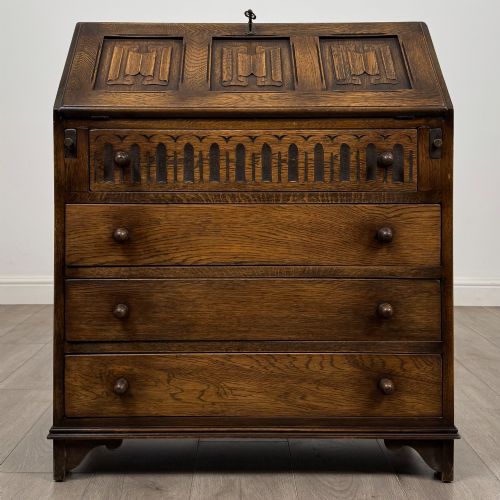
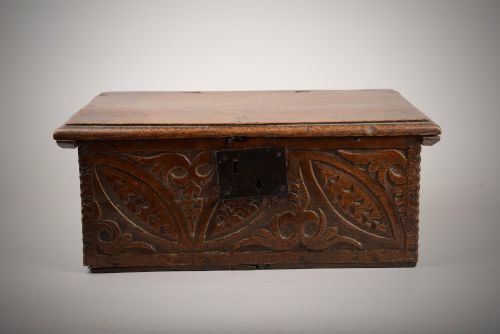
Meticulous surface enrichment unites these diverse objects, often displaying linenfold panels, geometric mouldings, or spirited green man carvings. Such ornamentation transforms utilitarian storage compartments into decorative focal points.
Materials and construction methods
Cabinet makers utilised solid oak for structural integrity, often pairing it with secondary woods like fruitwood or ash for internal framing and drawer linings. Brass handles, drop pulls, and iron fixings provide robust functional hardware across various periods.
Hand-carved detailing defines the exterior facades, executed with chisels and gouges to create deep relief motifs such as Tudor linenfold or Victorian Gothic foliage. Dovetail joints secure the drawer construction, ensuring durability over centuries of daily use.
Keep an eye out for hidden drawer compartments tucked inside seventeenth-century table boxes and nineteenth-century smoking cabinets for secret storage.
Assessing quality in carved oak furniture
Quality rests upon the crispness of the hand-carving and the integrity of the timber selection, where tight growth rings denote superior slow-grown oak. Superior examples display thoughtful proportion, balanced grain patterns, and period-correct hardware integration.
Construction methods reveal craftsmanship standards, notably through finely cut dovetails on drawer boxes and seamless integration of carved panels into the primary frame. Alterations, replaced drawer linings, or mismatched handles diminish the integrity of historical pieces.
Blyth and Son·Shapland and Petter·Robert Mouseman Thompson
The Carved Oak Desk Drawers Glossary
- Lowboy
- A small oak side table or dressing table featuring one or more rows of drawers, typically dating from the seventeenth or eighteenth century. These versatile pieces served various domestic functions in period interiors.
- Bureau
- A sloping desk that opens to reveal internal compartments and pigeonholes, often positioned above a chest of drawers. This form provides both writing space and concealed storage.
- Linenfold
- A style of relief carving used on oak panels that imitates folded linen cloth. This decorative technique appears frequently on Tudor and Jacobean revival furniture.
- Kneehole desk
- A writing table with a central recess for the user's legs, flanked by pedestals of drawers on both sides. They offer symmetrical storage configurations.
- Green Man
- A sculptural architectural ornament depicting a human face disgorging or entwined with foliage and vines. This motif recurs frequently on nineteenth-century Gothic revival oak furniture.
Carved Oak Desk Drawers: Frequently Asked Questions
How do I date a carved oak desk?
Dating relies on examining construction techniques, such as hand-cut dovetails, timber ageing, and the style of the carving. Early pieces often exhibit vernacular joinery, whereas later revival items display machine assistance.
Hardware styles and secondary woods also offer chronological markers, though replacement handles remain common across antique furniture.
Are these drawers suitable for daily use?
Solid oak construction provides exceptional durability, making these desks and tables robust enough for contemporary working environments. Proper care ensures the drawers slide smoothly and support modern loads.
Maintaining stable room humidity prevents the timber from warping, preserving the fit of historical drawers within their frames.
What is the difference between a lowboy and a desk?
A lowboy typically functions as a small side table with shallow drawers beneath the surface, originally used for grooming or serving. Desks generally provide dedicated writing surfaces with integrated stationery compartments.
Both categories utilise oak and feature drawers, but their historical placement within the domestic interior differed significantly.
How should I care for antique oak furniture?
Protect the timber by avoiding direct sunlight and maintaining consistent indoor temperatures to prevent splitting. Natural beeswax polish nourishes the surface without building up synthetic residues.
Lifting rather than dragging these heavy pieces protects the structural joints and floor surfaces alike.