

Edwardian Oak Writing Desk
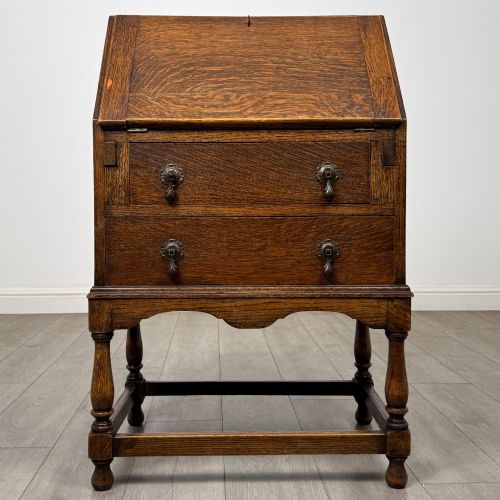
An edwardian oak writing desk brings sturdy timber grain and functional stationery compartments directly into a home study.
Identifying these pieces
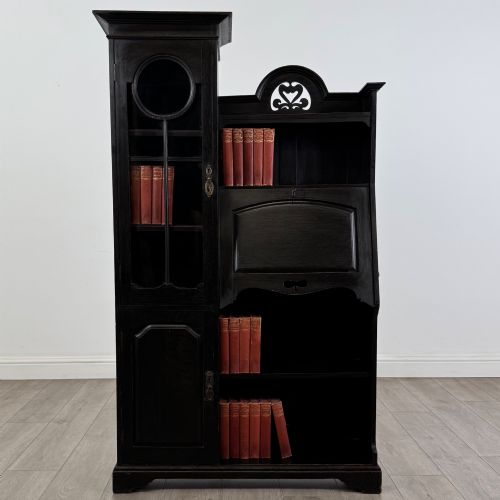
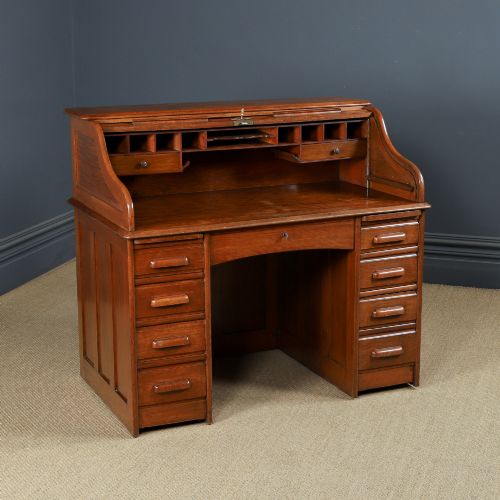
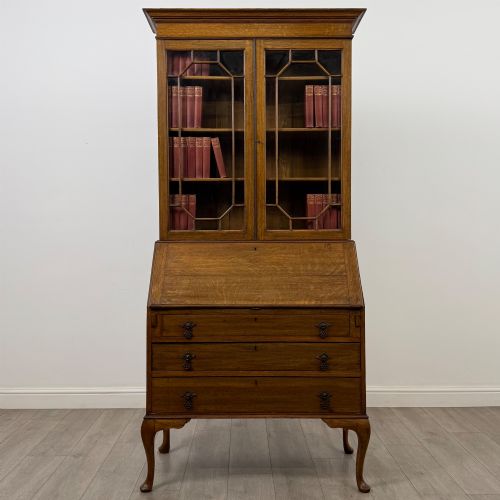
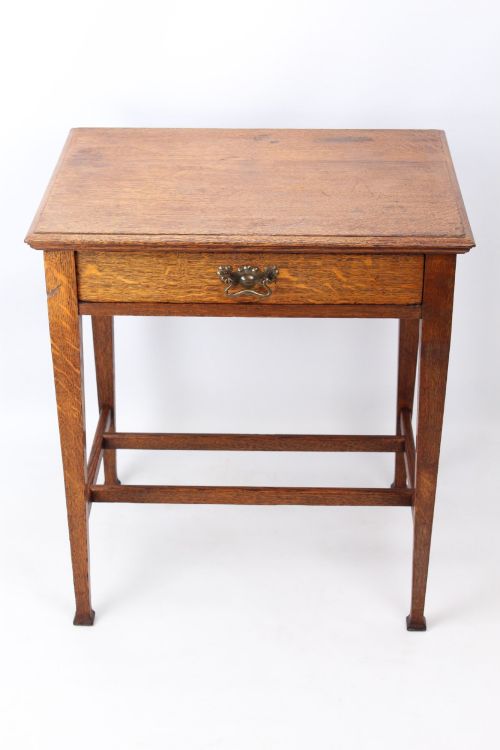
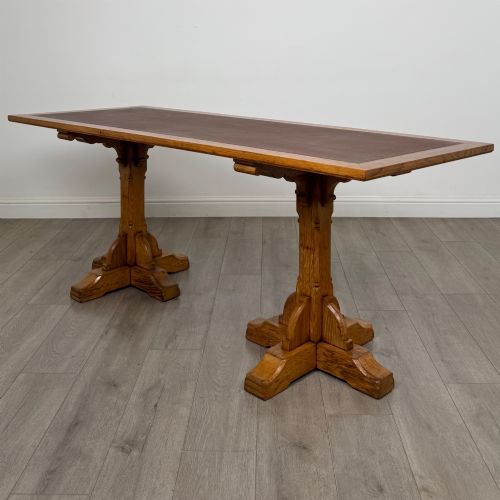
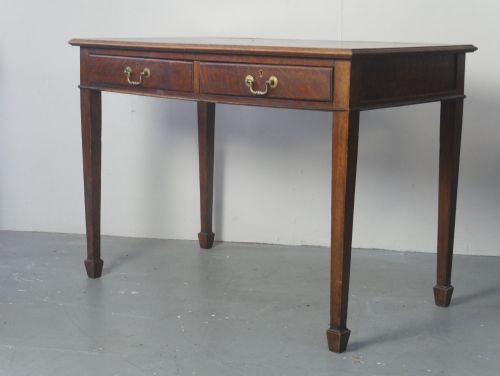
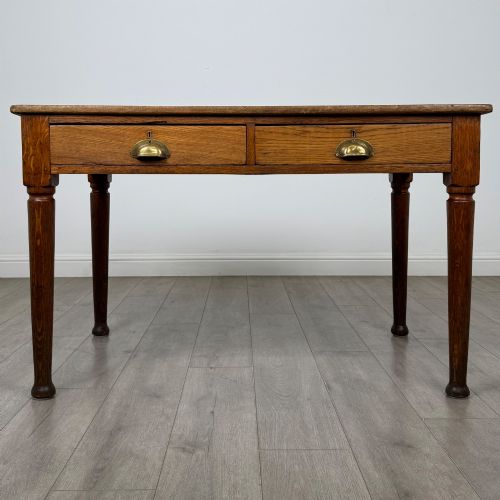
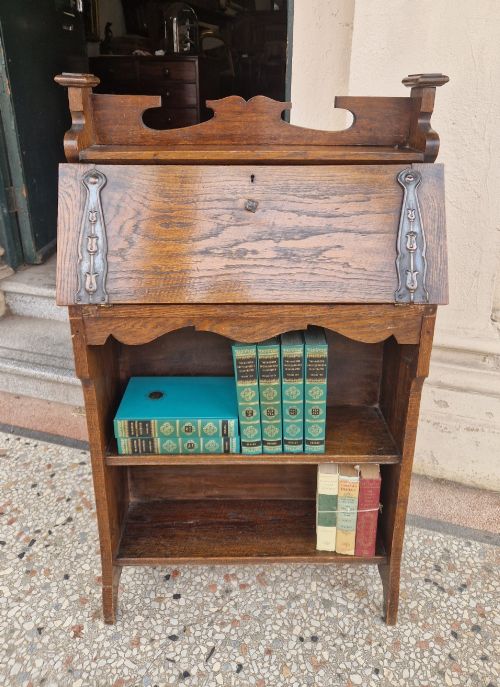
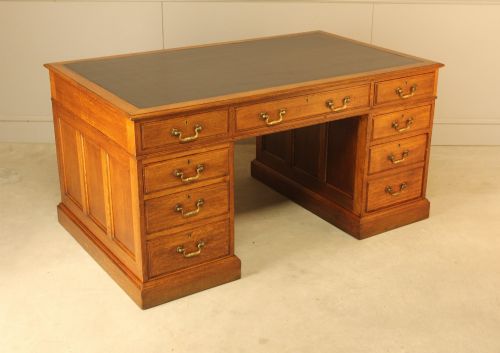
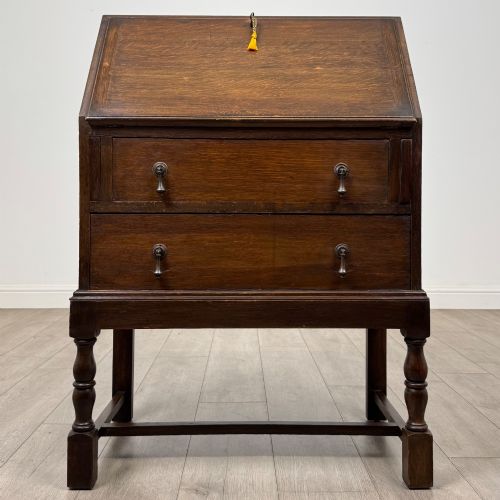
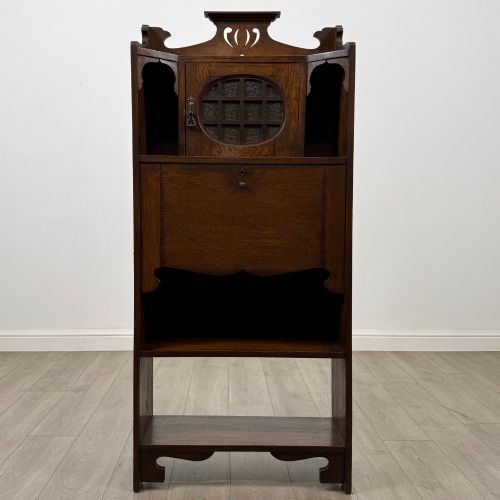
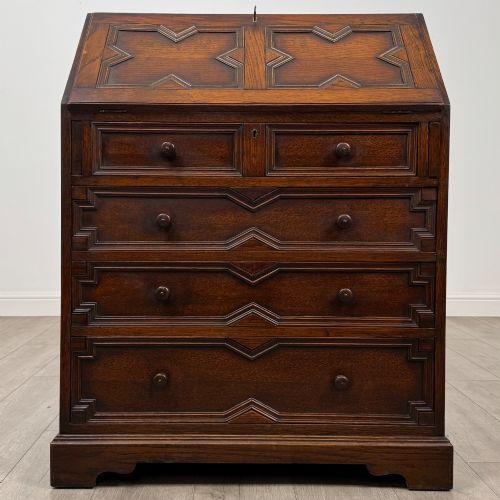
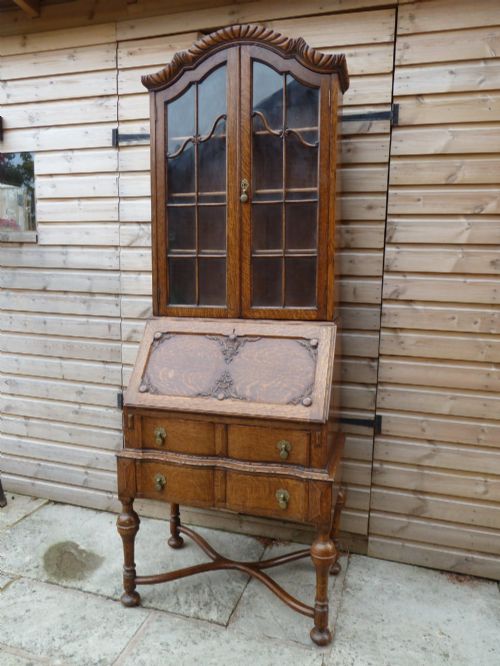
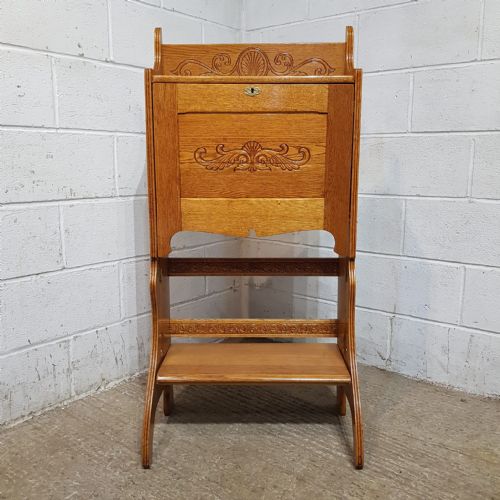
An edwardian oak writing desk is a practical workspace built from resilient timber, appearing across styles such as Arts and Crafts, Gothic Revival, and Jacobean Revival. Buyers frequently encounter variations ranging from simple kneehole writing tables to large roll top pedestals and fitted bureaux.
The historical record shows production spanning the Edwardian era, alongside pieces attributed to the nineteenth century and the nineteen-twenties. These items served administrative and correspondence needs in studies and offices, offering built-in drawers and compartments for paper storage.
Materials and construction
Makers utilised solid oak, frequently described as golden or limed, supplemented by brass handles on drawers and fitted stationery interiors. Some writing surfaces incorporate inset leather panels to provide a smooth writing plane.
Construction techniques include carved details seen in Flemish and Gothic Revival examples, tambour slats utilised in roll top desks, and turned supports such as barley twists.
Retail Price Guide 2026
Typical UK retail prices for edwardian oak writing desk, calculated from the Sellingantiques database of over a million retail prices indexed since 2003. This retail price guide relies exclusively on Sellingantiques data; no external sources or auction records are used, so the figures do not describe the wider market.
Green Man carvings occasionally peer out from antique oak buffet tables and desks, watching over daily correspondence with stern leafy expressions.
Distinctions in craftsmanship
Superior examples demonstrate careful timber selection, showing consistent grain patterns in golden or limed oak alongside robust pedestal construction. Lesser pieces rely on simpler joinery and utilitarian finishes without decorative carving.
The integration of complex mechanisms, such as smooth-sliding tambour shutters on roll top desks and fully fitted internal stationery compartments, separates standard writing tables from more elaborate office furniture.
Angus of London·Horrocks Standard Company·Lebus·Harrods London·Globe Wernicke
The Edwardian Oak Writing Desk Glossary
- Bureau
- A desk featuring a hinged fall-front that opens to reveal internal pigeonholes and small drawers for correspondence. This form provides a concealed workspace when closed.
- Tambour
- A flexible shutter made of narrow wooden strips glued to canvas, allowing roll top desks to slide open smoothly around a curve. It conceals the pigeonholes when locked.
- Kneehole
- A desk configuration featuring banks of drawers on either side with an open space in the centre for the user's legs. This layout defines pedestal writing tables.
- Pedestal
- A supporting column or cabinet base placed beneath a desk top, typically housing multiple storage drawers. Twin pedestal variants balance storage capacity with a central seating space.
Frequently Asked Questions
What is a roll top desk?
A roll top desk uses a slatted tambour shutter that slides over the desktop to conceal paperwork and stationery.
This mechanical cover allowed users to lock away unfinished correspondence securely at the end of the working day.
How do I identify an Edwardian desk?
Edwardian desks are typically constructed from oak and reflect stylistic influences ranging from simple English country designs to Arts and Crafts and Jacobean Revival forms.
They date from the early twentieth century and often incorporate brass hardware and fitted internal compartments.
Where were these desks used?
These pieces were designed primarily for studies, libraries, and home offices to handle daily correspondence and administrative tasks.
Smaller variants were also produced specifically as ladies' writing desks for domestic drawing rooms.