
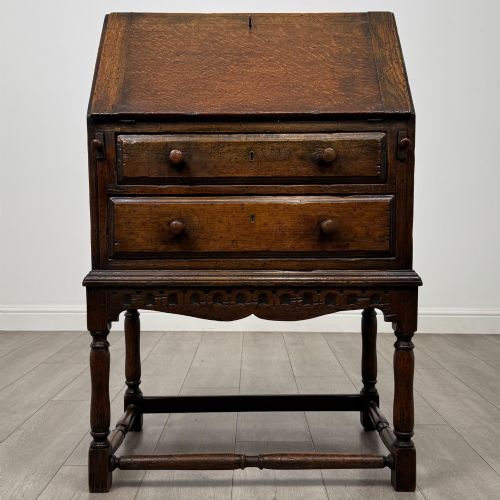
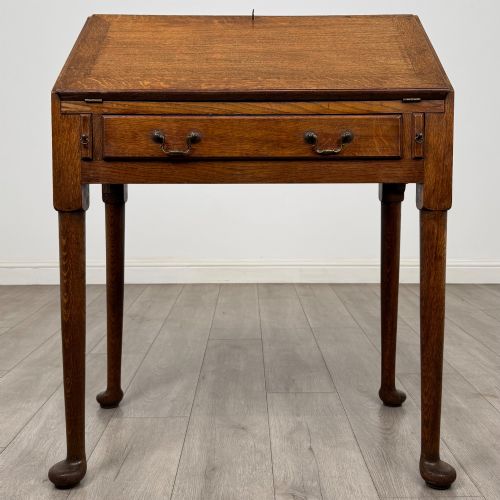
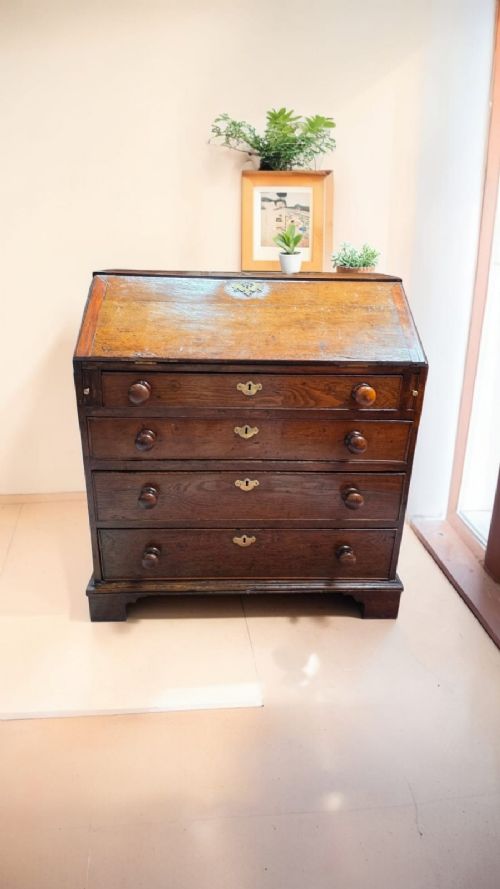
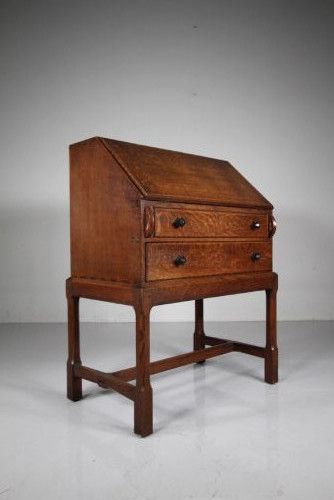

Oak Slope Front Desk
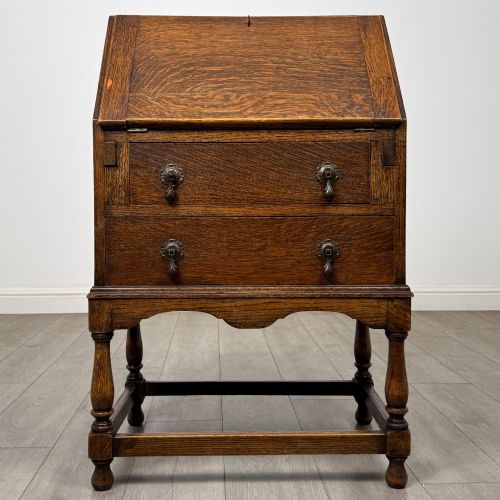
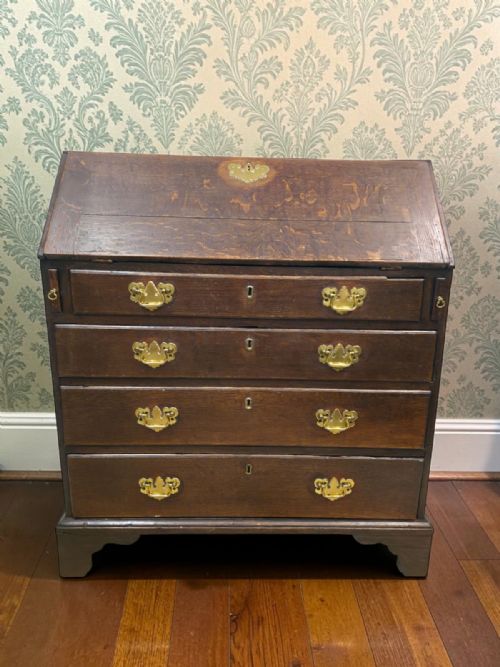
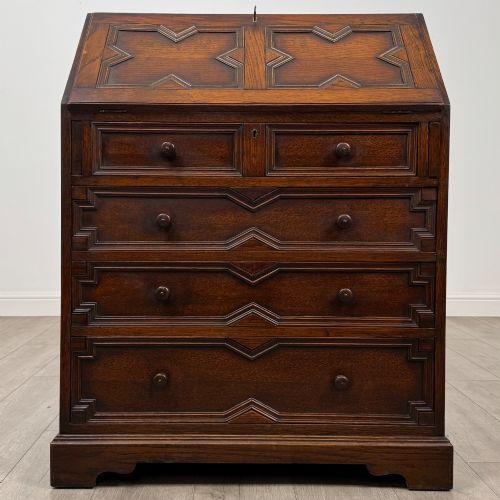
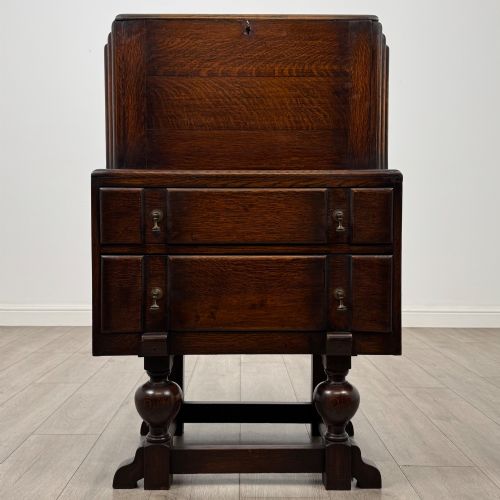
An oak slope front desk brings centuries of functional writing heritage into a room, offering sturdy construction and fitted compartments behind a sloping lid.
Oak Slope Front Desk
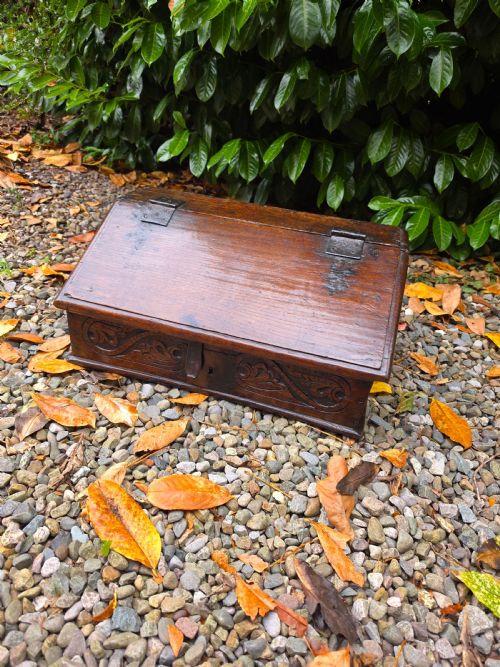
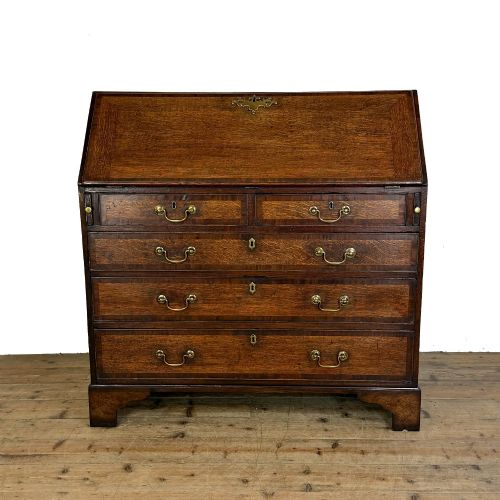
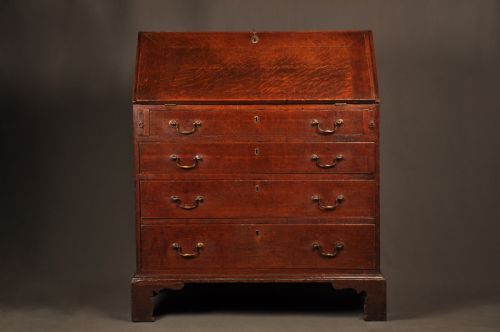
An oak slope front desk spans several centuries of British furniture making, ranging from modest seventeenth-century vernacular pieces to refined Georgian and Victorian examples. Buyers seeking this phrase typically encounter writing bureaux, fall-front desks, and compact desk boxes designed for correspondence and document storage.
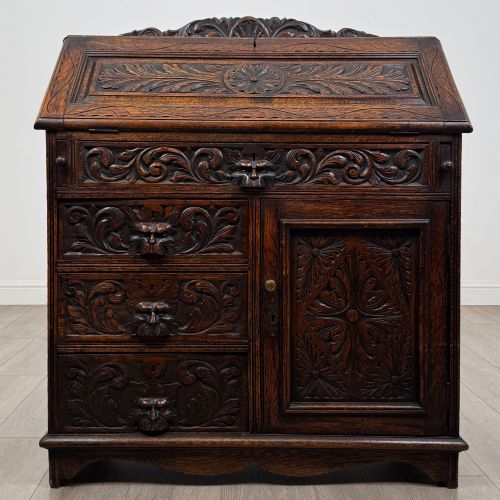
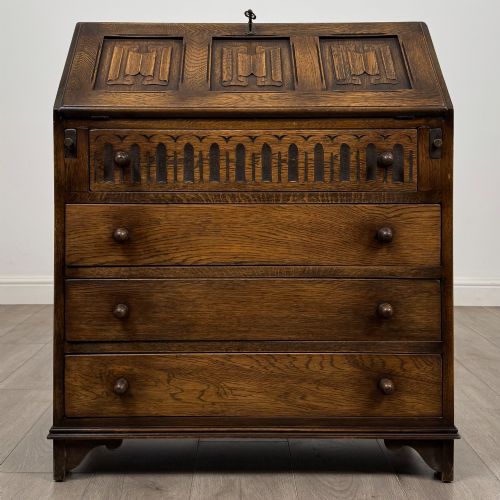
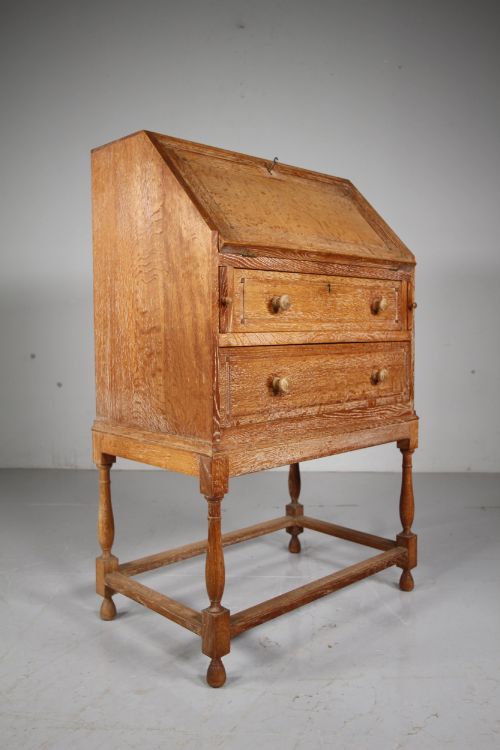
The selection here draws from periods including the seventeenth century, the Georgian era, and the Edwardian epoch, alongside revival styles like Jacobean and Tudor. Solid oak forms the primary body across these pieces, frequently paired with fitted interior compartments, pigeonholes, and secret drawers.
How they were made
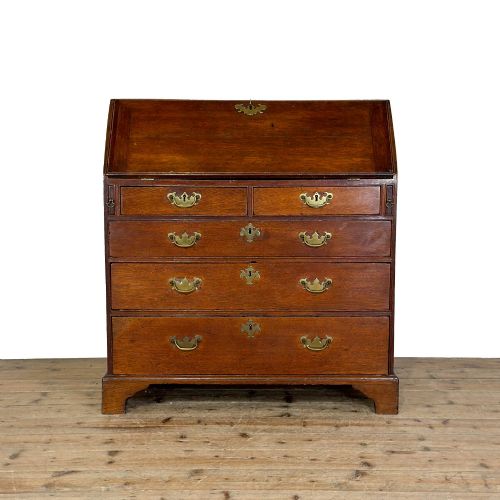
Cabinet makers utilised solid oak and golden oak planks, occasionally incorporating pollard oak, walnut, or mahogany veneers for visual contrast. Construction relied on traditional joinery methods, such as dovetailing for drawers and mortise and tenon joints for the main carcase.
Hardware played a functional and decorative role, featuring brass drop handles, escutcheons, and iron locking mechanisms. Writing surfaces frequently incorporated inset leather panels, while carved details like linenfold panels or Green Man motifs appeared on later revival pieces.
The inventory includes desk boxes, stationery cabinets, and writing bureaux with fitted stepped interiors.
What varies in quality
The standard of a bureau rests on the selection of timber grain and the complexity of its interior arrangement. Pieces featuring stepped drawers, secret compartments, and crossbanded veneers represent a higher tier of craftsmanship than simpler utilitarian boxes.
Proportion and surface preservation also dictate distinction, where undisturbed patination and original brassware elevate an example above later alterations or replacement stands.
Heals of London·Stanley Webb Davies
The Oak Slope Front Desk Glossary
- Fall-front
- A hinged writing flap that drops down to form a horizontal desk surface. This panel conceals the internal pigeonholes and small drawers when closed.
- Bureaux
- The plural form of bureau, denoting a writing desk equipped with a sloping lid or cylinder front. These pieces often feature tiered drawers beneath the writing compartment.
- Crossbanded
- A decorative border technique where veneer strips are laid perpendicular to the grain of the central panel. This framing method adds subtle contrast to drawer fronts and writing flaps.
- Pigeonholes
- Small, open compartments fitted inside the interior of a desk for sorting letters and papers. They form part of the stepped nest usually revealed upon opening the slope.
- Desk box
- A portable wooden box with a slanted lid used for writing before the development of freestanding desks. These early portable units rested on tables or laps.
Oak Slope Front Desk: Frequently Asked Questions
What is an oak slope front desk?
An oak slope front desk is a traditional writing cabinet featuring a slanted hinged lid that opens to reveal a fitted interior of small drawers and pigeonholes.
These pieces range from seventeenth-century box forms and miniature tables to large Georgian and Victorian freestanding furniture designed for handling correspondence.
How do I date an antique oak desk?
Dating relies on examining construction methods, timber selection, hardware, and stylistic ornamentation. Seventeenth-century examples display vernacular joinery and carved panels, whereas Georgian pieces show refined dovetailing and symmetrical drawer arrangements.
Revival pieces from the Edwardian era often incorporate golden oak finishes and machine-sawn elements while imitating earlier Jacobean or Tudor styles.
How were these desks used originally?
These desks served as private workstations for writing letters, managing household accounts, and storing legal documents securely. The sloping lid provided a comfortable writing angle while keeping wet ink and quills contained.
Inside compartments held stationery, wax seals, and inkwells, while lockable fall-fronts kept sensitive correspondence private.
How do I care for antique oak furniture?
Preserving antique oak involves placing the desk away from direct heat sources and fluctuating sunlight to prevent timber shrinkage and splitting. Regular dusting with a dry, soft cloth maintains the surface.
Applying occasional traditional wax polish feeds the grain and protects the historic patination without sealing the wood permanently.