


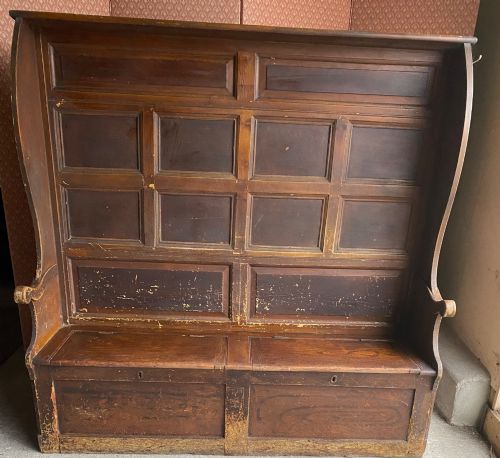
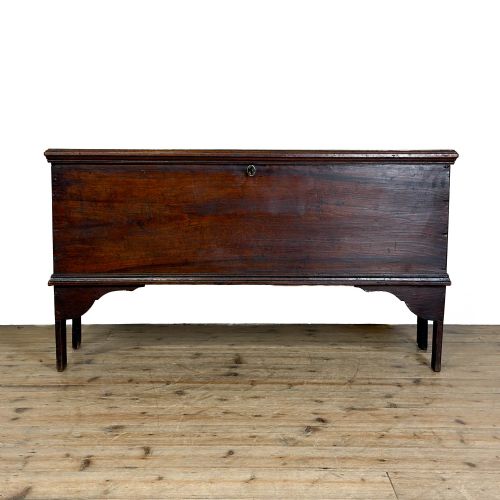
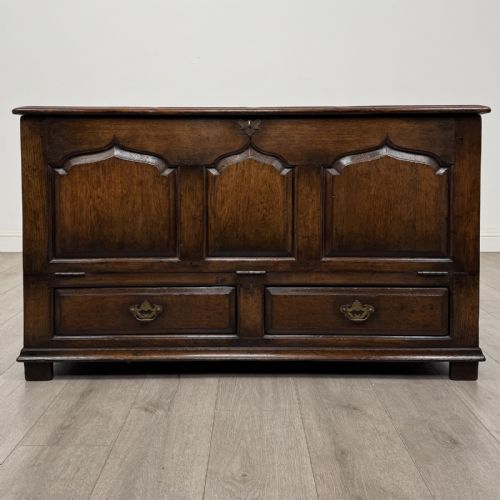
18th Century Oak Box
An 18th century oak box brings honest utility and rich grain into a room, offering sturdy storage rooted in domestic history.
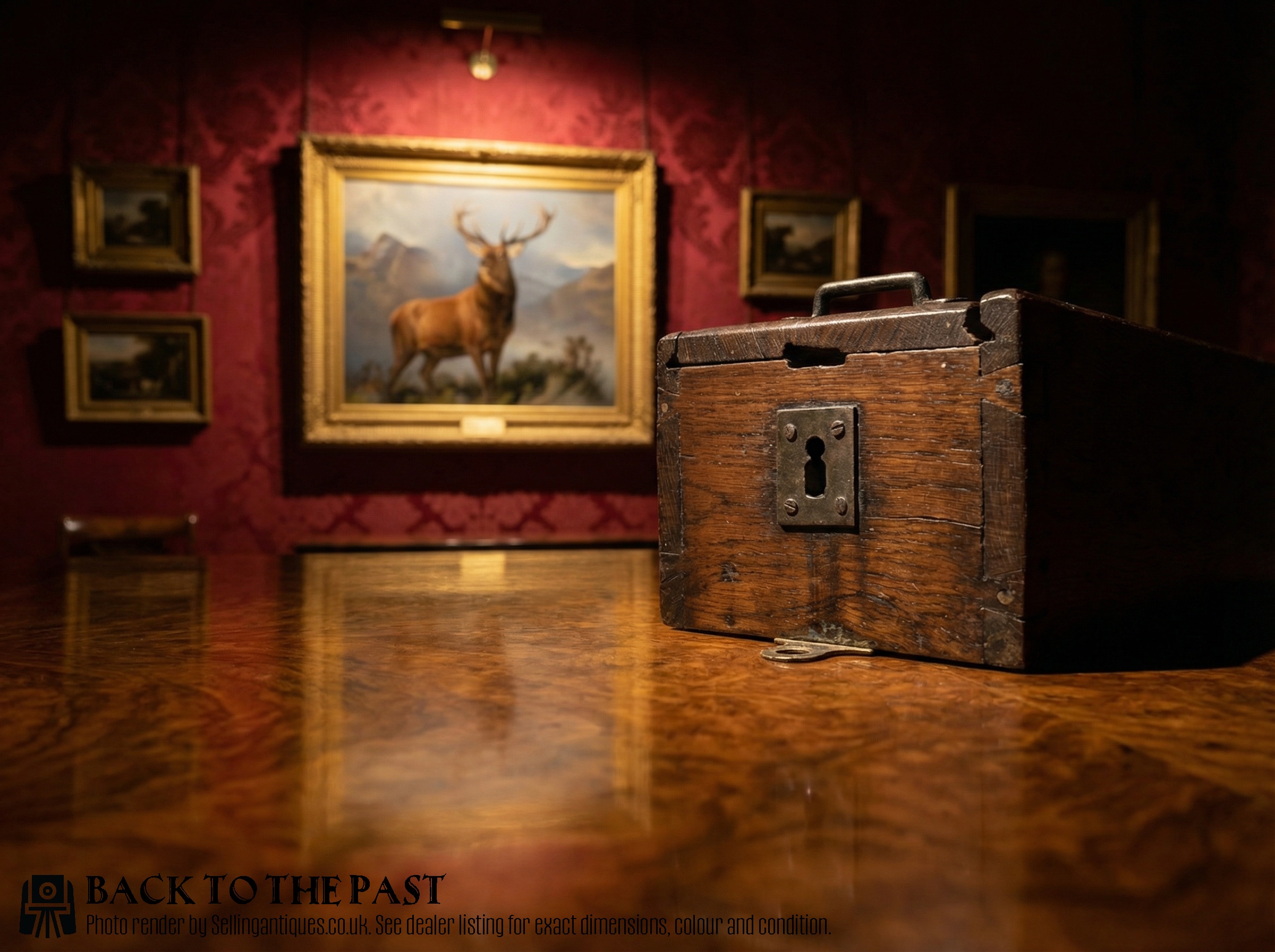
18th Century Oak Box
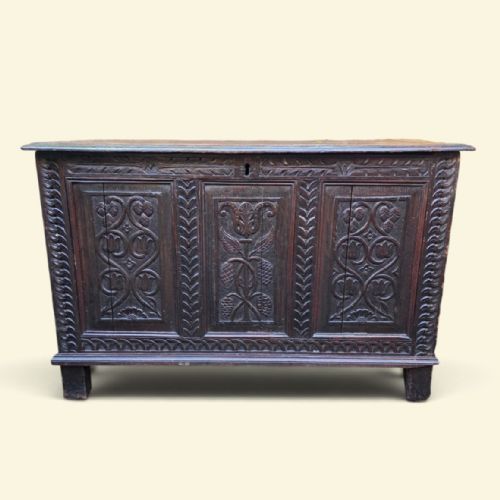
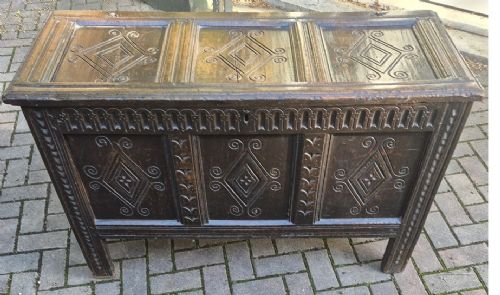
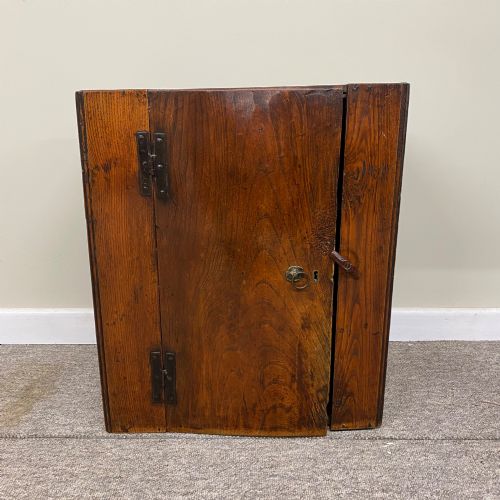
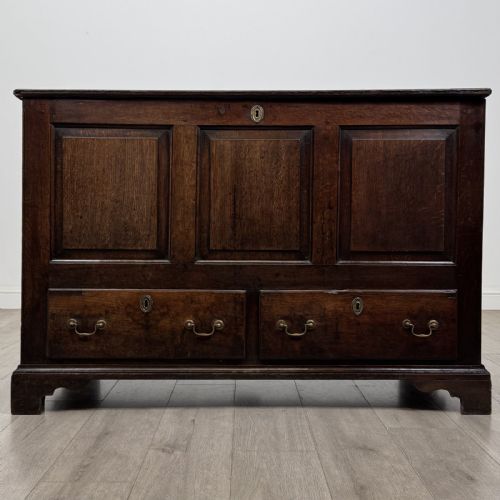
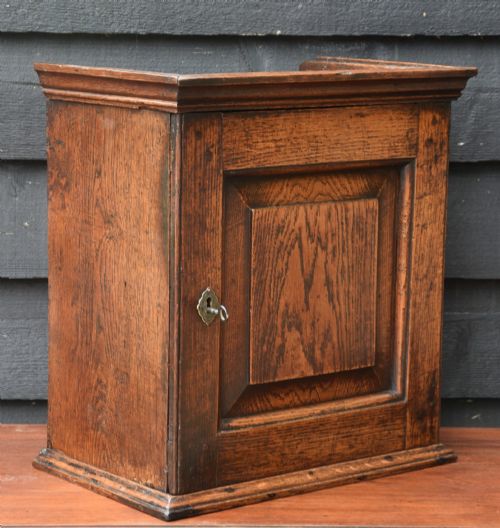
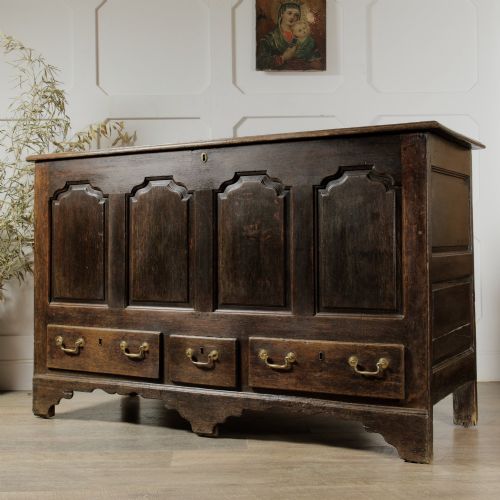
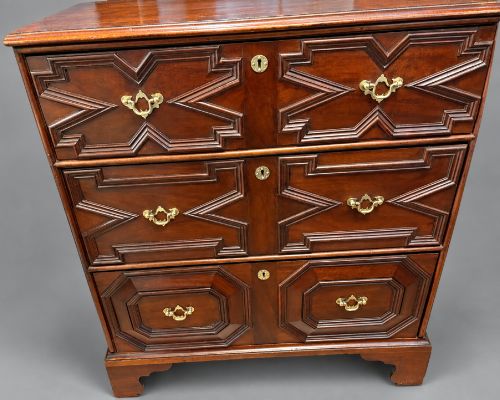
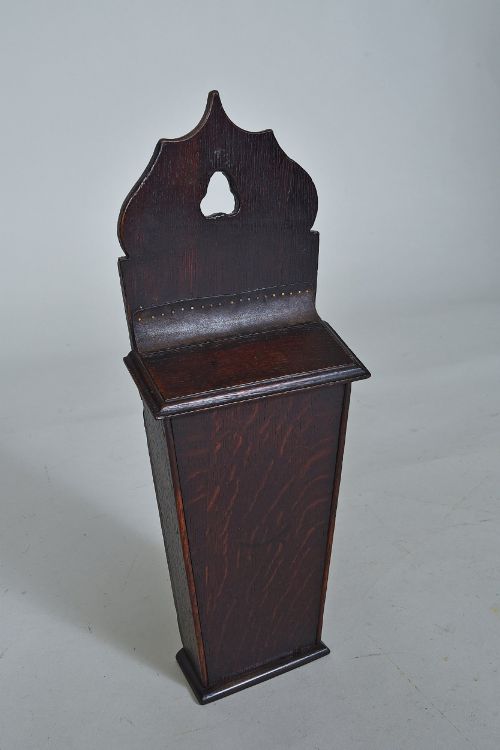
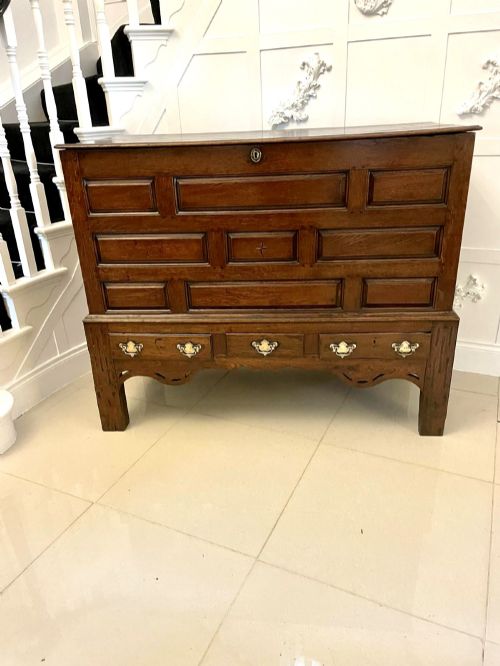
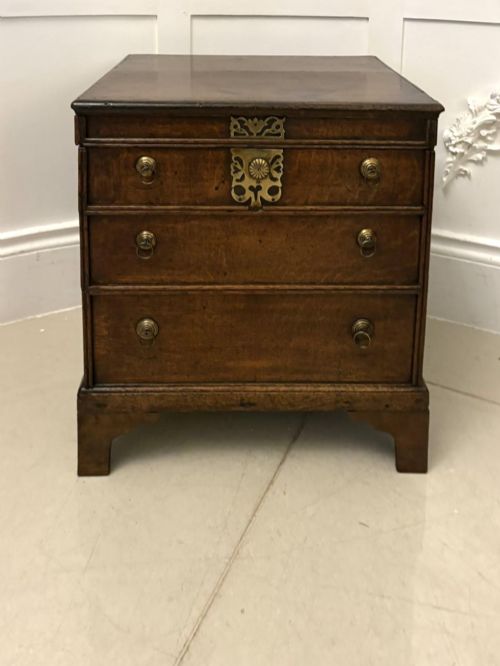
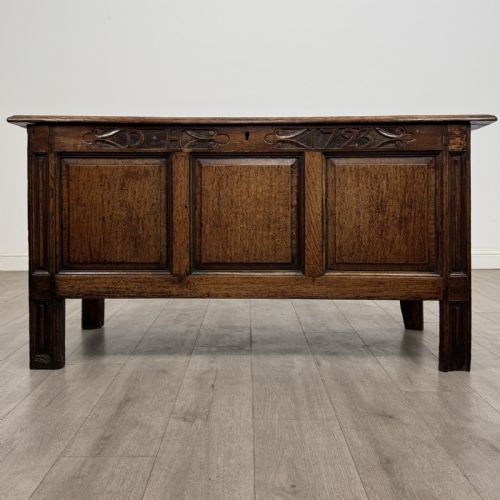
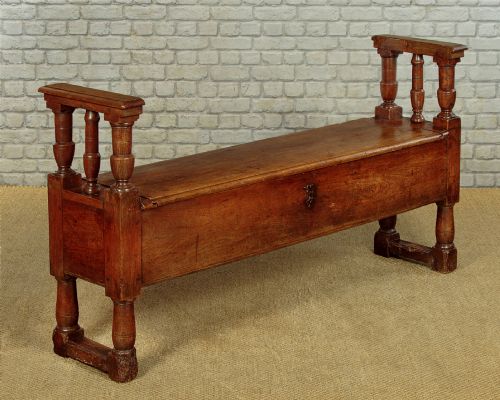
Every 18th century oak box serves a practical domestic purpose, spanning forms from small wall-hanging candle boxes and desk containers to larger blanket chests and miniature coffor bach pieces. The examples met most frequently on this page include Bible boxes with carved friezes, wall-mounted spice containers, and small tabletop chests originating from Welsh vernacular and Georgian traditions.
The materials recorded across these items centre firmly on solid oak, frequently augmented by fruitwood inlay, iron hardware, and brass hinges or lock plates. Stylistic descriptors range from early Georgian refinement to primitive country craftsmanship, showing how utilitarian objects received varying degrees of decorative attention.
Forms adapt directly to the needs of historic households, encompassing candle storage, salt holders, desk storage, and miniature chests of drawers. This variety demonstrates the adaptability of timber furniture within domestic spaces during the 1700s and surrounding decades.
How they were made
Carpenters constructed an 18th century oak box using thick boards joined by pegged mortise and tenon joints or simple dovetails, ensuring robust durability. Surfaces were planed and finished by hand, leaving tool marks that reveal the physical process of manual woodworking.
Decorative embellishments relied on scratch carving, incised geometric patterns, and contrasting fruitwood inlay applied directly to the timber panels. Hardware such as iron hinges, latches, and brass escutcheons were hand-forged or cast, then fixed with handmade iron nails and screws.
Internal layouts often incorporated small compartments, tills, or miniature internal drawers designed to hold documents, valuables, or household provisions securely. Timber selection favoured quarter-sawn oak to display the prominent medullary rays characteristic of sturdy British furniture.
18th Century Oak Box Retail Price Guide 2026
Typical asking prices for 18th century oak box among the pieces listed under this phrase on Sellingantiques today, from the lower quarter to the upper quarter. They describe what is for sale here now, not the wider market.
What varies in quality
The standard of an 18th century oak box depends upon the crispness of the carving, the architectural proportion of the miniature chest forms, and the selection of figured timber. Superior pieces display harmonious proportions and careful attention to secondary details like interior drawer construction.
Regional vernacular items demonstrate greater rustic simplicity, whereas pieces influenced by Georgian stylistic shifts show more deliberate symmetry and refined mouldings. The integrity of the original construction, including unaltered boards and period fixings, dictates the overall standing of an item.
The 18th Century Oak Box Glossary
- Bible box
- A small tabletop chest featuring a sloping or flat hinged lid, originally built to store family scriptures and writing materials. These containers often rest on short feet or a small drawer base.
- Coffor bach
- A Welsh term translating to little coffer, denoting a miniature chest or blanket box fitted with small drawers beneath the main compartment. These items often showcase local fruitwood inlay and vernacular joinery.
- Frieze
- The decorative horizontal band situated beneath the top moulding of a box or chest, frequently ornamented with scratch carving. Carvers utilised this space to display geometric patterns or dates.
- Mule chest
- A storage chest equipped with one or more drawers at the base beneath the primary trunk compartment. This form bridges the evolution between the simple coffer and the chest of drawers.
18th Century Oak Box: Frequently Asked Questions
What was an 18th century oak box used for?
These containers held precious household goods, writing materials, candles, salt, or family Bibles protected from dampness and pests.
Smaller versions hung on walls to keep provisions close at hand, while larger trunk forms sat on tables or floors for general storage.
How do I tell a Welsh vernacular box apart?
Welsh pieces frequently incorporate distinctive fruitwood inlay, contrasting dark and light woods, and local structural quirks.
They often appear as miniature chests with small drawers below the main compartment, reflecting regional furniture traditions.
Where were these boxes placed in homes?
Hanging candle boxes and spice containers were mounted directly onto kitchen or parlour walls near hearths.
Tabletop Bible boxes and desk boxes rested on surfaces where family members sat to read, write, or keep accounts.
What is the difference between a coffer and a box?
A coffer generally denotes a larger storage trunk constructed with heavy timber panels and integrated stile feet.
Smaller desk boxes and candle boxes are designed for tabletop use or wall hanging rather than heavy floor storage.