


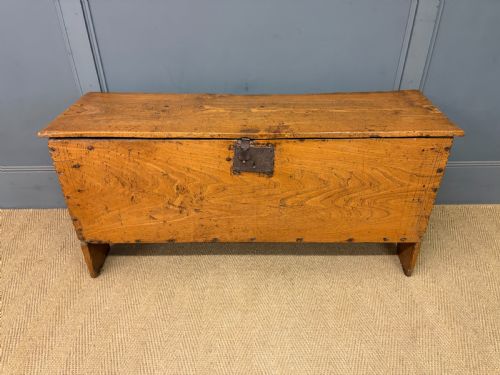
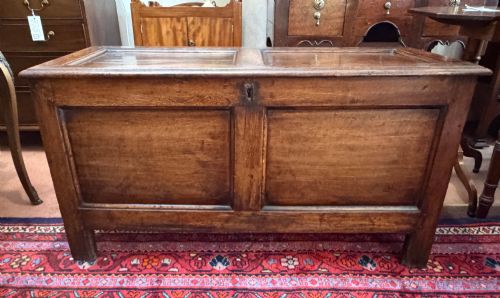
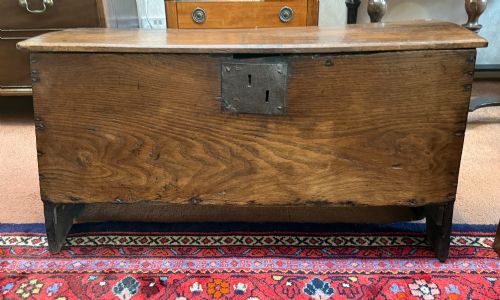
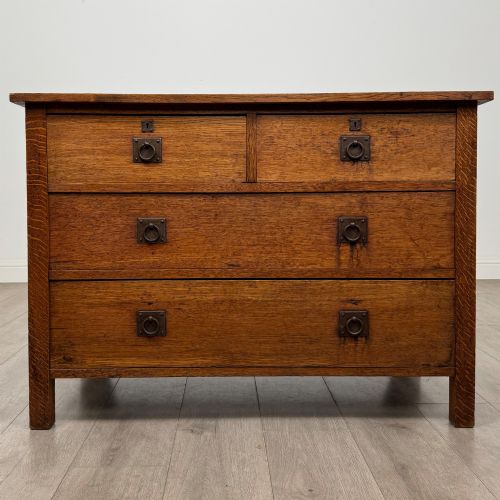
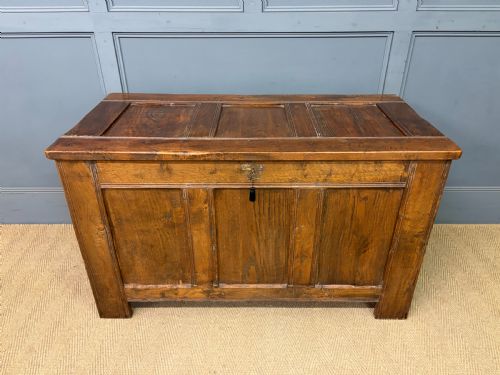
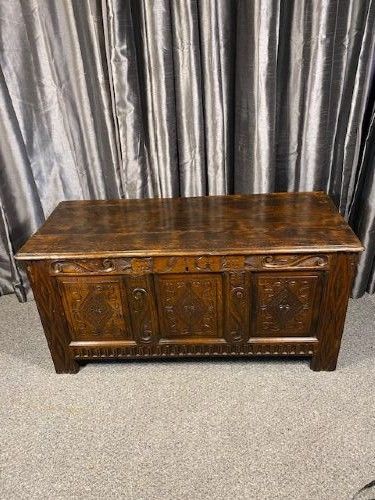
Rustic Oak Chest
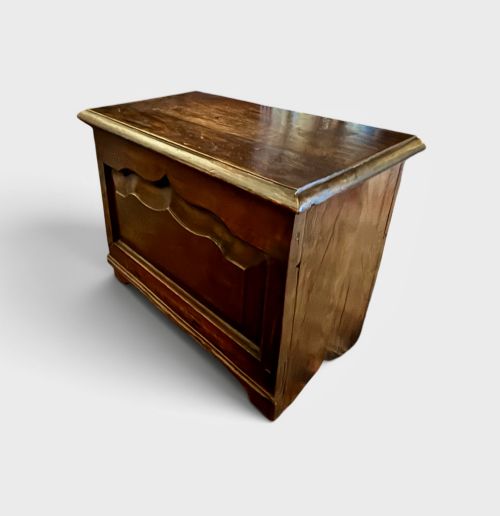
A rustic oak chest brings heavy timber and honest carpentry straight from centuries past into a modern room.
What these pieces are
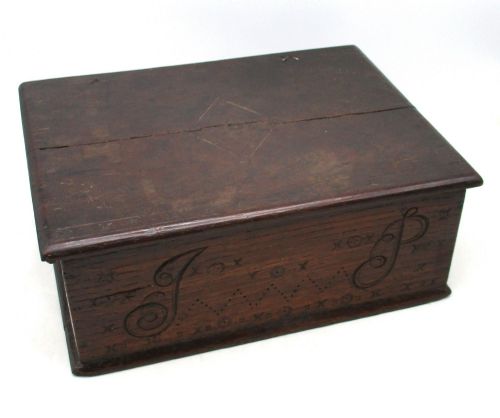
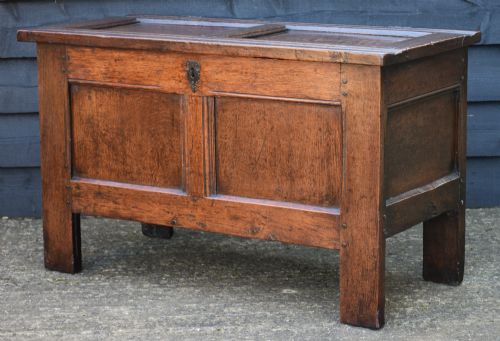
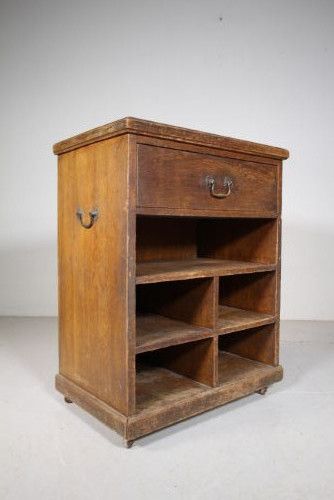
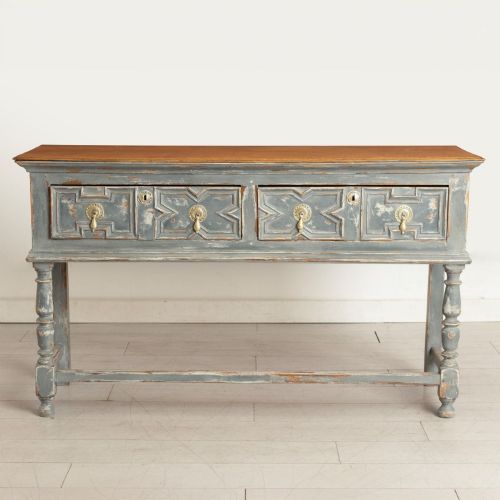
A rustic oak chest covers solid storage pieces built from sturdy wood, taking forms such as coffers, chests of drawers, and small Bible boxes. Most examples found here date from the seventeenth and eighteenth centuries, reflecting long periods of English country and Georgian craftsmanship.
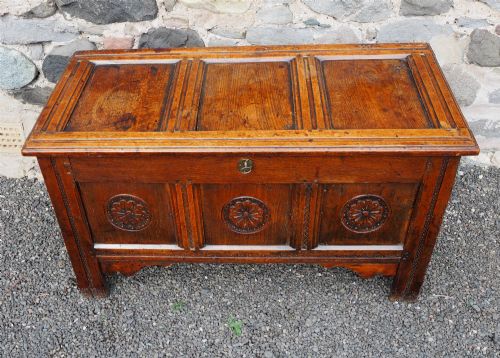
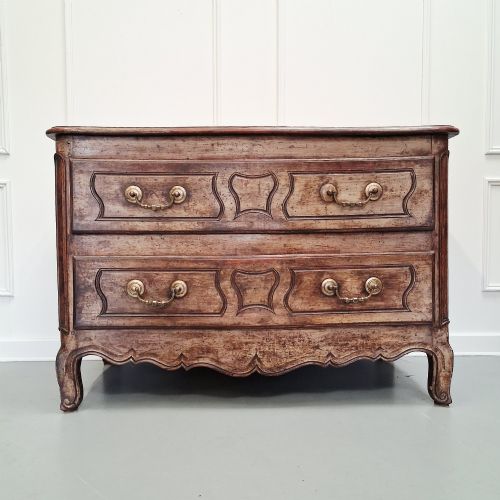
The collection ranges from heavy panelled coffers designed for household storage to compact chests of drawers and small devotional boxes. These forms served practical domestic needs in older homes, relying on robust construction rather than delicate ornamentation.
How they were made
Carpenters built these pieces using solid oak boards, frequently reinforced with iron and brass fittings such as hinges, escutcheons, and locks. Surfaces sometimes display carved details or a bleached finish, depending on regional workshop practices.
Joinery techniques prioritised durability, employing pegged joints and framed panels to handle the natural movement of heavy timber over generations of use.
Retail Price Guide 2026
Typical UK retail prices for rustic oak chest, calculated from the Sellingantiques database of over a million retail prices indexed since 2003. This retail price guide relies exclusively on Sellingantiques data; no external sources or auction records are used, so the figures do not describe the wider market.
Many an old Bible box still carries the faint, stubborn scent of centuries-old tallow candles and dried church rushes trapped inside the lid.
What varies in quality
Quality rests on the integrity of the timber, the crispness of any period carving, and the survival of original brass or iron hardware. Pieces that retain their early surface patination and unreplaced structural boards stand above those altered by later repairs.
Proportion and scale also dictate worth, as smaller proportions and well-balanced panel layouts command stronger interest than clumsy or heavy-handed proportions.
The Rustic Oak Chest Glossary
- Coffer
- A large wooden chest traditionally used for storing valuables, linen, or documents in early households. These storage pieces often feature hinged lids and sturdy panelled construction.
- Bleached oak
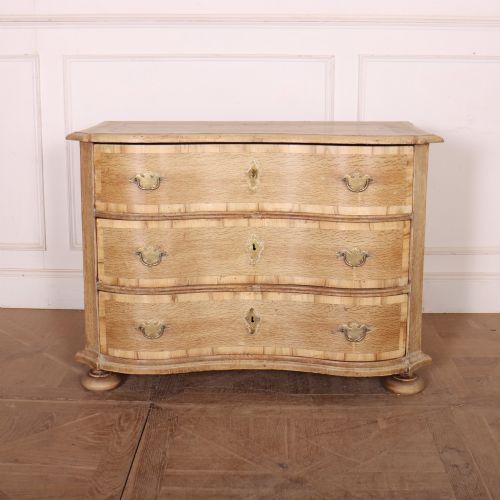
- Oak timber treated to lighten its natural dark tone, creating a pale surface often seen on continental commodes and specific country furniture.
- Bible box
- A small tabletop box constructed to hold a family Bible and writing materials securely. These portable pieces frequently date from the seventeenth and eighteenth centuries.
- Commode
- A low chest of drawers originating in continental furniture traditions, brought into British and Austrian interiors during the eighteenth century.
- Panelled
- A method of construction where flat boards fit within a sturdy timber frame to prevent warping. This technique forms the structural walls of traditional coffers.
Frequently Asked Questions
How do I date an oak coffer?
Dating an oak coffer involves examining the joinery methods, tool marks, and overall proportions of the timber frame. Pieces from the seventeenth century often show heavier hand-carved panels and pegged joints.
Eighteenth-century examples tend toward cleaner Georgian lines or simpler country surfaces, while hardware like hinges and locks provides additional clues.
Where were these chests made?
These chests originate from English country workshops and continental European centres, reflecting regional styles from the seventeen-hundreds and earlier. British pieces typically follow English country or Georgian traditions.
Other variations, such as Austrian commodes, demonstrate distinct continental finishing techniques like bleached oak surfaces.
How do I care for antique oak?
Antique oak benefits from stable indoor humidity levels away from direct heat sources and strong sunlight. Regular dusting with a dry cloth helps preserve the historic surface patination.
Avoid modern liquid polishes that can build up on the grain, and rely instead on traditional beeswax applied sparingly when the timber appears dry.