




Early Oak Trunk
An early oak trunk is a sturdy receptacle of solid timber and iron, built to hold household goods and endure for centuries.
Early Oak Trunk
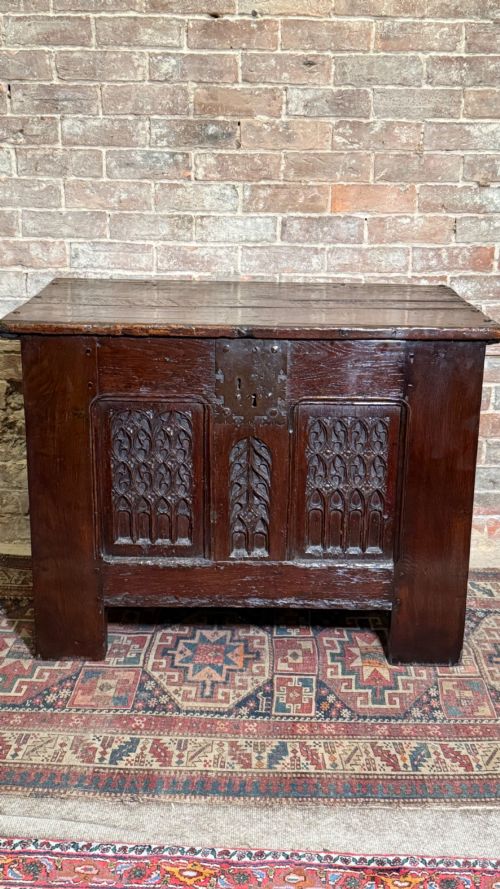
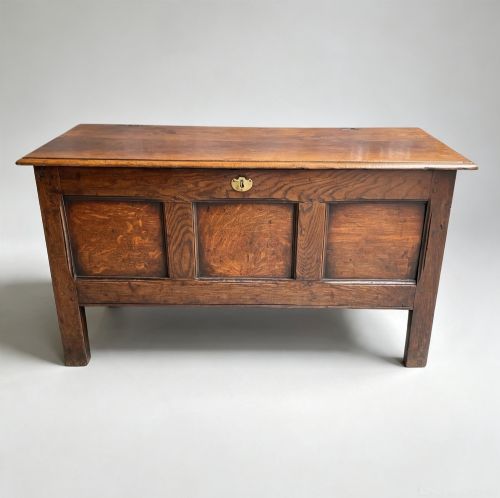
An early oak trunk encompasses heavy storage chests, coffers, and strong boxes originating from the sixteenth century through the early Georgian period. These pieces served domestic and security functions in households, holding valuables, linen, and documents before fitted closets existed.
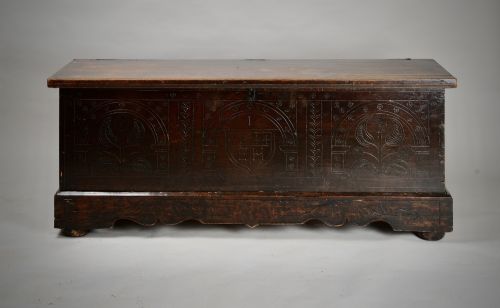
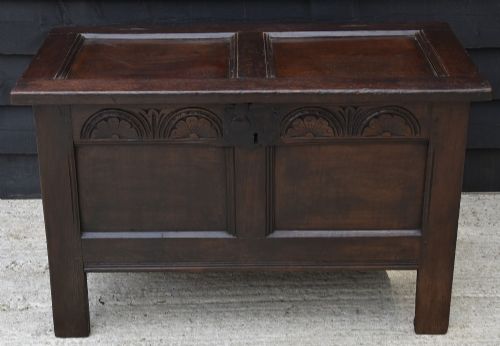
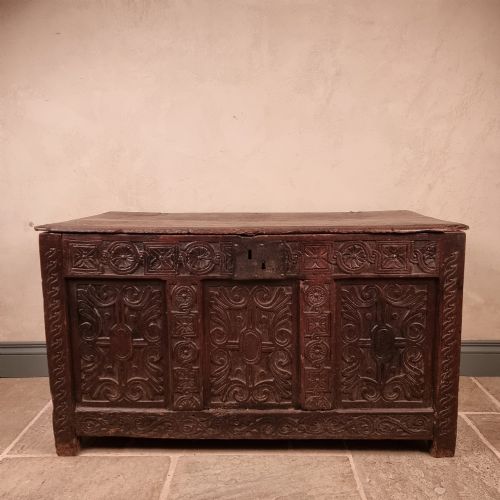
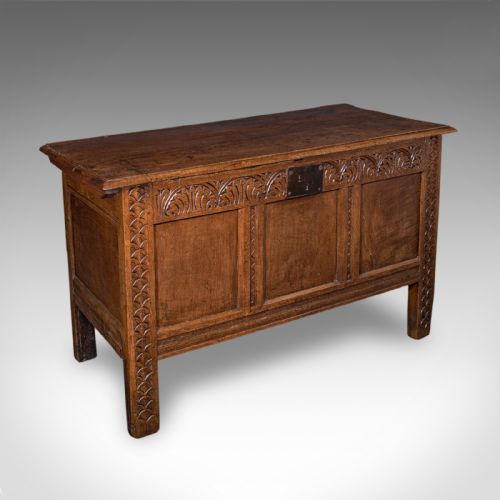
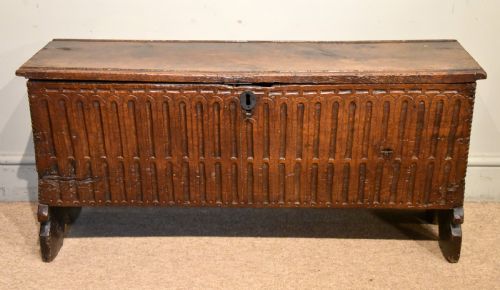
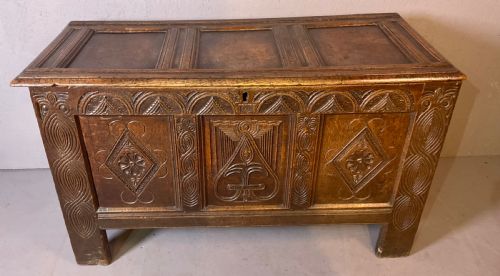
The versions most commonly met on this page date from the seventeenth century and the early eighteenth century, displaying panelled construction and hand-carved surfaces. Survivors from the sixteenth century appear less frequently, often showing simpler joined boards or medieval linenfold motifs.
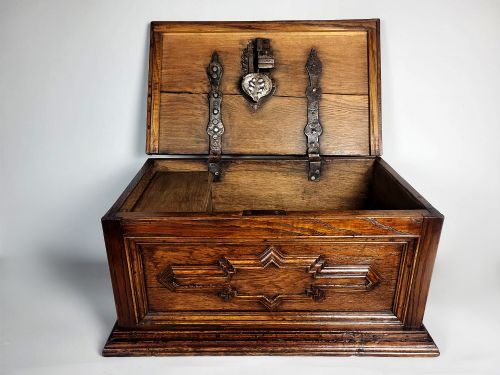
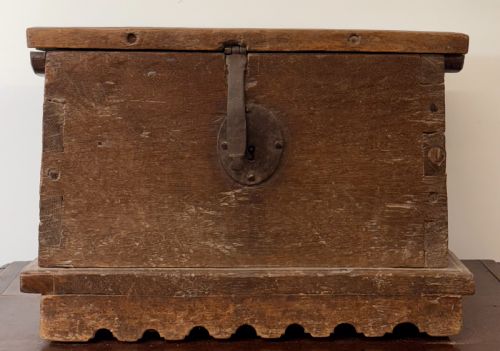
Regional variations emerge across the selection, including Welsh coffers, West Country examples, and pieces originating from continental workshops. Formats range from small safe boxes with complex steel locks to large blanket chests and mule chests fitted with lower drawers.
How they were made
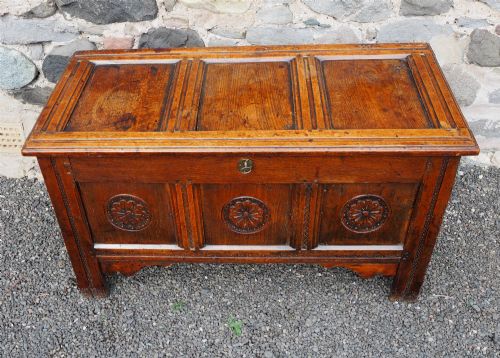
Carpenters built these containers using solid oak boards joined by traditional pegged mortise and tenon frames. Six plank constructions utilised plain boards joined at the edges with iron nails or wooden dowels.
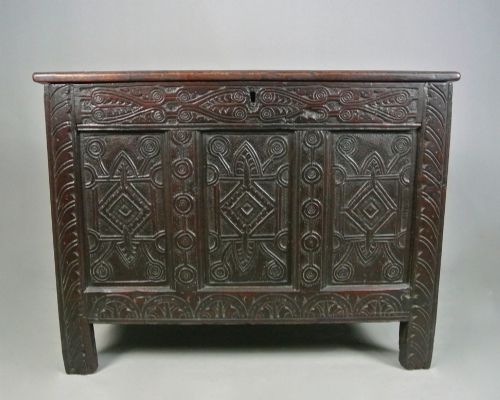
Surface decoration relied on gouge carving, arcading, and fluting cut directly into the timber rather than applied veneers. Blacksmiths provided essential hardware, forging wrought iron strap hinges, lock plates, and complex steel locks.
Several trunks cross paths with medical bags and postal strong boxes, proving that early security concerns applied equally to letters and leeches.
What varies in quality
The crispness and depth of the carved enrichment distinguish superior examples from plain utility pieces. Carving executed with confident hand-tool work carries greater visual weight than shallow or later replacement ornament.
The integrity of the original construction and timber surfaces dictates value. Pieces retaining their initial boarded lids, hinges, locks, and untouched patination stand apart from those subjected to heavy timber replacement or aggressive stripping.
The Early Oak Trunk Glossary
- Coffer
- A heavy wooden chest traditionally used for storing valuables or documents. These storage pieces often featured robust iron locks for security.
- Mule chest
- A storage chest fitted with one or more drawers beneath the main internal compartment. This form bridges the gap between the traditional trunk and the chest of drawers.
- Linenfold
- A style of wood carving popular in the Tudor period that resembles folded linen cloth. Craftsmen carved this design onto rectangular panels.
- Joined chest
- A piece constructed from a frame of stiles and rails enclosing thinner panels secured by pegs. This method accommodated seasonal wood shrinkage better than solid planking.
- Arcading
- A decorative row of blind arches carved into wooden panels, frequently seen on seventeenth-century furniture. This architectural motif reflects Renaissance influence on vernacular woodworking.
Early Oak Trunk: Frequently Asked Questions
What were early oak trunks used for?
These robust containers served primarily to store and transport valuable household possessions, textiles, and legal documents. In domestic settings, they often doubled as seating benches or tables.
Secure variants with iron locks protected church plate, money, and high-value commodities from theft. Simpler planked versions held everyday garments and blankets within the chamber.
How do I date an early oak trunk?
Dating relies on observing construction methods, timber preparation, and decorative motifs characteristic of specific reigns and centuries. Sixteenth-century pieces often display plain boards or linenfold panels, while seventeenth-century examples favour geometric panels and arcading.
Hardware styles and tool marks provide further chronological clues. Hand- forged ironwork and pegged joinery generally indicate earlier periods before industrial production began.
How do I care for an antique oak trunk?
Maintain stable indoor humidity levels to prevent the solid oak from drying out, warping, or splitting over time. Avoid placing the timber directly next to heat sources or in prolonged direct sunlight.
Clean the surface gently with a dry or barely damp cloth to preserve the historic wax finish. Avoid modern silicone polishes that can penetrate the grain and alter the patination.
What is the difference between a coffer and a chest?
The terms are often used interchangeably, though a coffer traditionally denotes a more secure storage container with reinforced iron bands and locks. Chests frequently served broader domestic storage purposes for household linens and clothing.
Early examples across both categories relied on heavy joined framing and thick oak boards. Regional terminology also influenced the names, with Welsh pieces sometimes called coffer bach.