

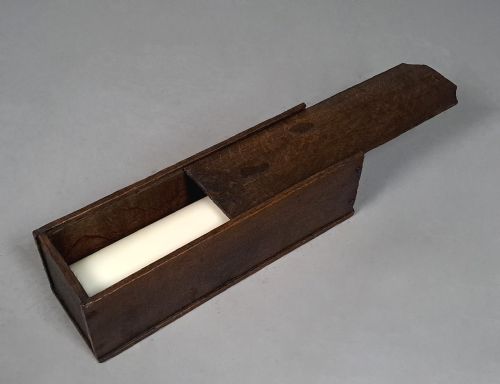


Dark Oak Candle Box
A dark oak candle box brings tactile warmth and historic utility to any wall, offering enduring storage shaped by centuries of daily domestic life.
Dark Oak Candle Box
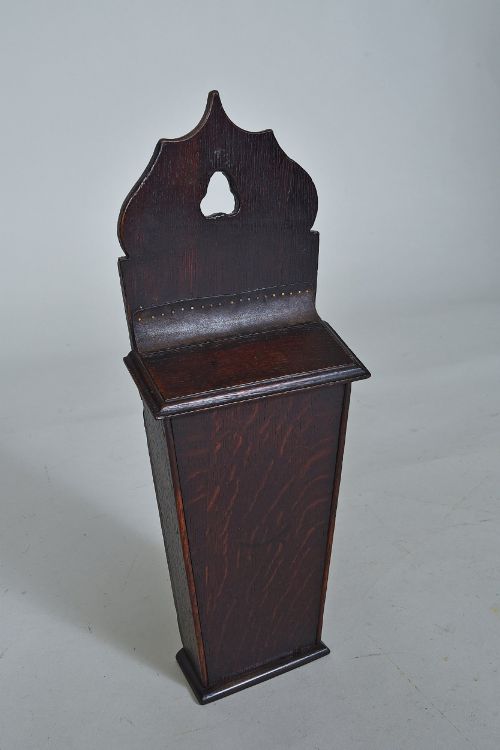
A dark oak candle box is a utilitarian container designed to hold tallow or wax candles safely away from dampness and pests in early homes. These pieces predominantly date from the seventeenth and eighteenth centuries, reflecting the robust joinery of the Georgian and earlier British eras.
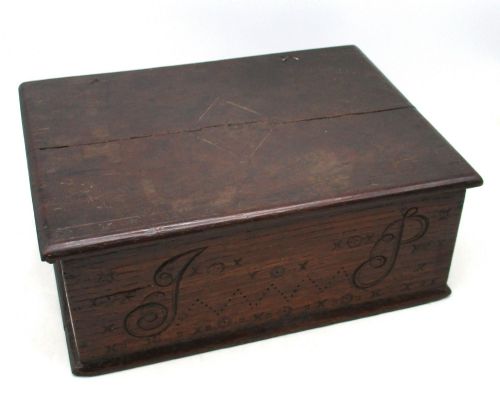
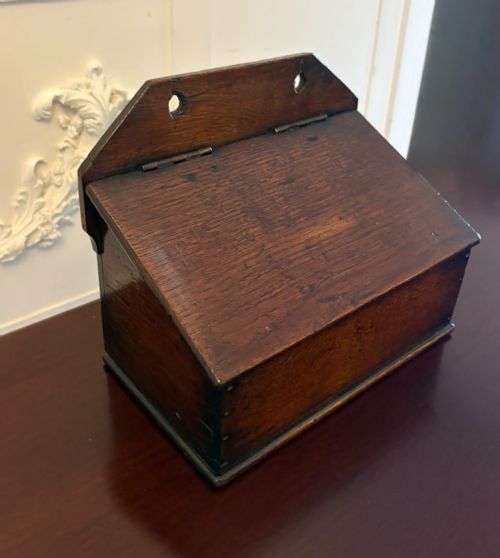
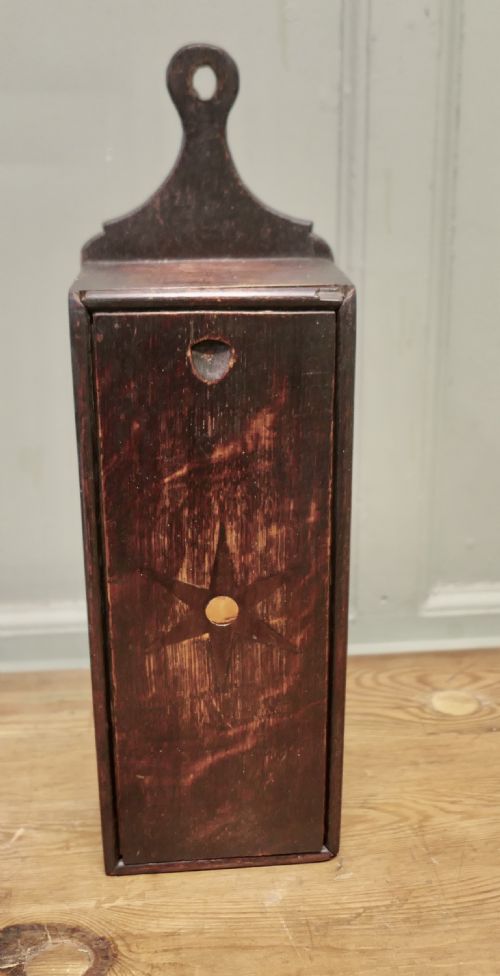
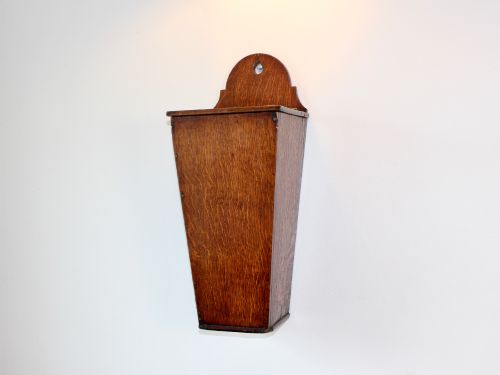
You will most frequently encounter wall hanging versions alongside smaller storage chests that incorporate internal compartments. The forms range from simple tapered rectangular shapes to carved vernacular boxes intended to mount beside a hearth or doorway.
Materials and construction
These items are constructed from solid oak, often showing rich grain patterns developed through age and use. Joinery techniques rely on traditional pegged joints, boards secured with early fixings, and hand-planed surfaces.
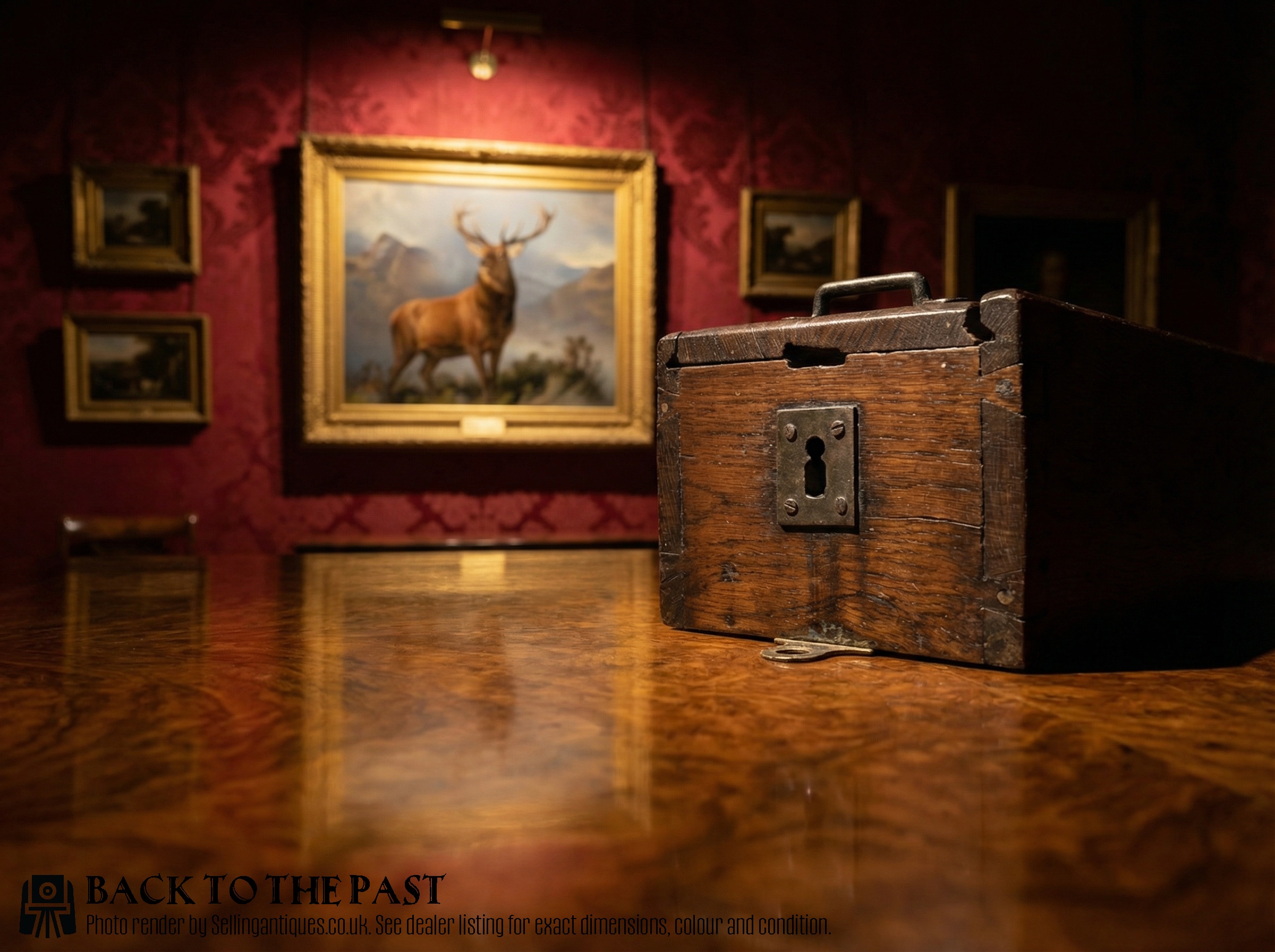
Hardware consists of iron hinges, latches, or brass details, sometimes accompanied by traces of early red paint. The structural build prioritises durability, utilising thick timber boards suited to daily domestic handling.
Dark Oak Candle Box Retail Price Guide 2026
Typical asking prices for dark oak candle box among the pieces listed under this phrase on Sellingantiques today, from the lower quarter to the upper quarter. They describe what is for sale here now, not the wider market.
Listings feature oak, iron, and brass across seventeenth and eighteenth-century periods, alongside Victorian interpretations.
Judging quality and character
The standard of a piece depends on the depth of the timber's patina and the integrity of its original construction. Unaltered surfaces and genuine period hardware elevate an example far above heavily restored or later constructed items.
Carved decoration, where present, distinguishes finer vernacular work from plain utility pieces. The balance of proportions and the preservation of original hanging points or internal compartments determine the distinction between ordinary and exceptional survivals.
The Dark Oak Candle Box Glossary
- Vernacular
- Objects made by local craftsmen for everyday domestic use rather than high-style urban workshops. These pieces reflect regional traditions and practical necessity.
- Treen
- Small handmade wooden household objects and utensils. Candle boxes often sit within this broader category of utilitarian treen.
- Coffer
- A sturdy wooden chest or box with a lid, occasionally containing an internal candle box compartment. They provide secure storage for valuables or textiles.
- Patina
- The deep surface sheen and colour developed by wood over centuries of handling, polishing, and exposure to light. It serves as a key indicator of age and authenticity.
- Tapered rectangular
- A box shape that narrows towards the bottom or top, a classic profile designed for holding dipped or moulded candles.
Dark Oak Candle Box: Frequently Asked Questions
How were candle boxes used?
Candle boxes were hung on walls or placed near hearths to keep precious tallow and wax candles dry, clean, and safe from household rodents.
Their secure lids and wall-mounting holes ensured candles remained accessible yet protected in busy historical kitchens and living spaces.
How do I hang a wall box?
Original wall boxes feature integrated mounting holes or brackets in their back panels designed for hanging on sturdy pegs or wall hooks.
Ensure any modern hanging method distributes the weight safely without straining the historic oak timber or original joints.
Are these pieces waterproof?
Historic oak boxes are not waterproof and possess natural timber seams that can expand or crack if exposed to high moisture.
Keep them in stable, dry indoor environments away from direct heat sources and damp exterior walls to preserve the wood.
How do I tell an 18th-century box from a Victorian one?
Eighteenth-century examples typically display hand- sawn boards, pegged joinery, and primitive iron hardware characteristic of vernacular country workshops.
Victorian pieces often show more uniform machine-finished timber, heavier carved ornamentation, and nineteenth-century construction methods.