


Country Oak Wall Box
A country oak wall box brings utilitarian texture and honest storage to a room, holding small domestic goods against timber panels.
Country Oak Wall Box
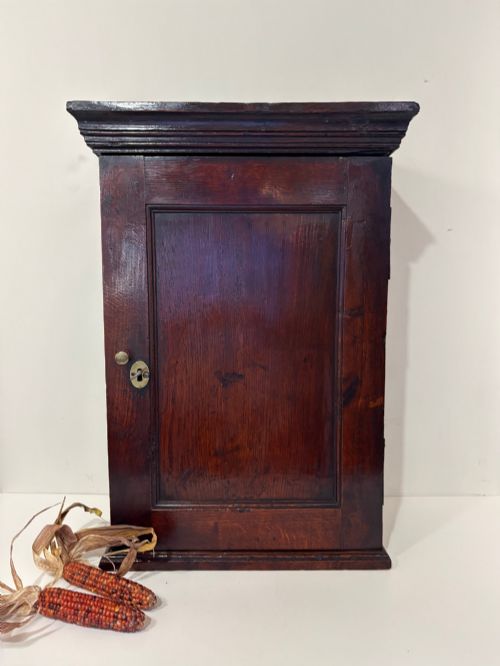
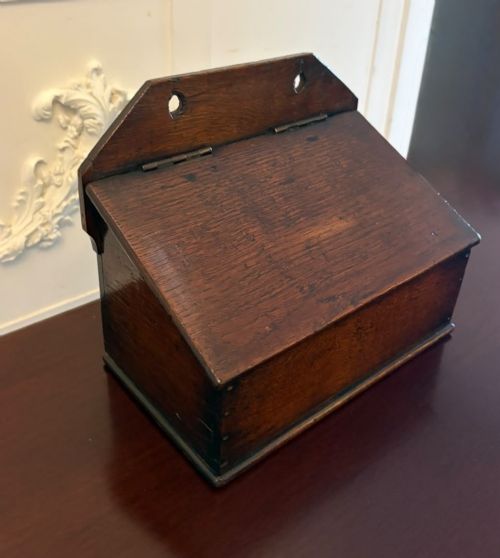
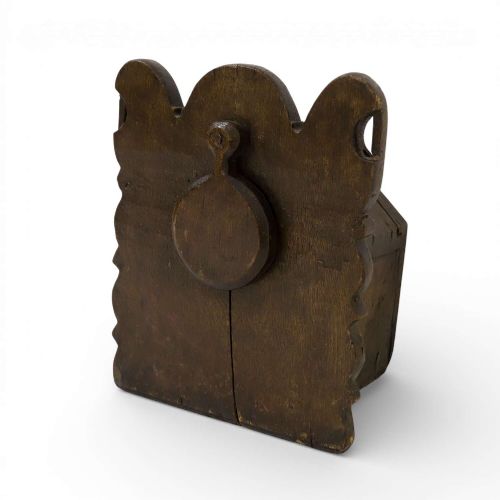
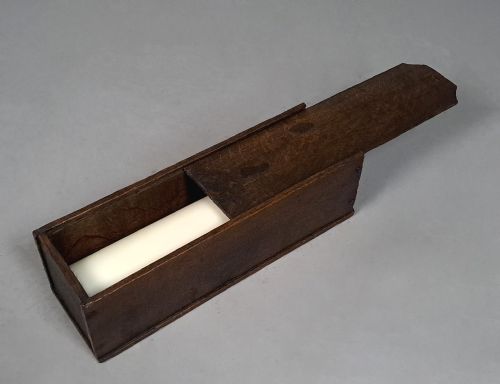
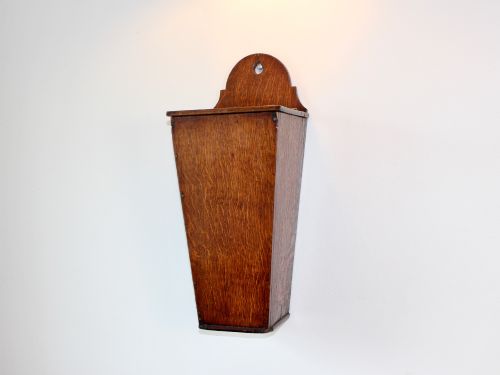
When you search for a country oak wall box, you encounter pieces designed to be hung safely out of the way in domestic interiors. These domestic items include candle boxes, salt boxes, hanging boxes, spice cabinets, and kitchen knife boxes.
The versions most commonly found here date from the seventeenth century through to the nineteenth century, encompassing Georgian and Victorian country periods alongside primitive and rustic styles. They represent practical British craftsmanship intended for daily household use.
These pieces utilise wall space efficiently, often featuring tapered rectangular forms or small cupboards with drawers. Their simple functional geometry suits both traditional interiors and minimalist modern spaces.
How they were made
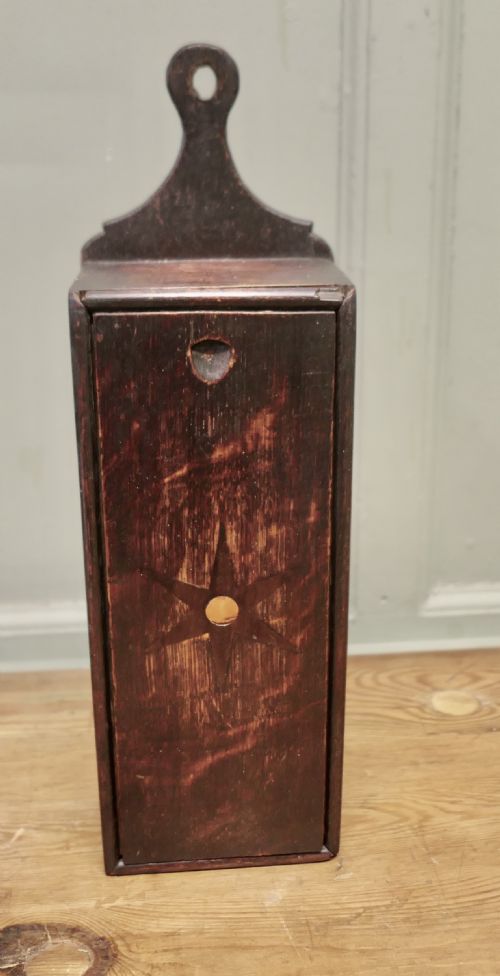
The primary construction relies on solid oak, frequently paired with secondary pine and enhanced by wood inlay for decorative contrast. Makers selected sturdy timber capable of withstanding heavy daily handling in busy kitchens and hallways.
Hardware consists of original iron and brass fittings such as hinges, latches, and hanging loops that secure the boxes to walls. Traces of early red paint sometimes survive on these surfaces, showing how they were finished originally.
The listings on this site span the 17th, 18th, and 19th centuries, showcasing oak alongside pine, brass, and iron.
What varies in quality
Quality in these domestic wall pieces rests on the integrity of the timber and the preservation of original hardware. Examples that retain their early iron hinges and uncompromised structural joints possess greater character than those with replaced parts.
The nuance lies in surface patination and proportion, where honest wear from centuries of use defines the visual appeal. Simple primitive forms display a directness that contrasts with more formal Georgian cabinet work.
The Country Oak Wall Box Glossary
- Salt Box
- A lidded wall container designed to keep coarse cooking salt dry near the hearth. These typically feature a hinged lid and a high backboard with a hanging hole.
- Candle Box
- A narrow wall-mounted receptacle used to protect tallow or wax candles from dust and pests. They often feature sliding or hinged lids for quick access.
- Spice Cabinet
- A small wall-hanging cupboard containing tiny internal drawers for storing valuable culinary spices. These represent more refined domestic storage.
- Treen
- Small handmade wooden items produced for the home. The term derives from the old word for tree.
- Patina
- The surface sheen and colour developed by timber through decades of handling, light, and polishing. This quality indicates genuine age.
Country Oak Wall Box: Frequently Asked Questions
Where were these boxes hung?
These wall boxes were traditionally hung near fireplaces, kitchens, or doorways where items like salt, candles, or knives needed to be kept within easy reach.
The suspension holes in their backboards allowed them to be secured safely off work surfaces in busy domestic spaces.
How do I clean an oak wall box?
Dust the timber gently with a dry, soft cloth to remove everyday particle buildup without disturbing the historic surface.
Avoid liquid cleaners or modern polish, which can damage old finishes and soften the natural patina built up over centuries.
Can these boxes support modern weight?
While originally built to hold heavy items like salt or dense candles, their hanging mechanisms require careful assessment.
Ensure that any wall fixings match the strength of the original iron hardware before suspending heavier items.
How can I tell a seventeenth century box from a nineteenth century one?
Early pieces from the seventeenth and early eighteenth centuries often display primitive construction techniques, hand-riven boards, and robust iron hardware.
Later nineteenth-century examples tend to incorporate secondary timbers like pine and exhibit more regular machine-sawn components.