
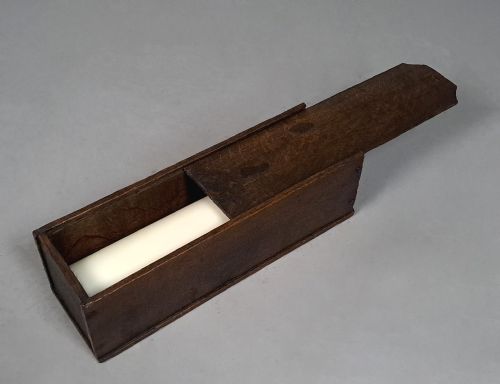
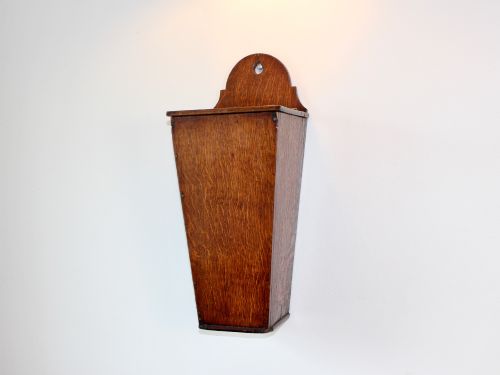


Georgian Candle Box
A georgian candle box is a practical domestic container for storing tallow dips or wax tapers, made to hang on the wall or sit on a table.
Georgian Candle Box
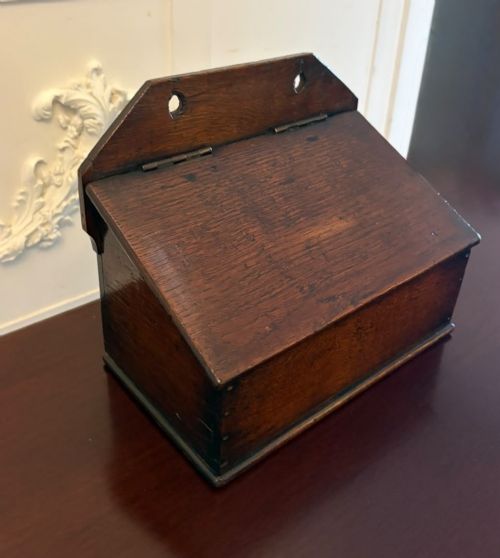
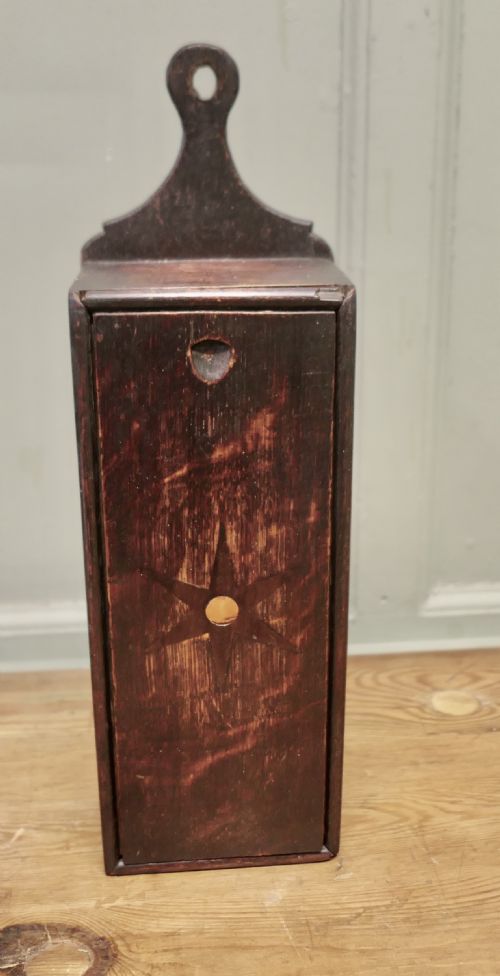
A georgian candle box is principally a wall hanging container designed to protect fragile dip candles from household damp, pests and drafts. The examples on this page span the eighteenth and nineteenth centuries, taking forms that range from simple tapered rectangular wall boxes to larger coffers fitted with internal compartments.
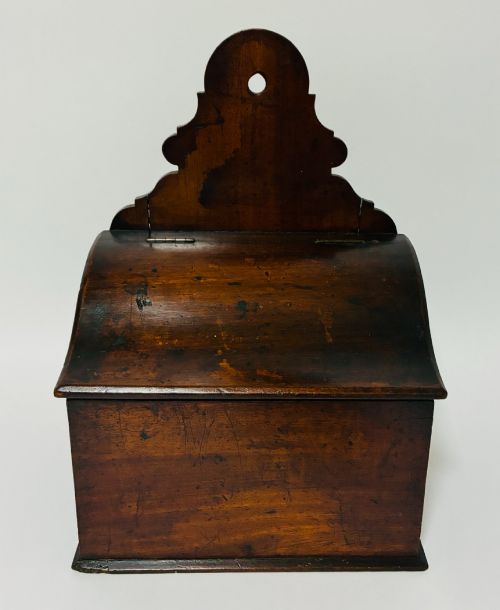
Most pieces encountered here are constructed from native timbers like oak and mahogany, often featuring sliding lids or hinged access. Alongside dedicated hanging boxes, the selection includes domestic salt boxes and larger storage chests incorporating internal candle tills.
Materials and construction methods
Makers utilised solid native and imported hardwoods, chiefly oak, mahogany, elm, yew, cherry and pine, joined with pegged mortise and tenon joints or simple overlapping boards. Surfaces frequently display visible grain patterns, primitive carved details or boxwood inlay.
Iron and brass hardware such as hinges, latches and hanging loops complete the construction, occasionally accompanied by traces of early paint or natural wax finishes.
Some domestic containers managed two jobs at once, doubling up as salt receptacles or hiding tiny secret drawers in the base.
Factors of standard and construction
Quality in a georgian candle box rests on the choice of timber, the crispness of any moulding or carving, and the survival of original functional elements. Solid mahogany examples with flame grain figures or finely fitted sliding lids sit at a different level of polish compared to rustic vernacular pine or primitive oak pieces.
The integrity of the hanging mechanism and the retention of original brass or iron hardware heavily influence the character of the box, as do repairs or replacements made to the backboards and hinges over centuries of domestic use.
The Georgian Candle Box Glossary
- Treen
- Small handmade wooden domestic objects. These utilitarian items were turned or carved for daily household utility.
- Spill box
- A small wall container for holding slender wood shavings used to transfer fire from hearth to candle. They share similar hanging proportions to candle containers.
- Till
- A small internal compartment or lidded box fitted inside a larger chest or coffer. Candle tills keep tapers separate from bulk stores.
- Salt box
- A domestic wall container with a sloping lid, built to keep coarse culinary salt dry near the fireplace. Many surviving examples served interchangeably for candles.
- Veneer
- A thin layer of figured wood applied over a secondary timber base. Flame mahogany boxes frequently employ this technique on their primary front panels.
Georgian Candle Box: Frequently Asked Questions
Where were candle boxes hung in the home?
These boxes hung near doorways, hearths or stairwells where artificial light was needed most urgently during evening hours.
The suspension holes in the backboards allowed them to be secured safely out of reach of household mice and damp flagstone floors.
How do I distinguish a candle box from a salt box?
Candle boxes typically feature narrow, upright rectangular proportions suited to the length of dipped tallow or wax tapers.
Salt boxes often possess a broader body with a sloping hinged lid designed for scooping granulated minerals.
Can these boxes still be used for modern candles?
Modern taper candles fit readily into historical wall boxes provided the internal dimensions match standard lengths.
Care should be taken to avoid placing burning candles near dry historic timber surfaces.
What woods were commonly used for these boxes?
Oak and mahogany appear most frequently across the surviving corpus, reflecting regional English cabinetmaking traditions.
Cabinetmakers also worked with elm, cherry, yew and pine depending on local timber availability.