


Hanging Candle Box
These hanging candle box examples are wall-mounted storage pieces designed to keep precious dips safe from pests and damp.
Hanging Candle Box
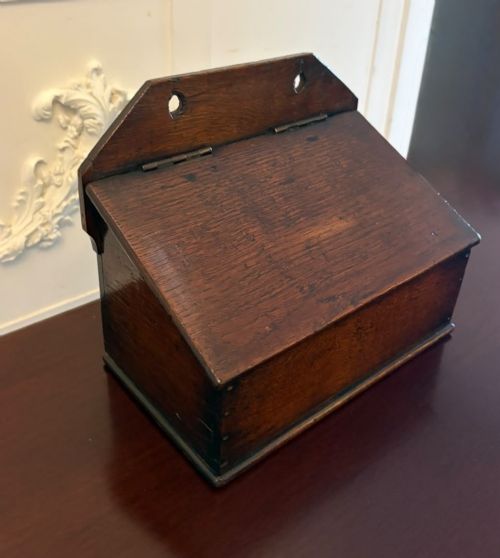
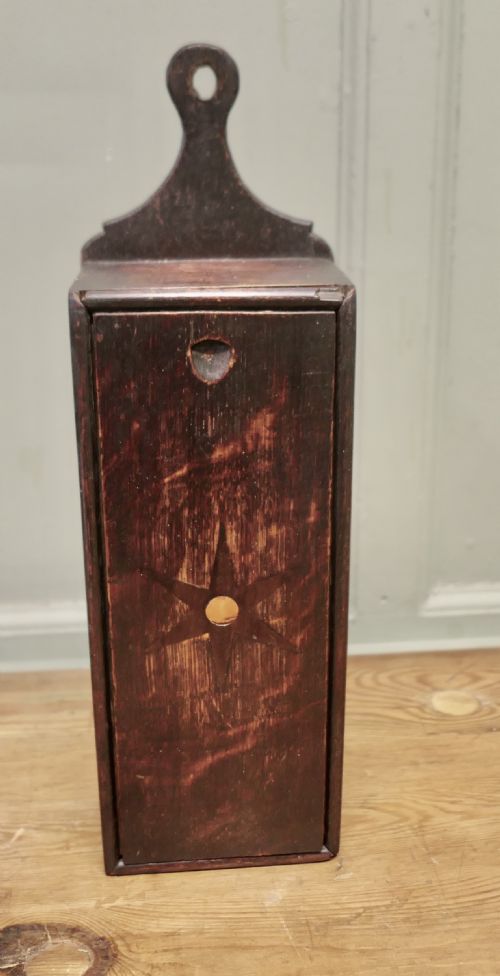
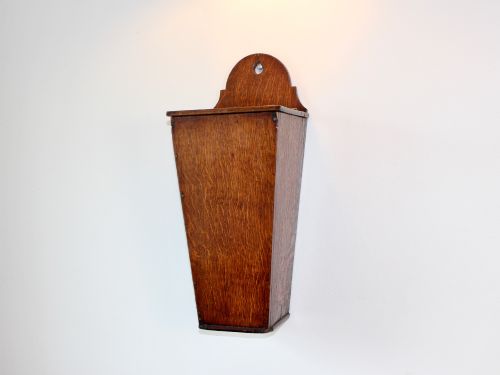
A hanging candle box is a utilitarian wall-mounted container designed to hold tallow or wax candles safely away from household hazards. The pieces appearing here span from the seventeenth century through the Victorian era, reflecting domestic storage needs across generations. Oak and mahogany dominate the forms, taking rectangular or tapered shapes intended to hang close to a hearth or doorway.
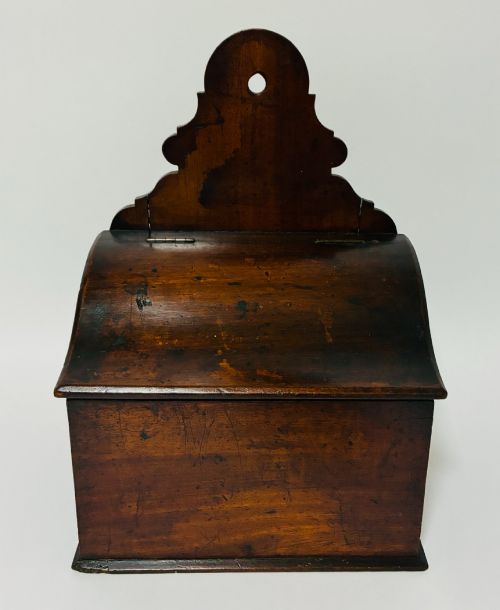
Georgian vernakular styles and English country pieces represent the majority of available stock. Examples often combine functions, serving alternately as salt boxes or spill boxes alongside their primary candle storage purpose. Form follows function directly, with hinged lids and integrated suspension holes standard across the selection.
What separates examples
Material selection dictates the primary tier of quality, with figured mahogany and finely grained oak sitting above utilitarian pine. The presence of decorative flourishes, such as boxwood inlay, carved surface ornamentation, or uncommon bell shapes to the lid, elevates particular specimens.
The survival of original hardware, including iron hinges and hanging brackets, maintains the integrity of a piece. Condition ranges from primitive rustic items with paint traces to finely polished vernacular furniture.
Listings feature oak, mahogany, pine, elm, and walnut, alongside iron and brass hardware.
The Hanging Candle Box Glossary
- Treen
- Small handmade wooden household objects. These items include utilitarian containers and boxes.
- Spill box
- A small wall-mounted container meant to hold thin wood shavings used for transferring flames. These boxes often accompany candle storage.
- Vernacular
- Everyday architecture and objects made by traditional craftsmen rather than high-style designers. These pieces reflect regional materials and practical needs.
- Salt box
- A wall-mounted container with a sloping lid traditionally used to keep salt dry near the fireplace. Many surviving examples share forms identical to candle boxes.
Hanging Candle Box: Frequently Asked Questions
How were hanging candle boxes used?
These boxes hung on walls near hearths or doorways to keep tallow and wax candles dry, clean, and safe from household pests. Their enclosed design protected fragile dips from dust and damage in busy domestic spaces.
Many examples doubled as salt containers or held spill papers used for lighting fires. Their placement ensured a light source stayed accessible in the dark rooms of older houses.
What woods were used for candle boxes?
Oak and mahogany appear most frequently across these pieces, representing both local country timbers and imported hardwoods. Pine, elm, walnut, and occasional bits of boxwood inlay also feature in regional construction.
Cabinetmakers utilised whatever timber was readily available, matching the material to the workshop's location and the customer's budget.
How do I hang an antique box safely?
Utilise the original suspension holes or brackets integrated into the backboard whenever possible. Modern wall anchors matched to the weight of the timber will provide secure support without stressing old joints.
Avoid placing the box in direct sunlight or near active heat sources that could dry out and crack the antique wood.
Are these boxes Georgian or Victorian?
The dating spans from the late seventeenth century through the eighteenth century Georgian period and into the nineteenth century. Georgian examples often display plain oak or figured mahogany, while Victorian pieces may show heavier carving.
Construction details, timber choices, and hardware styles help distinguish seventeenth-century vernacular work from later nineteenth-century production.