







Bombe Bureau Bookcase
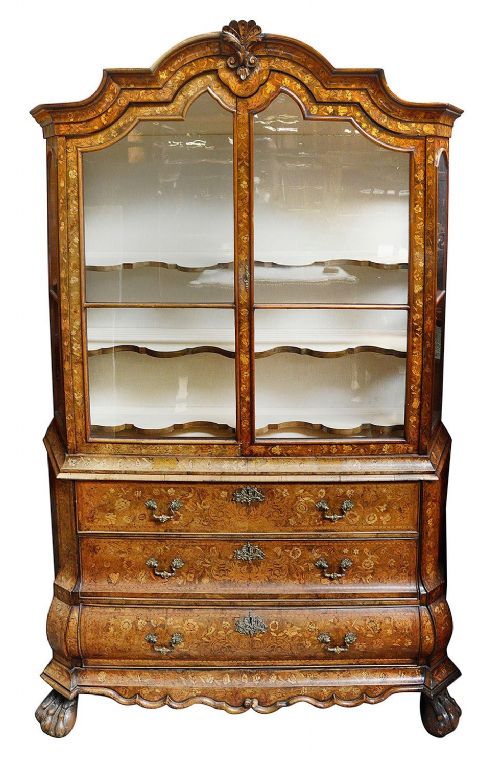
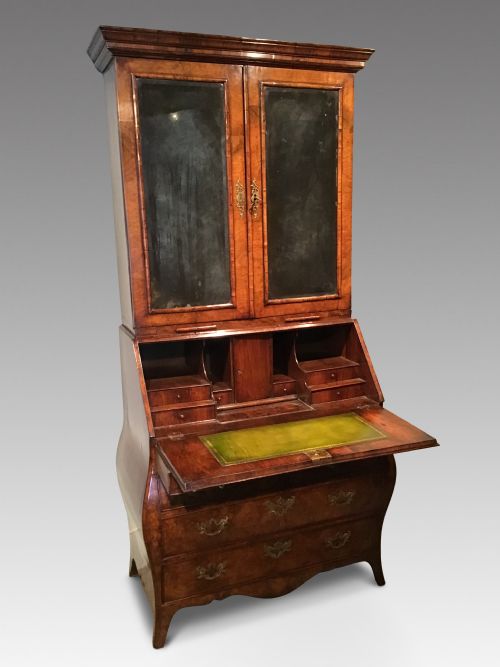
A bombe bureau bookcase marries curving swollen drawers with a fitted writing slope and upper shelves, offering both a dramatic silhouette and concealed compartments for your correspondence.
Bombe Bureau Bookcase
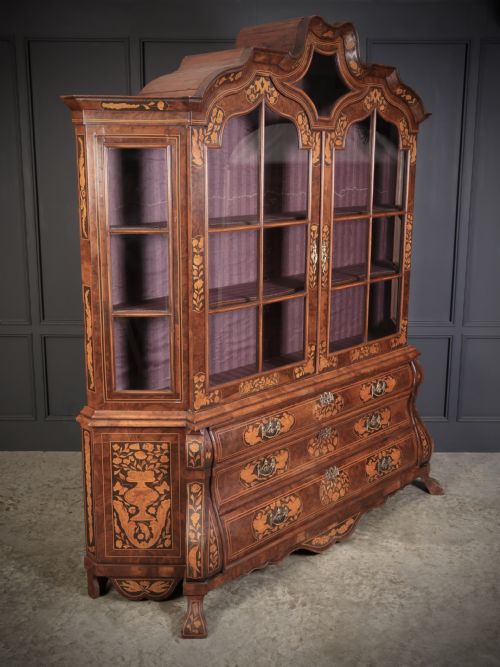
A bombe bureau bookcase presents a striking swollen profile across the lower chest of drawers, topped by a sloping fall-front desk and a glazed upper cabinet for display. When you search for a bombe bureau bookcase, you encounter impressive pieces designed to dominate a room with sweeping curves and architectural presence.
The pieces on this page span the 18th century, Georgian eras, and later 1920 revivals, with Dutch examples appearing frequently. Forms range from bureau cabinets and display cabinets to large bombe-shaped cabinets with intricate upper shelving.
Makers and cabinetmakers from the Georgian period onward utilised substantial proportions and deep lower chests. These items combine the practical utility of a writing desk with the grand display space of a bookcase.
How they were made
Craftsmen shaped these imposing carcases from pine and oak, applying rich veneers of walnut and burr walnut across the visible surfaces. The distinctive swollen shape requires careful shaping of the drawer fronts and side panels to achieve the characteristic outward curve.
Fruitwood inlay and fruitwood marquetry decorate many panels with floral or pictorial motifs, contrasting sharply against the darker walnut background. Brass hardware, including drop handles and escutcheons, secures the drawers and fall-front desk.
Glass panels are fitted into the upper cabinet doors to protect books or display items while keeping them visible. Secondary timbers like pine support internal pigeonholes and shelving units behind the main fall-front.
Listings feature walnut, burr walnut, fruitwood inlay, and fruitwood marquetry across 18th-century, Georgian, and 1920 periods.
What varies in quality
The crispness and complexity of the fruitwood marquetry define the artistic ambition of a piece, distinguishing simple veneering from elaborate floral compositions. Finer examples maintain symmetry and fluid lines across the challenging curved surfaces of the bombe lower chest.
The choice of timber grain, particularly the depth and movement within the burr walnut veneers, separates standard cabinet work from superior commissions. Well-matched grain patterns across drawer fronts and fall-front slopes indicate careful selection by the original maker.
Structural integrity relies on how cleanly the drawers operate within their curved housings and how securely the upper display cabinet joins the lower chest. Original brass fittings and intact glass panes add to the coherence of a surviving piece.
The Bombe Bureau Bookcase Glossary
- Bombe
- A bulging or swelling contour found on the lower drawer section of chests and bureaux. This silhouette requires advanced cabinet-making techniques to curve timber outward gracefully.
- Marquetry
- Decorative patterns formed by fitting together small pieces of tinted or natural wood veneer onto a carcase. Floral and urn motifs appear frequently in Dutch marquetry.
- Fall-front
- A hinged writing flap that drops down to create a desk surface and conceals interior pigeonholes and small drawers. It locks securely when upright to close the desk compartment.
- Vitrine
- A glass-fronted cabinet or display case designed for showing porcelain, books, or curiosities. Upper sections of bureau bookcases often function as vitrines.
- Escutcheon
- A protective metal plate surrounding a keyhole, usually fashioned from brass. These plates prevent the timber around the lock from splitting during regular use.
Bombe Bureau Bookcase: Frequently Asked Questions
What is a bombe bureau bookcase?
A bombe bureau bookcase combines a swelling curved chest of drawers with a sloping writing desk and an upper display cabinet. It serves as both a practical writing station and a grand display piece for books or porcelain.
These items often feature elaborate marquetry and rich walnut veneers, reflecting the cabinet-making standards of 18th-century Dutch and Georgian workshops.
How do I date a bureau bookcase?
Dating relies on examining the construction methods, secondary timbers, and stylistic traits like Dutch Baroque, Rococo, or Georgian influences. 18th-century pieces utilise period hardwoods and hand-cut joinery, while later revivals from the 1920s show different interior framing.
The presence of period fruitwood marquetry and burr walnut veneers helps position pieces within the 18th century or subsequent revival periods.
Where were these bookcases made?
Many examples originate from Dutch workshops influenced by Baroque and Rococo design traditions, characterised by prominent swelling drawer fronts and dense floral marquetry. Georgian examples from British makers tend to exhibit more restrained lines while sharing similar walnut construction.
Regional preferences determined whether the upper section functioned strictly as a bookcase or a glazed display vitrine.
How do I clean burr walnut?
Burr walnut surfaces require dusting with a soft, dry cloth to prevent abrasive particles from scratching the delicate veneer. Avoid using modern chemical polishes, as silicone and heavy waxes can build up and dull the grain over time.
Applying traditional beeswax sparingly helps nourish the timber and maintain the natural lustre of the polished walnut.