





Bombe Chest Writing Desk
These bombe chest writing desk pieces combine swollen convex forms with fitted writing compartments, offering character and practical storage in equal measure.
Bombe Chest Writing Desk
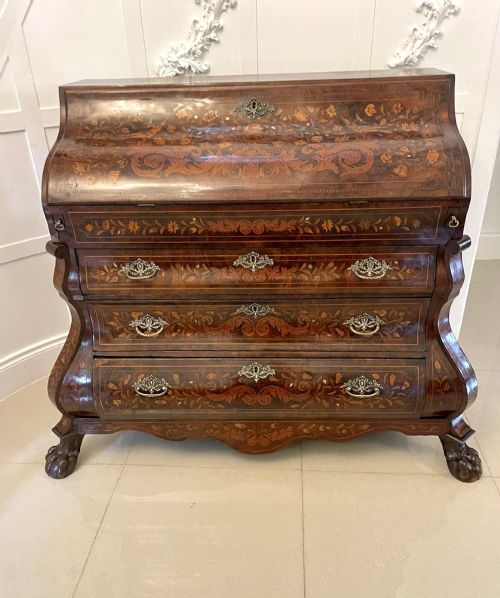
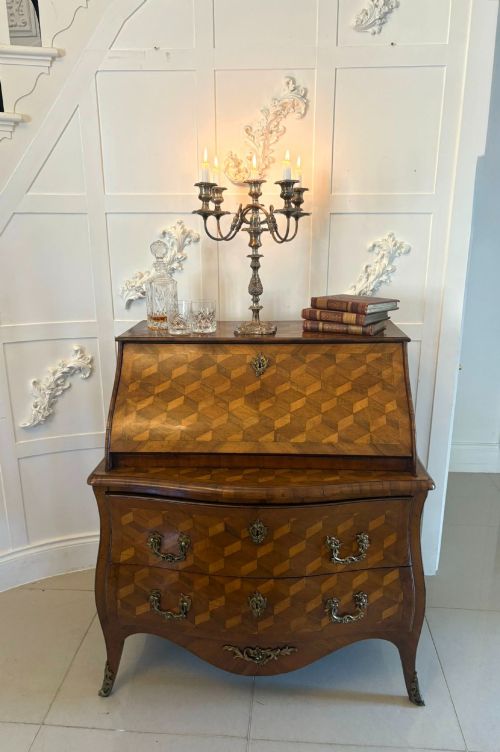
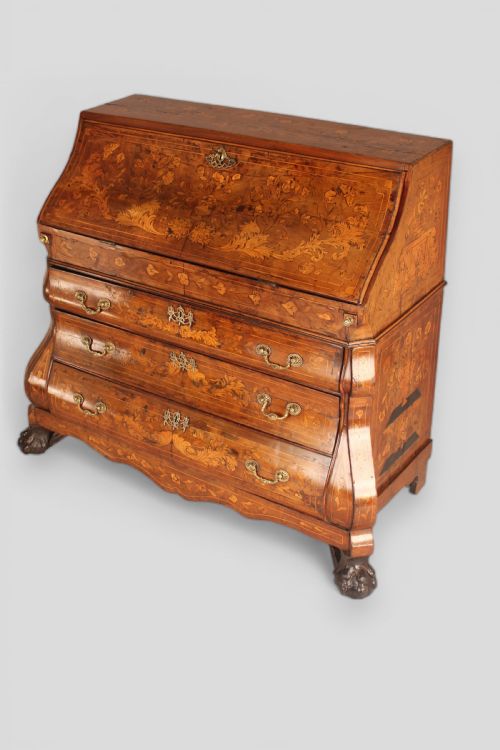
A bombe chest writing desk is essentially a sloping or cylinder bureau built with swollen, swelling convex fronts that taper towards the base. The form appears primarily as bureaux and bureau bookcases, drawing heavily on Dutch Rococo and Dutch Baroque traditions alongside French Chateau influences. Buyers searching for a bombe chest writing desk will encounter substantial freestanding items designed to anchor a principal room.
The material palette is dominated by walnut and burr walnut, frequently enriched with fruitwood marquetry or parquetry inlay depicting floral and geometric motifs. Oak and mahogany also appear in the record, occasionally paired with brass hardware and glass doors on bookcase variants. Most examples date from the eighteenth century, though later nineteenth-century interpretations and early twentieth-century pieces also surface.
Forms range from compact writing bureaux to large bureau bookcases fitted with upper display sections. The distinctive swelling contour defines every variation, creating deep drawers beneath a fall-front writing surface. Collectors seek out these pieces for their combination of architectural presence and intricate surface decoration.
What varies in quality
The quality of a bombe chest writing desk rests largely on the choice and figure of the timber veneer. Highly figured burr walnut with dense, symmetrical grain commands greater appreciation than plain timber surfaces. Furthermore, the intricacy and precision of the fruitwood marquetry inlay separate standard workshop production from master craftsmanship.
Structural integrity in the curved carcass panels also distinguishes finer examples from simpler ones. Expert shaping ensures the convex lines flow evenly without distortion, and the drawers operate smoothly despite the complex geometry of the swollen front. The survival of original brass mounts and untouched interior fittings further elevates the standing of any given piece.
Several bureau bookcases manage to look as though they have eaten a very large dinner and need to lie down.
The Bombe Chest Writing Desk Glossary
- Bombe
- A swollen, convex curving shape characteristic of continental furniture fronts and sides. This profile swells outward from the waist and tapers towards the feet.
- Marquetry
- Decorative patterns formed by fitting contrasting veneers into a prepared background surface. Floral designs in fruitwood are especially common on these walnut pieces.
- Bureau
- A writing desk featuring a sloping hinged flap that opens to reveal internal compartments and small drawers. It often sits atop chest drawers or a swollen bombe base.
- Parquetry
- Geometric wood inlay laid down in repeating patterns like cubes or herringbone. This technique creates subtle textural contrast alongside figurative marquetry.
- Burr walnut
- Timber taken from walnut tree growths that produces highly swirled, knotted grain patterns. It provides a rich decorative surface for cabinet fronts.
Bombe Chest Writing Desk: Frequently Asked Questions
What is a bombe chest writing desk?
A bombe chest writing desk is a cabinetwork form featuring swollen, convex drawer fronts and a fold-down writing surface. These pieces combine the storage capacity of a chest of drawers with a fitted desk interior.
Most examples originate from eighteenth-century Dutch or French traditions, constructed in walnut and adorned with marquetry inlay.
How do I date an antique bureau?
Dating relies on examining the construction methods, timber choices, and decorative styles visible across the piece. Eighteenth-century models often display hand-cut dovetails and native walnut or fruitwood veneers.
Later nineteenth and twentieth-century interpretations adopt similar forms but reveal different secondary timbers and assembly techniques upon close inspection.
Are these desks practical for daily use?
These desks provide substantial surface area for writing beneath their sloping fall-fronts, alongside deep storage drawers below. The internal compartments organise papers and small items efficiently within the cabinet architecture.
Care should be taken with antique surfaces when writing, often by using a protective blotter to preserve the aged timber and marquetry.
What wood types are most common?
Walnut and burr walnut dominate the surviving examples, prized for their rich colour and dynamic grain patterns. Fruitwood appears frequently in the contrasting marquetry inlay, depicting floral sprays and botanical motifs.
Mahogany and oak also occur within the listings, providing alternative structural and decorative finishes depending on the period.