
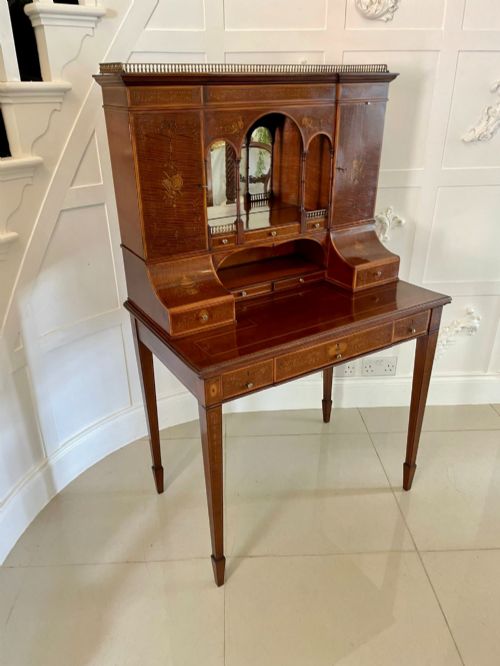
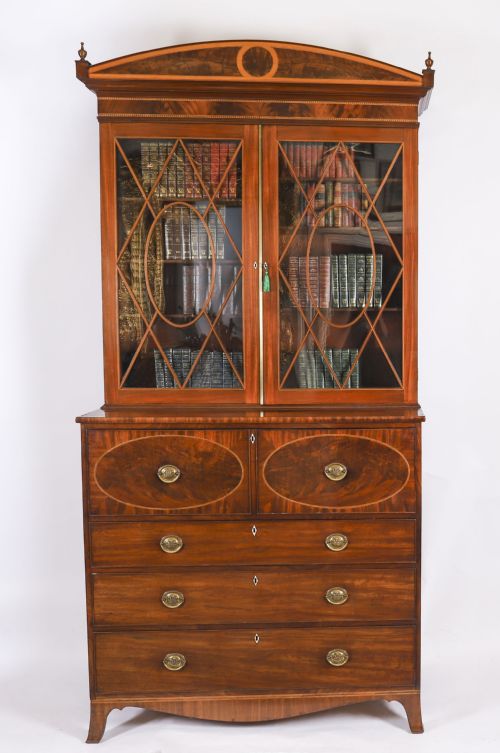


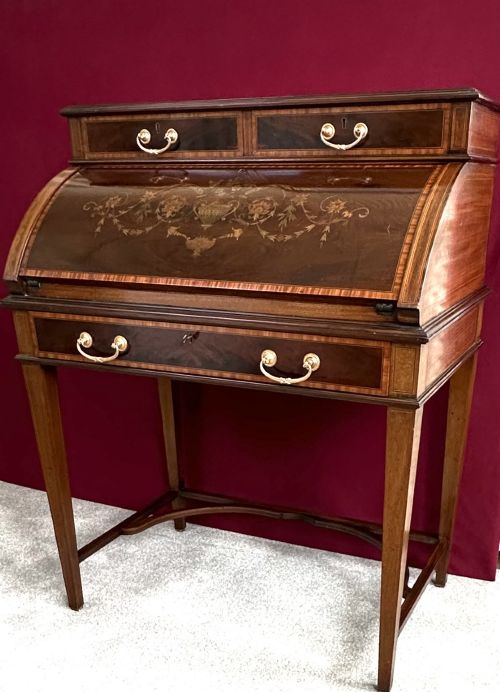
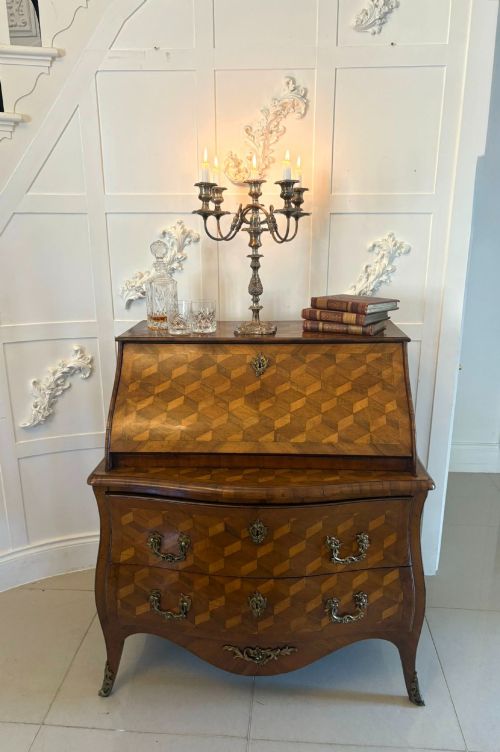
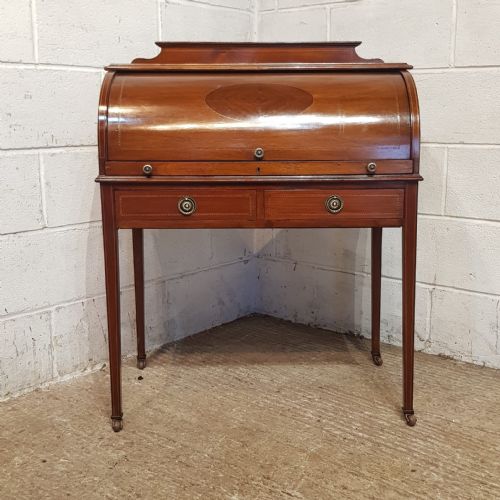
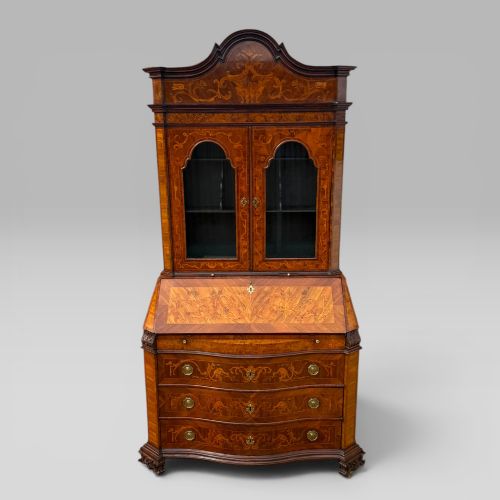
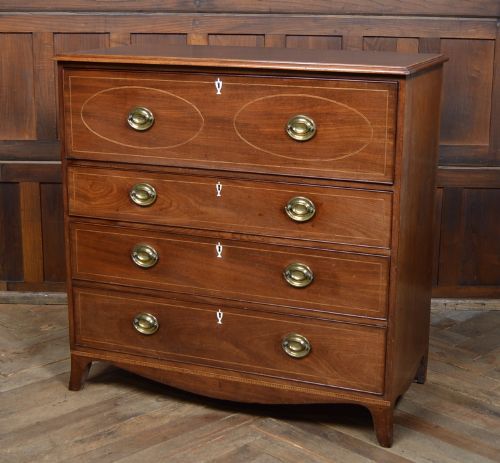


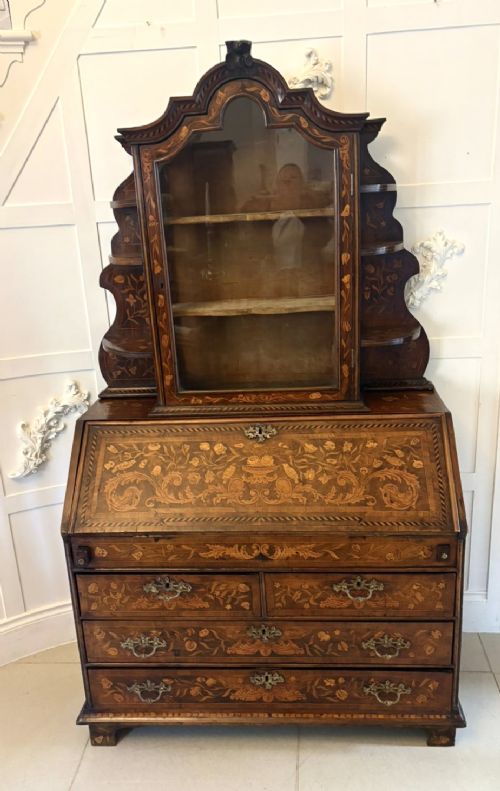
Brown Inlay Secretary Desk
A brown inlay secretary desk brings together practical writing storage and intricate cabinet work, spanning periods from the eighteenth century to the Edwardian era.
Brown Inlay Secretary Desk
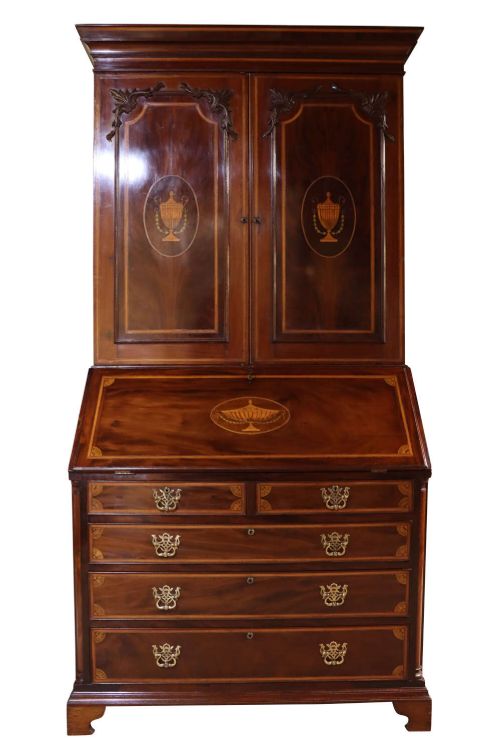
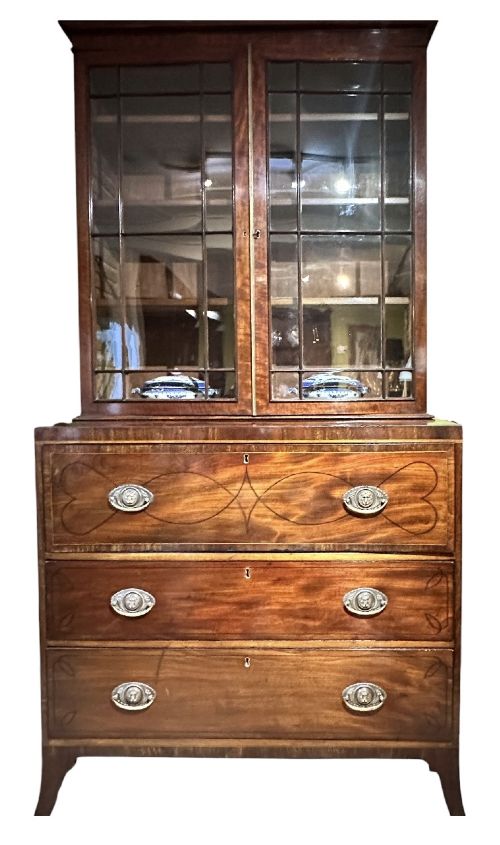
A brown inlay secretary desk incorporates writing surfaces with concealed drawers, pigeonholes and fitted compartments behind a drop front or sliding cylinder. These forms appear as bureau bookcases, bureau cabinets, and compact freestanding desks.
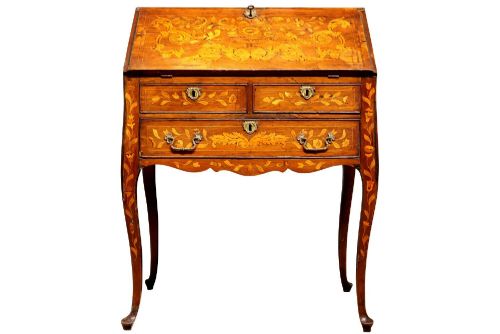
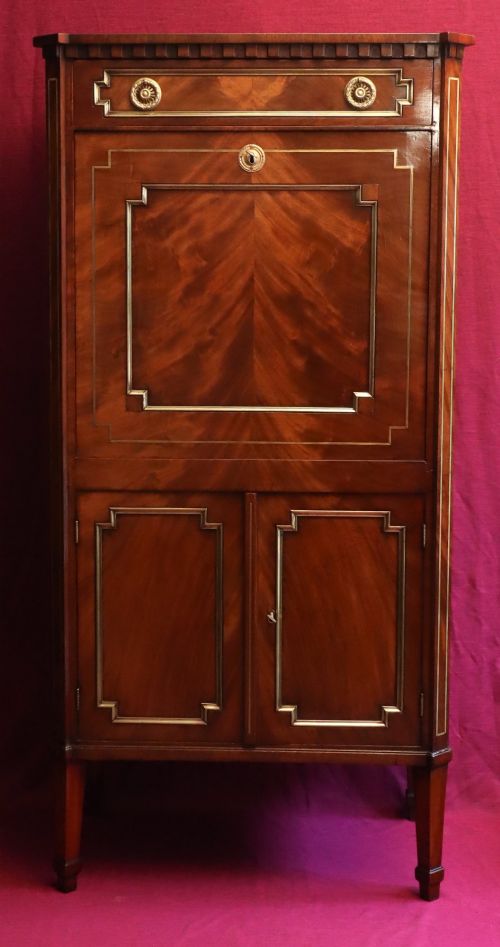
The pieces on this page span the Georgian, Regency, Victorian and Edwardian periods, alongside continental examples showing Dutch floral marquetry and French walnut construction.
Mahogany and walnut predominate, often enriched with lighter wood inlays and parquetry patterns across fall fronts, drawer fronts and bookcase doors.
Materials and construction
Cabinet makers utilised solid timbers and selected veneers of mahogany, walnut, and fruitwood, applied over secondary woods such as oak.
Inlay and marquetry techniques incorporate contrasting timbers like satinwood and tulipwood to create floral motifs, geometric banding, and pictorial panels.
Interior fittings involve intricate small drawers, leather writing inserts, and brass hardware including drop handles and escutcheons.
Several desks conceal secret drawers behind dummy pigeonholes, designed to guard private correspondence from curious household staff.
The markers of quality
Quality rests in the precision of the cabinet work, visible in the tightness of the dovetail joints on internal drawers and the crisp execution of the marquetry inlay.
Timber selection dictates the visual impact, where matched flame mahogany or burr walnut veneers demonstrate superior choice of material by the maker.
The structural integrity of the fall front hinges, the smooth operation of internal mechanisms, and the retention of original brass fittings separate standard examples from finer works.
The Brown Inlay Secretary Desk Glossary
- Secretaire
- A desk or chest of drawers containing a fitted writing drawer with a fold-down front. This mechanism conceals pigeonholes and small compartments.
- Marquetry
- Decorative veneer work forming pictorial or floral patterns using various tinted woods. Craftsmen assemble these delicate pieces before gluing them to the carcase.
- Davenport
- A small pedestal desk featuring a sloping top and drawers opening to the side. Victorian examples often include piano tops and burr walnut veneers.
- Bombe
- A swollen, convex shape characteristic of eighteenth-century continental furniture. This curving profile requires advanced woodworking skill to veneer successfully.
- Cylinder desk
- A desk with a rolling curved shutter that encloses the writing surface. When pushed back, it reveals slides and internal compartments.
Brown Inlay Secretary Desk: Frequently Asked Questions
What is a brown inlay secretary desk?
A brown inlay secretary desk is a piece of antique furniture designed for writing and storage, combining timber construction with decorative contrasting wood inlays.
These items range from large bureau bookcases to compact tables, all featuring enclosed writing compartments.
How do I identify a Georgian bureau?
Georgian bureau desks typically feature mahogany construction, bracket feet, and brass drawer pulls, dating from the eighteenth or early nineteenth century.
Inside the fall front, the layout often includes small pigeonholes, secret compartments, and central cupboard doors.
What is Dutch marquetry?
Dutch marquetry involves elaborate floral and pictorial inlay work utilising contrasting timbers across walnut or fruitwood surfaces.
Pieces featuring this style often display bombé curves or block fronts dating around eighteen hundred.
How do I care for antique veneer?
Antique veneer requires consistent indoor humidity levels and protection from direct sunlight to prevent lifting and drying out.
Applying microcrystalline wax periodically helps maintain the finish without harming the historic wood.