
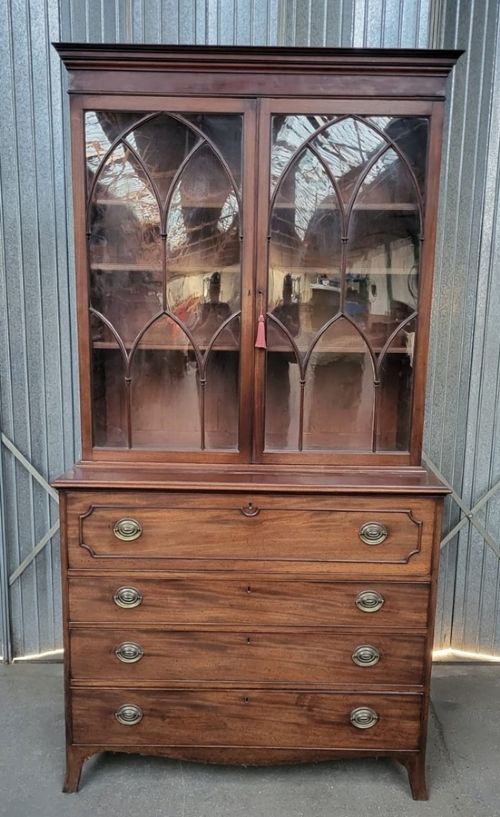
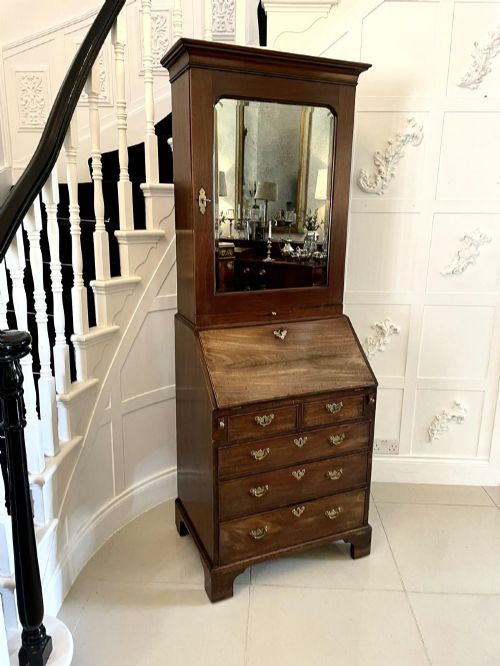
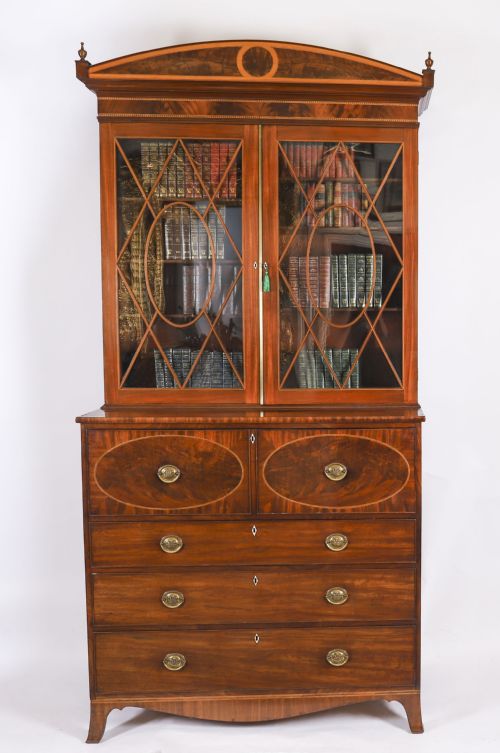
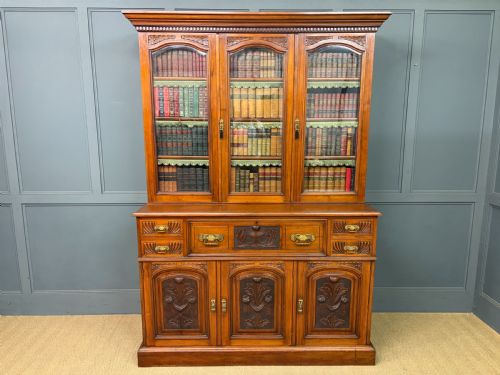


Bureau Cabinet Secretary
A bureau cabinet secretary brings together a fitted writing desk and a bookcase, giving you a serious piece of antique furniture that commands a room.
Bureau Cabinet Secretary
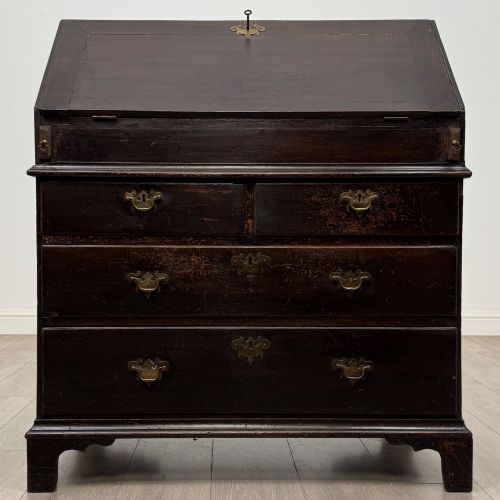
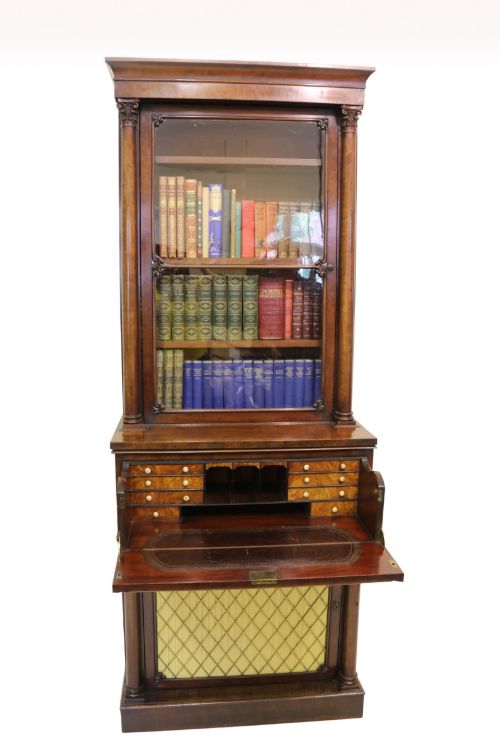
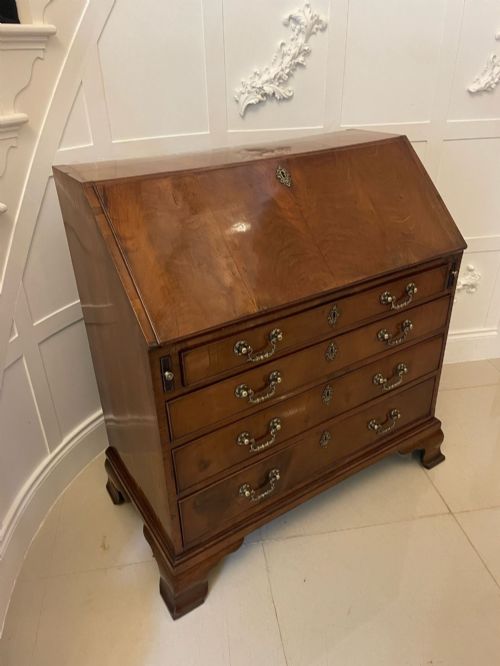
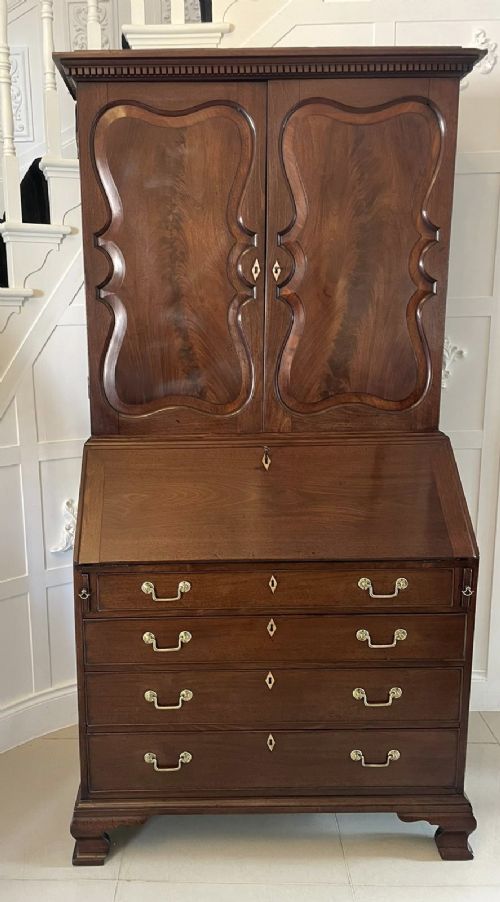
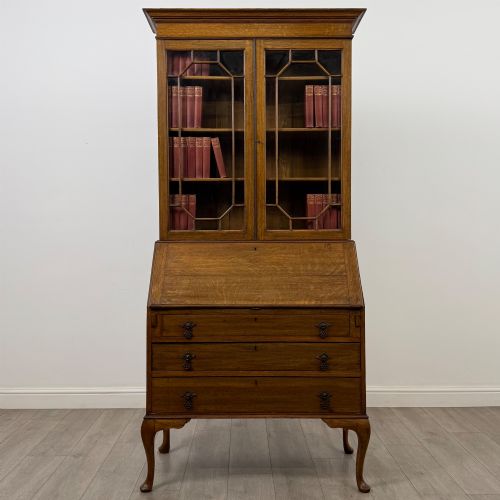
When you search for a bureau cabinet secretary, you are looking at substantial case furniture that combines a drop-front or drawer-fitted writing desk with upper shelving. These pieces range from compact fall-front writing desks in oak to towering bookcase combinations housing glazed doors above.
The versions most likely to meet you on this page date from the eighteenth century through the Edwardian era, spanning styles from Queen Anne and George III to Arts and Crafts. Walnut, mahogany and oak dominate the forms, offering fitted interiors with pigeonholes and small drawers hidden behind the main writing flap.
Materials and construction
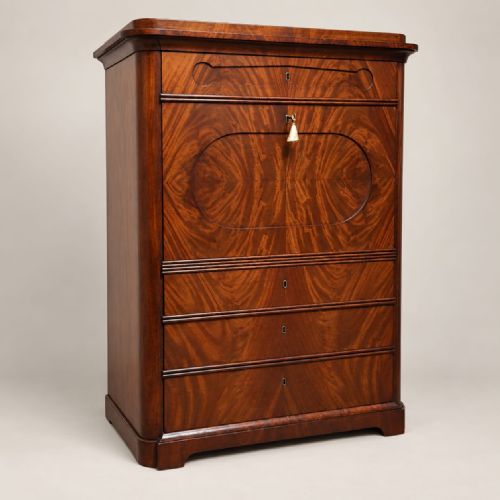
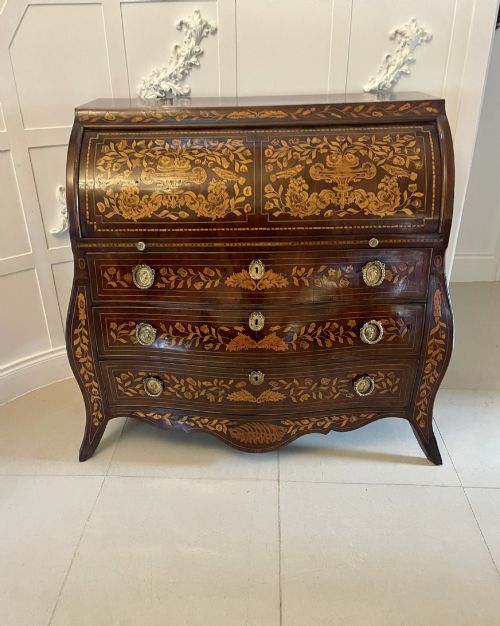
Cabinetmakers built these pieces using solid timbers like oak and mahogany, often applying figured veneers such as burr walnut, flame mahogany and yew wood across the principal surfaces. Marquetry inlay, brass hardware and glass panes for the upper bookcase doors complete the construction of the better examples.
Internal joinery relied on dovetailed drawer construction and pegged joints, particularly in earlier pieces, while later Edwardian examples utilised factory methods alongside traditional hand-carving. Writing surfaces frequently incorporated fitted compartments or leather inserts tailored for correspondence.
Materials documented across the pieces include brass, glass, mahogany, oak, walnut, burr walnut, iron and metal.
Judging quality and character
The quality of a bureau cabinet secretary rests on the choice of timber figure, such as matching veneers across the fall front and drawer fronts, and the subtlety of any marquetry inlay. Pieces with well-figured burr walnut or flame mahogany command attention through the natural grain patterns chosen by the cabinetmaker.
Interior architecture also sets examples apart, where stepped arrangements of secret drawers and pigeonholes demonstrate greater joinery skill than simple open cavities. Original brass handles, glass integrity in the upper doors and undisturbed patination elevate an item beyond standard production.
Arthur Basil Reynolds·George Oakley
The Bureau Cabinet Secretary Glossary
- Fall front
- A hinged writing flap that pulls down to form a horizontal desk surface. It conceals a fitted interior of small drawers and pigeonholes when closed.
- Secretaire
- A desk form featuring a drawer that pulls out and drops down to reveal a writing surface and internal compartments. It often appears as the middle section of a tall bookcase.
- Marquetry
- Decorative veneer work formed by fitting together thin pieces of wood, brass or shell to create pictorial patterns. Floral designs are common on Dutch and Georgian examples.
- Featherbanded
- A banding technique using two strips of veneer laid so the grain meets at an angle resembling a feather. This adorns the drawer edges of fine walnut furniture.
- Linenfold
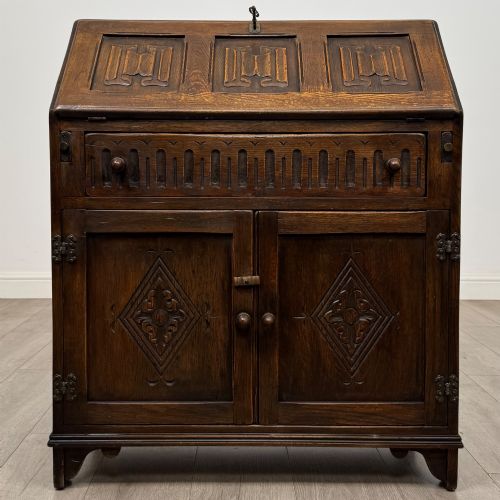
- A carved wood motif resembling folded linen cloth, frequently seen on oak pieces from the Edwardian period.
Bureau Cabinet Secretary: Frequently Asked Questions
What is the difference between a bureau and a secretaire bookcase?
A bureau typically uses a sloping fall front that drops down to create a writing desk. The writing surface sits above lower drawers without separate tall upper doors.
A secretaire bookcase incorporates a pull-out drawer mechanism that drops down to serve as a desk, positioned beneath a tall glazed bookcase section. Both forms combine storage with a dedicated writing space.
How do I date a bureau cabinet secretary?
Dating relies on observing timber choices, construction techniques and stylistic details. Eighteenth-century pieces often feature solid oak or mahogany frames with hand-cut dovetails and featherbanding.
Edwardian and later pieces tend to show lighter oak construction, machine-cut elements and distinct revival styles such as Arts and Crafts linenfold carving.
Were these pieces used for writing or display?
These pieces served both purposes simultaneously in historical homes. The lower desk section provided a private space for correspondence, ledger work and storing documents.
The upper glazed cabinet served as a bookcase for housing valued library volumes and displaying porcelain behind glass.
How do I care for a wood bureau cabinet?
Keep the wood away from direct heat sources and strong sunlight to prevent the timber and delicate veneers from drying out or splitting. Apply traditional beeswax periodically to nourish the surface.
Avoid excessive moisture and use soft cloths for dusting the carved details and glass panels.