

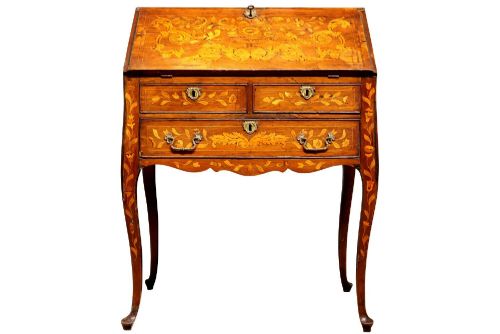
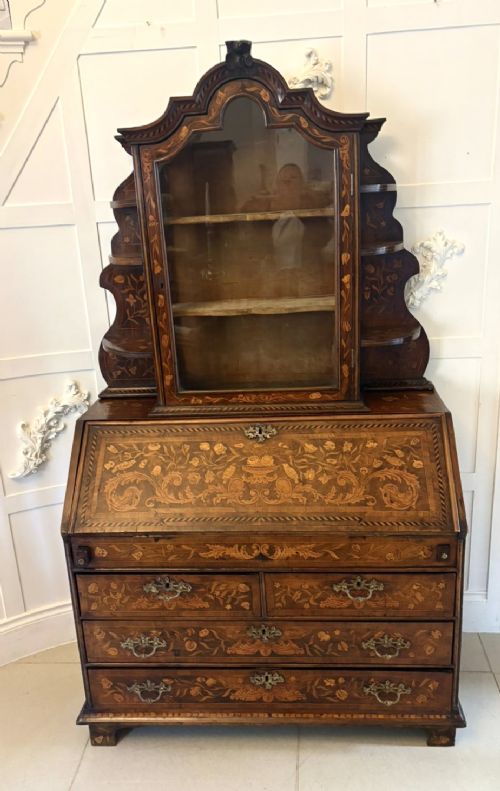


Dutch Walnut Secretary
A dutch walnut secretary is a timber fall-front writing desk, often topped with a bookcase, prized for its fitted interior and decorative floral marquetry.
Dutch Walnut Secretary
When you search for a dutch walnut secretary, you are looking at substantial writing furniture combining practical storage with elaborate decorative marquetry. These pieces originate across the eighteenth and nineteenth centuries, alongside occasional later interpretations.
The form typically splits into lower writing bureaus and tall bureau bookcases with glazed upper cabinets. Bureau cabinets and fall-front escritoires also appear frequently throughout the listings.
Makers shaped these items in distinct regional iterations including Dutch Baroque and Dutch Rococo styles. Bombé profiles with swelling lower fronts emerge as a notable variant among the walnut and burr walnut examples.
Materials and construction
Cabinet makers built the primary carcase using walnut, burr walnut, and oak, often incorporating secondary timbers like fruitwood. Walnut veneers provided a stable base for intricate surface decoration.
Fruitwood inlay and fruitwood marquetry create detailed floral patterns across the fall fronts and drawer panels. Brass handles and escutcheons complete the hardware on these fitted writing desks and bureau bookcases.
Walnut, burr walnut, fruitwood, and oak serve as the primary woods across eighteenth and nineteenth century listings.
Quality factors in walnut secretaries
The intricacy and preservation of the fruitwood marquetry separate standard examples from finer works. Crisp floral details and tight geometric control in the inlay require high technical skill.
The choice of timber grain, particularly the depth of burr walnut figure across large surfaces, dictates visual impact. Structural integrity in the fall-front hinges and internal pigeonholes also determines overall execution.
The Dutch Walnut Secretary Glossary
- Marquetry
- Decorative veneer work forming pictures or patterns using various coloured woods. This technique covers the exterior panels of many bureau bookcases.
- Bombe
- A swelling or bulging curved profile seen on the lower section of chests and desks. This silhouette characterises several eighteenth and nineteenth century examples.
- Escritoire
- A writing cabinet featuring a hinged fall-front writing surface concealing small drawers and pigeonholes. These items function as compact alternatives to larger bureau bookcases.
- Burr walnut
- Wood grain taken from a walnut tree growth showing swirling patterns and knots. Craftsmen utilised this timber for its rich visual texture.
- Bureau bookcase
- A combination furniture piece featuring a sloping writing desk below a shelved upper cabinet with glazed doors. These tall units provide extensive storage and display space.
Dutch Walnut Secretary: Frequently Asked Questions
How do I date a walnut secretary?
Examine the timber species, construction joints, and hardware styles to estimate the period of manufacture. Eighteenth-century pieces often display hand-cut dovetails and distinct walnut framing.
Compare the decorative marquetry motifs and silhouette styles, such as bombé curves, against known period designs. Later nineteenth-century or twentieth-century pieces typically show different internal secondary woods and machine-made elements.
Where should I place a bureau bookcase?
Position these tall wooden cabinets against a sturdy interior wall away from direct sunlight and heat sources. Walnut timber reacts poorly to extreme humidity fluctuations and rapid temperature changes.
Ensure adequate clearance around the fall-front writing surface so it drops fully without obstruction. Placing the desk in a room with stable climate control preserves the delicate fruitwood inlay.
How do I care for marquetry veneer?
Dust the exterior surfaces regularly using a soft, dry cloth to prevent dirt accumulation in the grain. Avoid chemical sprays or silicone polishes that can degrade aged wood finishes.
Apply a microcrystalline wax sparingly to nourish the walnut and protect the fruitwood inlay from drying out. Maintain steady room temperatures to stop the marquetry veneers from lifting.